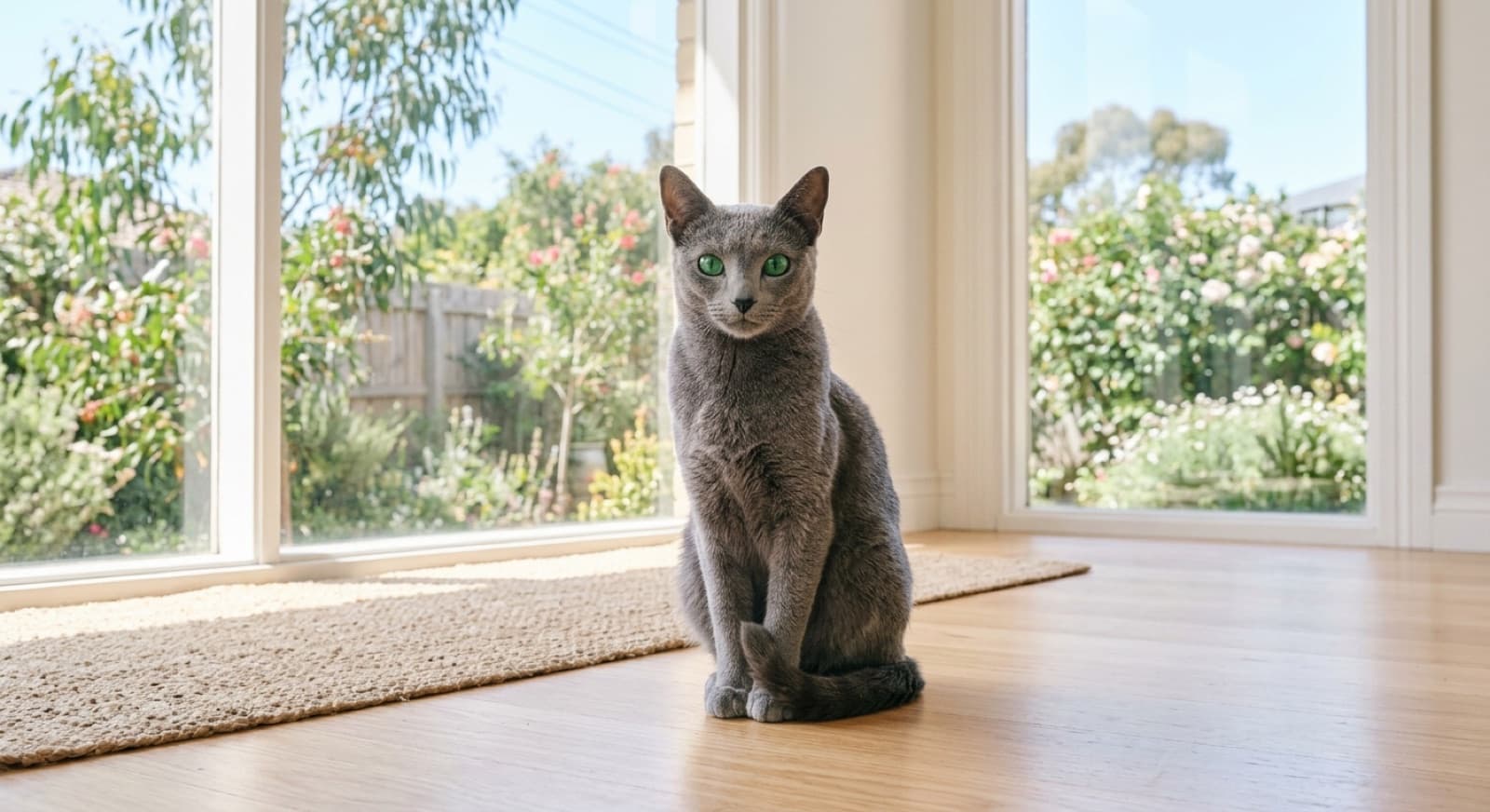
The short answer
The Russian Blue is one of the healthier, longer-lived cat breeds, without a heavy burden of breed-specific inherited disease. What matters most is weight: they love food and gain easily, so measured meals and play are the priority. Beyond that, look after urinary and dental health, keep up preventive care and year-round tick prevention, and see your vet regularly. Do those things and a Russian Blue often lives a long, comfortable life. This is general information, not veterinary advice. Always speak to your own vet about an individual cat.
One honest framing to start. Choosing a hardy breed is a real advantage, and the Russian Blue is genuinely one of the sturdier cats you can own. But no cat is maintenance-free, and the biggest risks for this breed are the everyday ones an owner controls, above all weight. Knowing what to watch for, and building good habits from the start, is what keeps a Russian Blue well. For general veterinary guidance alongside this article, the RSPCA Australia Knowledgebase and the Australian Veterinary Association are reliable starting points, and your own vet is always the final word on an individual cat.
Weight: the number-one thing to manage
The most common health issue owners run into with a Russian Blue is weight gain, and it is worth taking seriously because so much else follows from it. Russian Blues are notably food-motivated. Many will eat well past what they need if food is left out, and as an indoor, fairly calm breed they can burn less energy than a busy outdoor cat. Put those together and the pounds creep on quietly.
Excess weight is not a cosmetic issue. It raises the risk of diabetes, joint strain and urinary trouble, and it shortens lives. The good news is that this is the health problem an owner has the most control over. Feed measured meals of a good-quality complete cat food rather than free-feeding all day, keep the cat active with daily play and puzzle feeders, and weigh in with your vet on what a healthy weight looks like for your individual cat and how to reach it safely if the cat is already carrying extra. Getting this right does more for a Russian Blue's long-term health than almost anything else.
Urinary tract health
Urinary tract issues, including bladder inflammation and stones, are common across cats generally, and any cat can be affected, with overweight and indoor cats at higher risk. That makes it worth watching in a food-loving indoor breed like the Russian Blue. The signs to know are straining in the litter tray, frequent small trips, blood in the urine, urinating outside the tray, or crying while toileting.
One point deserves to be in bold in your mind: a cat, and especially a male cat, that is straining and unable to pass urine is a genuine emergency. A blockage can become life-threatening within a day and needs a vet immediately, at any hour. You lower the everyday risk by keeping the cat lean, encouraging water intake, feeding some or all wet food, and keeping litter trays clean, plentiful and in calm spots. If your cat shows any of the warning signs, treat it as a same-day vet visit, not a wait-and-see.
Dental disease
Dental disease is one of the most common health problems in cats of every breed, and the Russian Blue is no exception. Gum inflammation and periodontal disease build up quietly, and because cats are experts at hiding pain, it is easy to miss until it is serious. Watch for bad breath, drooling, pawing at the mouth, a change in how the cat eats, or a sudden preference for soft food.
Regular tooth brushing at home, introduced gently and early, helps slow the build-up of plaque, and your vet will check the teeth at the annual visit and advise when a professional dental clean under anaesthetic is needed. A dental problem caught early is cheaper and kinder to fix than one left to advance, and good dental care is one of the most reliable ways to protect a cat's long-term health and comfort.
Preventive care and the Sydney paralysis tick
The routine that keeps any cat well applies to the Russian Blue: annual vet checks, up-to-date vaccination, and year-round parasite prevention. Desexing, which a rescue cat already has, brings its own health and behaviour benefits. Regular checks also let a vet pick up small changes early, which matters even in a hardy breed.
In Sydney, parasite prevention means taking the paralysis tick seriously. The tick is present year-round along the NSW coast and in bushland suburbs, and its toxin can be fatal to a cat without prompt veterinary treatment. Ticks can be carried indoors on people, other pets or washing, so even an indoor cat needs a vet-recommended, cat-safe product. The choice of product matters, because some tick and flea treatments made for dogs are dangerous to cats, so ask your vet for a cat-appropriate option and stay on it year-round. The other Sydney factor is heat: a dense-coated Russian Blue copes well with cool weather but needs shade, water and a cool spot in a Sydney summer, and should never be left in a hot car or room.
Thinking of adopting a Russian Blue in Sydney?
A rescue Russian Blue arrives desexed, vaccinated, microchipped and vet-checked, and a foster carer can tell you what they have seen of the cat's health. Check the Russian Blues and grey crosses available now across Sydney and NSW rescues.
See Available Russian Blues →The vet budget and the case for insurance
A hardy breed costs less in predictable breed-specific problems, which is a real saving. But the biggest vet bills usually come from the unexpected: an accident, a urinary blockage, a dental procedure under anaesthetic, or a sudden illness. Those can happen to any cat, and they can each run from several hundred to over a thousand dollars. Planning for them is just sensible ownership.
Pet insurance is worth considering even for a sturdy breed, and the single most important rule is to start it while the cat is young and healthy, before any condition is diagnosed, because pre-existing conditions are generally excluded from cover. Australian insurers including Bow Wow Meow, Petplan Australia and RSPCA Pet Insurance offer cat cover. Compare the exclusions, the annual limit and the excess, not just the monthly premium.
When to see a vet
Alongside the routine annual check, some signs should prompt a same-day or emergency visit. Treat straining in the litter tray with little or no urine, especially in a male cat, as an emergency, because a urinary blockage is life-threatening. Book a prompt vet visit for a cat that stops eating or hides for more than a day, for any sign of mouth pain, for repeated vomiting or diarrhoea, for sudden weight loss or gain, and for suspected tick contact or sudden wobbliness in the back legs, which can be an early tick sign.
The reassuring part is that a Russian Blue is a sturdy cat, and with the basics in place its health tends to look after itself. In Sydney, specialty and emergency services such as the Small Animal Specialist Hospital (SASH) provide 24/7 emergency care if your vet needs to refer. For where to find a Russian Blue and what it costs, see the Russian Blue adoption guide, and if allergies are part of your decision, the Russian Blue and allergies guide covers what the reduced-allergen claim really means.
Frequently Asked Questions
Are Russian Blue cats a healthy breed?
Yes, on the whole. The Russian Blue is widely regarded as one of the hardier, longer-lived pedigree cats, without the heavy load of breed-specific inherited disease that some pedigree breeds carry. That is a genuine plus of the breed. It does not mean problem-free, though. The things that actually matter for a Russian Blue are the same things that matter for most cats: keeping weight down, looking after urinary and dental health, and staying on top of preventive care like vaccination and parasite control. Treat it as a sturdy cat that still needs good routine vet care, not a cat that needs none.
Why do Russian Blue cats gain weight so easily?
Russian Blues are notably food-motivated and will often eat well past what they need if you let them, and as an indoor, fairly calm breed they can burn less energy than a busy outdoor cat. That combination makes weight gain the single most common health issue owners run into. Excess weight is not just a cosmetic problem: it raises the risk of diabetes, joint strain, urinary trouble and a shorter life. The fix is straightforward. Feed measured meals of a good-quality complete cat food rather than leaving food out all day, use play and puzzle feeders to keep the cat active, and ask your vet what a healthy weight looks like for your individual cat and how to get there safely.
Do Russian Blue cats get urinary problems?
Urinary tract issues, including bladder inflammation and stones, are common across cats generally, and any cat, including a Russian Blue, can be affected, with overweight and indoor cats at higher risk. The signs to watch for are straining in the litter tray, frequent small trips, blood in the urine, urinating outside the tray, or crying while toileting. A cat, especially a male, that is straining and unable to pass urine is a genuine emergency and needs a vet immediately, because a blockage can become life-threatening within a day. You reduce the risk by keeping the cat lean, encouraging water intake, feeding some or all wet food, and keeping litter trays clean and calm. Any of the warning signs is a same-day vet call.
Do Russian Blue cats need dental care?
Yes. Dental disease is one of the most common health problems in cats of every breed, and the Russian Blue is no exception. Gum inflammation and periodontal disease build up quietly, and because cats hide pain, it is easy to miss until it is advanced. Watch for bad breath, drooling, pawing at the mouth or a cat that suddenly prefers soft food. Regular tooth brushing at home, introduced gently, helps slow plaque, and your vet will check the teeth at the annual visit and advise when a professional dental clean under anaesthetic is needed. Good dental care is one of the more predictable ways to protect a cat's long-term health.
How long do Russian Blue cats live?
Russian Blues are a long-lived breed, and with good care many reach their mid-teens or beyond. Their hardiness helps, but lifespan still depends on the basics this guide covers: keeping the cat lean, staying on top of dental and urinary health, keeping it indoors and safe, and staying current with vaccination and parasite prevention. A Russian Blue kept indoors, well fed in measured amounts, insured and seen regularly by a vet has every chance of a long, comfortable life. Most of what shortens a cat's life is preventable with the routine an engaged owner already provides.
Is pet insurance worth it for a Russian Blue?
Even for a hardy breed, pet insurance is worth considering, because the biggest vet bills come from accidents and unexpected illness rather than from breed-specific disease. A urinary blockage, a dental procedure under anaesthetic, or an emergency after an accident can each run from several hundred to over a thousand dollars, and those can happen to any cat. The most important rule is to start cover while the cat is young and healthy, before anything is diagnosed, because pre-existing conditions are generally excluded. Australian insurers such as Bow Wow Meow, Petplan Australia and RSPCA Pet Insurance offer cat cover. Compare the exclusions, the annual limit and the excess, not just the monthly premium.
Does the Sydney climate affect a Russian Blue?
The main Sydney health factor for any cat, including a Russian Blue, is heat rather than cold, and the paralysis tick. Russian Blues carry a dense double coat, so they cope well with cool weather but need help staying cool in a Sydney summer: shade, fresh water and never being left in a hot car or a closed hot room. The paralysis tick is present year-round along the NSW coast and in bushland areas, and its toxin can be fatal to a cat without prompt treatment, so even an indoor cat needs a vet-recommended, cat-safe tick and flea product. Ticks can be carried indoors on people and other pets, so no cat is entirely out of reach.
Does adopting a Russian Blue from rescue mean fewer health problems?
Adopting from rescue is a good choice, but the breed's underlying health needs are the same wherever the cat comes from. A rescue Russian Blue still needs weight management, dental and urinary care, and regular preventive vet visits. What adoption gives you is a cat that already arrives desexed, vaccinated, microchipped and vet-checked, plus a rescue or foster carer who can tell you what they have observed about the individual cat's health and temperament. Whatever the source, feed measured meals, keep the cat lean, keep up regular vet visits, and consider insurance while the cat is young.
Keep reading
Adoptable Russian Blues in Sydney
The Russian Blue breed profile and any Russian Blues or grey crosses currently listed across Sydney and NSW rescues.
Russian Blues & Allergies
What the reduced-allergen claim really means, why no cat is truly hypoallergenic, and how to test it sensibly.
Russian Blue Adoption in Sydney
Where to adopt a Russian Blue or grey cross, why they are rare in rescue, and adopt versus breeder cost.
Senior Cat Care in Sydney
Keeping a long-lived breed comfortable into old age, including the extra vet monitoring later years need.