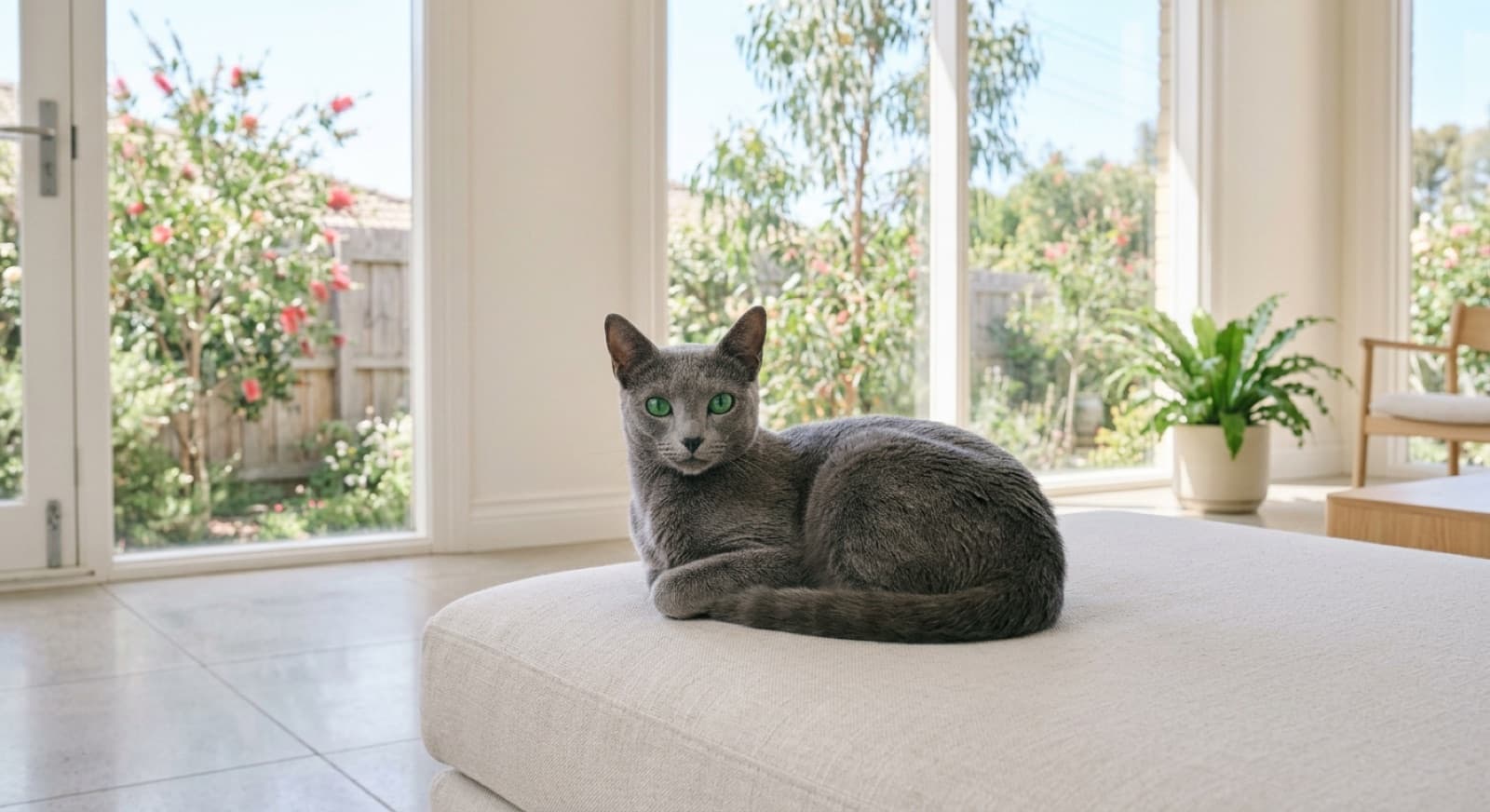
The short answer
Russian Blues are often called hypoallergenic, but no cat truly is. Many allergy sufferers react to them less, likely because the breed produces and sheds less of the main cat allergen, a protein called Fel d 1. Reactions are individual, though, so breed reputation is not proof one will suit you. The only reliable test is spending real, repeated time with the actual cat, and the best route is a foster-to-adopt rescue so you can trial the specific animal at home. Talk to your doctor about managing your allergy, since that is a medical question a breed choice alone cannot answer.
What actually causes a cat allergy
Start with the thing most people get wrong: a cat allergy is not really an allergy to fur. The main trigger is a tiny protein called Fel d 1, which a cat produces in its saliva and skin glands. When a cat grooms, it spreads that protein onto its coat, and as the coat sheds and the dander dries and floats, the protein travels through the home, settles on surfaces, and ends up in the air you breathe. That is what most cat-allergic people react to.
Two things follow from that. First, a hairless cat is not automatically allergen-free, because it still produces the protein, which is why the Sphynx is not the easy answer people assume. Second, the amount of allergen a cat produces and how much of it escapes into the air matter more than how much fur the cat has. That is the lens to judge any so-called hypoallergenic breed through, including the Russian Blue. For general guidance on cats and living with them, the RSPCA Australia Knowledgebase is a reliable starting point, and questions about your own allergy belong with your doctor.
Why many people find a Russian Blue easier
The Russian Blue's reputation as an allergy-friendly breed rests on a few reasons, though individual results always vary. The breed is often reported to produce a lower amount of the main cat allergen than the average cat, so there is simply less of it around to react to. Its coat is a short, dense double coat that sheds relatively little, which may keep more dander close to the skin and release less into the air. And because a Russian Blue is calm and easy to handle, it is a cat you can realistically groom and wipe down often, which lowers the allergen load further.
Put those together and it is easy to see why many allergy sufferers find a Russian Blue more comfortable to live with than other cats. But notice the careful language: often reported, may release less, many people. This is a breed that improves your odds, not one that removes the risk. The science on allergen levels is not absolute, and the variation between individual cats and individual people is large. So treat the reputation as a reason to test the breed, not a reason to skip testing.
The honest caveat: no cat is truly hypoallergenic
It is worth stating plainly, because a lot of marketing blurs it. There is no such thing as a completely hypoallergenic cat. Every cat, Russian Blue included, produces the allergen, and the amount varies from one cat to the next and even changes with things like whether the cat is desexed. A Russian Blue that is easy for one allergic person can still set off another, and there is no way to know from the breed label alone which you will be.
This matters most for anyone with a serious cat allergy, or asthma triggered by cats, where a reaction is not just uncomfortable but a health risk. If that is you, the breed reputation is not enough to rely on. Talk to your doctor first, take the testing below seriously, and do not commit to a cat you have not spent real time with. Choosing responsibly protects both your health and the cat, who should never be adopted into a home it may have to leave.
How to test it sensibly before you adopt
The only reliable test is real exposure to an actual cat, not the idea of a breed. A quick pat at a shelter tells you very little. Aim to spend genuine time in the same space as a Russian Blue, handle it, and if you can, visit more than once, because reactions can build over a longer exposure than a short visit allows.
The single best route for an allergy sufferer is a rescue that offers foster-to-adopt. It lets you live with the specific cat in your own home for a trial period and find out how you actually cope day to day, in the environment that matters, before the adoption is final. Several Sydney rescues use foster-based models, so ask about it. Be upfront about your allergy from the start so the rescue can guide you to a suitable cat and setup, and pair the whole process with medical advice from your doctor about managing your allergy. For how the adoption process works, our Sydney cat adoption guide walks through applying and getting approved.
Reducing allergens at home
If you do adopt, a handful of sensible habits lower the allergen load and make living with a cat far more comfortable:
- Keep the cat out of your bedroom, so you have one allergen-lighter space to sleep in.
- Groom or gently wipe the cat down regularly to remove loose dander, ideally done by someone in the home who is not allergic.
- Run a good air purifier with a HEPA filter in the rooms you use most.
- Wash your hands after handling the cat, and wash the cat's bedding and your own regularly.
- Vacuum often and favour hard floors and wipeable surfaces, since carpet and soft furnishings trap more allergen.
- Keep litter trays clean and well ventilated.
None of this replaces managing your allergy medically with your doctor, but together these steps make a real difference, especially alongside a lower-allergen breed and an indoor cat whose environment you control. Keeping a Russian Blue indoors is the right choice in Sydney anyway, for the cat's safety and for local wildlife, and it happens to suit allergy management well. See the indoor versus outdoor cats guide for more.
Looking for a lower-allergen cat in Sydney?
Russian Blues and blue-grey crosses are rare in rescue, so set an alert and be ready to trial the cat that suits your allergy. Check the Russian Blues available now, and browse other lower-allergen breeds too.
See Available Russian Blues →Other lower-allergen breeds to consider
The Russian Blue is one of several breeds with a lower-allergen reputation, and the same honest rules apply to all of them: potentially easier, never guaranteed, always worth testing. Breeds often mentioned alongside the Russian Blue include the Sphynx, the Siberian, and the Balinese. Each is talked about for a different reason, and none escapes the basic fact that all cats produce the allergen.
If a lower-allergen breed is your goal, cast the net a little wider and, above all, judge the individual cat rather than the breed name. Our hypoallergenic cats page lists the lower-allergen cats currently in Sydney rescue, and the Sphynx skin and sun care guide explains why a hairless cat is not the easy allergy answer many assume. Whichever breed you look at, use foster-to-adopt to trial the actual cat, and involve your doctor. For general veterinary guidance the Australian Veterinary Association is a reliable starting point.
Frequently Asked Questions
Are Russian Blue cats hypoallergenic?
Not truly, and it is important to be honest about that: no cat is 100% hypoallergenic. Russian Blues have a reputation as one of the more allergy-friendly breeds, and many allergy sufferers do react to them less than to an average cat. The usual explanation is that they are often reported to produce less of the main cat allergen, and their dense coat and lower shedding may release less of it into the air and onto surfaces. But every cat produces some allergen, reactions vary hugely from person to person, and a cat that suits one allergic person may still trigger another. Treat the breed as potentially lower-allergen, not allergen-free, and test it for yourself before you commit.
What actually causes a cat allergy?
It is not the fur itself. The main trigger is a tiny protein called Fel d 1, which a cat produces in its saliva and skin glands and spreads onto its coat when it grooms. As the coat sheds and dander dries and floats, that protein travels through the home and onto surfaces, and it is what most cat-allergic people react to. This is why a hairless cat is not automatically allergen-free, and why the amount of allergen a cat produces matters more than how much fur it has. It is also why grooming, cleaning and air management help, because they reduce how much allergen ends up in the air you breathe.
Why do some people react less to a Russian Blue?
There are a few likely reasons, though individual results vary. Russian Blues are often reported to produce a lower amount of the main cat allergen than the average cat, so there is simply less of it to react to. Their coat is a short, dense double coat that sheds relatively little, which may hold more dander close to the skin and release less into the air. And a calm, easy-to-handle cat is one you can groom and wipe down regularly, which lowers the allergen load further. None of this is a guarantee, and the science is not absolute, but together it explains why many allergy sufferers find a Russian Blue easier to live with than other cats.
How do I test whether a Russian Blue will trigger my allergy?
The only reliable test is real, repeated exposure to an actual cat, not the breed in theory. Spend genuine time around a Russian Blue before you commit: sit in the same room for a while, handle the cat, and ideally visit more than once, because a brief pat tells you little. The single best route for an allergy sufferer is a rescue that offers foster-to-adopt, because it lets you live with the specific cat in your own home for a trial period and see how you actually cope. Be upfront with the rescue about your allergy so they can guide you. And speak to your doctor about your allergy and how to manage it, because that is a medical question, not one a breed choice alone can answer.
Is a Russian Blue or a Sphynx better for allergies?
Neither is a safe bet on breed reputation alone, because both still produce the allergen and individual reactions vary. A Sphynx is hairless, so people assume it is allergen-free, but it still produces Fel d 1 in its skin and saliva, and without a coat that allergen can transfer directly to skin and surfaces, so a Sphynx is not automatically better and needs frequent bathing to manage it. A Russian Blue keeps its allergen in a low-shedding coat that you can groom. The honest answer is that the right cat for an allergic person is the individual cat you have tested and tolerated, whatever the breed. Use foster-to-adopt to trial the actual animal rather than choosing on breed labels.
How can I reduce cat allergens at home?
If you adopt, a few sensible habits lower the allergen load. Keep the cat out of your bedroom so you have one allergen-lighter space, and wash your hands after handling it. Groom or gently wipe the cat down regularly, ideally done by someone in the household who is not allergic, to remove loose dander. Use a good air purifier with a HEPA filter in the rooms you use most, wash the cat's bedding and your own regularly, vacuum often, and keep hard floors and wipeable surfaces where you can, since carpet and soft furnishings trap more allergen. Keep litter trays clean and well ventilated. None of this replaces managing your allergy medically with your doctor, but together these steps make living with a cat far more comfortable for many people.
Should I adopt a cat if I am not sure about my allergy?
Only if you can trial it responsibly first, because the worst outcome for everyone is adopting a cat and then returning it when the allergy proves too much. A returned cat is stressful for the animal and hard on the rescue. The kind, sensible path is to use a foster-to-adopt rescue so you can test living with the specific cat before the adoption is final, to be honest with the rescue about your allergy from the start, and to talk to your doctor about whether your allergy can be managed. If a trial shows you cannot cope, you have saved a cat a disruptive move. If it goes well, you adopt with confidence.
Does keeping a Russian Blue indoors affect allergies?
Keeping a cat indoors is the right choice in Sydney for the cat's safety and for wildlife, and it fits well with managing allergies too, because an indoor cat's environment is one you control. You can run air purifiers, keep the cat out of the bedroom, clean on a routine and groom regularly, none of which is possible with a cat that comes and goes. An indoor Russian Blue is a calm, home-loving cat that suits this kind of managed setup. Pair sensible home habits with medical advice about your allergy, and many people find they can comfortably share their home with a lower-allergen breed like the Russian Blue.
Keep reading
Adoptable Russian Blues in Sydney
The Russian Blue breed profile and any Russian Blues or grey crosses currently listed across Sydney and NSW rescues.
Hypoallergenic Cats in Sydney
The lower-allergen cats currently in Sydney rescue, with the honest caveat that no cat is truly hypoallergenic.
Russian Blue Adoption in Sydney
Where to adopt a Russian Blue or grey cross, why they are rare in rescue, and adopt versus breeder cost.
Russian Blue Health Issues
A hardy breed, but weight, urinary health and dental care still matter. What to plan for.