The short answer
A Sphynx needs a bath roughly every week to few weeks to manage skin oils, plus weekly ear cleaning, nail-fold cleaning and a daily skin check. Do not over-bathe, because that can make the skin oilier. In Sydney the two climate jobs are keeping bare skin out of strong summer sun (it burns easily) and keeping the cat warm on cool nights, since it has no coat for insulation either way. The whole routine takes minutes once it is a habit, and the daily handling doubles as bonding with a breed that loves attention.
Why a hairless cat needs more grooming, not less
This is the thing people get wrong about the breed. No fur looks like no work, but it is the opposite. A normal cat's coat quietly does two jobs: it absorbs the natural oils the skin produces, and it insulates the cat against heat and cold. A Sphynx has neither. The oils that a coat would soak up instead sit on the bare skin and collect in the wrinkles, the ears and the nail folds. Leave them and the cat turns greasy, develops a faint odour, and becomes prone to blocked pores, feline acne and skin infections.
So the owner takes over the job the coat would have done. The good news is that it is straightforward once it becomes routine, and a Sphynx generally enjoys the handling, since this is a cat that wants to be touched. Think of it as a short weekly session plus a quick daily once-over, not a chore. Get it right and you have a clean, comfortable, sweet-smelling cat that adores the attention.
The bath: how often and how
Most Sphynx need bathing somewhere between once a week and once every few weeks. The right frequency is whatever keeps the skin clean without drying it out, and it varies from cat to cat. The mistake to avoid is over-bathing. Wash the skin too often and it can respond by producing more oil, so you end up chasing a problem you created. Start gently, watch how quickly your cat gets oily, and settle on the least frequent bathing that keeps the skin comfortable.
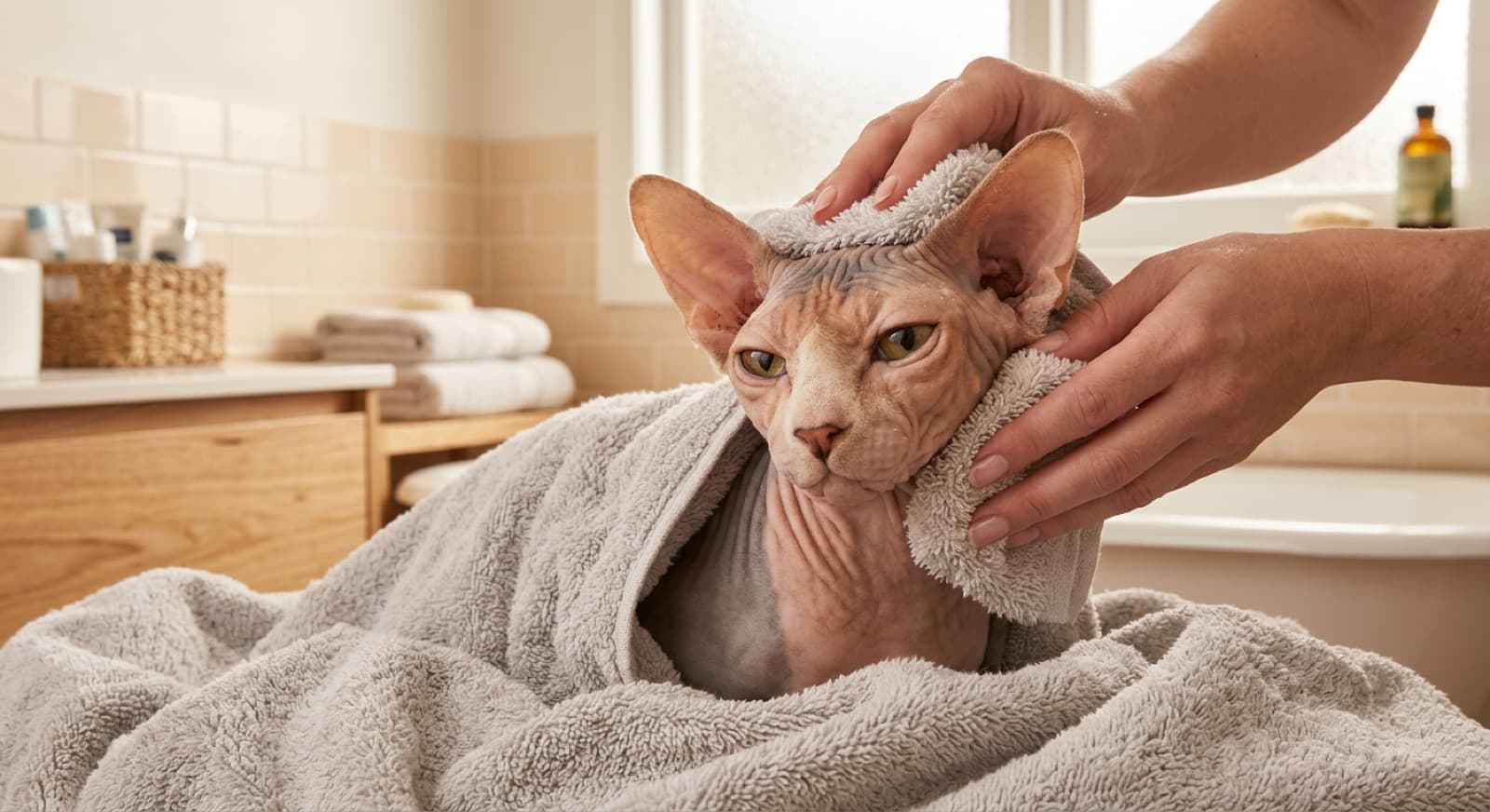
For the bath itself, use lukewarm water and a gentle, cat-safe shampoo recommended by your vet. Never use human or dog shampoo, because a cat's skin has a different pH and the wrong product can irritate or dry it. Work quickly and calmly, keep water out of the ears and eyes, rinse well, then dry the cat thoroughly with a soft towel and keep it warm afterwards, because a wet hairless cat gets cold fast. With a rescue Sphynx that may not be used to baths, introduce the whole thing slowly and make it a warm, calm experience, so the cat learns there is nothing to fear.
Ears: weekly cleaning
Sphynx ears build up wax quickly, because they have no hair to slow it down and the same skin oils collect inside. Left alone, that wax gets uncomfortable and can set the stage for infection, so ear care is part of the weekly routine. Clean the outer ear gently with a vet-recommended cat ear cleaner and a cotton pad, wiping only what you can easily reach. Never push anything deep into the ear canal.
Cleaning manages normal wax. It does not treat a problem. If you see redness, a strong smell, dark crumbly discharge, or the cat scratching at its ears and shaking its head, stop cleaning and book a vet visit, because that points to an infection or ear mites that need veterinary treatment. The skin and ear conditions that cross from grooming into medical territory are covered in our Sphynx health issues guide.
Nails, skin folds and feline acne
The nail beds and the folds of skin around them collect a waxy grime in a Sphynx, again because there is no coat to keep the area clean. Wipe the nail folds gently during the weekly session and keep the nails trimmed. While you are there, check the wrinkles and skin folds, which can trap oil and dirt in the same way.
Feline acne is common in the breed and usually shows up as blackheads and small bumps on the chin. Keeping the chin clean helps, and one simple change makes a real difference: swap a plastic food bowl for ceramic, glass or stainless steel and wash it daily, because plastic harbours the bacteria that worsen chin acne. Mild acne is a grooming matter. If the area turns red, swollen, sore or looks infected, treat it as a vet visit rather than squeezing or scrubbing it, since broken skin can become infected.
Sun protection: the Sydney priority
This is where the Sydney climate makes a Sphynx different from a hairless cat anywhere cooler. Bare skin burns in direct sun much like unprotected human skin, and repeated sun damage carries a longer-term skin cancer risk on the exposed areas. Sydney summers are strong and long, so sun protection is not a nice-to-have with this breed. It is essential.
The simplest protection is to control access to the sun. Keep your Sphynx indoors and out of direct sun in the middle of the day, and do not let it settle on a sunny windowsill or an unshaded balcony when the sun is high. Cats love a warm sunny spot, so this takes a little management. If you provide a catio for fresh air, make sure it is fully shaded rather than open to the sky. Do not reach for human sunscreen, because some human sunscreen ingredients are toxic to cats. If you want an actual sun-safe product for a cat, ask your vet, and lean on shade and indoor living as the main defence. General guidance on cat welfare and skin care is available from the RSPCA Australia Knowledgebase and your own vet.
Warmth: the other side of no coat
The same lack of a coat that leaves a Sphynx open to sunburn also leaves it unable to hold its own body heat. On a cool Sydney night, or in a home with air conditioning running, a Sphynx gets cold, and you will see it seek out warm spots, burrow under blankets and crowd in against you. Give it what it wants: warm bedding, blankets it can tunnel into, and a soft jumper on the coldest days if the cat tolerates one. Many Sphynx owners in Sydney find winter is when the cat is most determined to sleep under the covers.
One caution: a cat that cannot regulate temperature well can overheat just as easily as it chills, so make sure any heat source is safe and that the cat can always move away from it. Through a Sydney summer the whole priority flips to keeping the cat cool, shaded and hydrated, since heat is the real Sydney safety risk for any pet. Balancing warmth in winter against cool in summer is simply part of daily life with the breed.
Pulling it together: a Sydney seasonal routine
Day to day, the routine is a quick skin, ear and eye check whenever you are handling the cat, which with a Sphynx is often. Weekly, add the bath if the cat is due, plus ear cleaning, nail-fold cleaning and a nail trim. Keep the food bowl ceramic and washed daily to keep chin acne down.
Seasonally in Sydney, summer is about keeping the cat cool and out of the sun, with shade, water and no access to hot or sunny spots in the middle of the day. Winter is milder here than in colder climates, but the cool nights still matter for a bare-skinned cat, so that is when warm beds, blankets and a jumper earn their keep. Get these habits in place and Sphynx care stops feeling like a lot and becomes a few minutes woven through the day, most of which the cat treats as affection.
Why all of this points to an indoor cat
Everything on this page is easier when the cat lives indoors, where you control the sun, the temperature and the cleanliness of the environment. A Sphynx outdoors is exposed to exactly the two things it cannot cope with, strong sun and temperature swings, on top of the traffic, theft and disease risks that apply to any free-roaming cat, plus year-round paralysis ticks in Sydney bushland areas. Most Sydney rescues adopt cats out on an indoor or contained basis, and for a hairless breed it is the obvious choice. We cover indoor living, catios and safe outdoor access in the indoor versus outdoor cats guide. For general veterinary guidance on cat care, the Australian Veterinary Association and your own vet are the people to ask.
Ready for a Sphynx in Sydney?
If the care routine sounds like a fair trade for one of the most affectionate cats there is, a rescue Sphynx or hairless cross is the way to go. Check the hairless cats available now across Sydney and NSW rescues, and set an alert.
See Available Sphynx →Frequently Asked Questions
How often should you bathe a Sphynx cat?
Most Sphynx need a bath somewhere between once a week and once every few weeks, and the right frequency is whatever keeps the skin clean without drying it out. Because there is no coat to absorb skin oils, those oils build up and leave the skin greasy and slightly smelly if you leave it too long. But over-bathing is a real mistake too: strip the skin too often and it can respond by producing even more oil, so more baths create the problem they were meant to fix. Start with a gentle routine, watch how quickly your individual cat gets oily, and settle on the least frequent bathing that keeps the skin comfortable. Ask your vet to recommend a cat-safe product.
What do you use to bathe a Sphynx?
Use a gentle, cat-safe shampoo recommended by your vet, lukewarm water, and a calm setup. Never use human shampoo, dog shampoo or anything harsh, because a cat's skin has a different pH and the wrong product can irritate or dry it. Work quickly and gently, avoid getting water in the ears and eyes, rinse thoroughly, then dry the cat well with a soft towel and keep it warm afterwards, since a wet hairless cat chills fast. Introduce baths slowly and positively, especially with a rescue cat that may not be used to them. A cat that has learned baths are calm and warm will tolerate them far better than one rushed or frightened.
Why do Sphynx cats get dirty ears?
Sphynx ears build up wax quickly because, like the rest of the cat, they have no hair to slow it down and the same skin oils collect inside. Left alone, that wax can become uncomfortable and set the stage for infection. Clean the outer ear gently about once a week with a vet-recommended cat ear cleaner and a cotton pad, wiping only what you can easily reach and never pushing anything deep into the ear canal. If you see redness, a strong smell, dark crumbly discharge or the cat scratching and shaking its head, stop cleaning and see your vet, because that points to an infection or mites that need veterinary treatment, not more cleaning.
Do Sphynx cats get acne?
Yes. Feline acne, which shows up as blackheads and small bumps usually on the chin, is common in the Sphynx because skin oils have nowhere to go. Keeping the chin clean during the weekly routine helps, and switching from a plastic food bowl to a ceramic, glass or stainless steel one that you wash daily can make a real difference, since plastic harbours bacteria that worsen chin acne. Mild cases are a grooming issue. But if the area becomes red, swollen, sore or infected-looking, treat it as a vet visit rather than something to squeeze or scrub, because damaged skin can get infected.
Can a Sphynx get sunburnt in Sydney, and how do I protect it?
Yes, a Sphynx sunburns easily because its bare skin has no coat to shield it, and repeated sun damage carries a longer-term skin cancer risk on the exposed areas. Sydney's summer sun is strong, so the answer is to control access to it. Keep your Sphynx indoors, out of direct sun in the middle of the day, and do not let it bask on a sunny windowsill or an unshaded balcony when the sun is high. If you have a catio, make sure it is fully shaded. Do not put human sunscreen on a cat, because some human sunscreen ingredients are toxic to cats. If you want a sun-safe product, ask your vet for a cat-appropriate option.
Do Sphynx cats need clothes or blankets?
Often, yes, especially in winter and in air conditioning. Without a coat a Sphynx cannot hold its own body heat, so it seeks out warmth and can genuinely get cold on a cool Sydney night. Plenty of owners provide warm beds, blankets to burrow under, and a soft jumper for the coldest days, and most Sphynx love a heated or sunny-but-shaded warm spot to curl up in. Make sure any heat source is safe and that the cat can move away from it, because a cat that cannot regulate its temperature well can overheat just as easily. In Sydney summer the priority flips entirely to keeping the cat cool and shaded.
Is caring for a Sphynx really more work than a normal cat?
Yes, and it is worth being honest about that before you adopt one. A typical short-haired cat grooms itself and needs very little from you. A Sphynx needs regular bathing, weekly ear and nail-fold cleaning, daily skin checks, sun protection in summer and warmth in winter, plus the higher vet care the breed can need. None of it is difficult once it becomes routine, and the daily handling is something these affectionate cats adore, so it doubles as bonding time. But it is real, ongoing care, so a Sphynx suits someone who wants that closeness, not someone after a low-effort pet.
How do I care for a Sphynx in a Sydney summer heatwave?
Treat heat as the main risk. On very hot Sydney days keep your Sphynx indoors in the coolest part of the home, with fresh water always available and shade from any direct sun. Never leave it in a hot car or a closed, hot room, and never leave it able to reach a sunny spot when the sun is at its peak. A hairless cat has no coat for insulation in either direction, so it can overheat and burn quickly. If you ever see signs of heat stress such as heavy panting, drooling, weakness or distress, move the cat to a cool spot, offer water and contact your vet or an emergency service straight away, because heatstroke is a genuine emergency.
Keep reading
Adoptable Sphynx in Sydney
The Sphynx breed profile and any Sphynx or hairless crosses currently listed across Sydney and NSW rescues.
Sphynx Health Issues
Heart disease, skin conditions, dental care and the vet budget every Sphynx owner should plan for.
Sphynx Adoption in Sydney
Where to adopt a Sphynx or hairless cross, why they are rare in rescue, and adopt versus breeder cost.
Indoor vs Outdoor Cats in Sydney
Why Sydney rescues adopt out indoor cats, plus catios and how to give a cat safe, shaded outdoor access.