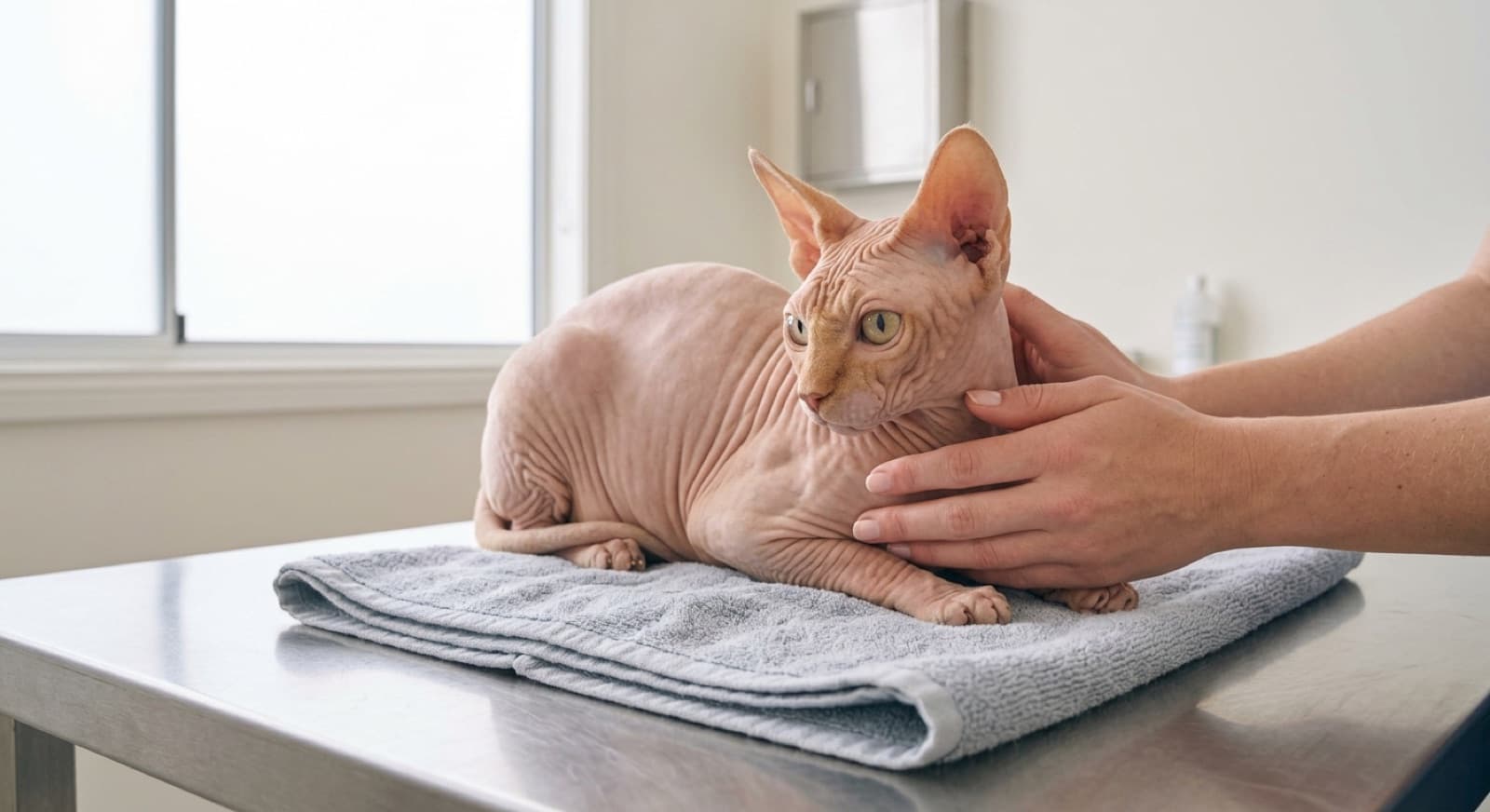
The short answer
The main Sphynx health concerns are hypertrophic cardiomyopathy (a heart-muscle disease the breed is predisposed to), skin conditions and sunburn, dental disease, and poor temperature control. A Sphynx is a rewarding but higher-input cat: it needs regular vet checks so heart disease is caught early, ongoing skin and dental care, sun protection in Sydney's summer, and warmth on cool nights. Budget for a bigger vet spend than an average cat and take out insurance while the cat is young. This is general information, not veterinary advice. Always speak to your own vet about an individual cat.
Before we start, one honest framing. A Sphynx is not a fragile cat, and plenty live long, happy lives. But the breed does carry a handful of recognised health considerations, and no coat adds day-to-day care that most cats never need. Knowing what to watch for, and building the vet budget in from the start, is what keeps a Sphynx well. For general veterinary guidance alongside this article, the RSPCA Australia Knowledgebase and the Australian Veterinary Association are reliable starting points, and your own vet is always the final word on an individual cat.
Hypertrophic cardiomyopathy: the heart concern to know
The most serious health consideration in the Sphynx is hypertrophic cardiomyopathy, usually shortened to HCM. It is the most common heart disease in cats generally, and the Sphynx is one of the breeds recognised as predisposed to it. In HCM the muscle wall of the heart thickens, which makes the heart pump less efficiently and can lead over time to heart failure or dangerous clots.
The difficult part of HCM is that it can develop quietly, with no obvious signs, until it is well advanced. That is precisely why regular veterinary checks matter so much for this breed. At a routine visit a vet listens to the heart and may pick up a murmur or an abnormal rhythm. If anything raises concern, the reliable next step is referral to a veterinary cardiologist for a heart ultrasound (an echocardiogram), which is the accepted way to assess the heart muscle. Cardiac screening databases such as the Orthopedic Foundation for Animals record breed screening for exactly these conditions.
There is no way to prevent HCM and no home test for it. What you can do is catch it early, so a vet can manage it and plan care. Ask your vet how often they want to check an individual Sphynx, and never ignore signs like laboured or open-mouthed breathing, sudden weakness or collapse, or a cat that hides and goes off food, which can point to a heart problem and warrant urgent veterinary attention. In Sydney, specialty and emergency services such as the Small Animal Specialist Hospital (SASH) include cardiology and 24/7 emergency care if your vet needs to refer.
Skin: oil, acne, infections and sunburn
The Sphynx's defining feature is also its main ongoing health job. A coated cat's fur absorbs the oils the skin naturally produces. A Sphynx has no coat to do that, so the oils build up on the bare skin and in the folds and ears. Left unmanaged, that leads to a greasy feel and odour, blocked pores and feline acne (blackheads, usually on the chin), and sometimes yeast or fungal overgrowth in the skin folds. Regular gentle bathing, ear cleaning and skin checks keep it under control, and the full routine is covered in our Sphynx skin and sun care guide.
The bigger Sydney-specific risk is sunburn. Bare skin burns in direct sun much like unprotected human skin, and repeated sun damage carries a longer-term skin cancer risk on exposed areas. Sydney summers are strong, so a Sphynx should not have access to a sunny windowsill or an unshaded patio in the middle of the day. Keep the cat indoors with shaded resting spots. Do not reach for human sunscreen, because some human sunscreen ingredients are toxic to cats. If you want sun protection, ask your vet for a cat-safe product. Any redness, scabs, sores, lumps or a persistent bad smell is a reason to see your vet rather than treat the skin yourself.
Dental disease
Dental disease is common in the Sphynx, so mouth care belongs on the checklist. Gum inflammation and periodontal disease can start young in some individuals, and because cats are experts at hiding pain, dental problems are easy to miss until they are serious. The signs to watch for are bad breath, drooling, pawing at the mouth, a change in how the cat eats, or a sudden preference for soft food.
Regular tooth brushing at home, introduced gently, helps slow the build-up of plaque, and your vet will check the teeth at the annual visit and advise when a professional dental clean under anaesthetic is needed. Do not leave mouth pain untreated in a Sphynx. A dental problem caught early is cheaper and kinder to fix than one left to advance, and it is one of the more predictable vet costs to plan for with the breed.
Temperature: a hairless cat in the Sydney climate
Without a coat, a Sphynx cannot insulate itself, so it feels both cold and heat far more than a furred cat. On cool Sydney nights and in air conditioning it chills quickly, which is why you will see a Sphynx burrow under blankets, curl up on warm spots, or happily wear a soft jumper in winter. Provide warm resting places and let the cat get to them.
In summer the job flips. Sydney heatwaves push well past 35 degrees on the hottest days, and a Sphynx can overheat and burn. Keep it cool and shaded, with fresh water always available, and never leave it in a hot car or a closed, hot room. As with every dog and cat, heat is the real Sydney safety risk, not cold. Managing temperature is simply part of daily life with a Sphynx. It is not hard, but it is constant, and it is one more reason the breed belongs indoors where you control the environment.
Diet, weight and digestion
Sphynx often have hearty appetites and a fast metabolism, partly because a body with no coat burns energy to stay warm. That is not a licence to overfeed. Keeping any cat lean is one of the best things you can do for its long-term health, and it matters for a breed already carrying a heart-disease risk, since excess weight adds strain. Feed a good-quality complete cat food in measured amounts, and ask your vet what a healthy weight looks like for your individual cat rather than guessing.
Some Sphynx have sensitive stomachs and do better on a consistent diet with careful transitions between foods. If your cat has ongoing loose stools, vomiting or poor appetite, that is a vet conversation, not something to manage with supermarket remedies. Never give a cat human medication, and never change a prescription diet without veterinary advice.
Parasites and the paralysis tick
Even an indoor Sphynx needs parasite prevention, and in Sydney that means taking the paralysis tick seriously. The paralysis tick is present year-round along the NSW coast and in bushland suburbs, and its toxin can be fatal to cats without prompt veterinary treatment. Ticks can be carried indoors on people, other pets or washing, so an indoor cat is not fully out of reach.
The right prevention is a vet-recommended, cat-safe product, and the choice of product matters because some tick and flea treatments made for dogs are dangerous to cats. Ask your vet for a cat-appropriate option and stay on it year-round. A bare-skinned Sphynx does make one thing easier: with no coat to hide them, ticks and skin changes are simpler to spot on a daily check.
Thinking of adopting a Sphynx in Sydney?
A rescue Sphynx arrives desexed, vaccinated, microchipped and vet-checked, and a foster carer can tell you what they have seen of the cat's health. Check the hairless cats available now across Sydney and NSW rescues.
See Available Sphynx →The vet budget and the case for insurance
Add all of this up and the honest conclusion is that a Sphynx costs more to keep well than an average cat. A cardiac ultrasound with a specialist, a dental procedure under anaesthetic, or ongoing management of a skin or heart condition can each run from several hundred to over a thousand dollars. That is not a reason to avoid the breed, but it is a reason to plan.
Pet insurance makes more sense for a Sphynx than for many cats, and the single most important rule is to start it while the cat is young and healthy, before any condition is diagnosed, because pre-existing conditions are generally excluded from cover. Australian insurers including Bow Wow Meow, Petplan Australia and RSPCA Pet Insurance offer cat cover. Compare the exclusions, the annual limit and the excess, not just the monthly premium, and read what each policy says about the conditions this breed is prone to.
When to see a vet
Alongside the routine annual check, some signs should prompt a same-day or emergency visit. Treat laboured, fast or open-mouthed breathing, sudden weakness, collapse or fainting as an emergency, because these can signal a heart problem. Book a prompt vet visit for skin changes such as sores, lumps, spreading redness or a bad smell, for any sign of mouth pain, for a cat that stops eating or hides for more than a day, and for suspected tick contact or sudden wobbliness in the back legs, which can be an early tick sign.
The reassuring part is that the bare skin makes a Sphynx easy to monitor. A quick daily once-over while you handle the cat, which it will love, lets you spot changes early. Pair that with regular vet visits and the breed's health needs become a manageable routine rather than a worry. For the day-to-day care that keeps skin and ears healthy, see the Sphynx skin and sun care guide, and if you are still deciding, the Sphynx adoption guide covers where to find one and what it costs.
Frequently Asked Questions
What health problems are Sphynx cats prone to?
The concerns to plan for are heart disease, skin conditions, dental disease and temperature sensitivity. Hypertrophic cardiomyopathy, a thickening of the heart muscle, is the most serious and the Sphynx is one of the breeds recognised as predisposed to it. On the skin, the lack of a coat means oil buildup, a higher risk of skin infections and feline acne, and real sunburn risk on bare skin in the Sydney sun. Dental disease is common in the breed, and no coat means poor temperature control. None of this makes a Sphynx a sickly cat, but it is a higher-care, higher-vet-cost breed than an average moggy, so budget and insure accordingly and keep up regular vet checks.
Do Sphynx cats commonly get heart disease?
The Sphynx is recognised as one of the breeds predisposed to hypertrophic cardiomyopathy (HCM), the most common heart disease in cats, in which the heart muscle thickens and works less efficiently. HCM can develop with no obvious signs until it is advanced, which is exactly why regular veterinary checks matter for this breed. If your vet hears a heart murmur or has any concern, the next step is usually referral to a veterinary cardiologist for a heart ultrasound, which is the reliable way to assess the heart muscle. There is no way to prevent HCM, but early detection lets a vet manage it and plan care, so ask your vet how often they want to monitor an individual cat.
Why does a Sphynx need so much skin care?
A furred cat's coat quietly absorbs the natural oils its skin produces. A Sphynx has no coat to do that, so those oils sit on the bare skin and collect in the folds and the ears. Left alone they lead to a greasy feel, skin odour, blocked pores and feline acne, and sometimes yeast or fungal overgrowth. Regular gentle bathing, ear cleaning and skin checks keep it under control. The bare skin also sunburns easily, which matters a lot in Sydney, so a Sphynx must stay out of direct summer sun. The full routine is in our Sphynx skin and sun care guide. If you notice redness, scabs, sores or a bad smell, see your vet rather than treating the skin yourself.
Can Sphynx cats get sunburnt in Sydney?
Yes, and it is a genuine risk, not a rare one. A Sphynx has no coat to shield its skin, so direct sun burns it much like unprotected human skin, and repeated sun damage carries a longer-term skin cancer risk on the exposed areas. Sydney's summer sun is strong, so a Sphynx should not have access to a sunny windowsill or a hot patio in the middle of the day. Keep the cat indoors with shaded resting spots, and if you use a catio make sure it has full shade. Do not put human sunscreen on a cat without veterinary advice, because some human sunscreen ingredients are toxic to cats. If you want a sun-safe product, ask your vet.
Do Sphynx cats have dental problems?
Dental disease is common in the Sphynx, so mouth care is part of owning one. Gum inflammation and periodontal disease can start young in some individuals, and dental problems are painful and easy to miss because cats hide discomfort. Signs to watch for are bad breath, drooling, pawing at the mouth, or a cat that suddenly prefers soft food. Regular tooth brushing at home helps, and your vet will check the teeth at the annual visit and advise when a professional dental clean under anaesthetic is needed. Do not ignore mouth pain in a Sphynx. Book a vet check if you see any of the warning signs.
How long do Sphynx cats live?
With good care many Sphynx live well into their teens, similar to other indoor pedigree cats. Lifespan depends heavily on the things this guide covers: regular vet checks to catch heart disease early, good skin and dental care, keeping the cat lean and indoors, and staying on top of parasite prevention. A Sphynx kept indoors, well fed, insured and seen regularly by a vet has every chance of a long life. The breed's care needs are higher than average, but they are manageable, and most of what shortens a cat's life is preventable with the routine an engaged owner already provides.
Is pet insurance worth it for a Sphynx?
For a Sphynx the case for pet insurance is stronger than for an average cat, because the breed can carry higher vet needs, from heart monitoring to skin and dental care. A single specialist workup, such as a cardiac ultrasound, or a dental procedure under anaesthetic, can cost several hundred to over a thousand dollars, and heart disease in particular can mean ongoing management. Taking out cover while the cat is young, before any condition is diagnosed, is the cheapest time to start, because pre-existing conditions are generally excluded. Australian insurers such as Bow Wow Meow, Petplan Australia and RSPCA Pet Insurance offer cat cover. Compare the exclusions and the annual limit, not just the monthly price.
Do Sphynx cats feel the cold and the heat more than other cats?
Yes. Without a coat a Sphynx cannot insulate itself, so it gets cold quickly on cool Sydney nights and in air conditioning, and it overheats and burns in direct summer sun. You will often see a Sphynx seek out warm spots, burrow under blankets, or wear a soft jumper in winter. In summer the job flips to keeping it cool and out of the sun, with shade, fresh water and never being left in a hot car or a hot room. Managing temperature is simply part of daily life with the breed. It is not difficult, but it is constant, and it is one more reason a Sphynx belongs indoors.
Does adopting a Sphynx from rescue mean fewer health problems?
Adopting from rescue is a good choice for many reasons, but it does not remove the breed's underlying health needs. A rescue Sphynx still needs the same heart monitoring, skin and dental care, and temperature management as any Sphynx. What adoption does give you is a cat that already arrives desexed, vaccinated, microchipped and vet-checked, and a rescue or foster carer who can tell you what they have observed about the individual cat's health and temperament. Whatever the source, budget for good preventive care, keep up regular vet visits, and consider insurance while the cat is young.
Keep reading
Adoptable Sphynx in Sydney
The Sphynx breed profile and any Sphynx or hairless crosses currently listed across Sydney and NSW rescues.
Sphynx Skin & Sun Care in Sydney
Bathing, ear cleaning, warmth and sun protection: the daily routine that keeps a hairless cat healthy.
Sphynx Adoption in Sydney
Where to adopt a Sphynx or hairless cross, why they are rare in rescue, and adopt versus breeder cost.
Senior Cat Care in Sydney
Keeping an older cat comfortable and healthy, including the extra vet monitoring later years need.