The short answer
Senior cats are one of the best and most overlooked adoptions in Sydney. An older cat is calm, already litter trained and fully formed in personality, so the rescue can tell you exactly what it is like, and senior fees are often waived or discounted. Caring for one is straightforward: keep it indoors, give it warm beds and easy-access litter and food, and watch for the ordinary signs of ageing like drinking more, losing weight or stiffness. Those are signals to see your vet, not causes for panic. Senior cats should see a vet twice a year, and pet insurance is worth starting early.
Why a senior cat is a great adoption
Senior cats are the cats everyone walks past in a Sydney shelter, and that is a shame, because they are usually the easiest cats to live with. An older cat has done its growing up. It is calm, it sleeps a lot, and it wants company rather than constant play. If you work, live in an apartment, or simply want a gentle companion instead of a whirlwind, a senior fits your life far better than a kitten.
The biggest practical advantage is that there are no surprises. A kitten's personality is still forming, so you are guessing. A senior cat is already itself. The rescue or foster carer can tell you whether it is a lap cat, whether it is confident or shy, whether it settles with children, dogs or other cats, and how much attention it wants. You are choosing a known quantity, which is exactly what you want for a first cat or a busy household.
There is an emotional case too. Many senior cats end up in rescue through no fault of their own. Their owner dies, moves into aged care, or can no longer manage, and a cat that has been loved for a decade suddenly finds itself in a shelter cage, confused and grieving. These cats have so much to give and wait the longest for a second chance. Adopting one is deeply rewarding, and because seniors are the least likely to be chosen, your decision genuinely opens a space for the next cat too. You can see the older cats currently looking for homes on the Sydney senior cats page.
When is a cat “senior”?
There is no single birthday that makes a cat old, but vets group feline life stages roughly like this:
- Mature: about 7 to 10 years. Middle age. Often still active, but a good time to start watching weight and teeth.
- Senior: about 11 to 14 years. Slowing down a little, more sleep, and the age when regular screening pays off.
- Geriatric: about 15 years and up. Many cats reach this happily, especially indoor cats.
Treat these as a guide rather than a rule. Plenty of cats are bright and playful well past 11, and an indoor cat in Sydney routinely lives into its late teens. What matters is not the number on the chart but noticing changes and adjusting care as your cat ages. The RSPCA Knowledgebase and the Australian Veterinary Association both recommend stepping up vet checks once a cat enters its senior years.
Health signs to watch as a cat ages
This part sounds daunting but it should be reassuring. The common conditions of older cats are well understood, and most are very manageable when caught early. Cats are experts at hiding illness, so your job is simply to notice change and get it checked. You do not need to diagnose anything yourself. You need to know what the warning signs look like, and then let your vet do the rest.
Here are the conditions vets see most in ageing cats, and the signs that should prompt a visit:
- Chronic kidney disease. One of the most common problems in older cats. The classic signs are drinking a lot more water and urinating more than usual, often with gradual weight loss. Your vet can test kidney function with a simple blood and urine test and manage it.
- Hyperthyroidism. An overactive thyroid. The tell-tale sign is weight loss despite a big appetite, sometimes with restlessness, a fast heartbeat or a scruffy coat. Your vet can test for it and treat it.
- Arthritis. Very common and easy to miss, because cats do not limp obviously. Look for reluctance to jump up or down, stiffness after rest, sleeping more, or trouble getting into the litter tray. Your vet can confirm it and help with comfort and pain relief.
- Dental disease. Painful and often silent. Signs include bad breath, drooling, dropping food, pawing at the mouth or eating on one side. Your vet can examine and treat the teeth.
- Diabetes. Signs overlap with kidney disease: increased thirst and urination, and appetite or weight changes. A vet can diagnose it and set up a management plan.
- Vision and hearing decline. An older cat may bump into things, become startled more easily, or call out more loudly. Mention it to your vet, since sudden vision loss can point to high blood pressure, which is treatable.
The pattern is the same for all of them: watch for change, then see your vet. Do not attempt to treat any of these at home or guess at causes. Two of the most useful things you can do are weigh your cat at home each month and keep a mental note of how much it drinks, because weight loss and increased thirst are early flags for several of these conditions. If something worsens fast, or your cat stops eating, seek help promptly. A specialty and 24/7 emergency hospital like SASH has locations across Sydney for after-hours care.
Vet care for a senior cat
The single most valuable habit for a senior cat is a check-up twice a year instead of once. Six months is a long time in an older cat's life, and problems that are cheap and simple to manage early can become serious if left. Both the AVA and RSPCA advise more frequent checks as cats age for exactly this reason.
A senior check is more than a quick look over. Depending on your cat's age and history, your vet may suggest a weight comparison against the last visit, blood and urine tests to screen kidney and thyroid function, a blood pressure reading, and a proper look at the teeth. These are screening tools, not something to be alarmed by. They exist to catch the common conditions above while they are easy to treat. Keep your cat's history from the rescue, since knowing its background helps your vet spot what to watch for.
Parasite prevention still matters for an indoor senior. In Sydney the paralysis tick is a year-round risk and is dangerous to cats, so ask your vet for a suitable cat-safe product and follow their advice on it. Never use a dog parasite product on a cat, as some are toxic to cats. Your vet is the right person to choose the product, the frequency and the right approach for your individual cat.
Comfort and quality of life at home
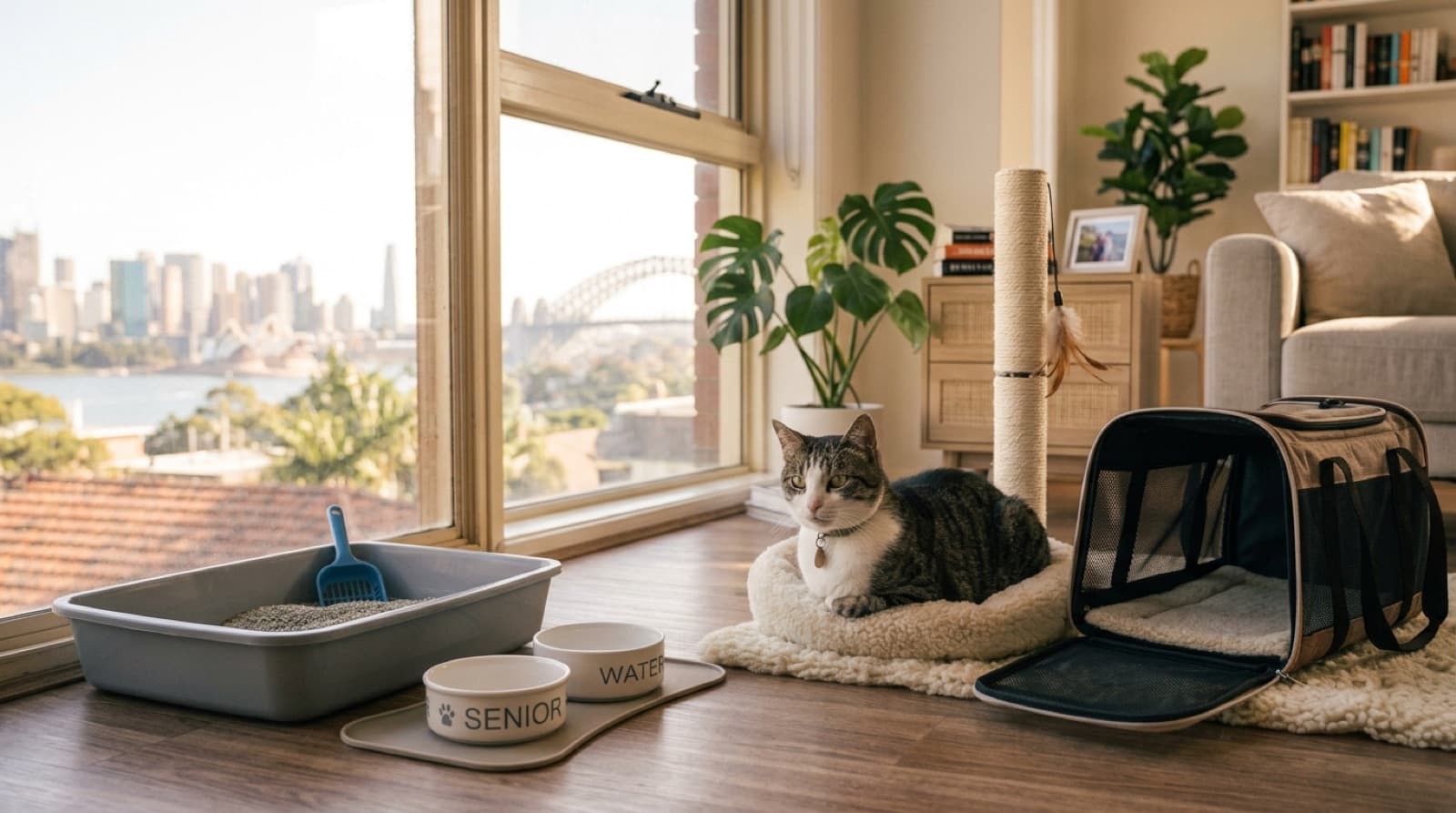
Small changes to your home make a big difference to an ageing cat. The goal is to remove the little daily struggles, the cold floor, the high jump, the deep litter tray, so your cat can be comfortable and dignified. None of this is expensive. Most of it is just thoughtful placement.
- Low-sided litter trays. A stiff or arthritic cat struggles to climb into a deep tray. Use one with a low entry, and add a second tray so there is always one close by.
- Warm, soft beds. Older cats feel the cold. Give soft bedding in quiet, draught-free spots, ideally raised off cold floors and out of the way of noise and foot traffic.
- Ramps and steps. Add a step, stool or pet ramp up to a favourite window perch, couch or bed so your cat does not have to jump, which can hurt sore joints.
- Resources on one level. Keep food, water, litter and a bed on the floor your cat uses most, so it never has to manage stairs to eat or toilet.
- Easy grooming help. Older cats groom themselves less. A gentle daily brush keeps the coat clean and comfortable and gives you a chance to feel for lumps or sore spots.
- Routine and calm. Seniors value predictability. Keep feeding times steady, give a nervous cat a quiet retreat, and avoid big sudden changes where you can.
Water is worth a special mention. Because kidney health matters so much in older cats, make water easy and appealing, with a few bowls around the home or a pet water fountain, so your cat stays well hydrated. If you notice it drinking far more or far less than usual, that is a change to mention to your vet.
Sydney specifics for older cats
Keeping a senior cat indoors, or contained with a catio or secure yard, is the norm in Sydney and it protects a frail older cat especially well. An indoor senior is safe from traffic, from cat fights that spread disease, and from the paralysis tick that lurks in Sydney bushland year-round and is dangerous to cats. Older cats are slower and less able to get themselves out of trouble outdoors, so a warm, quiet indoor home is genuinely the kinder option. Most Sydney rescues adopt cats out to live indoors anyway, and our indoor versus outdoor cats guide covers how to transition an outdoor cat indoors gently.
Sydney heat is the other thing to plan for. Older cats cope less well with hot summer days, so on a 35°C afternoon make sure your senior has a cool, shaded spot, plenty of fresh water, and never gets shut in a hot car or a stuffy room. A tiled bathroom floor or a spot near a fan is often where an older cat will choose to lie out a heatwave. Cats do not pant well, so if a senior seems distressed in the heat, treat it seriously and call your vet.
Browse adoptable senior cats in Sydney
Calm, affectionate older cats from rescues across Sydney and NSW, many with fees waived or discounted. Their foster notes tell you exactly what each one is like.
See Senior Cats →The cost of a senior cat, honestly
Adopting a senior cat usually costs less than adopting a younger one. Sydney rescues frequently waive or discount fees for older cats to help them find homes, where an adult cat is otherwise commonly around $100 to $250. That fee still covers desexing, vaccination, microchipping, a FIV check and a vet check, so even a discounted senior arrives fully vetted.
The honest part is the ongoing care. A senior cat means more frequent vet checks and, over time, a reasonable chance of managing an age-related condition, so the running cost can be higher than for a young cat. This is precisely why pet insurance is worth taking out, and why timing matters: an insurer will not cover a pre-existing condition, so the value is in starting cover before a problem appears. If you adopt a senior that already has a known condition, ask the rescue for the full veterinary history so you can budget realistically and talk to your vet about what it involves.
Do not let the numbers scare you off. Many senior cats are perfectly healthy and cost no more day to day than any adult cat. Under NSW law your cat must be microchipped and lifetime-registered, and a rescue cat is already microchipped, so remember to transfer the microchip into your name through the NSW Pet Registry after adoption. If you want the full breakdown of what adoption includes and the current NSW registration rules, see our complete cat adoption guide.
Thinking about quality of life
Adopting an older cat means you may share fewer years than with a kitten, and it is worth being honest with yourself about that up front. But those years are often the most peaceful and loving a cat and owner can have. A senior cat repays a calm home with quiet, steady affection, and giving one a soft place to land for its later years is a genuinely good thing to do.
When the time comes to think about the end, quality of life is the thing to focus on, and your vet is the right person to guide you through it. They can help you weigh comfort, appetite, mobility and whether your cat still enjoys the things it always loved. That conversation is hard, but you do not have to have it alone, and having it with a vet who knows your cat means the decision is made with care rather than in a crisis. For now, if you are considering a senior, focus on the good years ahead, not the last one.
Frequently Asked Questions
Why adopt a senior cat?
Because a senior cat is one of the easiest, most rewarding adoptions you can make. Older cats are calm, they are already litter trained, and their personality is fully formed, so the rescue can tell you exactly what you are getting: a lap cat, a quiet companion, a cat that is fine with children or dogs. They also wait far longer for homes than kittens and are the most overlooked cats in every Sydney shelter, so adopting one genuinely saves a life. Many are surrendered through no fault of their own, often when an owner dies or moves into aged care. If you want an affectionate cat without the chaos of a kitten, a senior is the smart choice.
At what age is a cat considered senior?
Cats are generally considered mature from about 7 to 10 years, senior from around 11 to 14, and geriatric from about 15. These bands are a guide, not a hard rule, and many cats are healthy and active well past 11. What matters more than the number is watching for changes as your cat ages and adjusting care to suit. Indoor cats in Sydney routinely live into their late teens and sometimes past 20. The AVA and RSPCA both recommend more frequent vet checks once a cat enters its senior years, because catching problems early makes them far easier to manage.
What health problems do older cats get?
The common ones in ageing cats are chronic kidney disease, hyperthyroidism (an overactive thyroid), arthritis, dental disease and diabetes, along with a gradual decline in vision and hearing. The signs to watch are drinking and urinating more than usual, losing weight even with a good appetite, stiffness or reluctance to jump, bad breath or dropping food, and any change in eating, grooming or behaviour. None of these mean the end. Most are very manageable when caught early, but they need a vet to diagnose and treat, so do not try to guess or self-treat at home. Book a check if anything changes.
How often should a senior cat see the vet?
Twice a year is the standard recommendation for a senior cat, compared with once a year for a healthy adult. The AVA and RSPCA both advise more frequent checks as cats age, because cats hide illness well and six months is a long time in an older cat's life. A senior check often includes a weight comparison, a blood and urine test to screen kidney and thyroid function, a blood pressure reading and a dental look. Your vet may suggest these based on your cat's age and history. Between visits, a monthly weigh-in at home and a note of any change in drinking, appetite or toileting gives your vet a head start.
Do senior cats cost more to keep?
The adoption itself usually costs less, because Sydney rescues often waive or discount fees for senior cats to help them find homes. The ongoing cost can be higher, mainly through more frequent vet checks and the chance of managing an age-related condition. This is exactly why pet insurance matters, and why the time to take it out is before a problem appears, since insurers will not cover a pre-existing condition. If you adopt a senior with a known condition, ask the rescue for the full history and budget realistically. For a healthy older cat, day-to-day costs are similar to any adult cat.
How do I make my home comfortable for an old cat?
Make everything easy to reach and warm. Use a litter tray with low sides so a stiff cat can step in without pain, and add a second tray so there is always one nearby. Give soft, warm beds in quiet spots, ideally raised off cold floors and away from noise. Add steps or a ramp to a favourite window perch or the couch so your cat does not have to jump. Keep food, water and litter on the level your cat spends most time on, so it never has to climb stairs. Older cats value routine and calm, so keep feeding times steady and give a nervous senior a quiet retreat.
Are senior cats already litter trained?
Yes, almost always. A senior cat has used a litter tray its whole life, so unlike a kitten there is usually nothing to teach. If an older cat starts missing the tray, treat it as a health signal rather than bad behaviour, because it often points to arthritis making the tray hard to enter, or to a medical issue like kidney disease or a urinary problem. Switch to a low-sided tray, add more trays around the home, and book a vet check. Sudden toileting changes in a senior cat are one of the clearest signs that something needs looking at.
Should a senior cat be kept indoors in Sydney?
Yes. Indoor or contained living is the norm for Sydney cats and it matters even more for a frail older cat. An indoor senior is protected from traffic, from cat fights that spread disease, and from paralysis ticks, which are a year-round risk in Sydney bushland and are dangerous to cats. Older cats are also slower and less able to escape trouble outside. A warm, quiet indoor home with easy-access resources suits a senior perfectly. If you are adopting a cat that has lived outdoors, our indoor versus outdoor guide covers how to make the change gently.
Keep reading
Senior Cats in Sydney
Live listings of older cats looking for calm homes across Sydney and NSW rescues.
Complete Cat Adoption Guide
Where to adopt in Sydney, what it costs, what is included, and the NSW law you need to know.
Indoor vs Outdoor Cats in Sydney
Why Sydney cats are kept indoors or contained, and how to transition an outdoor cat humanely.
All Cat Adoption Resources
Guides on adopting, settling in and caring for a rescue cat in Sydney and NSW.