The short answer
You can adopt a British Shorthair on the Gold Coast, but be patient: purebreds are rare in rescue because nearly all are bought from breeders, and plush-coated crosses come up more often. Watch the main South East Queensland cat rescues and set alerts. When a British Shorthair or cross appears, adoption costs about $100 to $300 all inclusive of desexing, vaccination, microchipping and a FIV check, a fraction of the breeder price. The breed is calm, easygoing and independent, which makes it a good fit for many households, including busier ones, so long as you manage two things: its tendency to gain weight, and its dense coat, which needs weekly brushing. Keep any British Shorthair indoors or contained, given the Gold Coast's ticks, cane toads and traffic.
What a British Shorthair actually is
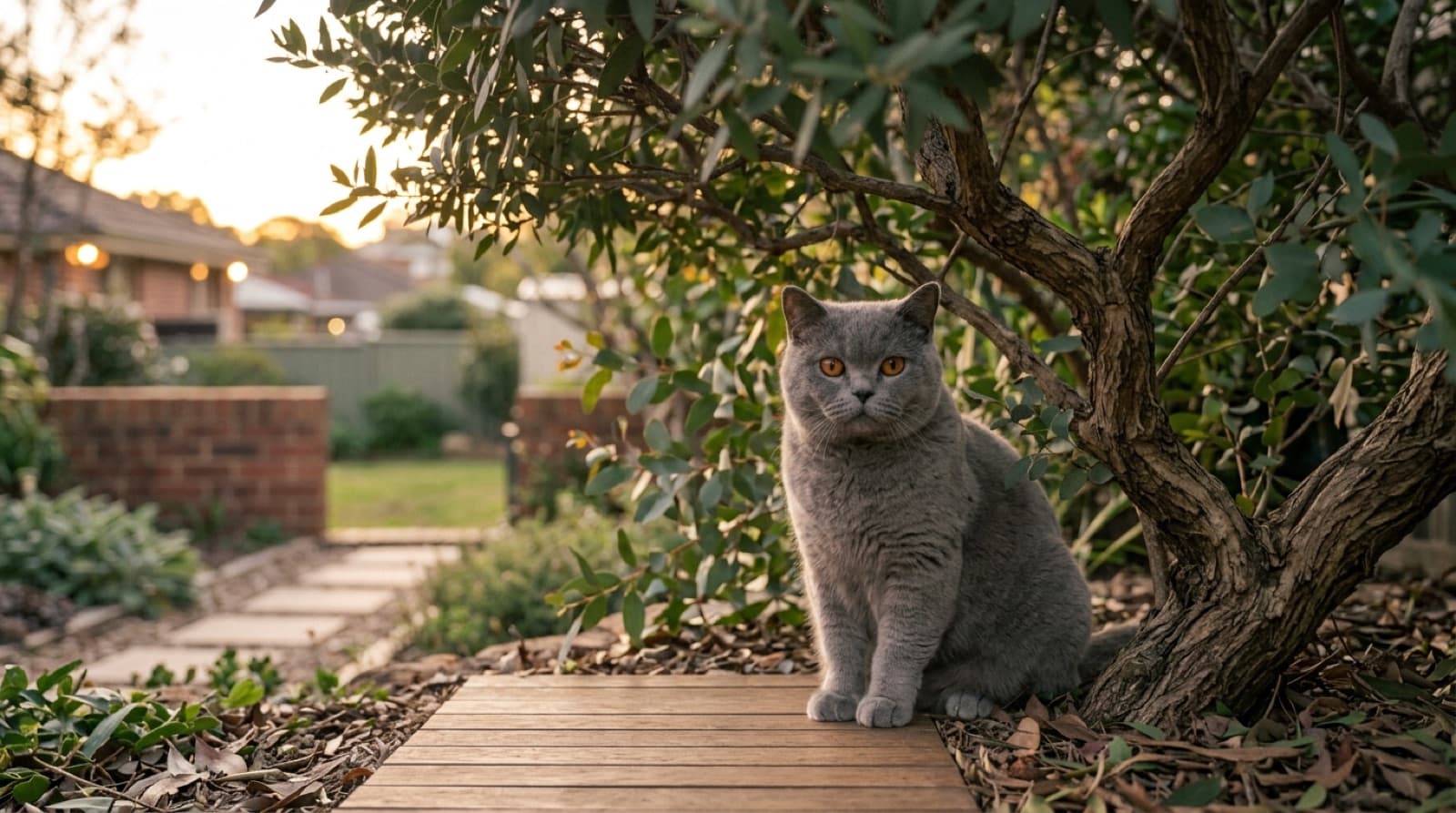
The British Shorthair is a sturdy, muscular, medium-to-large cat with a broad round face, big round eyes, and a dense, plush, crisp coat that stands slightly away from the body. It comes in many colours, but the best known is the blue-grey British Blue with copper eyes. It is a slow-maturing breed, reaching full size at around three years, and males are notably larger than females.
Temperament is the breed's calling card: calm, easygoing, dignified and undemanding. The British Shorthair is affectionate but usually on its own terms, tending to sit companionably beside you rather than demand a lap, and it is famously tolerant and good-natured, which makes it a relaxed family cat. It is not a high-energy or clingy breed. That laid-back nature is lovely, and it comes with two things to manage, weight and coat, covered in the temperament and care guide. For the breed profile and any British Shorthairs currently listed, see the British Shorthair breed page.
Why British Shorthairs are rare in rescue, and why they do turn up
Purebred British Shorthairs are scarce in Gold Coast rescue for the same reason as other pedigree cats: almost everyone who owns one bought it from a breeder, so very few enter the rescue system. Compared with the steady stream of domestic cats and kittens Queensland rescues take in, British Shorthair numbers are tiny.
They do end up in rescue, though, and rarely because of the cat, since the breed is so easygoing. The common thread is a life change: a move to a rental that will not allow pets, a new baby, a relationship breaking down or illness. Far more common than a purebred is a British Shorthair cross or a stocky, plush-coated domestic, often a British Blue type, carrying much of the look and the calm temperament without the paperwork, and these make wonderful pets.
Where to adopt a British Shorthair or cross on the Gold Coast
Because British Shorthairs are scarce, watch several established South East Queensland rescues at once, set alerts, and be ready to apply the moment a suitable cat appears. These are the main rescues rehoming cats across the Gold Coast:
Animal Welfare League Queensland (AWLQ)
A long-running no-kill charity whose flagship Gold Coast Rehoming and Education Centre at Coombabah is the main shelter on the Gold Coast, backed by a foster network that means honest temperament notes. Adoption includes desexing, vaccination, microchipping and a vet check, and a surrendered British Shorthair or cross can surface here. Listings at awlq.org.au.
RSPCA Queensland
The state body rehomes cats across Queensland through its statewide network, with its main Animal Care Campus at Wacol in Brisbane. Gold Coast adoptions are handled through that statewide RSPCA Queensland network, and every adoption covers desexing, vaccination, microchipping and a vet check, so a surrendered British Shorthair or cross can appear. Listings at rspcaqld.org.au.
PetRescue
A national aggregator that lists cats from many smaller Queensland rescues in one searchable place, which is the easiest way to cast a wide net for a rare breed. Browse at petrescue.com.au.
People search for a dedicated “British Shorthair Rescue Queensland,” but we cannot verify a currently active QLD British-Shorthair-specific rescue by that name. Keep your search on the general rescues above and lean on alerts. For the full set of cat adoption guides, browse all our Gold Coast cat adoption resources.
What it costs: adopt versus buy
- Adult cat: about $100 to $250, all inclusive of desexing, vaccination, microchipping and a FIV check.
- Kitten: about $150 to $300, covering the same vet work plus the early vaccination course.
A purebred British Shorthair from a breeder is a different order of cost, commonly a couple of thousand dollars, and that price buys a cat with none of the vet work done. Adoption is not just cheaper on the sticker price, it saves you hundreds more in vet bills a rescue has already covered. Plan for the ongoing costs too: quality food and careful portions for a breed prone to weight gain, litter, weekly brushing for the dense coat, annual vet checks, and a vet-recommended cat-safe parasite product, which matters on the Gold Coast because the paralysis tick is present year-round. Taking out pet insurance while the cat is young is the cheapest time to start.
If you have been searching “British Shorthair for sale Gold Coast”
Plenty of people land here after searching for a British Shorthair to buy. Purebred kittens are the most scam-prone corner of the online pet market, precisely because buyers will pay a couple of thousand dollars sight unseen, and popular breeds like the British Blue are common targets. The ACCC Scamwatch has recorded pet scams where a seller takes a deposit for a kitten that does not exist, then vanishes once the money clears. Adoption removes that risk: you deal with an established, registered rescue, you meet the cat, and you pay a modest fee for an animal already desexed, vaccinated, microchipped and FIV tested. When a British Shorthair cross with the same calm character may be sitting in a Gold Coast rescue for a fraction of the price, the safer and cheaper choice is usually the obvious one.
Why a British Shorthair should live indoors on the Gold Coast
A British Shorthair should live indoors, or with contained outdoor access like a catio, secure yard or harness walks. The breed is valuable and not street-smart, so it is a theft target and is poorly equipped for traffic, dogs or a cat fight. Gold Coast conditions add year-round paralysis ticks, cane toads that are toxic if a cat mouths them, snakes, and native wildlife that free-roaming cats harm. The good news is that a calm, home-loving breed like the British Shorthair adapts beautifully to indoor life: provide climbing, scratching, daily play and a window perch, and consider a catio for safe outdoor time. If you would rather focus your search on cats suited to indoor life, browse the indoor-appropriate cats currently available across Gold Coast rescues.
The Queensland basics before you bring one home
Queensland has clear rules for cat ownership under the Animal Management (Cats and Dogs) Act 2008, and a rescue handles most of them for you. Every cat must be microchipped by 12 weeks of age or before it is sold or given away, whichever comes first. Unlike New South Wales, the City of Gold Coast does not require cats to be registered under its Local Law No. 12 (Animal Management) 2013, so there is no annual cat registration here, though confirm the current rules with your own council. A rescue cat is already desexed and microchipped, so your job is mainly to update the microchip ownership details to you. For general veterinary guidance the RSPCA Australia Knowledgebase and the Australian Veterinary Association are reliable, and always speak to your own vet about an individual cat.
Browse adoptable British Shorthairs on the Gold Coast
British Shorthairs and plush-coated crosses are rare in rescue, so the best move is to check the live listings and set an alert. See the British Shorthairs and stocky short-haired cats available right now across Gold Coast and Queensland rescues.
See Available British Shorthairs →Choosing your British Shorthair
When a British Shorthair or cross does come up, an adult with a known temperament is usually the safer bet, especially for a first cat, because the rescue or foster carer can tell you exactly what the cat is like. The breed's easygoing nature makes it a forgiving choice, but read the foster notes over the photo, and stay open to a cross, because if your priority is a calm, sturdy, good-natured cat, a British Shorthair cross gives you the temperament that matters and is what you are most likely to find in Gold Coast rescue.
Frequently Asked Questions
Where can I adopt a British Shorthair near me on the Gold Coast?
Start with the main South East Queensland cat rescues and set alerts, because British Shorthairs appear rarely and go fast. Animal Welfare League Queensland runs its flagship Gold Coast Rehoming and Education Centre at Coombabah, which is the main shelter on the Gold Coast, and RSPCA Queensland rehomes cats across the state through its network, and a British Shorthair or cross turns up from time to time. You are far more likely to find a British Shorthair cross or a plush grey domestic shorthair than a purebred. Browse current listings, ask each rescue to flag you if a British Shorthair type comes in, and be application-ready. PetRescue aggregates listings from many smaller Queensland rescues in one place.
Are British Shorthairs rare in Australian rescue?
Yes. Purebred British Shorthairs are uncommon in Queensland rescue because almost every one is bought from a breeder, so few enter the rescue system. The ones surrendered usually come in on a life change like a move, a new baby, illness or relationship breakdown, not a behaviour problem, because the breed is easygoing. What you will see more often is a British Shorthair cross or a stocky, plush-coated domestic, sometimes the grey British Blue type, with much of the look and the calm temperament. If you love the British Shorthair character rather than the papers, a cross is well worth considering and much easier to find.
How much does it cost to adopt a British Shorthair versus buy one?
Adopting a British Shorthair or cross through a Gold Coast rescue costs about $100 to $250 for an adult or $150 to $300 for a kitten, and that fee already covers desexing, vaccination, microchipping, a FIV check, worming and flea treatment and a vet check. A purebred British Shorthair from a breeder costs far more, commonly a couple of thousand dollars, with none of that vet work done, so you pay those bills separately on top. Adoption is a fraction of the breeder price and the cat arrives already vetted and ready to settle in.
Are British Shorthairs good for first-time or busy owners?
Often yes, and it is one of the breed's strengths. The British Shorthair is calm, easygoing, undemanding and independent, happy to potter around the house and settle near you without needing constant attention, which makes it more tolerant of an owner who works than a demanding breed like the Siamese. That said, no cat should be neglected: it still needs daily play, enrichment and company, and a second cat can be good. The main things to manage are weight, because the breed is placid and prone to obesity, and the dense coat, which needs weekly brushing, both covered in the temperament and care guide.
Should a British Shorthair live indoors on the Gold Coast?
Yes. A British Shorthair should live indoors or with contained access like a catio, secure yard or harness walks. The breed is valuable and not street-smart, so it is a theft target and is poorly equipped for traffic, dogs or a cat fight, and the Gold Coast has year-round paralysis ticks, cane toads that are toxic if mouthed, snakes, and native wildlife that free-roaming cats harm. A calm, home-loving breed like the British Shorthair adapts very well to indoor life with climbing, scratching, play and a window perch, and most Queensland rescues now adopt cats out on an indoor or contained basis.
Do I need to microchip and register a British Shorthair on the Gold Coast?
Under the Queensland Animal Management (Cats and Dogs) Act 2008, a cat must be microchipped by 12 weeks of age or before it is sold or given away, whichever comes first. Unlike New South Wales, the City of Gold Coast does not require cats to be registered under its Local Law No. 12 (Animal Management) 2013, so there is no annual cat registration to pay on the Gold Coast, though you should confirm the current rules with your own council. A rescue cat is already desexed and microchipped when you adopt, so your main job is to update the microchip ownership details so the cat is registered to you.
Keep reading
Adoptable British Shorthairs on the Gold Coast
The British Shorthair breed profile and any British Shorthairs or crosses currently listed across Gold Coast and Queensland rescues.
British Shorthair Temperament & Care
The calm, independent nature, managing weight in a placid breed, and grooming the dense plush coat.
British Shorthair Health Issues
HCM with its breed DNA test, PKD, a bleeding disorder, obesity, and the signs to watch for.
All Cat Adoption Resources
Guides on adopting, kitten care, indoor living and costs for cats on the Gold Coast and in Queensland.