The short answer
A purebred British Shorthair is uncommon in Melbourne rescue, but plush grey and chunky domestic cats with the same calm nature turn up often, so set an alert and apply fast when one appears. Adoption runs about $145 to $400 for an adult, already desexed, vaccinated and microchipped, far below a breeder price. If you buy instead, check the seller's Pet Exchange Register source number and ask about HCM and PKD testing, and know that many cats sold as British Blue are grey domestics. The honest part is the care: the breed is easygoing and food-loving, so it needs its weight watched, it has some heart screening worth knowing about, and the dense coat needs a weekly brush. Get that right and you have one of the most low-drama, companionable cats there is.
What a British Shorthair is
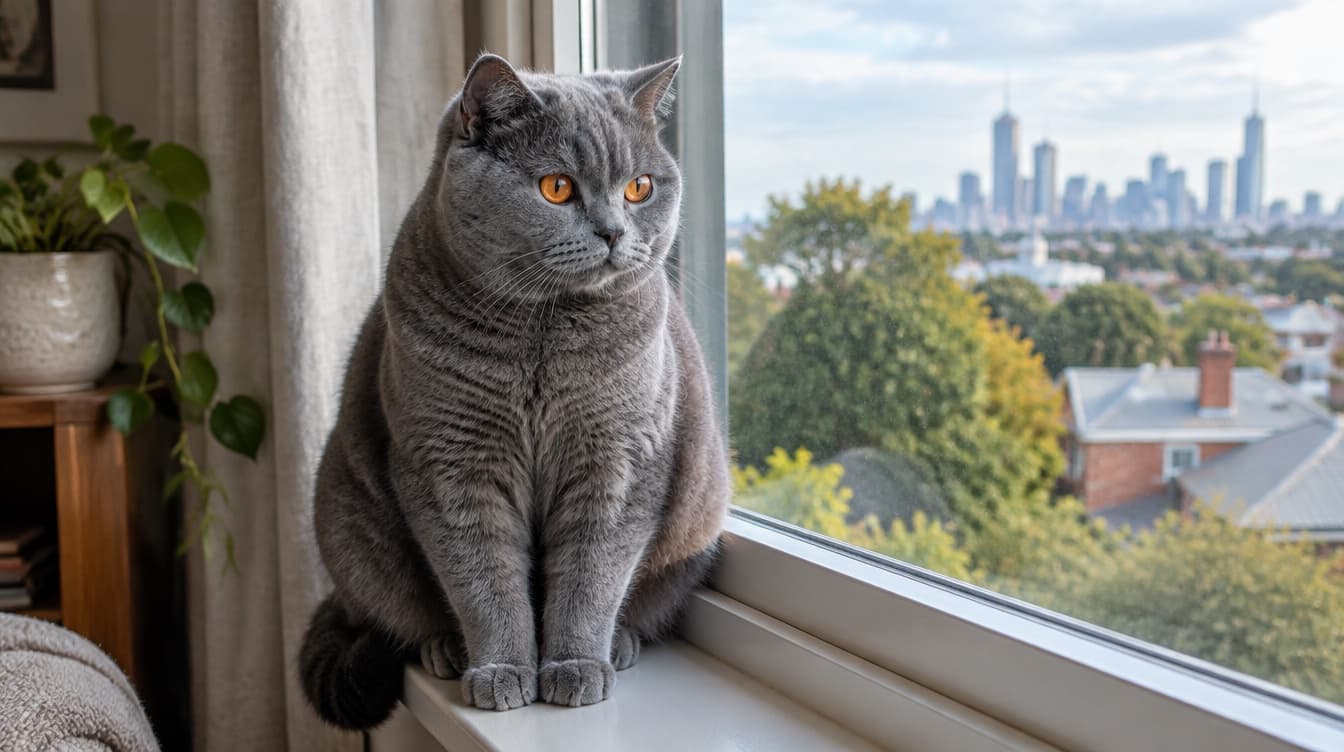
The British Shorthair is a medium to large, sturdy, chunky cat with a round head, full cheeks, big round copper or orange eyes, and a short, dense, plush coat that stands away from the body and feels like a soft pile carpet. The classic and most sought-after colour is the solid blue-grey British Blue, though the breed comes in many colours and patterns. It grows slowly, reaching its full, substantial size at around three years old.
Temperament is the draw. British Shorthairs are calm, easygoing, patient and dignified, affectionate but undemanding, and famously low-drama. They tend to show their love by staying near you rather than constantly climbing into your lap, and many are not keen on being picked up or carried. They are quiet, independent and adaptable, which makes them an easy, placid companion for a wide range of homes, including families and those with other calm pets.
How British Shorthairs end up in rescue
A British Shorthair is a deliberate, expensive purchase and the breed is easygoing and kept for life, so few purebreds reach shelters. When one is surrendered it is almost always for the ordinary reasons any cat is, a move to a rental that will not take pets, a new allergy, a relationship breakdown or an owner who becomes unwell or passes away, rather than anything about the cat. Plush grey and chunky domestic short-hairs, which share the look and often the calm nature, are far more common in rescue, and for a pet home they are a lovely and much more available option. None of these cats are in rescue through any fault of their own.
Where to adopt a British Shorthair or plush cross in Melbourne
There is no British Shorthair-only rescue we can verify in Victoria, so the plan is to watch the general cat rescues and act quickly. These are the main groups rehoming cats around Melbourne:
- RSPCA Victoria runs adoption centres at Burwood East and RSPCA Peninsula at Pearcedale, with published cat fees and a steady flow of adult cats. Browse at rspcavic.org.
- Lort Smith runs an adoption centre at Campbellfield with its own animal hospital behind every cat, at lortsmith.com.
- The Lost Dogs' Home, the long-established North Melbourne shelter, rehomes cats as well as dogs, at dogshome.com.
- Animal Aid at Coldstream and the Australian Animal Protection Society at Keysborough rehome cats across the outer east and south-east, at animalaid.org.au and aaps.org.au.
- Second Chance Animal Rescue, a Victorian foster-based rescue, lists cats at secondchanceanimalrescue.com.au.
Many of these rescues also appear on PetRescue, and LocalPetFinder brings Melbourne listings together so you do not have to check each site by hand. Be wary of any group calling itself a British Shorthair rescue that asks for money before you have confirmed a real address, a current adoptable list and charitable status. Browse the current British Shorthairs and plush crosses on the Melbourne British Shorthair listings, and for the full process read our Melbourne cat adoption guide.
What it costs: adopt versus buy
Adopting is far cheaper than buying, and the cat arrives already vetted. RSPCA Victoria publishes adult cat fees of $145 to $400 and kitten fees of $235 to $400, with seniors often free, and other Melbourne rescues sit in a similar range. That fee covers desexing, vaccination, microchipping, a FIV check, worming, flea treatment and a vet check.
A purebred British Shorthair kitten from a breeder, by contrast, commonly runs well into four figures and often several thousand dollars for a British Blue, and you still pay for the vet work afterwards. The rescue fee is not really the cat's price, it part-covers the vet work already done, which is why a rescue cat usually works out cheaper than a free kitten you then have to desex, vaccinate and microchip yourself. Our Melbourne cat adoption costs guide breaks down setup and yearly costs.
Health and everyday care
The dense plush coat is easy to care for, needing a weekly brush and a little more during a seasonal moult, and the breed is otherwise low-maintenance. The two health points to understand are the heart and the waistline. The British Shorthair has a known rate of hypertrophic cardiomyopathy, a heart condition responsible breeders screen for with a DNA test, and of polycystic kidney disease, both worth asking a breeder or rescue about. And because the breed is easygoing, food-loving and not very active, it is prone to becoming overweight, so measured meals and play genuinely matter. A rescue British Shorthair or cross arrives vet-checked, so ask what the in-care assessment found, keep the cat lean, and talk to your own vet.
Victorian rules for a new cat owner
The governing law is the Domestic Animals Act 1994, administered through Agriculture Victoria. Cats aged three months and over must be registered with your local council, renewing each year by 10 April, and a desexed and microchipped cat attracts a substantially reduced fee set by your council. A cat registered with a Victorian council for the first time must already be microchipped, and a rescue cat arrives chipped, so just move the record into your name. Many Victorian councils also set cat curfews or containment rules, which a calm, home-loving British Shorthair meets easily.
Indoor living and Melbourne weather
A British Shorthair suits indoor or contained-outdoor life very well, which protects it from cars and suits a home-loving cat that does not push to roam. Give it window perches, a sturdy cat tree, play to keep it active and lean, and company, and it is content. On Melbourne's heatwave days above 40 degrees keep the cat inside in the coolest room with water and airflow, because a dense-coated cat feels the heat. Our indoor versus outdoor cats guide covers setting up a safe, interesting indoor home.
Browse adoptable British Shorthairs in Melbourne
A purebred British Shorthair is uncommon, so set an alert. Plush grey domestic cats with the same calm, easygoing nature appear far more often. Browse live Victorian listings now.
See Available British Shorthairs →If you have been searching “British Shorthair kittens for sale”
Plenty of people land here after looking for a British Shorthair or British Blue kitten to buy, and it is worth slowing down before you pay. Victoria gives you a check that buyers in many other states do not have: under the Pet Exchange Register scheme, anyone advertising a cat or kitten for sale, or even to give away, must show the animal's microchip number and a source number, and it is an offence to advertise without them. Find both numbers in the ad, check the source number on the Pet Exchange Register before any money changes hands, ask a genuine breeder about HCM and PKD testing, and remember that many cats advertised as British Blue are grey domestics, so judge the cat not the label. Never pay a deposit by bank transfer for a kitten you have not seen, because the ACCC Scamwatch records pet deposit scams using purebred kittens as a lure.
A rescue cat removes that risk entirely: it is real, you can meet it, and it arrives desexed and vetted. If papered lineage matters to you, go to a breeder you can verify who screens for the breed's inherited conditions. If what you want is a calm, plush, low-drama companion, rescue is the safer and cheaper path, and an adult lets you see the real temperament before you commit.
Adult or kitten, and is a British Shorthair right for you?
An adult is usually the better choice, because you can see the real temperament and how the cat is with other pets, where a kitten is still forming and British Shorthairs are slow to reach their full size. Adults also wait longer for homes. A settled adult British Shorthair or plush cross is a calm, low-maintenance companion.
Be honest about the fit. A British Shorthair is calm, easygoing, adaptable and undemanding, an ideal cat for many households including families and quieter homes, and it is easy to groom and contain. The two things to accept are its low-key style of affection, since it often prefers to be near you rather than on you, and its tendency to gain weight, which needs managing. Get that right and a rescue British Shorthair or plush cross is a placid, companionable housemate. If you want a cat that is constantly in your lap and demands attention, a more affectionate breed may suit better.
Frequently Asked Questions
Where can I adopt a British Shorthair near me in Melbourne?
Watch the main Melbourne cat rescues and set an alert, because a purebred British Shorthair is uncommon in rescue while plush grey and chunky domestic cats turn up often. RSPCA Victoria (Burwood East and Pearcedale), Lort Smith's adoption centre at Campbellfield, The Lost Dogs' Home in North Melbourne, Animal Aid at Coldstream, Second Chance Animal Rescue and the Australian Animal Protection Society at Keysborough all rehome cats, and any could list a British Shorthair or a blue cross. Nearly every cat on Melbourne rescue lists is a domestic cat, so your realistic target is a calm, round-faced, plush-coated cat with the same easygoing nature. Be application-ready and apply the day a suitable cat appears.
Why are British Shorthairs rare in Melbourne rescue?
Because almost all rescue cats are domestic cats rather than purebreds, and because the breed is easygoing and tends to be kept for life. Across the Melbourne rescues we track, the listings are overwhelmingly domestic short-hairs and long-hairs, and a papered British Shorthair rarely appears. When one is surrendered it is usually for the ordinary reasons any cat is, a move, an allergy, a relationship breakdown or a death in the family, rather than anything about the cat. A plush grey or chunky domestic short-hair with the same calm nature is a much more likely find, and a lovely pet.
How much does it cost to adopt a British Shorthair versus buy one in Melbourne?
Adopting through a Melbourne rescue costs about $145 to $400 for an adult cat or $235 to $400 for a kitten, and seniors are often discounted or free. That fee covers desexing, vaccination, microchipping, a FIV check, worming, flea treatment and a vet check. A purebred British Shorthair kitten from a breeder costs far more, commonly well into four figures and often several thousand dollars for a British Blue, and you still pay for the vet work afterwards. A rescue grey or plush cross gives you the look and the calm nature for a fraction of the price.
How do I check a British Shorthair kitten advertised for sale in Victoria?
Look for two numbers in the advertisement: the kitten's microchip number and a Pet Exchange Register source number. In Victoria, anyone advertising a cat or kitten for sale or to give away must display both, and it is an offence to advertise without them. You can check the source number on the Pet Exchange Register website before you pay anything, and a listing missing either number is a red flag. A genuine breeder should also screen the parents for HCM and PKD. Many cats sold as British Blue are grey domestics, which make lovely pets but are not papered, so judge the cat not the label, and never pay a deposit by bank transfer for a kitten you have not seen.
Are British Shorthairs affectionate, and good with children and other pets?
They are affectionate in their own calm, dignified way, which is the key thing to understand. A British Shorthair is easygoing, patient and placid, and it typically does well with children and other pets, but it tends to show its affection by being near you rather than constantly on your lap, and many dislike being picked up or carried for long. It is independent and undemanding, happy to potter around the house, and not especially vocal or clingy. That calm, low-drama nature is exactly why so many people love the breed. A foster carer can describe the individual cat's temperament.
What health should I know about with a British Shorthair?
Two things stand out. The breed has a known rate of hypertrophic cardiomyopathy, a heart condition that responsible breeders screen for with a DNA test, and of polycystic kidney disease. The other is weight: British Shorthairs are easygoing, food-motivated and not very active, so they are prone to becoming overweight, which measured meals and play help prevent. The dense plush coat needs a weekly brush, more during a seasonal moult. A rescue British Shorthair or cross arrives vet-checked, so ask the rescue what the in-care assessment found, keep the cat lean, and talk to your own vet about the individual cat.
Should I adopt an adult British Shorthair or a kitten?
An adult is usually the better choice. With an adult you can see the real temperament and how the cat is with other pets, where a kitten is still forming, and British Shorthairs are slow to reach their full chunky size. Adults also wait longer for homes. A settled adult British Shorthair or plush cross is a calm, low-maintenance companion that suits many households well.
I keep seeing British Shorthair kittens for sale. Is adopting really an option?
It is, though you may need patience, because a papered British Shorthair is uncommon in rescue while the for-sale listings are easy to find, which makes buying feel like the only route. It is not the only route, and the online market for popular pedigree kittens, especially the British Blue, attracts scams and backyard breeding, so a cheap kitten or a deposit request for a kitten you have not met is a warning sign rather than a bargain. In Victoria, any advertisement to sell or give away a cat must display the microchip number and a Pet Exchange Register source number, so check that number on the Pet Exchange Register before paying anything. Adoption costs a fraction of a breeder price, gives a vet-checked cat a home, and a plush grey rescue cross gives you the British Shorthair look and calm nature. Set alerts, be application-ready, and be patient.
Keep reading
Adoptable British Shorthairs in Melbourne
Live listings of British Shorthairs and plush grey crosses from Melbourne rescues.
Best Cat Rescues in Melbourne
The verified shelters and foster rescues to set alerts with across Victoria.
Melbourne Cat Adoption Guide
The full process, from application to bringing a rescue cat home.
Cat Adoption Costs in Melbourne
Adoption fees, setup gear, yearly costs and Victorian council registration.