The short answer
If you want a papered Russian Blue, buy from a breeder registered with a cat council: the Russian Cat Council of Australia puts kittens at about $1,000 to $1,600 and says to expect a wait. Purebred Russian Blues are rare in rescue, but grey domestic shorthairs are common, and many of them are gentle, quiet cats for a rescue fee of a few hundred dollars with desexing and vaccination included. Do not buy a Russian Blue for allergies: Australia's allergy specialists, ASCIA, say all cat breeds can cause allergies. A “registered” Russian Blue for $300 is the classic scam. All figures are reference points checked 9 November 2026, not quotes.
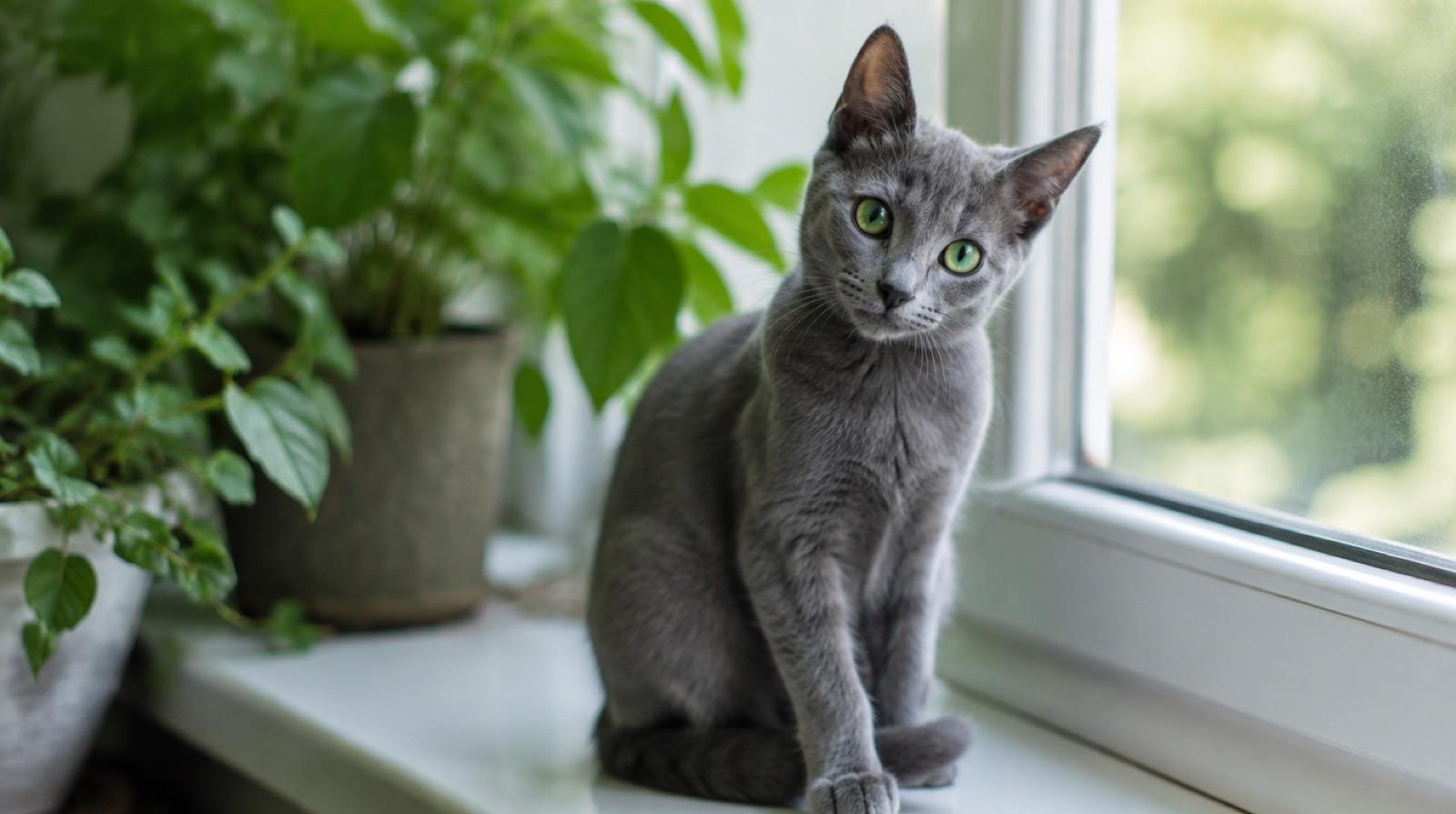
Should you adopt or buy a Russian Blue?
It depends on whether you want the breed or the kind of cat. If papers matter to you, for showing or because you have set your heart on a pedigree Russian, a registered breeder is the honest answer, because purebred Russian Blues rarely turn up in Australian rescue. If what you want is a quiet, gentle grey cat, rescue has plenty, and the fee includes desexing, microchipping and vaccination.
There are three routes, and each has its own trap:
- A registered breeder. About $1,000 to $1,600 for a kitten, according to the Russian Cat Council of Australia, often with a wait. The trap is a seller who says “registered” without proof.
- A rescue, shelter or council pound. A few hundred dollars, all vet work done. The trap is a label: a grey moggy listed as a “Russian Blue” is still a moggy, which is fine as long as you know it.
- An online ad. The highest risk. The council warns that scammers advertise supposedly registered kittens for around $300 and then ask for transport money.
What does a Russian Blue kitten cost in Australia?
| Route | Reference cost | What is included | Source |
|---|---|---|---|
| Registered Russian breeder | About $1,000 to $1,600 | Fully vaccinated and microchipped before going home; proof of registration and pedigree; desexing arranged by 6 months | Russian Cat Council of Australia, read 9 Nov 2026 |
| RSPCA NSW | $270 kitten (under 6 months); $220 adult cat | Desexing, microchipping, vaccinations and health checks | RSPCA NSW fees, read 9 Nov 2026 |
| Cat Protection Society of NSW | $150 per cat or kitten, $250 for two | Vet check, desexing, microchip, first vaccination, flea and worm treatment | Cat Protection Society, read 9 Nov 2026 |
| “Registered” kitten in an online ad | Around $300 | Usually nothing: the council names this price as a common scam | Russian Cat Council of Australia |
Reference figures, not quotes. Breeders set their own prices and rescues change their fees; follow the link before you rely on a number. Fees in other states are in our guide to kittens for sale in Australia.
The council's range is lower than many pedigree breeds. For comparison, our Ragdoll and Maine Coon price guides show what larger, more heavily marketed breeds cost. That gap is one reason Russian Blue scams work: a buyer who knows a pedigree cat is expensive can be talked into believing $300 is a lucky find.
Is a Russian Blue hypoallergenic?
No cat breed is hypoallergenic. If someone at home has a cat allergy or asthma, see a doctor before you bring any cat home, Russian Blue included.
The Russian Blue sits on almost every list of “hypoallergenic cats,” and that label sells kittens. The Australasian Society of Clinical Immunology and Allergy (ASCIA), the peak body for allergy specialists in Australia and New Zealand, is plain about it: because all cats have sebaceous glands, all cat breeds can cause allergies. RSPCA South Australia does list the Russian Blue among breeds considered hypoallergenic, but adds on the same page that no animal is 100% allergen free.
Two more points from ASCIA matter if you are testing a cat before you commit. Up to 50% of people who are allergic to animals do not get symptoms straight away, so a short visit proves little. And ASCIA says cat allergen can remain in a home for up to six months. ASCIA's first advice for people who are sensitised and have symptoms is not to bring a pet into the home.
What this means in practice: if you are mildly allergic and still want a cat, judge the individual cat over several long visits, not the breed name, and get medical advice first. A grey rescue cat you have tested this way is a sounder bet than a Russian Blue kitten you have never met. Our guide to hypoallergenic cats in Australia covers the evidence and the testing in full.
Is it a Russian Blue or a grey domestic shorthair?
Blue is the cat-fancy word for grey, and it is one of the most common moggy colours. It comes from the dilute gene lightening black pigment, as our guide to domestic shorthair colours and patterns explains. So Australian shelters see a steady stream of grey cats, and some get listed as “Russian Blue” or “Russian Blue cross” because of the colour. The Russian Cat Council of Australia puts it simply: just because a cat is blue, black or white does not make it a Russian.
The breed has features beyond colour. Here is how the breed descriptions compare with the grey cats you will meet in rescue, and with the other famous blue cat, the British Shorthair:
| Feature | Russian Blue | British Shorthair (blue) | Grey moggy |
|---|---|---|---|
| Eyes | Green and almond-shaped, per the council; CFA calls for vivid green, which it says usually deepens with age | Large and round; gold or copper in a blue cat | Any colour, often yellow, gold or green |
| Coat | Short, plush double coat that stands out from the body; guard hairs tipped, giving a silvery sheen | Short, very dense, firm, with a crisp texture | Usually a flatter coat with no silver sheen; may have white patches or tabby ghost marks |
| Head and body | Medium wedge head, large upright ears; slender, long, muscular body | Round, massive head; medium to large, powerful body with a deep, broad chest | Anything in between |
| Colours | Blue, white and black recognised in Australia; no long coats or white markings | Many colours; blue is the best known | Grey solid, grey and white, blue tabby, blue-cream |
| Proof | Registration and pedigree papers | Registration and pedigree papers | None needed: it is a moggy |
Sources: Russian Cat Council of Australia, About the Russian and Buying a Russian; Cat Fanciers' Association Russian Blue standard; Cat Fanciers' Association British Shorthair standard. The grey moggy column is general guidance, because a moggy has no standard.
Only papers prove a pedigree. A grey rescue cat with green eyes and a plush coat might have Russian ancestry somewhere, or might not, and no shelter can tell you which from a photo. For most people that does not matter: you are choosing a personality, and a rescue can usually tell you whether a cat is quiet, cuddly, shy or bold. If a listing says “Russian Blue,” read it as a description of the look and ask the rescue what the cat is like.
See Russian Blues and grey cats listed near you
Purebreds are rare in rescue, so the breed pages also help you catch Russian Blue crosses as they are listed. Each listing links to the rescue, where you apply directly.
How do you check a Russian Blue breeder?
The Russian Cat Council of Australia says all genuine breeders are registered with a cat governing council, and warns that a kitten “with a pedigree” does not by itself mean it came from a registered breeder. Australian cat registration runs through several bodies: ANCATS (Australian National Cats), the Australian Cat Federation and its state member bodies, and the Co-Ordinating Cat Council of Australia, whose members include the Feline Control Council of Victoria and the NSW Cat Fanciers Association. The Russian Cat Council itself keeps a state-by-state list of member breeders.
- Confirm the registration yourself. Ask which council the breeder is registered with, then check with that council, not through a link the seller sends. ANCATS has a public “Check a Member” lookup.
- Check your state's number. NSW, Victoria, South Australia and the ACT all set rules for kitten ads (a breeder or microchip number in NSW, a Pet Exchange Register source number in Victoria, a DACO number in SA, a licence number in the ACT). The state-by-state table is in our kittens for sale guide.
- Ask about health. The sources we checked name no breed-specific DNA test for the Russian Blue, and the council calls the breed healthy by constitution. A good breeder will still show vet records for the kitten and talk openly about the parents and past litters. Russian Blues are not among the pedigree breeds the ACVIM consensus statement names as at increased risk of the heart disease HCM.
- Expect what the council lists. Vaccinated and microchipped before going home, proof of registration and pedigree, and desexing arranged by 6 months.
- Expect to wait. The council says Russians are often in high demand. A waiting list is normal; a kitten available today at a low price is not.
The council also has a tip for buyers: introduce yourself properly. It advises against sending breeders a one-line “got kittens?” message, and a breeder who cares where kittens go will ask you questions too.
What do Russian Blue scams look like?
A “registered” Russian Blue kitten for around $300, followed by a request for transport money, is the scam the breed council itself warns about.
The Russian Cat Council of Australia describes the pattern: ads offering supposedly registered kittens for around $300, then requests for transport costs, written in poor English with text copied and pasted from real breeders' websites. It also warns about stories such as the kitten having moved interstate or being sold for a family member. Scamwatch describes the same playbook across all pet scams: fake websites, profiles and marketplace listings for popular breeds and pets that do not exist.
- The price. Well under the council's $1,000 to $1,600 range for a kitten said to be registered.
- No visit. The seller cannot meet you or do a live video call with the kitten and its mother. Scamwatch says to see the pet in person, or by video call if you cannot visit.
- Extra fees after the deposit. Transport, a crate, insurance or a vet certificate, each one urgent.
- Copied text and photos. Run a reverse image search on the kitten photos and paste a sentence of the ad into a search engine.
- No numbers. No microchip number, no council registration you can confirm, and no state number where one is required.
- “Hypoallergenic” as a selling point. ASCIA says all cat breeds can cause allergies, so this is a claim, not a fact.
If you have already paid, contact your bank straight away and report it to Scamwatch. The same checks in more depth, including the WA fake-transport-company pattern, are in our kittens for sale guide.
Is a Russian Blue the right cat for you?
The breed's reputation is for a quiet, gentle cat. The Russian Cat Council of Australia describes Russians as intelligent, loyal, loving and gentle, social with the whole family, sometimes fairly reserved, and not fond of loud noises. The Cat Fanciers' Association calls them graceful, playful and quiet, and says they may seem shy at first but become friendly, affectionate companions once they know you. The council says they live into their mid to late teens with the right care.
- Good fit: a calm home, adults or older children, people who like a cat that bonds closely and does not demand constant attention.
- Think twice: a loud, busy household, or a home that wants an outgoing cat to greet every visitor.
- Not a reason to choose one: allergies, for the reasons above.
Temperament varies between individual cats in every breed. That is the quiet strength of rescue: a foster carer can tell you how a particular cat behaves with noise, children and other pets. Not sure what kind of cat suits you? Try the what cat breed am I quiz, or dog or cat? if you are still deciding on the species.
Where to find a Russian Blue or a grey rescue cat
Purebred Russian Blues rarely turn up in rescue, while grey domestic shorthairs are listed all year. So the practical plan is to watch the breed page, set an alert, and look at the grey moggies while you wait. Rescue kittens come in waves in the warm months, which is when a grey kitten is easiest to find.
Russian Blue listings in the big cities
- Russian Blue cats for adoption in Sydney
- Russian Blue cats for adoption in Melbourne
- Russian Blue cats for adoption in Brisbane
- Russian Blue cats for adoption in Perth
- Russian Blue cats for adoption in Adelaide
- All breeds Australia-wide: the Russian Blue breed page.
City guides to adopting a Russian Blue
Each city guide names the local rescues, fees and council rules:
- Russian Blue adoption in Sydney
- Russian Blue adoption in Melbourne
- Russian Blue adoption in Brisbane
- Russian Blue adoption in Gold Coast
- Russian Blue adoption in Perth
- Russian Blue adoption in Adelaide
If a kitten is what you want, see the kittens in Sydney or kittens in Melbourne; for a cat that suits a flat, see indoor cats in Sydney. Before you apply, the adoption readiness check takes five minutes.
Frequently asked questions
How much is a Russian Blue kitten in Australia?▼
About $1,000 to $1,600 from a registered breeder, according to the Russian Cat Council of Australia, which says Russian kittens generally price in that range (read 9 November 2026). The kitten should come vaccinated and microchipped, with proof of registration and pedigree and a desexing arrangement by 6 months. A rescue cat that looks like a Russian Blue costs the normal rescue fee, for example $220 for an adult cat at RSPCA NSW. These are reference figures, not quotes.
Are Russian Blue cats hypoallergenic?▼
No. The Australasian Society of Clinical Immunology and Allergy (ASCIA) says that because all cats have sebaceous glands, all cat breeds can cause allergies. RSPCA South Australia lists the Russian Blue among breeds considered hypoallergenic, but in the same breath says no animal is 100% allergen free. Some allergic people do well with a particular cat, which is a fact about that cat and that person, not the breed. Spend long, repeated visits with the individual cat and talk to your doctor first.
Is my grey cat a Russian Blue?▼
Probably not, unless it came with pedigree papers. Blue is simply the cat-colour word for grey, and it is common in domestic shorthairs. The Russian Cat Council of Australia says that just because a cat is blue, black or white does not make it a Russian. A Russian Blue has green eyes, a plush double coat with light tipping that gives a sheen, a slender, long, muscular body and large upright ears. A grey moggy with yellow eyes, a flat single coat or white patches is a grey moggy, and a lovely one.
Can you adopt a Russian Blue from a rescue in Australia?▼
Occasionally, but purebred Russian Blues are rare in Australian rescue. Grey domestic shorthairs are far more common, and shelters sometimes label them Russian Blue or Russian Blue cross on looks alone. Watch the Russian Blue breed page for your city and set an alert, and be open to a grey moggy whose personality suits you. If only a papered Russian will do, a registered breeder is the surer route.
What colours do Russian cats come in?▼
The Russian Cat Council of Australia lists three recognised colours: blue, white and black. Blue is the colour most people picture. The council also says Russians do not have long coats or white markings, so a grey cat with a white chest is not a Russian.
What health tests should a Russian Blue breeder do?▼
The sources we checked name no breed-specific DNA test for the Russian Blue, and the Russian Cat Council of Australia describes the breed as renowned for a healthy constitution. That does not make health checks optional. Ask for a vet check, vaccination and microchip records, proof of registration and pedigree, and what the breeder knows about the health of the parents and earlier litters. A breeder should answer those questions without being pushed.
Are Russian Blue kitten ads on social media scams?▼
Many are. The Russian Cat Council of Australia warns that scammers often advertise supposedly registered kittens for around $300 and then ask for transport costs, often in poorly written English copied from real breeders' websites. Scamwatch says to see the pet in person or on a video call, check the breeder is legitimate, and that a very cheap pet is likely a scam. If a Russian Blue kitten costs a fraction of $1,000, treat the ad as a scam until proven otherwise.
What is a Russian Blue like to live with?▼
The Russian Cat Council of Australia describes the breed as intelligent, loyal, loving and gentle, social with the whole family but sometimes fairly reserved, and not fond of loud noises. The Cat Fanciers' Association says they may appear shy at first but become friendly, affectionate companions once they know you. A calm home suits them better than a loud, busy one.
How long do Russian Blue cats live?▼
The Russian Cat Council of Australia says Russians live into their mid to late teens given the right environment and nutrition. Like any cat, that depends on desexing, weight, dental care and regular vet checks rather than breed alone.
Do I have to wait for a Russian Blue kitten?▼
Often, yes. The Russian Cat Council of Australia says Russians are often in high demand, so buyers should be prepared to wait, and it keeps a state-by-state list of member breeders. A seller with kittens ready to go today, at a low price, with no questions for you, is the pattern scammers use.
Where can I see Russian Blue and grey cats for adoption right now?▼
LocalPetFinder lists cats from the rescues, shelters and council pounds we aggregate, refreshed regularly. Open the Russian Blue page for Sydney, Melbourne, Brisbane, Perth or Adelaide to see current matches, browse the domestic shorthair listings for grey cats, and set an alert so you hear about new arrivals early. Each listing links to the rescue, where you apply directly.
Sources
- Russian Cat Council of Australia: Buying a Russian
- Russian Cat Council of Australia: About the Russian
- Russian Cat Council of Australia: Find a registered Russian breeder
- Cat Fanciers' Association: Russian Blue breed profile and standard
- Cat Fanciers' Association: British Shorthair breed profile and standard
- ASCIA: Pet allergy
- RSPCA South Australia: Pets for people with allergies
- Scamwatch: Buying and selling scams (pet scams)
- ACVIM consensus statement on feline cardiomyopathies (2020)
- RSPCA NSW: Adoption fees
- Cat Protection Society of NSW: Cats for adoption
Keep reading
Russian Blue cats for adoption in Sydney
Russian Blues and Russian Blue crosses listed by the Sydney rescues we aggregate, with each rescue's details on the profile.
Hypoallergenic cats in Australia
What ASCIA says about cat allergies, why no breed is a guarantee, and how to test a cat before you adopt.
British Shorthair kittens: adopt or buy?
The other famous blue-grey cat: breeder checks, heart and kidney screening, and the rescue route.
Domestic shorthair colours and patterns
Why blue means grey, how the dilute gene works, and what a shelter listing's colour words mean.