The short answer
Purebred Russian Blues almost never appear in Perth rescue. Nearly every cat we list from Perth rescues is a domestic short-hair or long-hair. So set an alert, stay open to a blue-grey cross, and apply fast when one appears. Adoption runs about $150 to $230 for an adult, already desexed, vaccinated, microchipped and FIV tested. Western Australian law requires every pet cat to be desexed and microchipped anyway, so a rescue cat has that done before you collect it.
What a Russian Blue is
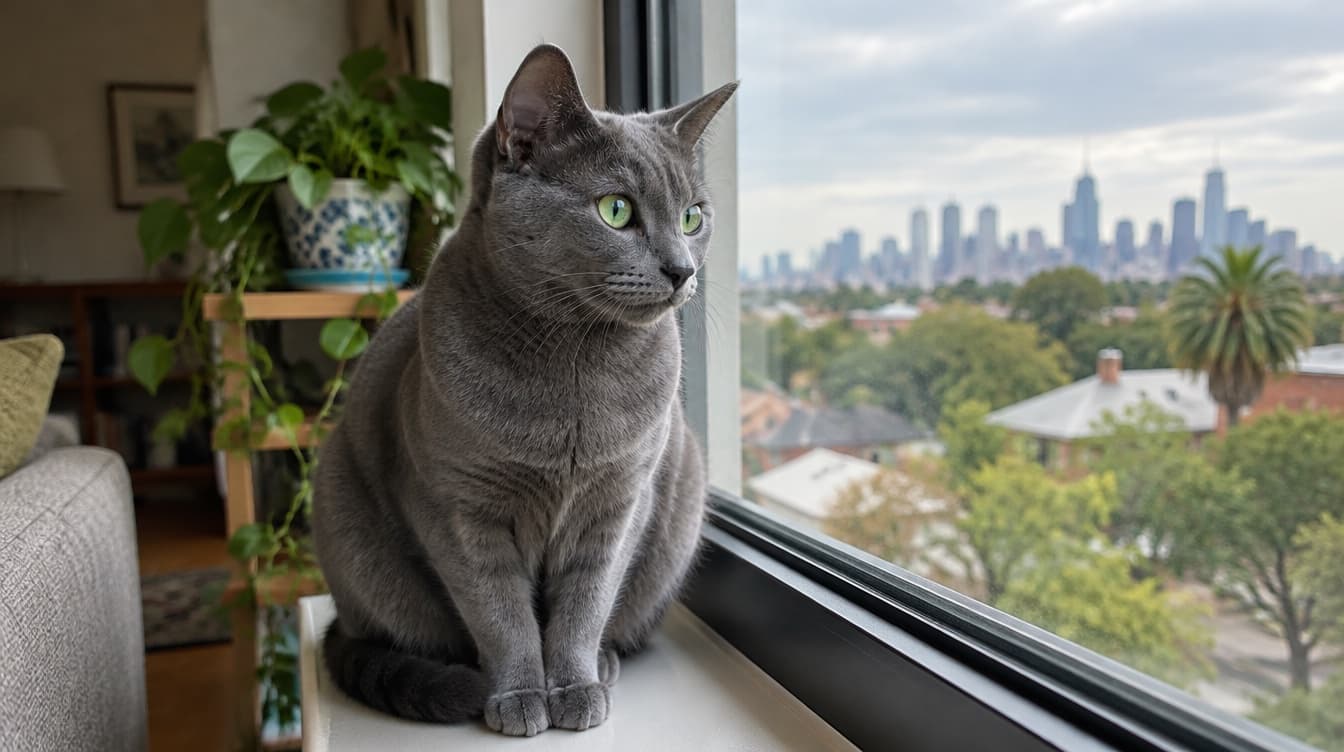
The Russian Blue is an elegant, fine-boned short-haired cat known for two things: a dense, plush, silvery blue-grey double coat that stands out from the body, and vivid green eyes set in a gently smiling face. The coat feels soft and seal-like, and the silver tipping gives it a shimmer in the light. It is a moderate, natural cat with no exaggerated features, which is part of why it tends to be healthy and long-lived.
Temperament is the real signature. Russian Blues are quiet, reserved and deeply loyal to their own people, often shadowing one favourite person around the house while staying shy and cautious with strangers. They dislike noise and upheaval, settle best in a calm, predictable home, and are clean, undemanding and gentle rather than loud or boisterous. If you want a serene companion that bonds hard but does not make a fuss, this is the nature people are chasing.
What Perth rescue listings actually show
LocalPetFinder pulls cat listings from Perth rescues into one place, so we can see what is genuinely available rather than guessing. The picture is consistent. Nearly every cat listed is a domestic short-hair or long-hair, and a purebred Russian Blue almost never appears. That is not a gap in our coverage; it is what Perth rescue looks like.
This matters for how you search. If you hold out for a papered Russian Blue through rescue, you may wait a very long time. If you widen the search to blue-grey domestic short-hairs, you will see suitable cats regularly, many with the same plush coat and quiet, people-bonded nature. Shelter breed labels are best guesses, so judge the individual cat, its coat and its temperament rather than the word on the listing, and set an alert so you hear about a match the day it is listed.
How Russian Blues end up in rescue
A Russian Blue is a deliberate, expensive purchase, which is the main reason so few reach shelters. When one does, the reasons tend to repeat, and none of them are the cat's fault:
- Life changes. A move to a rental that will not take pets, a new baby, a relationship breakdown, or an owner who becomes unwell or passes away.
- A mismatch with a busy home. A shy, noise-sensitive cat bought into a loud, chaotic household can hide and stress, and the owner decides a calmer home would suit it better.
- A new allergy. The breed's lower-allergen reputation is only partial, and sometimes a household reaction forces a rehome.
A reserved cat that reaches rescue often blossoms once it is in a quiet home with a patient owner, so the foster notes about how it is settling are worth reading closely.
Where to adopt a Russian Blue or blue-grey cross in Perth
There is no Russian Blue-only rescue we can verify in WA, so the plan is to watch the general cat rescues and act quickly. These are the main groups rehoming cats around Perth:
| Rescue | Location | Good to know |
|---|---|---|
| Cat Haven | Shenton Park | WA's largest cat-only shelter, with a steady flow of adult cats and kittens. |
| RSPCA WA | Malaga | The state body, with published cat fees and a behavioural assessment on every cat. |
| Perth Rescue Angels | Perth metro, foster-based | Foster homes mean detailed notes on how each cat really behaves. |
| SAFE Perth | Perth and regional WA | Foster-based network rehoming cats across the state. |
Many of these rescues also list on PetRescue, the national site, and LocalPetFinder brings Perth listings together so you do not have to check each site by hand. For the full process, from application to bringing a cat home, read our Perth cat adoption guide, and compare the shelters in our best cat rescues in Perth guide.
What it costs: adopt versus buy
Adopting is far cheaper than buying, and the cat arrives already vetted. A Perth rescue commonly charges about $150 to $230 for an adult cat and about $425 for a kitten, with seniors often discounted.
| Path | Typical cost | What you get |
|---|---|---|
| Perth rescue, adult cat | About $150 to $230 | Desexing, vaccination, microchip, FIV check, worming, flea treatment, vet check. |
| Perth rescue, kitten | About $425 | As above, plus the early vaccination course. |
| Perth rescue, senior cat | Often discounted | As above, plus a known temperament. |
| Purebred Russian Blue from a breeder | Well into four figures | A kitten of known breeding, with the vet work still to arrange. |
| Cheap or “free” private listing | Varies | In WA the cat must be desexed and microchipped by law, so a cheap kitten leaves that job and cost to you. |
The rescue fee is not really the cat's price. It partly covers vet work the rescue has already paid for, which is why a rescue cat usually works out cheaper than a free kitten you then have to desex, vaccinate and microchip yourself, especially in WA where the law requires that work anyway. Our Perth cat adoption costs guide breaks down setup and yearly costs.
If you have been searching “Russian Blue kitten for sale Perth”
Plenty of people land here after looking for a Russian Blue kitten to buy, and it is worth slowing down before you pay. Western Australia does not run a Pet Exchange Register the way Victoria does, so there is no source number to check, which makes meeting the cat in person and confirming the vet work even more important. The one thing WA law is clear on is that every pet cat must be sterilised and microchipped by six months of age, so a kitten sold without that done simply leaves the job, and the cost, to you.
- Meet the cat in person, ideally with its mother, and never pay a deposit by bank transfer for a kitten you have not seen.
- Confirm the vet work. Ask for proof of desexing, microchipping and vaccination, and have the microchip details put in writing.
- Be wary of a bargain. A cheap or free blue-grey kitten advertised online is a classic scam and backyard-breeding setup.
The ACCC Scamwatch service records pet deposit scams where a seller takes money for a kitten that does not exist, and purebred kittens are a common lure. A rescue cat removes that risk: it is real, you can meet it, and it is already desexed, microchipped and vetted. If a papered Russian Blue matters to you, go to a breeder you can verify in person. If what you want is a quiet, plush blue-grey lap cat, rescue is the safer and cheaper path.
Western Australian rules for a new cat owner
The governing law is the Cat Act 2011. The parts that affect you:
- Sterilisation. Every pet cat must be desexed by six months of age, unless a vet grants a health exemption or the owner is a registered breeder.
- Microchipping. Every pet cat must be microchipped by six months of age. A rescue cat arrives chipped, so update the record into your name.
- Registration. Every pet cat must be registered with your local government by six months of age, and a sterilised cat pays a reduced fee. Each council sets its own amount and process.
- Cat containment. A number of WA councils have cat containment or prohibited-area local laws, so check what applies where you live. A Russian Blue is one of the easiest cats to keep happily contained.
Living with a Russian Blue
The good news is that the coat is low-maintenance. A Russian Blue's short, dense coat needs only a weekly brush to keep it glossy and cut down on shed hair, with no clipping or daily combing. The real work is emotional, not physical: this is a sensitive cat that wants a calm home, a steady routine and a patient introduction. Give a newly adopted Russian Blue a quiet room to settle in, let it come to you rather than forcing contact, and it will usually attach deeply within a few weeks.
Keep the cat lean, because a quiet indoor breed can gain weight easily, and provide climbing, scratching and play to keep its clever mind busy. Annual vet checks, dental care and a vet-recommended parasite product round out the routine.
Indoor living and the Perth climate
Russian Blues are built for indoor life, and Perth rescues generally adopt cats out to live indoors or with contained outdoor access. A quiet cat with a window perch and a cat tree is content. Our indoor versus outdoor cats guide covers setting up a safe, interesting indoor home and the WA containment rules.
Perth's climate is the local twist. Summers are long, hot and dry, so keep the cat inside in the coolest part of the home on scorching days, with water and shade or air-conditioning, and never shut it in a sunroom or a car. In bush-fringe suburbs, keeping a cat contained also protects it from snakes and from 1080 baits used for wildlife management. The short, dense coat copes well with Perth winters, which are mild.
A quick word on health
The Russian Blue is a natural, moderate breed and is generally hardy and long-lived, without the exaggerated features that cause problems in some pedigrees. The main everyday risk is weight gain in a quiet indoor cat, so keep it lean and active. A rescue cat has had a vet check before adoption, so ask the rescue what it found, and the RSPCA Australia Knowledgebase is a good general reference on cat health and welfare. Talk to your own vet about the individual cat.
Browse adoptable Russian Blue cats in Perth
A purebred Russian Blue rarely comes up, so set an alert. Plush blue-grey crosses with the same quiet nature appear far more often.
See Available Russian Blues →Choosing the right Russian Blue-type cat
For a first cat, an adult is usually the safer bet. You can meet the real temperament, which matters more for a shy breed than for almost any other, and the rescue can tell you how the cat copes with people, noise and other pets. When you meet a cat, check three things:
- Temperament. A confident but gentle cat settles faster than a very fearful one, though a shy cat can come good in a calm home with time.
- The home match. Be honest about how quiet and predictable your household is, because that suits a Russian Blue far better than noise and chaos.
- The foster notes. They tell you how the cat behaves day to day, which predicts life with it better than the breed label.
Keep an open mind about a blue-grey domestic short-hair rather than chasing a papered purebred. If you are adopting a kitten, our new kitten guide for Perth covers the first weeks.
Frequently Asked Questions
Where can I adopt a Russian Blue near me in Perth?
Watch the main Perth cat rescues and set an alert, because a purebred Russian Blue rarely comes up. Cat Haven in Shenton Park is WA's largest cat-only shelter, and RSPCA WA at Malaga, Perth Rescue Angels and SAFE Perth all rehome cats, any of which might list a Russian Blue or a plush blue-grey cross. Across the Perth rescues we aggregate, almost every cat is a domestic short-hair or long-hair, so your realistic target is a grey, short-coated cat with the same quiet, reserved nature. Be application-ready and apply the day a suitable cat appears.
Why are Russian Blues so rare in Perth rescue?
Because almost all rescue cats are domestic cats, not purebreds. A Russian Blue is an expensive cat people buy on purpose, so far fewer reach shelters, and when one is surrendered it is usually because of a move, a death in the family, a new allergy or a relationship breakdown rather than anything wrong with the cat. A blue-grey domestic short-hair with the same dense coat and gentle, shy temperament is a far more likely find, and for a pet home it is just as rewarding.
How much does it cost to adopt a Russian Blue versus buy one in Perth?
Adopting through a Perth rescue commonly costs about $150 to $230 for an adult cat and about $425 for a kitten, and that fee already covers desexing, an F3 vaccination course, microchipping, a FIV blood test, worming, flea treatment and a vet check. A purebred Russian Blue kitten from a breeder costs far more, commonly well into four figures, and you still arrange the vet work afterwards. Western Australian law requires every pet cat to be desexed and microchipped anyway, so a rescue cat has already met two of your three legal obligations before you collect it.
Is there a Russian Blue rescue in Perth or WA?
We cannot verify a currently-active, Russian Blue-specific rescue in Western Australia, so treat any single-breed name with caution until you confirm it yourself. The dependable route is the general Perth cat rescues, an alert for blue-grey short-haired cats, and telling each rescue you are open to a cross. Before sending money to any group, confirm it has a real physical presence, a current adoptable list, and, for a cat that is desexed and microchipped, proof of that vet work.
Are Russian Blues hypoallergenic?
Not truly, although they have a reputation for being easier on allergies. Russian Blues are often said to produce less of the Fel d1 protein that triggers most cat allergies, and some allergy sufferers do tolerate them better, but no cat is genuinely hypoallergenic and reactions vary from person to person. If allergies are the reason you are drawn to the breed, spend time with the individual cat before committing rather than relying on the breed label, and talk to your doctor. A plush-coated domestic cat may suit you just as well.
Are Russian Blues good indoor cats for a Perth home or unit?
Yes, they are one of the better-suited breeds for indoor and unit living. Russian Blues are quiet, clean, undemanding and happy with a window perch, a cat tree and a predictable routine, and indoor living protects them from Perth's hot, dry summers, snakes, 1080 baits in bush-fringe suburbs and traffic. A growing number of WA councils also have cat containment or prohibited-area local laws, so an indoor or contained-outdoor cat keeps you on the right side of local rules. A Russian Blue rarely pushes to roam.
Should I adopt an adult Russian Blue or a kitten?
An adult is usually the better choice, especially for a first cat. With an adult you can see the coat and, more importantly, meet the real temperament, because a Russian Blue can be shy and the rescue can tell you how it is with people, noise and other pets. A kitten's personality is still forming. Adults also wait longer for homes. Whichever you choose, read the foster notes closely, because for a reserved breed they tell you more about daily life than the breed label does.
Do I have to register a Russian Blue cat in WA?
Yes. Under the Western Australian Cat Act 2011, every pet cat must be sterilised, microchipped and registered with your local government by six months of age. Sterilised cats pay a reduced registration fee, and the exact amount and process are set by each local council. A rescue cat arrives already desexed and microchipped, so it meets two of the three requirements the day you collect it, and you simply register it with your council and move the microchip record into your name.
Are Russian Blues healthy?
Generally yes. The Russian Blue is considered a hardy, long-lived breed without the extreme features that cause trouble in some pedigrees, and the main thing to watch is weight, because a bored indoor cat can gain too much. As with any cat, keep up dental care, parasite prevention and annual vet checks. A rescue cat has had a vet check before adoption, so ask the rescue what it found, and talk to your own vet about the individual cat.
Keep reading
Adoptable Russian Blues in Perth
Live listings of Russian Blues and blue-grey crosses from Perth rescues.
Best Cat Rescues in Perth
Cat Haven, RSPCA WA, Perth Rescue Angels and SAFE Perth compared.
Cat Adoption in Perth: A Complete Guide
Where to adopt, the WA Cat Act 2011, and how to choose the right cat.
What Cat Adoption Costs in Perth
Adoption fees, setup gear, yearly costs and WA council registration.