The short answer
A Lhasa Apso is a sturdy little companion dog, ideally about 25 cm at the shoulder, that the breed standard calls gay, assertive, but chary of strangers, with an average lifespan of 15 years according to the Dogs Australia breed page. If you buy, use a Dogs Australia registered breeder who can show both parents' DNA results for progressive retinal atrophy (PRA) and will talk openly about eyes, knees and skin. None of the member breeders whose websites we read in November 2026 published a price, so ask each one. If you adopt, check the live Lhasa Apso listings (numbers change daily), set an alert and look at other small dogs too. Any fee here is a reference, not a quote; check with the breeder or rescue.
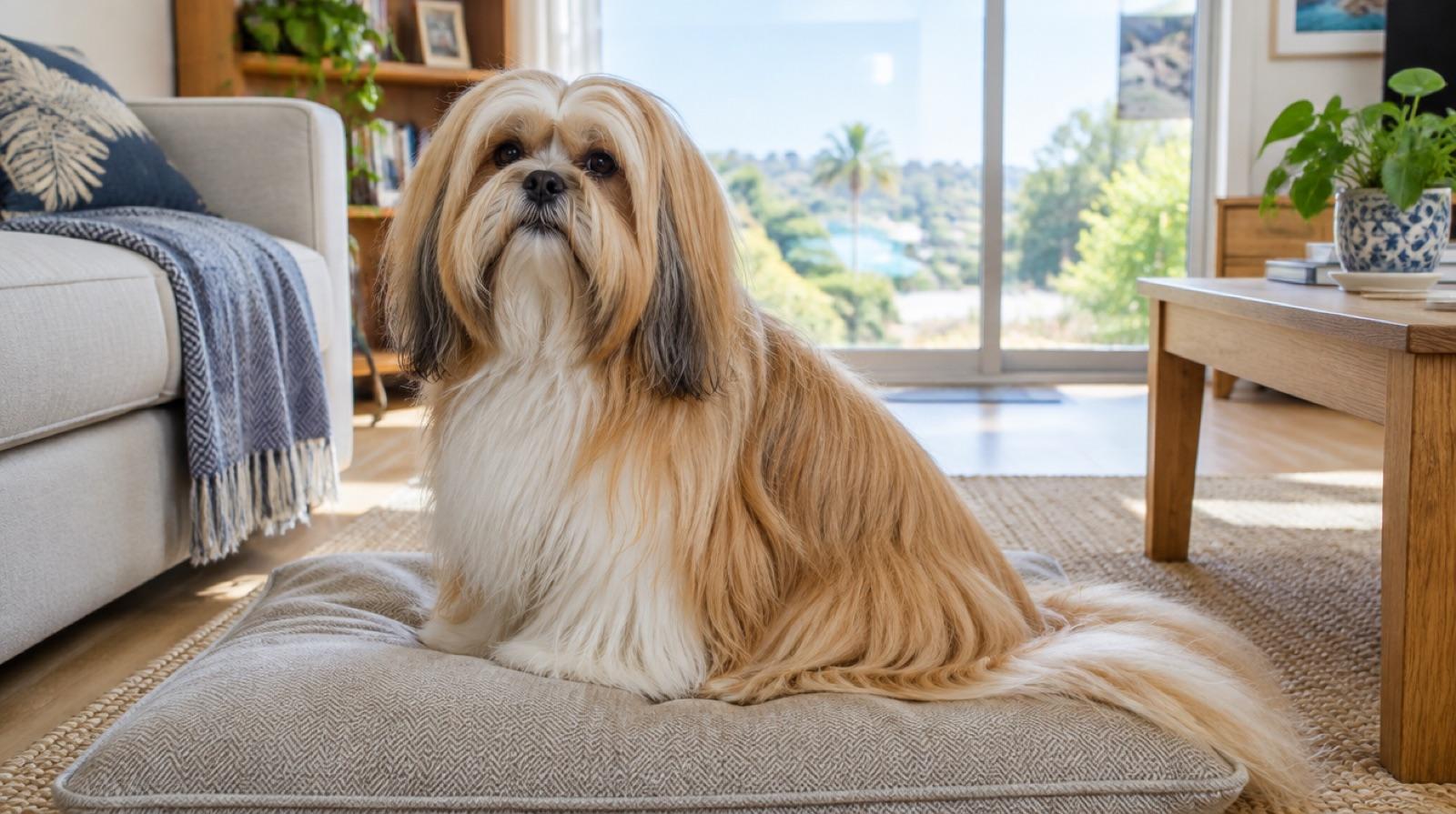
Should you adopt or buy a Lhasa Apso?
Either route can work. The Dogs Australia breed standard asks for “a well balanced, solid dog” whose characteristics are “gay, assertive, but chary of strangers”, with a heavy, straight, hard top coat over a dense undercoat. The ideal height is 25 cm at the shoulder for dogs, with bitches slightly smaller.
A registered breeder who DNA tests the parents for PRA gives you the best odds against the breed's best-known inherited eye disease and a puppy you raise yourself. Rescue gives you a dog whose temperament and coat you can see first; check the live listings to see what is available, as numbers change daily. The route to avoid is an online ad for a cheap “Lhasa” with no health results and no breeder you can check.
| Route | Reference cost | What you usually get | Main risk |
|---|---|---|---|
| Dogs Australia registered breeder | No member breeder we checked published a price (November 2026); ask each one | A pedigree puppy; ask for both parents' PRA results | Waiting lists |
| General rescue or council pound | The standard fee, for example $500 to $1,000 at the RSPCA rows below | An occasional Lhasa or Lhasa cross, desexed and microchipped | Availability changes daily; check the live listings |
| Online ad with no checkable breeder | Anything, from suspiciously cheap to full price | Unknown parents, no health results, or a puppy that does not exist | Untested parents and scams |
Reference figures: the RSPCA NSW and RSPCA Victoria fee pages, read November 2026. They are not quotes. Breeders and rescues set their own prices and change them, so check with them.
What is a Lhasa Apso like to live with?
Loyal, independent and watchful. The Dogs Australia breed page describes a sentinel or warning dog whose suspicion of strangers was prized in Tibet: calm, intelligent, independent and dignified, at times a little stubborn, playful and mischievous even into old age, and intensely loyal to its family. It says the breed is best suited to people looking for a companion dog and will readily adapt to the family's routine. The page also records that the first Lhasa Apso was imported to Australia in 1961.
Dogs Victoria adds two honest points for buyers: house training a Lhasa can be challenging, and the dog may reach full size at one year while still behaving like a puppy for a long time, so training needs patience and consistency. It says Lhasas tend to bond with adults more than with youngsters, though not as a hard-and-fast rule.
| Trait | What the source says |
|---|---|
| Size | Ideal height 25 cm at the shoulder for dogs; bitches slightly smaller (breed standard) |
| Colours | Golden, sandy, honey, dark grizzle, slate, smoke, parti-colour, black, white or brown (breed standard) |
| Coat | Top coat heavy, straight and hard, not woolly or silky, of good length; dense undercoat (breed standard) |
| Grooming | High maintenance in full coat; most pet owners keep the dog clipped (Dogs Australia breed page) |
| Exercise | Up to 1 hour a day; suits a flat or apartment (Royal Kennel Club) |
| Life span | Average 15 years (Dogs Australia breed page); 12 to 15 years (Dogs Victoria) |
Sources: Dogs Australia breed standard, Dogs Australia breed page, Dogs Victoria and the Royal Kennel Club, read 11 November 2026.
How much coat care does a Lhasa need?
More than most small dogs. The Dogs Australia breed page says the Lhasa does not shed its coat as other breeds do, that its undercoat becomes tangled and matted if not brushed out, and that preparing a dog in full coat takes about two hours to bath and groom. Dogs Victoria says regular, even daily, brushing and combing and bathing every two to four weeks are needed, that many owners use a professional groomer, and that it is not uncommon to have the coat clipped short every six weeks.
Budget for this before you choose the breed. Our Lhasa Apso coat and eye care guide explains the routine, and the dog cost calculator helps you add grooming to a first-year budget.
Which health checks should a Lhasa breeder talk about?
Start with progressive retinal atrophy (PRA), an inherited disease of the retina that causes gradual loss of sight. The Dogs Australia breed page says the breed has few health issues, names dry eye, cherry eye and skin allergies as some common problems, and says PRA exists in the breed and testing has been conducted for a number of years. The UK Royal Kennel Club lists a DNA test for PRA as the minimum test before breeding; its news page published on 6 October 2017 announced an official DNA testing scheme for generalised PRA in Lhasa Apsos. Here is what each source names; use it to ask an Australian breeder questions, not as an Australian rule.
| Condition or test | Dogs Australia breed page | Dogs Victoria | Royal Kennel Club (UK) | American parent club |
|---|---|---|---|---|
| PRA (DNA test) | Named; testing for years | Named | Good practice (minimum) | No testing requirement |
| Eye examination | Not stated | Not stated | Best practice | No testing requirement |
| Dry eye | Named | Named | Not listed | Not listed |
| Cherry eye | Named | Named | Not listed | Not listed |
| Kneecap problems (patellar luxation) | Not stated | Named | Not listed | Named |
| Skin: allergies, sebaceous adenitis | Allergies named | Both named | Not listed | Not listed |
| Familial renal dysplasia (kidney) | Not stated | Named | Not listed | Not listed |
Sources: Dogs Australia breed page, Dogs Victoria breed profile, Royal Kennel Club and the American Lhasa Apso Club health statement (which says the club has no testing requirements for its member breeders and also names hernias, corneal ulcers and bladder stones), read 11 November 2026.
Ask to see the PRA certificates for both parents, with names that match the litter, and ask what the breeder has seen in their lines for eyes, knees, skin and kidneys. Our Lhasa Apso health guide covers what owners plan for.
How much is a Lhasa Apso puppy from a registered breeder?
We quote no breeder price, because none of the breeders whose websites we read published one. In November 2026 we read the own websites of Australian Lhasa Apso breeders, leaving out listing and classified sites, and found no published price. We also found no guide price from Dogs Australia or the state bodies. We cannot speak for every breeder, so ask each one.
Ask for the price in writing and compare what it includes: the parents' PRA results, the vet check, vaccination and microchip, whether the puppy is on the Limited Register with a desexing agreement, and whether the breeder will take the dog back if your circumstances change.
You may need to wait for a litter. Dogs Australia's registration figures show 88 Lhasa Apsos registered in 2025, against 148 in 2022.
Survey of member breeders' own websites, November 2026. Any price a breeder gives you is theirs to set; fees change, so check with them. Nothing here is a quote.
See the Lhasa Apsos listed right now
Lhasa Apsos and Lhasa crosses from the rescues, shelters and council pounds we aggregate, each with its rescue, desexing and microchip details. Every listing links to the rescue, where you apply directly.
What do Lhasa Apsos in rescue look like?
It varies. Check the live listings above, as numbers change daily; a Lhasa Apso in rescue may be an adult or a Lhasa cross, and a good rescue will tell you how the dog is with children, other dogs, grooming and time alone. With an average lifespan of 15 years, according to the Dogs Australia breed page, an adult can still have many years ahead. If you adopt, ask the rescue what it knows about the dog's eyes and coat condition.
If you are flexible on breed, browse small dogs listed by rescues: Sydney, Melbourne, Brisbane, Perth, Adelaide.
What does a rescue Lhasa cost?
| Rescue | Fee as published | Read |
|---|---|---|
| RSPCA NSW | $620 puppy under 12 months; $500 dog over 12 months | 11 Nov 2026 |
| RSPCA Victoria | $650 to $1,000 puppy under 6 months; $500 to $1,000 adult dog | 11 Nov 2026 |
Reference only, not a quote. These are the fees each rescue published on the date shown; fees change and some dogs are priced individually, so check with the rescue. Read our guides to adopting a dog in Australia and adopting a senior dog.
How do Lhasa Apso puppy scams work?
Never send a deposit for a Lhasa Apso puppy you have not seen with its mother, in person or at least on a live video call. A seller who asks for more money after the first payment, for shipping or transport, matches the scam pattern Dogs Victoria describes.
Scamwatch warns that scammers set up fake websites, and fake profiles on social media and online marketplaces, for pets that do not exist, and that if a pet is very cheap it is likely a scam. Dogs Victoria's puppy scam fact sheet adds that fake ads may display microchip, source or membership numbers lifted from legitimate breeders, and that scam sites often use puppy photos downloaded from other websites. Checks to make before you pay:
- Health results. Ask for both parents' PRA results, with certificates whose names match the litter.
- Size. The standard sets one ideal height, 25 cm at the shoulder for dogs, with bitches slightly smaller. If a puppy is sold as a “teacup” or “miniature” Lhasa, ask why; the standard describes no smaller version.
- Borrowed numbers. Dogs Victoria says to contact the organisation a seller claims membership of and check the number is valid and matches the breeder's name, location and breed.
- Copied photos. Dogs Victoria passes on the ACCC's advice to use a reverse image search to check whether the photos appear on other websites.
Our guide to puppies for sale in Australia has the state-by-state table of breeder numbers, how to check each one, and what to do if you have already paid.
When is a registered breeder the better choice?
Rescue is not right for everyone, and if you want a Lhasa puppy specifically, waiting for a registered breeder is reasonable. Check these before you pay:
- Registration. Ask for the breeder's prefix and membership number and check them through Dogs Australia's breeder search or your state body.
- PRA DNA results for both parents.
- An honest health history of the lines: eyes, knees, skin and kidneys.
- Coat advice. Ask the breeder to show you how to groom the coat and what a pet clip involves.
- A written contract covering health problems, register type, desexing and whether the breeder will take the dog back.
Is a Lhasa Apso the right dog for you?
The appeal is real: a small, long-lived, loyal dog that adapts to its family's routine. Be honest about three things before you apply anywhere: the coat needs daily care or regular clipping, the dog is wary of strangers by design, and training takes patience. Not sure? Try the what dog breed is right for me quiz and the adoption readiness check, and compare with our guides to apartment dogs and low maintenance dog breeds.
Find a Lhasa Apso near you
Lhasa Apsos and Lhasa crosses listed by rescues, by city:
- Lhasa Apsos for adoption in Sydney
- Lhasa Apsos for adoption in Melbourne
- Lhasa Apsos for adoption in Brisbane
- Lhasa Apsos for adoption in Perth
- Lhasa Apsos for adoption in Adelaide
Local guides to adopting a Lhasa Apso, with the rescues that serve each city: Sydney, Melbourne, Brisbane, Perth, Adelaide, Gold Coast.
More adopt-or-buy guides: Shih Tzu, Maltese, Havanese, Bichon Frise, Pekingese, Cavalier King Charles.
Frequently asked questions
How much is a Lhasa Apso puppy in Australia?▼
We have no current published figure to quote. In November 2026 we read the own websites of Australian Lhasa Apso breeders, and none published a price; the prices we saw were on listing sites, which we do not use, and we found no guide price from Dogs Australia or the state bodies. Ask each breeder for the price in writing and compare what is included.
Is the Lhasa Apso a toy breed?▼
No. Dogs Australia places the Lhasa Apso in Group 7, Non Sporting, not in the Toys group. The breed standard asks for a well balanced, solid dog with an ideal height of 25 cm at the shoulder for dogs, with bitches slightly smaller.
What is the Lhasa Apso temperament like?▼
The Dogs Australia breed standard describes the Lhasa Apso as gay, assertive, but chary of strangers. The Dogs Australia breed page calls it calm, intelligent, independent and dignified, at times a little stubborn, playful into old age and intensely loyal to its family, and says it can be wary of strangers.
What health tests should a Lhasa Apso breeder do?▼
Ask about progressive retinal atrophy (PRA) first. The UK Royal Kennel Club lists a DNA test for PRA as its minimum test for the breed and an eye examination under its eye scheme as best practice. Dogs Victoria also names cherry eye, kneecap problems, allergies, sebaceous adenitis, dry eye and familial renal dysplasia, so ask the breeder what they test for and what has appeared in their lines.
What is PRA in Lhasa Apsos?▼
Progressive retinal atrophy is an inherited disease of the retina that causes gradual loss of sight. The Dogs Australia breed page says PRA exists in the breed and that testing has been conducted for a number of years, and the UK Royal Kennel Club announced an official DNA testing scheme for generalised PRA in Lhasa Apsos on 6 October 2017. Ask for both parents' DNA results.
How long do Lhasa Apsos live?▼
Usually a long time. The Dogs Australia breed page gives an average lifespan of 15 years and says many live much longer; Dogs Victoria gives 12 to 15 years; the UK Royal Kennel Club lists over 12 years.
How much grooming does a Lhasa Apso need?▼
A lot, if you keep the coat long. The Dogs Australia breed page calls it a high maintenance breed whose undercoat tangles and mats if not brushed out, and says most pet owners find it more practical to keep the dog clipped. Dogs Victoria says regular, even daily, brushing and frequent bathing, every two to four weeks, are necessary.
Are Lhasa Apsos good with children?▼
With the right children. Dogs Victoria says Lhasas tend to bond with adults more than with youngsters, though this is not a hard-and-fast rule, and that older children, or young children who are exceptionally gentle with dogs, can live happily with one. Always supervise children and dogs together.
Can I adopt a Lhasa Apso in Australia?▼
Sometimes. A Lhasa Apso in rescue may be an adult or a Lhasa cross, and numbers change daily, so check the live Lhasa Apso listings, set an alert, and also browse small dogs in your city.
How much does it cost to adopt a Lhasa Apso?▼
You pay the rescue's standard fee. RSPCA NSW listed $620 for a puppy under 12 months and $500 for a dog over 12 months, and RSPCA Victoria listed $500 to $1,000 for adult dogs. These were the fees published when we read them in November 2026; they are a reference, not a quote, and fees change, so check with the rescue.
How do I avoid Lhasa Apso puppy scams?▼
Only pay for a puppy you have seen with its mother, in person or at least on a live video call. Scamwatch says a very cheap pet is likely a scam, and Dogs Victoria warns that fake ads may show microchip, source or membership numbers lifted from real breeders. Check any membership number with the state body yourself.
Sources
- Dogs Australia: Lhasa Apso breed standard (last updated 3 August 2008)
- Dogs Australia: Lhasa Apso breed page
- Dogs Australia: National Animal Registration Analysis 2018 to 2025
- Dogs Australia: Find a breeder
- Dogs Victoria: Lhasa Apso breed profile
- Royal Kennel Club (UK): Lhasa Apso breed page and health tests
- Royal Kennel Club (UK): New DNA testing scheme for Lhasa Apsos (October 2017)
- American Lhasa Apso Club: Health statement (undated)
- Scamwatch: Buying and selling scams (pet scams)
- Dogs Victoria: A7 Identifying puppy scams and puppy farms (fact sheet, 23 September 2022)
- RSPCA NSW: Adoption fees
- RSPCA Victoria: The adoption process
Keep reading
Lhasa Apsos listed by rescues
Lhasa Apsos and Lhasa crosses listed right now by the rescues and shelters we aggregate across Australia.
Puppies for sale: adopt or buy?
The breeder number each state requires, how to check it, and rescue puppy fees.
Shih Tzu puppies: adopt or buy?
Another long-coated companion breed, its health checks and what rescue looks like.
Lhasa Apso health problems
The eye, knee, skin and kidney issues Lhasa owners plan for.