The short answer
A Pekingese is a small, dignified, flat-faced (brachycephalic) companion, and breathing is the big question. A 2026 Cambridge study reports only 10.9% of the Pekingese it assessed free of BOAS signs, and found no significant difference from Pugs, French Bulldogs and Bulldogs. If you buy, use a Dogs Australia registered breeder whose dogs have open nostrils and breathe quietly, and ask whether a vet has assessed the parents' breathing and eyes. We found no member breeder that publishes a price on its own website, so ask each one. If you adopt, Pekingese reach general rescues, mostly as adults, and you can see how the dog breathes before you commit. Rescue fees below are reference figures, not quotes; check with the rescue.
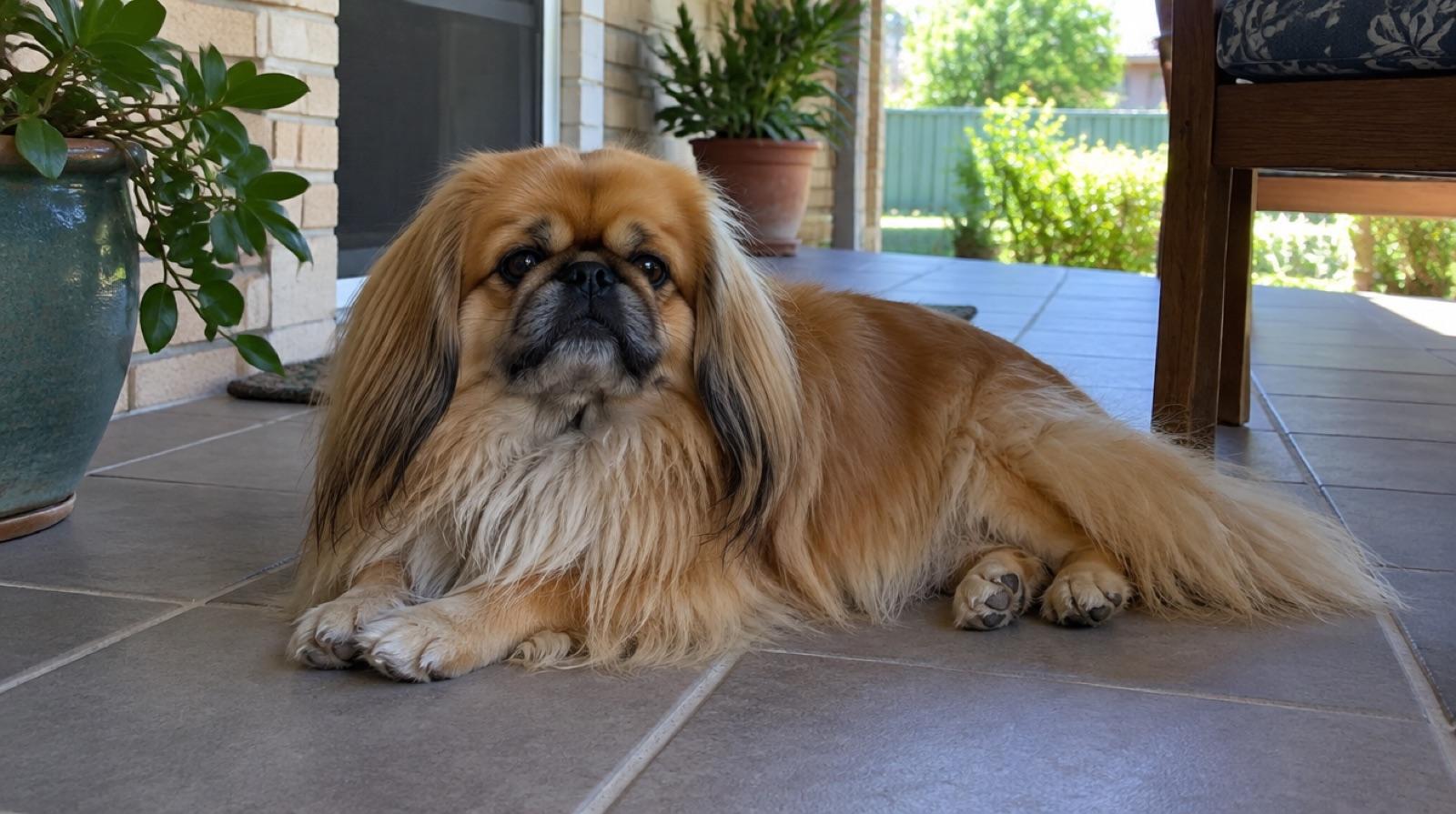
Should you adopt or buy a Pekingese?
Start with the breed, not the route. The Dogs Australia breed standard describes a small, well-balanced, moderately thick-set dog “with great dignity and quality”, and its first paragraph says any signs of respiratory distress for any reason, or an inability to move soundly, are unacceptable and should be heavily penalised. That matters because the Pekingese is a flat-faced (brachycephalic) breed, and recent research puts it among the breeds most affected by breathing problems. The Australian Veterinary Association keeps dog breeds with exaggerated features out of its own advertising and marketing, and its policy names the Pekingese among them.
If you still want a Pekingese, either route can work. A registered breeder who selects for open nostrils and quiet breathing gives you the best odds with a puppy. A rescue gives you an adult whose breathing, eyes and character you can see before you commit. The route to avoid is an online ad for a cheap or “rare colour” Pekingese with no information about the parents.
| Route | Reference cost | What you usually get | Main risk |
|---|---|---|---|
| Dogs Australia registered breeder | No member breeder we checked published a price; ask each one | A puppy with pedigree papers, often on the Limited Register, from parents you can meet | Waiting lists; breathing problems can still develop |
| General rescue or council pound | The standard fee, for example $395 to $1,200 at the RSPCA rows below | Adult Pekingese and Peke crosses, desexed and microchipped | Listings come and go; you may wait |
| Online ad or unregistered seller | Any price; a cheap price is a scam warning | Untested parents, merle or other off-standard colours, or a puppy that does not exist | Breathing and eye problems, and scams |
Reference figures: the RSPCA NSW, RSPCA ACT and RSPCA Victoria fee pages, read 11 November 2026. They are not quotes; rescues change their fees, so check with them.
What did the Cambridge study find about Pekingese breathing?
It found the Pekingese among the most affected breeds it studied. The study, by Tomlinson, Liu, Sargan and Ladlow at the University of Cambridge, was published in PLOS One on 18 February 2026. It assessed 898 dogs over 12 months old from 14 flat-faced breeds in the UK, recruited between September 2021 and April 2024 at the Cambridge vet school hospital, dog shows and breed health testing days, listening to each dog's airway before and after a three-minute exercise test. Grade 0 means no signs of BOAS, grade 1 mild signs heard only with a stethoscope, and grades 2 and 3 are clinically significant.
- The study included 46 Pekingese, and only 10.9% of them were free of BOAS signs (grade 0).
- The authors found no significant difference between the Pekingese and the three best-known flat-faced breeds (Pugs 7%, French Bulldogs 10% and Bulldogs 10.9% at grade 0 in a 2016 study), so they called it a higher-risk breed, alongside the Japanese Chin.
- Only 17.8% of the Pekingese had open nostrils, and some had severely narrowed (stenotic) nostrils.
- Few of the Pekingese were overweight, so the authors suggest other factors matter more for this breed than weight.
These were UK dogs (pets, breeding and show dogs), not Australian ones, and dogs that had already had BOAS surgery were left out. It is still the best published evidence for the breed. Following the study, the Royal Kennel Club opened its Respiratory Function Grading scheme to the Pekingese and 13 other breeds in the UK in February 2026. In Australia, ask a breeder whether a vet has assessed the parents' breathing, and how.
The RSPCA Knowledgebase describes BOAS as a lifelong and often progressive disorder that affects a dog's ability to live comfortably, with noisy breathing, breathing difficulty, exercise intolerance, coughing and passing out. It says surgery can help, but dogs may still need lifelong management. The breed standard points the same way: it asks for a nose that is not too short, with large and open nostrils, and says pinched nostrils and heavy over-nose wrinkles are unacceptable and should be heavily penalised.
What about Pekingese eyes, heat and coat?
Eyes
The RSPCA groups the eye problems of flat-faced dogs as brachycephalic ocular syndrome: corneal ulcers, dry eye and eye trauma, which can include the eyeball bulging out of its socket. It says affected dogs often need surgery, medication and ongoing care. Dogs Victoria lists eye issues among the health conditions that occur in the breed, along with luxating patellas, heart issues and respiratory complications, Dogs Victoria says to clean around the eyes and the facial creases daily, and Dogs Australia says a Peke in full coat needs careful removal of dirt from the facial creases and around the eyes. The standard itself asks for eyes “free from obvious eye problems”. A red, cloudy or weeping eye needs a vet promptly.
Heat
The RSPCA says flat-faced breeds have a reduced capacity to cool down by panting, and that overweight dogs overheat faster. Dogs Victoria calls the Pekingese “definitely an indoors companion” that needs a cool space in very hot and humid weather. Walk early and late, give shade and a cool room, and never leave a Pekingese in a car. Heatstroke is an emergency; get to a vet immediately. Read dogs in hot weather for summer planning.
Flying is another heat and breathing question. Qantas Freight lists the Pekingese among the brachycephalic breeds on its pet travel page, so read the airline's current rules and talk to your vet before you plan to fly one interstate.
Coat
The standard describes a double coat with a mane, and says excessive coat must be heavily penalised. Dogs Australia says a Pekingese in full coat needs daily brushing, and that a non-showing Peke can be kept in a shorter “puppy cut” that is less work. Our Pekingese coat, heat and eye care guide covers the daily routine, and the Pekingese health guide covers the wider health picture.
What should you ask a Pekingese breeder?
No Australian club publishes a single required test list for the breed that we could find, so judge a breeder by what the standard and the evidence point to:
| Ask about | Why | Source |
|---|---|---|
| Parents' breathing, at rest and after exercise | BOAS is common in the breed; respiratory distress is a heavy fault in the standard | Cambridge 2026; Dogs Australia standard |
| Open nostrils on both parents | Narrowed nostrils were linked to BOAS across the breeds studied | Cambridge 2026; Dogs Australia standard |
| Eye checks | Flat-faced dogs are prone to ulcers, dry eye and eye trauma | RSPCA; Dogs Victoria |
| Kneecaps and heart | Listed among the conditions that occur in the breed | Dogs Victoria |
| A lean body and a moderate coat | Weight raises heat risk; excessive coat is a heavy fault | RSPCA; Dogs Australia standard |
Sources read 11 November 2026. Ask for any vet reports by the parents' registered names, so you can match them to the litter.
Colour is a quick check too. The standard says all colours and markings are permissible and of equal merit, except albino, liver or merle. A seller advertising a merle Pekingese is selling a dog outside the standard.
How much is a Pekingese puppy from a registered breeder?
We could not find a published figure. In November 2026 we read the own websites of Pekingese breeders that show Dogs Australia membership, leaving out listing and marketplace sites. None of them published a price for a pet puppy, and we found no Australian Pekingese club that publishes a guide price. Prices on listing sites, or from sellers whose sites showed no membership, are not something we quote.
Registered Pekingese puppies are not common. Dogs Australia's registration figures show 107 Pekingese registered in 2025, down from 161 in 2018, so expect to wait. When you ask a breeder for a price, ask what it includes: the parents' vet checks, vaccinations and microchip, the register type and desexing agreement, and whether the breeder will take the dog back.
Budget for what comes after, too. The dog cost calculator gives a first-year figure, and our guides to cheaper vet care and desexing costs help with the rest. Pet insurance or savings matter more than usual for a flat-faced breed.
See the Pekingese listed right now
Pekingese and Peke crosses from the rescues, shelters and council pounds we aggregate, each with its rescue, desexing and microchip details. Every listing links to the rescue, where you apply directly.
What do Pekingese in rescue look like?
Mostly adults, plus Peke crosses. Pekingese come into rescue for the same reasons as other dogs, such as an owner moving, going into care or no longer being able to manage. A rescue Peke may already have had eye or airway treatment, and a good rescue will tell you what it knows.
That honesty is the advantage of adopting. With a puppy from an ad, you find out about the airway and eyes later. With an adult in rescue, you can watch the dog breathe and move, ask how it copes on a warm day, and read its vet notes before you sign anything. Our Pekingese adoption guide for Sydney covers the local side.
What does a rescue Pekingese cost?
| Rescue | Fee as published | Read |
|---|---|---|
| RSPCA NSW | $620 puppy under 12 months; $500 dog over 12 months | 11 Nov 2026 |
| RSPCA ACT | $395 for dogs over 6 months and under 8 years; $650 for popular breeds and mixes with high adoption demand over 12 months; $1,200 for popular small breed puppies with high adoption demand up to 12 months (the page does not say which breeds count as popular) | 11 Nov 2026 |
| RSPCA Victoria | $500 to $1,000 for adult dogs | 11 Nov 2026 |
Reference only, not a quote. These are the fees each rescue published on the date shown; fees change and some dogs are priced individually, so check with the rescue. The fee normally covers desexing, microchipping, vaccinations and a vet check. Read our guide to adopting a dog in Australia.
If no Pekingese is listed near you, browse small dogs as well: Sydney, Melbourne, Brisbane, Perth, Adelaide.
How do Pekingese puppy scams work?
Never send a deposit for a Pekingese puppy you have not seen with its mother, in person or at least on a live video call. A seller who asks for more money after the first payment, for transport, a crate or insurance, is following the standard scam script.
Scamwatch warns that scammers set up fake websites, social media profiles and marketplace listings for pets that do not exist, and that a very cheap pet is likely a scam. Dogs Victoria's puppy scam fact sheet adds that fake ads may display microchip, source or membership numbers lifted from legitimate breeders. What to watch for with a Pekingese:
- A price that seems too good. Scamwatch says a very cheap pet is likely a scam. Pressure to pay a deposit quickly is a reason to stop, not to hurry.
- Off-standard colours. Merle, liver and albino are outside the Dogs Australia standard.
- Borrowed numbers. A real breeder's membership or source number in an ad proves nothing on its own. Contact the breeder through Dogs Australia or the state body, not the ad.
- “Vet checked” and nothing more. A puppy vet check says nothing about how the parents breathe.
Our guide to puppies for sale in Australia has the state-by-state table of breeder numbers, how to check each one, and what to do if you have already paid.
When is a registered breeder the better choice?
Rescue is not right for everyone. A registered breeder is a reasonable choice if you want a puppy and are prepared to wait for one from parents you can meet, or if you have kept the breed before and know what it needs. Check these before you pay:
- Registration. Ask for the breeder's prefix and membership number and check them with Dogs Australia or the state body. It confirms membership, not puppy quality.
- The parents' breathing. Watch and listen to the mother at rest and after a short walk. Look for open nostrils and no snoring at rest.
- Eyes and kneecaps. Ask what vet checks the parents have had, by name.
- A moderate dog. A breeder who talks about breathing and soundness before coat and colour.
- A written contract covering health problems, register type, desexing and whether the breeder will take the dog back.
Is a Pekingese the right dog for you?
The appeal is real. The standard describes a fearless, loyal and aloof dog, “not timid or aggressive”, and Dogs Victoria describes a comical, determined and very affectionate personality behind the regal look, and says Pekingese are not prone to be nuisance chewers or diggers. Be honest about three things before you apply. Heat: you need a cool indoor space and a plan for every summer. Care: eyes and face creases need daily attention, and the coat needs brushing or clipping. Money: a flat-faced breed needs pet insurance or savings for airway and eye problems.
Not sure it fits? Try the what dog breed am I quiz and the adoption readiness check, and read our guides to apartment dogs and calm dog breeds.
Find a Pekingese near you
Pekingese and Peke crosses listed by rescues, by city:
- Pekingese for adoption in Sydney
- Pekingese for adoption in Melbourne
- Pekingese for adoption in Brisbane
- Pekingese for adoption in Perth
- Pekingese for adoption in Adelaide
Local guides to adopting a Pekingese, with the rescues that serve each city: Sydney, Melbourne, Brisbane, Perth, Adelaide, Gold Coast. For health in more depth, see the Pekingese health guide.
More adopt-or-buy guides: Shih Tzu, Pug, Boston Terrier, Cavalier King Charles Spaniel, Maltese, Pomeranian, Cairn Terrier, Basenji.
Frequently asked questions
How much is a Pekingese puppy in Australia?▼
We could not find a published price. None of the Dogs Australia member breeders whose own websites we read in November 2026 listed a price for a pet Pekingese puppy, and we found no Australian Pekingese club that publishes a guide price. Ask each registered breeder and compare what is included. Any figure a breeder gives you is their price on the day, not a quote from us.
Do Pekingese have breathing problems?▼
Many do. A University of Cambridge study published in PLOS One in February 2026 included 46 Pekingese in the UK, all over 12 months old, and reports only 10.9% of them free of BOAS signs (grade 0). The authors placed the Pekingese, with the Japanese Chin, in a higher-risk group, with no significant difference from Pugs, French Bulldogs and Bulldogs. Only 17.8% of the Pekingese assessed had open nostrils.
What is BOAS?▼
BOAS, brachycephalic obstructive airway syndrome, is a breathing disorder of flat-faced dogs. The RSPCA describes it as a lifelong and often progressive disorder that causes noisy breathing, breathing difficulty and exercise intolerance, and says surgery can help but dogs may still need lifelong management. Ask your vet to check a Pekingese's breathing.
Can a Pekingese cope with an Australian summer?▼
Only with care. The RSPCA says flat-faced breeds have a reduced capacity to cool down by panting, and Dogs Victoria describes the Pekingese as an indoor companion that needs a cool space in hot and humid weather. Walk early and late, keep the dog lean, and never leave it in a car. Heatstroke is an emergency: get to a vet immediately.
Why do Pekingese get eye problems?▼
Their prominent eyes are exposed. The RSPCA groups the eye problems of flat-faced dogs as brachycephalic ocular syndrome, including corneal ulcers, dry eye and eye trauma, which can include the eyeball bulging out of its socket. Dogs Victoria says to clean around the eyes and face creases daily. See a vet promptly about a red, cloudy or weeping eye.
What does the breed standard say about a Pekingese's face?▼
The Dogs Australia standard asks for a nose that is not too short, with large and open nostrils, and says pinched nostrils and heavy over-nose wrinkles are unacceptable and should be heavily penalised. It also says any sign of respiratory distress is unacceptable. Look for parents that breathe quietly and have open nostrils.
How big does a Pekingese get?▼
Small but heavy. The Dogs Australia standard gives an ideal weight of no more than 5 kg for dogs and 5.4 kg for bitches, and says a Pekingese should look small but be surprisingly heavy when picked up. Dogs Victoria gives an average life span of 10 to 15 years.
Are Pekingese good family dogs?▼
For a calm household, often yes. The standard describes the temperament as fearless, loyal and aloof, not timid or aggressive. Dogs Victoria says Pekingese are agreeable with children who are not too boisterous, and that training takes patience. Supervise children with any dog.
Can I adopt a Pekingese in Australia?▼
Yes, sometimes. Pekingese and Pekingese crosses reach general rescues and council pounds, usually as adults. Watch the Pekingese listings, set an alert, and apply quickly when one appears. A rescue can tell you how the dog breathes and copes with warm weather before you commit.
How much does it cost to adopt a Pekingese?▼
You pay the rescue's standard fee. RSPCA NSW listed $620 for a puppy under 12 months and $500 for a dog over 12 months, RSPCA ACT listed $395 for dogs over 6 months and under 8 years, with higher bands ($650 for adult dogs, $1,200 for small breed puppies) for popular breeds with high adoption demand, without listing which breeds those are, and RSPCA Victoria listed $500 to $1,000 for adult dogs. These were the fees published when we read them in November 2026; they are a reference, not a quote, so check with the rescue.
How do I avoid Pekingese puppy scams?▼
Only pay for a puppy you have seen with its mother, in person or at least on a live video call. Scamwatch says a very cheap pet is likely a scam, and Dogs Victoria warns that fake ads may show microchip, source or membership numbers lifted from real breeders. Check any number yourself with Dogs Australia or your state body, not through a link the seller sends.
Sources
- Dogs Australia: Pekingese breed standard (last updated 22 Feb 2017)
- Dogs Australia: Pekingese breed profile
- Dogs Australia: National Animal Registration Analysis 2018 to 2025
- Dogs Victoria: Pekingese breed information
- Tomlinson, Liu, Sargan and Ladlow (2026), A cross-sectional study into the prevalence and conformational risk factors of BOAS across fourteen brachycephalic dog breeds, PLOS One (University of Cambridge)
- Royal Kennel Club: RFG scheme expanded to 14 more breeds (18 February 2026)
- RSPCA Knowledgebase: What do I need to know about brachycephalic dogs?
- RSPCA Knowledgebase: How can I protect my dog from heatstroke?
- Australian Veterinary Association: dog breeds with exaggerated features in marketing (policy)
- Qantas Freight: Brachycephalic breeds
- Scamwatch: Buying and selling scams (pet scams)
- Dogs Victoria: A7 Identifying puppy scams and puppy farms (fact sheet)
- RSPCA NSW: Adoption fees
- RSPCA ACT: Adoption process
- RSPCA Victoria: The adoption process
Keep reading
Pekingese listed by rescues
Pekingese and Pekingese crosses listed right now by the rescues and shelters we aggregate across Australia.
Shih Tzu puppies: adopt or buy?
The other long-coated flat-faced toy, what the same Cambridge study found, and Shih Tzus in rescue.
Pug puppies: adopt or buy?
What vets found about Pug health, the checks to ask about, and Pugs in rescue.
Pekingese coat, heat and eye care
Daily eye and face care, coat options and keeping a Peke cool in summer.