The short answer
A Pekingese needs three things done well and often. Comb the long double coat to the skin several times a week so it does not mat, and get a professional groom every few weeks. Manage the heat, because a flat-faced dog with a thick coat overheats fast in Sydney, so exercise only in the cool hours, use air-conditioning on hot days, and never leave the dog in a car. Clean and dry the eye area and the facial folds every day, and watch the prominent eyes for any sign of pain or injury. A sensible shorter summer trim is fine and common, but never shave to the skin. Handle the dog gently and never by the scruff. Do those three jobs and a Pekingese is a wonderful Sydney companion.
The three jobs that define the breed
Most breeds have one headline care need. A Pekingese has three, and they are tangled together. The coat is long, dense and double, so it demands real grooming. The face is flat, so the dog cannot cool itself well and struggles in heat. And the eyes are large and prominent, sitting in facial folds that trap moisture, so they need daily attention. None of these is hard on its own. The mistake is treating a Pekingese like a low-maintenance lap dog because it is small and quiet. It is not. It is a high-care dog in a small package.
The good news is that all three jobs become routine once you build them into daily life. Ten minutes of combing, a bit of common sense about when to walk in summer, and a quick wipe of the eyes and folds each day. That is the shape of it. The Pekingese breed page covers the temperament and the loyal, dignified character of the dog. This guide is about the daily hands-on care that keeps that dog comfortable and healthy in Sydney.
The coat: brush little and often, or pay for it later
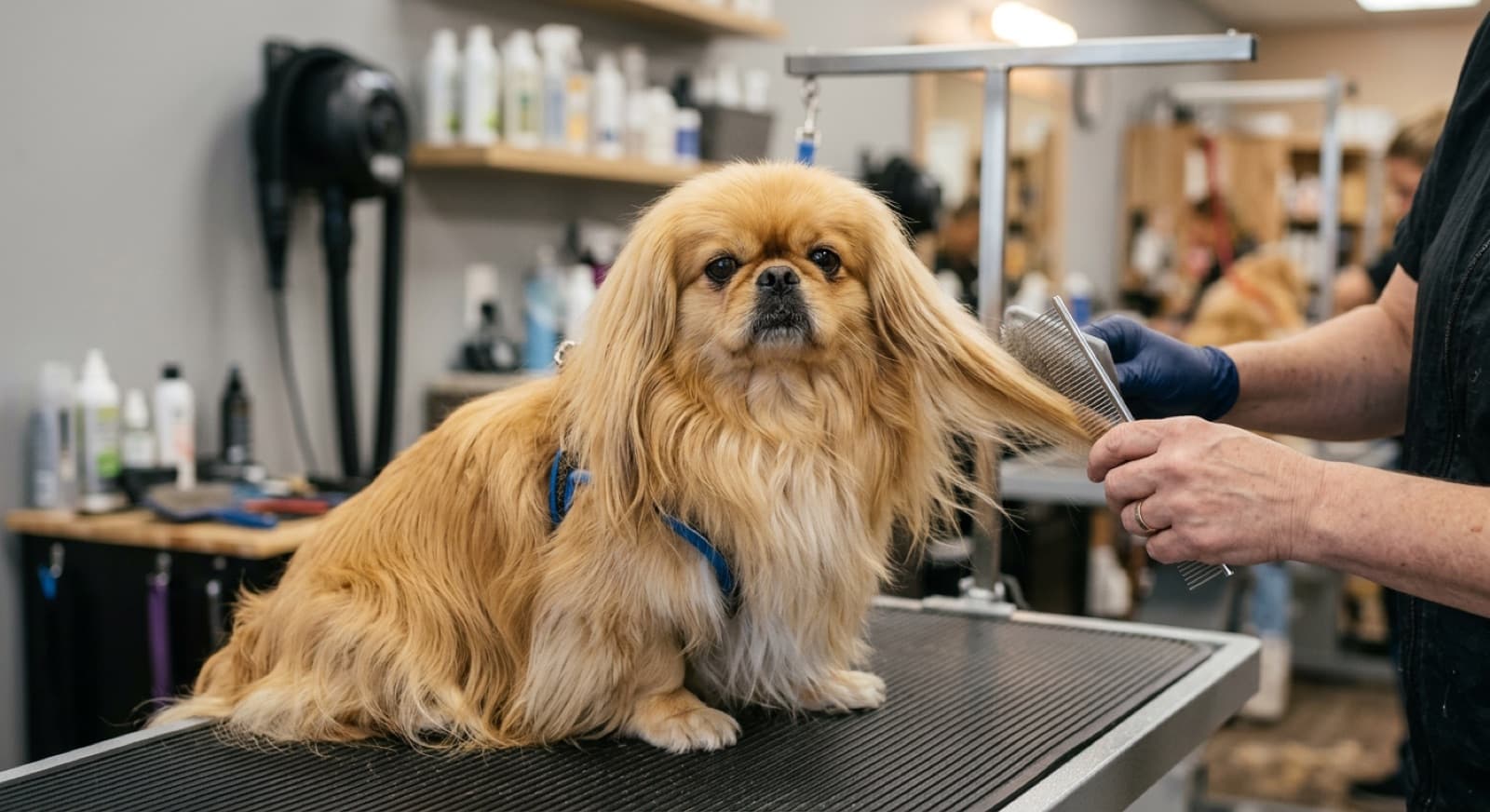
A Pekingese wears a profuse, long, straight topcoat over a thick, soft undercoat. That double structure is exactly what tangles and felts if it is left, because the soft undercoat catches and binds against the longer outer hair. Mats form first and fastest at the friction points: behind the ears, in the armpits, through the feathering on the legs, in the trousers at the rear, and around the back end. A mat can look tidy on the surface while it tightens against the skin underneath, pulling and trapping moisture, which is why surface brushing is not enough.
The technique that actually works is line-combing. You part the coat in sections and comb right down to the skin, working through a small area at a time so nothing is skimmed over. Do this several times a week at least, and a little every day is better still. The reward for little and often is that you almost never get serious mats. Skip it for a fortnight and you usually end up with tight mats that have to be clipped out, which is uncomfortable for the dog and more expensive at the groomer.
Two coat areas need special mention. The rear and sanitary area must be kept clean and neatly trimmed, because a long coat plus a flat face makes toileting hygiene a genuine issue, and a soiled, damp rear mats and smells. And bathing needs proper drying. A Pekingese that is bathed but not blow-dried down to the skin will often mat as it dries and can develop a musty smell from the damp undercoat, so thorough drying is part of the bath, not an optional extra. On top of your home routine, most Pekingese need a professional groom every few weeks for the bath, blow-dry, nails, ears and a tidy of the rear and feet.
Plenty of Sydney owners keep their Pekingese in a shorter clip, often called a puppy cut or a lion trim, to cut the grooming workload and help with the summer heat. That is a reasonable, common choice and nothing to feel guilty about. The one rule is that a groomer should take the length down sensibly and not shave the coat right to the skin. A double coat gives some protection from sun and heat, and shaving to bare skin can leave it growing back patchy or with a changed texture. Shorter, yes. Bald, no.
The Sydney heat: a flat face under a heavy coat
This is the pillar with the highest stakes. A Pekingese is a brachycephalic breed, which simply means flat-faced, and that shortened skull crowds the nose and throat so the dog works harder to move air. Dogs cool themselves mainly by panting, moving air fast over a wet tongue and airway to shed heat. A flat-faced dog cannot pant efficiently, and on top of that a Pekingese carries a thick double coat that holds warmth in. Put those together and you have one of the breeds most at risk of heatstroke, which can be fatal. Heat, not cold, is the dog-safety risk in Sydney, where summers regularly reach the mid-thirties with real humidity.
Managing it is not fussing. It is the core of keeping the breed safe, and the rules are simple once they are habit:
- Exercise only in the cool of early morning and evening in summer. Never walk or play hard in the middle of a hot day.
- Avoid hot pavement. Hot bitumen burns paw pads and radiates heat straight up at a low dog. Check it with the back of your hand first, and stick to shade and grass.
- Always carry water, and offer it often on any outing.
- Provide shade, cool mats and air-conditioning on hot days, and give the dog a genuinely cool place to retreat to at home.
- Never leave your dog in a parked car, not even for a couple of minutes with the windows down. A car heats to lethal levels shockingly fast.
- Watch the humidity, not just the temperature. On a humid Sydney day panting works even less well, so a muggy 28 degrees can be more dangerous than a dry 33.
Learn the warning signs of overheating and act the instant you see them. Early heat stress looks like frantic, loud, laboured panting, heavy drooling and gums turning bright red. As it worsens the dog goes wobbly and weak, the gums can shift from bright red to grey or blue, and it may collapse. If you see any of this, treat it as an emergency: move the dog into shade or air-conditioning, offer water, and cool it with cool, not ice-cold, water over the body, then get to a vet immediately. Sydney has 24/7 specialty and emergency services such as the Small Animal Specialist Hospital (SASH) for after-hours crises. The acute first-aid and medical detail sits in the Pekingese health issues guide. The Australian Veterinary Association also has general guidance on keeping dogs safe in hot weather, and the RSPCA Australia Knowledgebase covers the welfare issues of flat-faced breeds.
This is where the coat and the heat meet. A summer trim plus air-conditioning is genuinely kinder to a Pekingese than a heavy full coat in a heatwave. A shorter clip will not, on its own, make a flat-faced dog safe in the heat, so it never replaces the cool-hour rule. But it does reduce one source of trapped warmth, and combined with sensible timing and a cool home it makes the Sydney summer easier on the dog.
Eyes and face folds: a daily wipe, and watch closely
The Pekingese has large, round, prominent eyes set in a flat face with facial folds around the nose. Both features need daily care. Each day, use a soft damp cloth or a vet-recommended wipe to clear any discharge from the corners of the eyes, then clean and, most importantly, dry the nose wrinkle and any folds. Moisture trapped in a warm fold is the problem: it quickly leads to skin irritation and infection, so drying is the step people forget and the one that matters most. Some tear staining below the eyes is common and mostly cosmetic.
Keep the hair around the eyes trimmed short so it cannot rub against the surface of the eye, because stray hairs are a constant low-level irritant on a face built like this. And watch the eyes closely. The prominent Pekingese eye is easily scratched or injured, so squinting, redness, cloudiness, obvious pain, or your dog pawing at an eye are all reasons to get to a vet quickly rather than waiting to see if it clears. A sudden change in the amount or colour of eye discharge is also worth a check. The specific eye conditions this breed is prone to, and why the prominent eye carries a real injury risk, are covered in the health guide. This is the part of daily care where fast action genuinely protects the dog.
Handling ties straight into eye safety. Lift a Pekingese gently with both hands supporting the body, and never grab or scruff it by the neck or the loose skin near the head, because rough handling and pressure around the head raise the risk of an eye injury. Support the chest and hindquarters, keep the dog level, and teach children to let the dog come to them rather than snatching it up. A dog that is handled calmly around the face also learns to tolerate the daily eye and fold cleaning, which makes the whole routine easier for both of you.
Browse adoptable Pekingese in Sydney
A Pekingese rewards an owner who commits to the coat, the heat and the daily eye care. Browse live NSW listings and set an alert so you hear the moment one comes into rescue.
See Available Pekingese →Exercise, nails, ears, teeth and ticks
A Pekingese is a low-exercise breed, and that suits the flat face well. A couple of short, gentle walks and some play is plenty. This is not a jogging or long-hike dog, and it should never be pushed through hard or hot activity. Keep walks short, stay in the cool hours in summer, and always use a harness rather than a neck collar so nothing presses on the already-compromised airway. Let the dog set the pace and rest when it wants. Because the breed is bright and can be stubborn, mental work matters as much as physical, so scent games, short training sessions and puzzle feeders keep a Pekingese content without generating heat. On a scorching, humid day, skip the outdoor walk and play indoors in the cool.
The smaller care tasks round out the routine. Trim nails regularly, because a low, short-legged dog does not wear them down much. Check and clean the ears, since a coated breed can trap moisture and wax. And pay real attention to dental care, because a small dog with a flat face has a crowded mouth where teeth sit close together and tartar builds fast, so regular tooth brushing and vet dental checks make a difference over the years.
One Sydney fact ties into all that outdoor time and the thick coat: paralysis ticks are a year-round danger across the region and can be fatal. Keep your Pekingese on a vet-recommended tick prevention product all year, and ask your vet which product suits your dog, rather than choosing one yourself. The thick double coat is the catch here, because it hides ticks far better than a short coat does, so a physical tick check after any time in bushland means parting the coat and feeling right down to the skin, not just running a hand over the top. The health guide goes deeper on ticks and the breed-specific medical topics.
Is a Pekingese right for your Sydney home?
Put it together and the picture is honest. A Pekingese is a loyal, calm, dignified companion that does not need much exercise and is happy in an apartment or a house. In return, it asks for real daily care: combing the coat so it does not mat, protecting a flat-faced dog from the Sydney heat, and cleaning the eyes and folds every single day. If you can commit to that, it is a genuinely rewarding little dog and a good fit for city living.
If your idea of a small dog is a low-maintenance one you can largely leave to itself, be honest with yourself before you adopt, because a Pekingese is not that dog. Sydney and NSW rescues such as RSPCA NSW, AWL NSW, Sydney Dogs and Cats Home, Monika's Doggie Rescue and Maggie's Rescue assess their dogs in foster and shelter care, and can tell you honestly how a particular Pekingese or Pekingese cross is coping with its coat, the heat and its eyes. Purebred Pekingese are not common in rescue, so setting an alert is the practical way to catch one. If you go ahead, register your adopted dog with your council through the NSW Pet Registry as required under the Companion Animals Act. The Pekingese adoption guide covers where to look and what adoption costs against a breeder.
Frequently Asked Questions
How often should I groom a Pekingese?
Brush and comb a Pekingese thoroughly several times a week at a minimum, and ideally a little every day, because the long double coat mats fast if it is left. The coat is a profuse, straight topcoat over a thick soft undercoat, and the trouble spots are behind the ears, the feathering on the legs, the trousers at the back and around the rear. Line-combing, where you part the coat and comb right down to the skin in sections rather than skimming the surface, is what actually stops mats forming, because a mat can look fine on top while it tightens against the skin underneath. On top of your home routine, most Pekingese need a professional groom every few weeks for a bath, a proper blow-dry to the skin, nail trim and a tidy-up of the rear and feet. If you skip the brushing for a couple of weeks you will usually end up with mats that have to be clipped out, so little and often beats one big session.
Can I shave my Pekingese in summer?
You can give a Pekingese a shorter summer trim, and many Sydney owners do exactly that for easier upkeep and to help with the heat, but do not shave a double coat right down to the skin. A tidy shorter clip, often called a puppy cut or a lion trim, is a reasonable and common choice that cuts the grooming workload and can make a hot summer more comfortable. Shaving to bare skin is different and not recommended, because the coat gives some protection from sun and heat, and a double coat that is shaved to the skin can grow back patchy or with a changed texture. A good groomer can take the length down sensibly without going to the skin. Pair a shorter trim with the real heat rules, cool-hour exercise and air-conditioning, because a trim on its own does not make a flat-faced dog safe in a heatwave.
Can Pekingese cope with the Sydney heat?
They can, but only with active management, because a Pekingese is a flat-faced brachycephalic breed carrying a heavy double coat, which is a hard combination in a hot climate. Dogs cool themselves mainly by panting, and a shortened airway makes panting much less effective, so a Pekingese cannot shed heat the way a long-nosed dog can, and the thick coat holds warmth in. That does not mean the breed cannot live happily in Sydney, plenty do, but you carry the job of keeping it out of the worst heat. Exercise only in the cool of early morning and evening, never the middle of a hot day, provide shade, water and air-conditioning or a cool mat when it is hot, and never leave the dog in a parked car. Watch humidity as closely as temperature, because a muggy day makes panting even less effective. A sensible summer trim plus air-conditioning is far kinder than a heavy coat in a Sydney heatwave.
How do I care for a Pekingese's eyes and face folds?
Clean and dry the eye area and the facial folds every day, and watch the large prominent eyes closely for any sign of trouble. Use a soft damp cloth or a vet-recommended wipe to clear discharge from the corners of the eyes, then wipe the nose wrinkle and any folds and dry them properly, because trapped moisture in a warm fold quickly leads to skin irritation and infection. Keep the hair around the eyes trimmed short so it cannot rub the surface of the eye. The Pekingese eye sits prominently and is easily injured or scratched, so if you ever see squinting, redness, cloudiness, obvious pain or your dog pawing at an eye, treat it as urgent and get to a vet quickly rather than waiting. Some tear staining under the eyes is common and mostly cosmetic, but a sudden change in the amount or colour of discharge is worth a check.
Do Pekingese need a lot of exercise?
No, a Pekingese is a low-exercise breed that suits a couple of short, gentle walks and some indoor play rather than long or hard activity. The flat face means it cannot handle sustained or hot exercise the way an athletic breed can, so this is not a jogging or long-hike dog. Keep walks short, stick to the cool hours in summer, use a harness rather than a neck collar so nothing presses on the airway, and let the dog set the pace and rest when it wants. Mental stimulation matters as much as physical activity for this breed, so scent games, short training sessions and puzzle feeders keep a Pekingese happy without generating heat. On the hottest, most humid Sydney days, skip the outdoor walk entirely and play indoors in the cool instead.
Why does my Pekingese get matted so easily?
The Pekingese coat mats easily because it is a long, dense double coat, and a soft undercoat under a long topcoat is exactly the structure that tangles and felts if it is not combed to the skin. Friction points make it worse, so the areas that rub, behind the ears, the armpits, the trousers at the rear and the leg feathering, are where mats form first and tightest. Moisture is the other trigger, which is why a Pekingese that is bathed but not dried thoroughly to the skin will often mat and can start to smell, and why the damp rear and sanitary area needs to be kept clean and trimmed. The fix is line-combing several times a week rather than surface brushing, drying properly after any bath, and keeping the friction areas and the rear neat. If mats have already tightened against the skin, do not tug at them, because that hurts and can tear the skin. Let a groomer clip them out safely.
How do I know if my Pekingese is overheating?
The early signs are frantic, loud, laboured panting, heavy drooling and gums that turn bright red, and this is an emergency the moment you see it. As overheating worsens the dog becomes wobbly and weak, the gums can shift from bright red to a grey or bluish colour, and it may collapse. Because a flat-faced, heavily coated dog struggles to cool itself, heat stress can escalate to life-threatening heatstroke very quickly. If you see these signs, stop everything, move the dog into shade or air-conditioning, offer water, and cool it with cool, not ice-cold, water over the body, then get to a vet straight away and do not wait to see if it settles. The full acute detail sits in the Pekingese health guide, but the short version is simple: treat any overheating episode as the genuine emergency it is, because heatstroke can kill a flat-faced dog fast.
How should I pick up and handle a Pekingese?
Lift a Pekingese gently with both hands supporting the body, and never grab or scruff it by the neck or the loose skin near the head. The breed has large, prominent eyes that sit forward in a flat face, and rough handling or pressure around the head and neck can raise the risk of an eye injury, so calm, supported lifting matters more than it does for a long-nosed dog. Support the chest and hindquarters, keep the dog level, and teach children to sit and let the dog come to them rather than snatching it up. Gentle handling also helps with the daily care, because a Pekingese that is used to being touched calmly around the face will tolerate eye cleaning, fold cleaning and combing far better. The specific medical reasons behind protecting the eyes are covered in the health guide.
Keep reading
Adoptable Pekingese in Sydney
Live listings of Pekingese and Pekingese crosses across Sydney and NSW rescues.
Pekingese Adoption in Sydney
Where to adopt, why Pekingese end up in rescue, and what adoption costs against a breeder.
Pekingese Health Issues in Sydney
Prominent-eye conditions, brachycephalic airway problems, heatstroke first-aid and year-round tick prevention.
All Sydney Adoption Guides
Browse every breed and how-to guide for adopting a rescue dog in Sydney.