The short answer
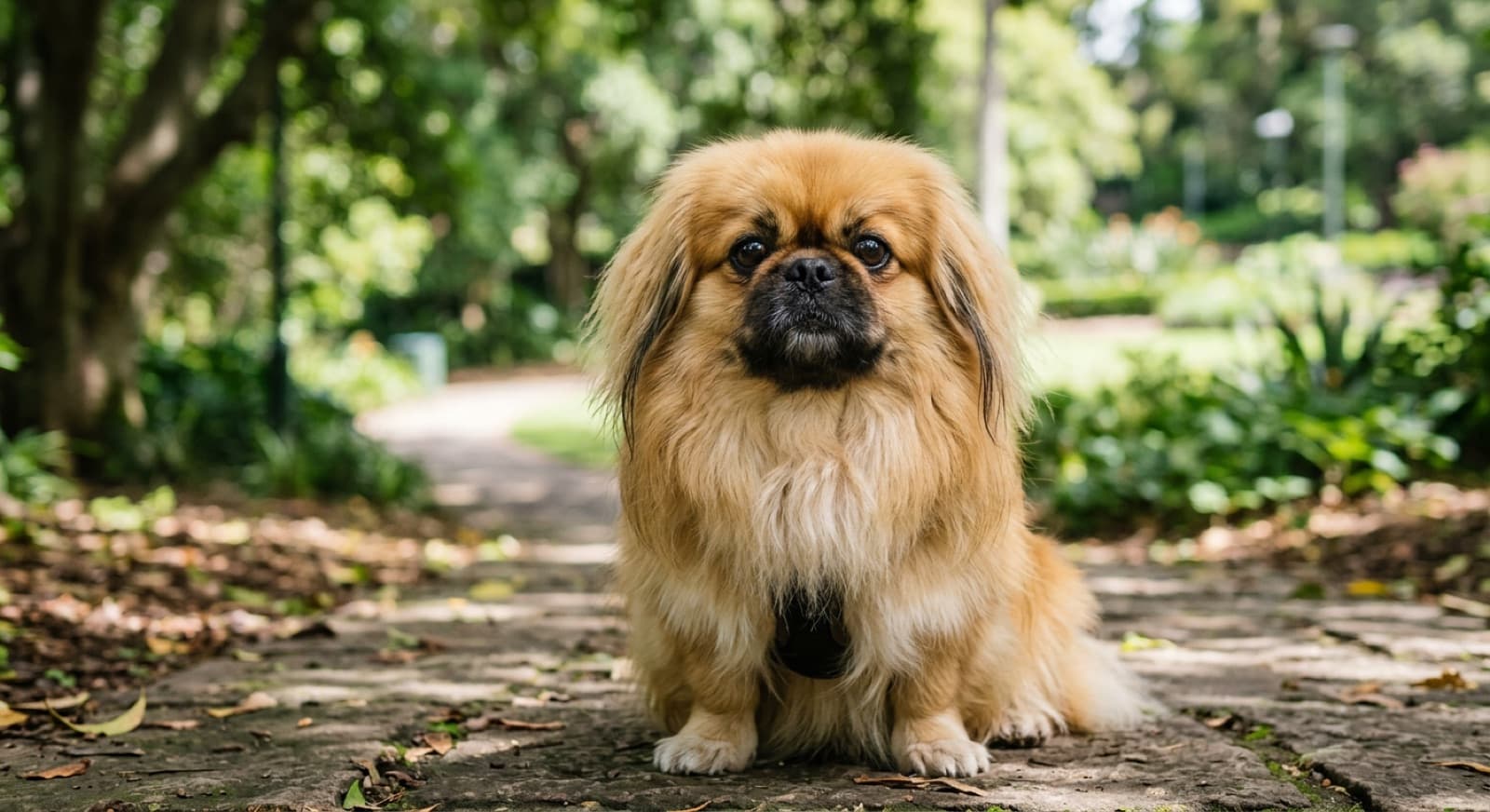
The Pekingese is a small brachycephalic, or flat-faced, breed, and that shape drives most of its health picture. The big one is breathing: a narrowed airway causes snoring and snorting and, in Sydney, a real danger in the heat, because a flat-faced dog cannot cool itself well and can overheat fast. The second is the eyes, which are large, prominent and exposed, and prone to ulcers, dryness and a knock-out injury called proptosis where the eye pops out of its socket. Watch too for skin-fold irritation on the face, back problems in a long-backed dog, a slipping kneecap, and dental disease in a small crowded mouth. Learn two emergencies above all: heatstroke, and an eye out of its socket. Both mean get to a vet at once.
Breathing and the flat face: the first thing to understand
If one thing defines the Pekingese's health, it is the short muzzle. Pekingese are brachycephalic, meaning flat-faced, and that pushed-in nose comes with a narrowed airway. The same soft tissue that sits in a long-nosed dog's muzzle is packed into a much smaller space, which can partly obstruct the flow of air. Vets call the result brachycephalic obstructive airway syndrome, or BOAS, and it ranges from barely noticeable to severe.
A mildly affected Pekingese might snort, snore and breathe noisily but otherwise live an ordinary happy life. A more affected dog struggles with exercise, tires quickly, breathes with obvious effort, and can gag or bring up foam. The signs to watch for are noisy or laboured breathing, poor stamina on walks, a dog that overheats easily, and disturbed sleep from snoring. If your Pekingese shows the more significant end of that, see your vet. BOAS can be assessed, and in significant cases it can be helped with surgery to open up the airway. The RSPCA Australia Knowledgebase has clear guidance on brachycephalic breeds and the welfare issues that come with a flat face.
Everyday management matters as much as anything a vet can do. Keep your Pekingese lean, because extra weight crowds the airway further. Use a harness rather than a collar so nothing presses on the throat. Walk in the cool parts of the day, keep exercise light, and never push a flat-faced dog to keep going when it is working hard to breathe. Heat is the big multiplier here, which is the next thing to understand. Our Pekingese coat, heat and eye care guide for Sydney goes into day-to-day management in full.
Heat: the Sydney danger for a flat-faced dog
Dogs cool themselves mainly by panting, moving air over a wet tongue and airway to shed heat. A brachycephalic Pekingese has a narrowed airway, so panting works far less well, and heat builds up quickly. Add the breed's heavy double coat and you have a dog that is doubly poor at staying cool. This is why a Pekingese is at much higher risk of heatstroke than a long-nosed dog, and why heat is the single biggest day-to-day safety issue for one in Sydney.
Sydney summers bring humid days and the odd 35 degree spike, and humidity makes cooling even harder. The rules are simple and they matter. Walk your Pekingese in the early morning or after dark, never in the heat of the day. Always carry water. Never leave the dog in a car, not even for a minute with a window cracked, and never leave it in a yard without proper shade and water. On a hot, still, humid day, the safest choice is to skip the walk and let the dog rest somewhere cool. Deep heat and coat management belongs to the dedicated guide linked above, but the emergency below is the one every Pekingese owner must know.
Emergency: heatstroke in a Pekingese
This is the one Pekingese emergency every owner must know, because a flat-faced, heavy-coated dog overheats fast and heatstroke is life-threatening. The signs are heavy, laboured or frantic panting, bright red or bluish gums and tongue, thick drooling, distress and unsteadiness, and in severe cases collapse, vomiting or seizures. Act at once. Move the dog to shade or air conditioning, wet it down with cool (not icy) water over the body, offer small sips of water if it can drink, and get to a vet immediately, phoning ahead so they are ready. Cooling on the way matters, so do not delay to cool perfectly first. Out of hours, head to a 24/7 hospital such as SASH, which offers round-the-clock emergency care in Sydney. Do not assume a dog that seems to recover is fine, because heatstroke can cause internal damage that shows up later.
The eyes: a Pekingese signature
Alongside breathing and heat, the eyes are the defining Pekingese health area. Those large, prominent eyes are a big part of the breed's look, but they sit in very shallow sockets and stick out more than a deeper-set eye, which leaves them exposed and easy to injure. Eye care is a genuine part of owning a Pekingese, and knowing the signs of trouble makes all the difference.
Corneal ulcers. An ulcer is a graze or sore on the clear surface of the eye, and Pekingese get them more easily because the surface is so exposed. Causes include a bump, a scratch from a bush or a paw, an in-turned eyelid or lash rubbing on the eye, or a dry eye. The signs are squinting or holding the eye shut, redness, a cloudy or hazy look to the surface, watering, and pawing or rubbing at the eye. A corneal ulcer is painful and can worsen quickly, so it is an urgent vet visit, not a wait-and-see. Prompt treatment usually resolves it well, while a neglected ulcer can threaten the eye itself.
Dry eye, entropion and lash problems. Pekingese can develop dry eye, properly called keratoconjunctivitis sicca, where the eye does not make enough tears and becomes sore, red and prone to infection and ulcers. A thick or sticky discharge and a dull-looking surface are clues. The breed is also prone to entropion, where an eyelid rolls inward so the lashes rub on the surface of the eye, and to stray lashes doing the same, both of which cause chronic irritation and ulcers. If you notice constant tearing, squinting, redness or a dog rubbing at an eye, have your vet check it, since these are treatable and early assessment protects the eye.
Emergency: a Pekingese's eye out of its socket (proptosis)
Because a Pekingese's eyes are so prominent and the sockets so shallow, even minor trauma can force the eyeball forward out of its socket. A knock to the head, a fall, a dog fight, or too much pressure from rough restraint or scruffing the neck can all do it. This is called proptosis, and it is a true emergency. The eye will visibly bulge out with the lids caught behind it. Do not try to push it back in and do not touch the eye. Keep it moist with a clean, damp cloth or saline, stop the dog rubbing at it, and get to a vet or a 24/7 emergency hospital immediately, because fast treatment gives the best chance of saving the eye. Handle a Pekingese gently around the head, never grab it by the scruff, and treat any sudden, severe or obviously abnormal change to an eye as urgent.
Skin folds: the face wrinkles need daily care
The Pekingese's flat face comes with deep skin folds across the muzzle and around the nose, and those folds need looking after. They are warm and they trap moisture, food and dead skin, which lets bacteria and yeast build up. The result, called skin-fold dermatitis, shows as redness, a damp or greasy feel, an unpleasant smell, and a dog that rubs or scratches at its face.
It is largely a preventable problem. Wiping the facial folds clean and, just as importantly, drying them thoroughly is the daily habit that keeps trouble away, and it matters even more through a humid Sydney summer when everything stays damp. The nose fold, which sits close to the eyes, also needs care so that hair and moisture there do not irritate the eye surface. If a fold becomes sore, smelly or infected despite regular cleaning, see your vet, since it is treated easily when caught early. The step-by-step fold and eye routine lives in the coat, heat and eye care guide linked above.
The back: a long-backed dog needs protecting
The Pekingese is a long-backed, short-legged dog, and that shape puts extra strain on the spine. The main concern is intervertebral disc disease, where one of the cushioning discs between the vertebrae bulges or ruptures and presses on the spinal cord. It can cause pain and, in more serious cases, weakness or worse in the back legs.
The signs to know are back or neck pain, a reluctance to move, jump or climb stairs, a hunched posture, yelping when touched or picked up, and wobbliness or weakness in the back legs. A sudden inability to walk or use the back legs is an urgent emergency: get to a vet at once, because prompt treatment gives the best chance of recovery. You can lower the risk in everyday life. Keep your Pekingese lean, discourage jumping on and off the sofa or bed, add a ramp or steps where the dog likes to climb, and always support the whole body when you lift, one hand under the chest and one under the rear, so the back never dangles. It is one more reason to take out pet insurance early, before anything is on record as a pre-existing condition.
Luxating patella: the slipping kneecap
Like many small breeds, the Pekingese can have a luxating patella, which simply means a kneecap that slips out of its normal groove. The classic sign is a dog that suddenly skips or hops on a back leg for a few strides, then carries on as if nothing happened once the kneecap slots back into place. You will often see it as an intermittent little hitch in the walk rather than a constant limp.
Some dogs do this occasionally and are never troubled by it, while more significant cases cause ongoing limping, stiffness and, over the years, arthritis. If you notice the skipping gait, mention it to your vet, who can feel the knee and grade how loose it is. Mild cases are usually managed by keeping the dog lean and fit, since every extra gram loads the joint. More severe cases sometimes need surgery. Keeping your Pekingese at a healthy weight helps its knees, its back and its breathing all at once.
Teeth and anaesthetic risk
Dental disease. A flat face means a small, crowded mouth, and crowded teeth trap plaque and food where it is hard to clean. Left alone, that leads to tartar, gum disease, pain, bad breath and tooth loss. Dental care is one of the easiest problems to stay ahead of. Daily or regular tooth brushing is the gold standard, backed up by dental chews and professional cleans when your vet advises. Start young if you can, and check the mouth now and then for red gums or brown tartar.
Anaesthetic risk. This is worth knowing before any procedure. Brachycephalic dogs carry a higher anaesthetic risk than long-nosed breeds, because their airways need careful handling when a dog is going under and waking up. It is not a reason to avoid needed surgery or a dental clean, and vets manage it routinely, but always make sure your vet knows your dog is a flat-faced breed so they can plan accordingly. A clinic experienced with brachycephalic patients is a real plus.
Why adopting a Pekingese is not a health disadvantage
People sometimes worry that a rescue dog is a health gamble next to a breeder puppy. For a Pekingese the picture is more balanced than that. A Pekingese adopted through a reputable Sydney rescue arrives desexed, vaccinated, microchipped, treated for parasites and vet-checked, with all of it included in the fee. You are not taking on an unassessed animal, and the breed's big issues are things a vet check and a foster carer can often spot.
Adopting also means the things that matter most in this breed are often known upfront. Because many rescue Pekingese live in foster care, a carer who has shared a home with the dog can tell you how it copes in the heat, whether it snores or struggles on walks, how its eyes and skin folds have been, and how it moves. Some rescue Pekingese already have a breathing or eye issue being managed, and that will be on the listing. That honesty is a real advantage, because you adopt knowing the dog rather than guessing. If you are weighing it up, our Pekingese adoption guide for Sydney covers where to look and what it costs. Sydney rescues worth watching include RSPCA NSW, AWL NSW, Sydney Dogs and Cats Home, Monika's Doggie Rescue and Maggie's Rescue.
Keeping a Pekingese healthy: the checklist
Most of what keeps a Pekingese well is routine, and breathing, heat and eyes sit right at the centre of it. The habits below do the heavy lifting.
- Respect the flat face. Keep the dog lean, use a harness not a collar, keep exercise light, and watch for noisy or laboured breathing that is worse than usual.
- Beat the heat. Walk in the cool hours, always carry water, never leave the dog in a car or a shadeless yard, and skip the walk on hot humid days.
- Protect the eyes. Keep them clean, handle the head gently, never scruff the neck, watch for squinting, redness or cloudiness, and treat any painful or suddenly abnormal eye as urgent.
- Clean and dry the skin folds. Wipe the facial and nose folds daily and dry them fully, and get sore or smelly folds seen early.
- Mind the back. Discourage jumping off furniture, use ramps or steps, support the whole body when lifting, and keep the dog lean.
- Look after the teeth. Daily or regular tooth brushing and dental checks prevent painful disease in a small crowded mouth.
- Flag the flat face to your vet. Before any anaesthetic, make sure the clinic knows your dog is brachycephalic.
- Stay on year-round tick prevention. Use a vet-recommended product every month without a gap, because the paralysis tick on the NSW coast is a fatal risk.
The Sydney paralysis tick point
One health risk has nothing to do with the breed and everything to do with where you live. The paralysis tick is native to the east coast of Australia, including the coastal and bushland areas around Sydney, and its bite releases a toxin that causes an ascending paralysis which is fatal without veterinary treatment. It is a year-round risk here, not just a summer one, so prevention never takes a break.
The response is straightforward. Keep your Pekingese on a vet-recommended tick prevention product every single month with no gaps, and after any walk through bush or long grass run your hands slowly over the whole dog, feeling for a lump. A heavy Pekingese coat can hide a tick, so part the fur and check the skin carefully around the face, under and inside the ear flaps, under the collar, in the armpits and between the toes. The signs of tick paralysis include a wobbly or weak back end, a changed or weak bark, gagging, and heavy or laboured breathing. In a flat-faced Pekingese, breathing changes can be harder to read against its normal snuffly baseline, so any sudden worsening deserves a fast vet check. Treat suspected tick paralysis as an emergency and get to a vet at once. Your own vet can advise on the right prevention product for your dog.
Browse adoptable Pekingese in Sydney
Adopting an adult lets you learn how a dog copes in the heat, how it breathes, and how its eyes and back are, with a vet check already done. Browse live NSW listings and set an alert so you hear the moment a Pekingese comes in.
See Available Pekingese →When to see the vet urgently
Most Pekingese health issues are managed at a normal appointment. A few need a faster response. Get to a vet immediately, including out of hours, if you see any of these:
- Heavy or frantic panting, bright red or bluish gums, drooling, distress or collapse on a hot day (heatstroke, which is life-threatening).
- An eye bulging out of its socket after a knock, fall or rough handling (proptosis, which is a true emergency).
- A suddenly red, sore, cloudy or squinting eye, or a dog pawing hard at its face (possible corneal ulcer or other eye emergency).
- A sudden inability to walk or use the back legs, severe back pain, or crying when touched or lifted (possible disc problem).
- A wobbly back end together with a changed or weak bark, gagging or worsened breathing (possible paralysis tick).
- Severe breathing distress, blue-tinged gums, or a collapse from struggling to breathe (a breathing emergency in a brachycephalic dog).
For the everyday things, such as regular snoring, an intermittent skipping gait, tear staining, or a slightly irritated skin fold, book a normal vet visit soon rather than waiting. Catching those early gives your Pekingese the best outcome. When in doubt, phone your vet or a 24/7 hospital and describe what you are seeing. They would far rather you called and it was nothing than the other way around. To find a local vet, the Australian Veterinary Association can help, and you can browse the full Sydney adoption resources hub for more breed guides.
Frequently Asked Questions
Do Pekingese have breathing problems?
Many do, to some degree. The Pekingese is a brachycephalic, or flat-faced, breed, which means the very short muzzle packs the same soft tissue into a much smaller space and narrows the airway. This is called brachycephalic obstructive airway syndrome, or BOAS, and it ranges from mild to severe. A mildly affected Pekingese might snort, snore and breathe noisily but cope fine with quiet everyday life, while a more affected dog struggles with exercise, tires quickly, and can gag or bring up foam. The important thing to know is that heat and hard exercise make it worse, and a badly affected flat-faced dog can overheat fast. If your Pekingese is very noisy, tires easily, or seems to work hard just to breathe, see your vet, because BOAS can be assessed and, in significant cases, helped with surgery. Keep the dog lean, walk in the cool hours, use a harness not a collar, and never push a flat-faced dog in the heat.
Can Pekingese cope with the Sydney heat?
Only with care, because a flat-faced dog is far worse at cooling itself than a long-nosed one, and the Pekingese also carries a heavy double coat. Dogs shed heat mainly by panting, and a brachycephalic Pekingese has a narrowed airway that makes panting less effective, so heat builds up quickly and heatstroke can come on fast. Sydney summers bring humid days and occasional 35 degree spikes, and those are the days to be most careful. Walk your Pekingese early morning or after dark, never in the middle of the day, always carry water, and never leave the dog in a car even for a minute or in a yard without shade. Learn the signs of heatstroke, which include heavy laboured breathing, bright red or bluish gums, drooling, distress and collapse. Heatstroke is a life-threatening emergency, so start cooling the dog and get to a vet at once. Our Sydney coat, heat and eye care guide covers day-to-day heat management in detail.
Why do Pekingese have eye problems and can a Pekingese eye pop out?
Yes, a Pekingese eye can pop out of its socket, and it comes down to the shape of the face. Pekingese have large, prominent eyes set in very shallow sockets, which look appealing but leave the eye exposed and poorly protected. That exposure makes them prone to corneal ulcers, which are grazes or sores on the surface of the eye, as well as dry eye and eyelid problems. The most serious risk is proptosis, where even minor trauma, a knock to the head, or too much pressure or rough restraint can force the eyeball forward out of its socket. A proptosed eye is a true emergency: keep it moist, do not touch or push it, and get to a vet immediately. Watch every day for squinting, redness, cloudiness, tearing, or a dog pawing at its face, and treat any painful or suddenly abnormal eye as urgent. Handle a Pekingese gently around the head and never scruff or grab it by the neck.
What is skin-fold dermatitis in a Pekingese?
Skin-fold dermatitis is an irritation or infection in the deep skin folds, and in a Pekingese it most affects the wrinkles across the muzzle and around the nose. Those folds are warm and they trap moisture, food and dead skin, which lets bacteria and yeast build up. The signs are redness, a damp or greasy feel, an unpleasant smell, and a dog that rubs or scratches at its face. The good news is that it is largely preventable with routine care. Wiping the facial folds clean and, crucially, drying them thoroughly, is the daily habit that keeps trouble away, and it matters even more in a humid Sydney summer. If a fold becomes sore, smelly or infected despite cleaning, see your vet, because it is treated easily when caught early. Our coat, heat and eye care guide covers the daily fold and eye routine in full.
Do Pekingese have back or spine problems?
They can, because the Pekingese is a long-backed, short-legged dog, and that build puts extra strain on the spine. The main concern is intervertebral disc disease, where a cushioning disc between the vertebrae bulges or ruptures and presses on the spinal cord. The signs are back or neck pain, reluctance to move, jump or climb stairs, a hunched posture, yelping when touched or lifted, and in more serious cases wobbliness or weakness in the back legs. A sudden inability to walk or use the back legs is an urgent emergency that needs a vet at once, because early treatment gives the best outcome. You can lower the risk by keeping your Pekingese lean, discouraging jumping on and off furniture, using ramps or steps where you can, and supporting the whole body when you lift, never letting the back dangle.
What is a luxating patella in a Pekingese?
A luxating patella is a kneecap that slips out of its normal groove, and it is common in small breeds like the Pekingese. The classic sign is a dog that suddenly skips or hops on a back leg for a few strides, then goes back to normal once the kneecap slots back into place. Some dogs do it now and then and are never really bothered, while more significant cases cause limping, stiffness and, over the years, arthritis. If you notice the skipping gait, mention it to your vet, who can feel the knee and grade how loose it is. Mild cases are usually managed by keeping the dog lean and fit, since extra weight loads the joint, while more severe cases sometimes need surgery. Keeping your Pekingese at a healthy weight is one of the simplest and most useful things you can do for its knees and its back.
How long do Pekingese live?
Pekingese commonly live around 12 to 14 years, a good span for the breed. A lot of what shapes that life is care and management rather than anything automatically life-shortening. A Pekingese kept lean to protect its breathing, knees and back, walked in the cool hours, with clean dry skin folds, clean protected eyes, good dental care and steady vet checks, has a strong chance of a long comfortable life. The flat face means heat and breathing need lifelong attention, and the prominent eyes need daily care, but neither is a reason to avoid the breed. Ask about breathing, eyes and any back history when you adopt, keep up year-round paralysis tick prevention, and learn the heatstroke and proptosis emergency signs so you can act fast if you ever need to.
Do rescue Pekingese come health checked?
Yes. A Pekingese adopted through a reputable Sydney rescue arrives desexed, vaccinated, microchipped, treated for worms and fleas, and vet-checked before it is listed, with all of that included in the fee. A good rescue also notes any known issues, and for a Pekingese that often means breathing, eyes, skin folds, back trouble, or dental problems, since those are the things that matter most in the breed. Some rescue Pekingese already have a breathing or eye issue being managed, and that will be on the listing. Many are in foster care, so a carer who has lived with the dog can tell you how it copes in the heat, whether it snores or struggles on walks, how its eyes and folds have been, and how it moves. That is a real advantage, because you adopt knowing the dog rather than guessing, and the flat-faced and eye issues that need ongoing attention are exactly what you want flagged before you commit.
Keep reading
Adoptable Pekingese in Sydney
Live listings of Pekingese across Sydney and NSW rescues.
Pekingese Coat, Heat & Eye Care
The daily coat, skin-fold and eye routine, and staying safe in the Sydney heat.
Pekingese Adoption in Sydney
Where to adopt a Pekingese, why they end up in rescue, and what adoption costs against a breeder.
All Sydney Adoption Guides
Browse every breed and how-to guide for adopting a rescue dog in Sydney.