The short answer
Buy from a registered breeder if you want a purebred Cavalier puppy and you are prepared to check health paperwork: Dogs Australia puts the price at about $4,000 to $5,000, and the parents should have heart checks by a cardiologist, eye tests, DNA tests and, where available, an MRI for syringomyelia. Adopt if you are open to an adult Cavalier or a Cavalier cross, which rescues list far more often than purebred puppies, for a published adoption fee ($500 to $1,200 at the RSPCA examples below) with desexing and microchipping done. Avoid cheap online ads. Prices and fees are reference figures read on 9 November 2026, not quotes.
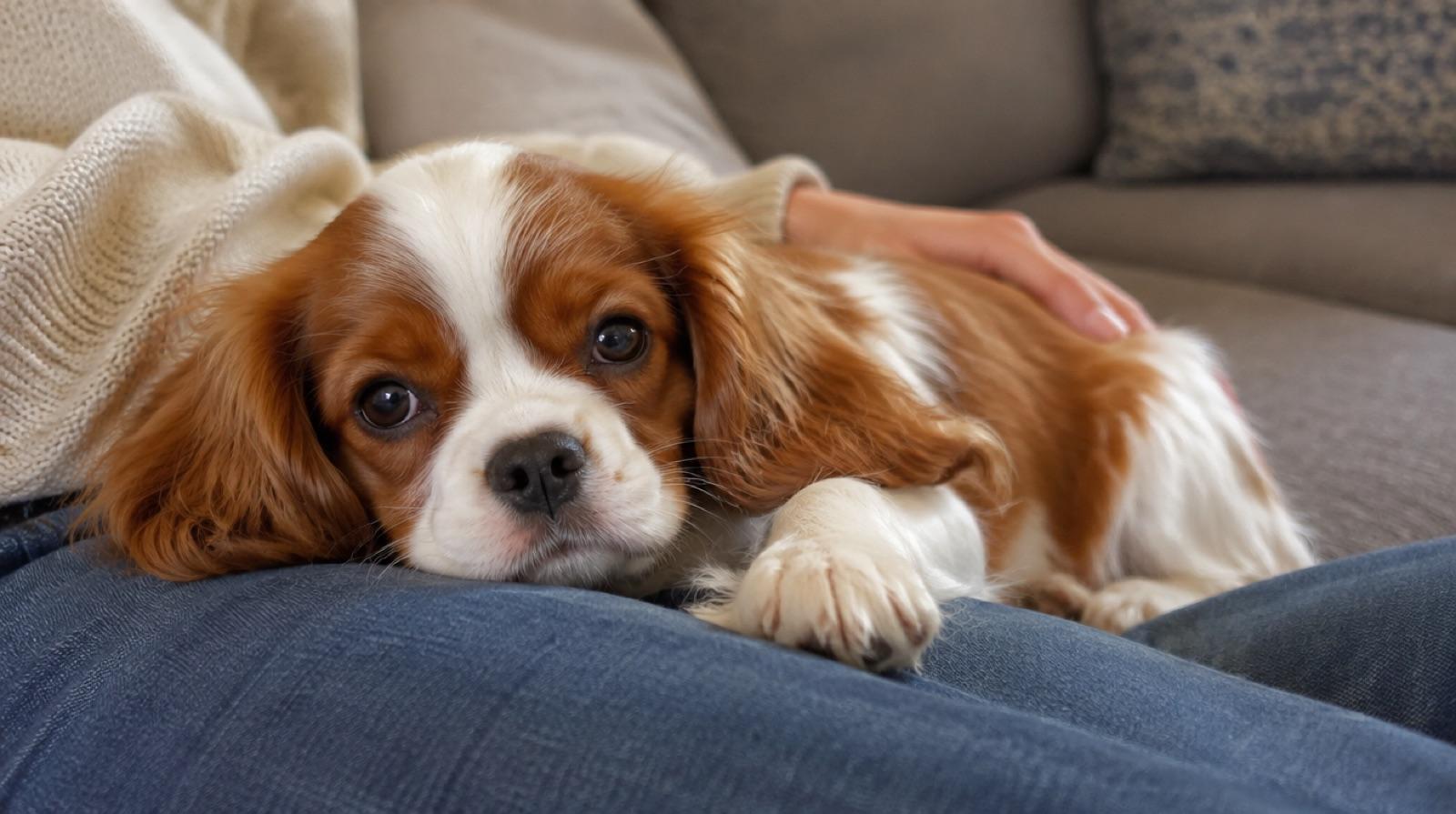
Should you adopt or buy a Cavalier?
It depends on what you need. If you want a purebred Cavalier puppy, a registered breeder is the realistic route, because purebred Cavalier puppies rarely appear in rescue. If you are happy with an adult dog, or with a cross that has plenty of Cavalier in it, adopting is cheaper, faster to arrange and comes with the vet work done.
Whichever route you take, the Cavalier is a breed where health history matters more than usual. The Cavalier King Charles Spaniel Club of Queensland lists mitral valve disease, syringomyelia and Chiari-like malformation, episodic falling, curly coat dry eye, eye disorders and patella problems among the conditions the breed is predisposed to. A breeder's job is to screen for them. A rescue's job is to tell you what it knows. Your job is to ask.
| Route | Reference cost | What you usually get | Main risk |
|---|---|---|---|
| Dogs Australia registered breeder | About $4,000 to $5,000 (Dogs Australia) | A purebred puppy, pedigree papers (usually limited register), parents with health certificates, a waiting list | Testing is not mandatory, so you still have to check it |
| Rescue or breed rescue | Usually the standard adoption fee (see below) | Mostly adult Cavaliers and Cavalier crosses, desexed and microchipped | Unknown parent health history; few puppies |
| Online ad or social media | Often below the breeder range | Anything from a real litter to a puppy that does not exist | Scams and untested parents |
Reference figures read on 9 November 2026 on the Dogs Australia buying guide and the rescue fee pages linked below. Not quotes: breeders and rescues set their own prices and change them.
What does a Cavalier puppy cost from a registered breeder?
About $4,000 to $5,000. That is the figure Dogs Australia gives in its guide to buying a Cavalier, written with a registered Cavalier breeder of 26 years, and it adds that the price varies between breeders. We could not find a state Cavalier club that publishes its own price range, so treat this as the one published reference point, not a guaranteed band.
The same guide explains what the money pays for: health testing, feeding and care, vet bills, microchipping, vaccinations and raising the litter. It also notes that most family companion Cavaliers are sold on limited register papers, with an agreement that the dog will not be bred from. That is normal, and it is not a reason to pay less.
The Cavalier King Charles Spaniel Club of Victoria makes a point worth repeating: puppies from pet shops and backyard breeders are often sold for the same price as, or more than, puppies from serious hobby breeders. A high price does not prove good breeding. The paperwork does.
Which health tests should a Cavalier breeder show you?
Ask for certificates on both parents for each test below. Dogs Australia says most Cavaliers are tested from 12 to 18 months of age and older, and that there is no mandatory health testing for breeders nationwide, which is why the question is yours to ask.
| Test | What it screens for | What to ask for |
|---|---|---|
| Heart check | Mitral valve disease (MVD) | An annual certificate, preferably from a specialist veterinary cardiologist, dated within the last year |
| Eye examination | Eye abnormalities and early-onset juvenile cataracts | A certificate from a specialist veterinary ophthalmologist |
| DNA test | Curly Coat/Dry Eye Syndrome | Results for both parents (puppies of two clear parents need no test) |
| DNA test | Episodic Falling Syndrome | Results for both parents |
| MRI scan | Chiari-like malformation and syringomyelia | Results where scanning is available; if not done, ask why |
Test list from Dogs Australia, read 9 November 2026. This is a buying checklist, not veterinary advice.
The heart: mitral valve disease
Mitral valve disease is a degenerative condition in which a heart valve slowly stops closing properly and blood leaks backwards. The Cavalier King Charles Spaniel Club Queensland calls it a leading cause of death in the breed and estimates that approximately half of Cavaliers have a murmur by the age of five. There is no DNA test for it, so screening is done by a veterinary cardiologist, and responsible breeders weigh the age and heart status of the parents and their close relatives before breeding. A heart certificate from years ago tells you much less than a current one.
The spine: Chiari-like malformation and syringomyelia
Chiari-like malformation happens when the back of the skull is too small for the brain, which can disturb the flow of fluid around the spinal cord. Syringomyelia is what can follow: fluid-filled cavities inside the spinal cord. The Cavalier King Charles Spaniel Club of NSW says a Cavalier can have a cavity and never show symptoms, and that the only accurate way to check a dog without symptoms is an MRI under general anaesthetic, which is expensive and not available in every part of Australia. The Queensland club lists signs in affected dogs such as neck and shoulder sensitivity, scratching near the ears without touching the skin, and reluctance to jump or climb stairs. If you see these in any Cavalier, talk to your vet.
Not every Cavalier develops either condition, and Dogs Australia stresses that point. But they are the reason a breeder's health paperwork is worth more than a nice photo. Our Cavalier health guide covers the conditions in more depth.
See Cavaliers listed by rescues right now
Adult Cavaliers and Cavalier crosses come up through general rescues across Australia. The breed page shows what is listed today, with an alert for new arrivals.
See Cavaliers →What do Cavaliers in rescue look like?
Mostly adults and crosses. Cavaliers in rescue tend to be a mix of adult purebreds surrendered by their owners and Cavalier crosses with Poodles, Maltese, Jack Russells and other small breeds. Purebred Cavalier puppies are the rarest thing on the list. If a puppy is essential to you, a breeder is the honest answer; if it is not, an adult Cavalier has two real advantages. Its temperament is already known, and a rescue can often tell you about its heart from a recent vet check.
There is one breed-specific rescue we can confirm: Cavalier King Charles Spaniel Rescue QLD, a registered charity run by volunteers that rehomes surrendered Cavaliers in Queensland and posts available dogs on its Facebook and Instagram pages. Outside Queensland, Cavaliers come through the general rescues and RSPCA shelters we list.
What does a rescue Cavalier cost?
| Rescue | Published fee | Checked |
|---|---|---|
| RSPCA NSW | $620 puppy under 12 months; $500 dog over 12 months | 9 Nov 2026 |
| RSPCA Victoria | $650 to $1,000 puppy under 6 months; adult dogs $500 to $1,000; each animal's fee is on its profile | 9 Nov 2026 |
| RSPCA ACT | $1,200 for popular small breed puppies and poodle mixes up to 12 months | 9 Nov 2026 |
Fees as published by each rescue on the date shown. A reference, not a quote: fees change, and some dogs are priced individually. Adoption fees normally include desexing and microchipping; ask each rescue what else is included.
One caution carries over to rescue dogs: a Cavalier or Cavalier cross can carry the breed's heart risk whatever its history. Ask the rescue what vet checks it has done, book your own vet visit in the first week, and look at pet insurance before a murmur is ever recorded.
How do Cavalier puppy scams work?
Never pay a deposit for a Cavalier you have not seen with its mother, in person or on a live video call. A request for more money for transport, a crate or insurance after you have paid is the classic scam script.
A small, popular, expensive breed is what scammers advertise. Scamwatch says scammers set up fake websites, social media profiles and marketplace listings for popular breeds that do not exist, and that a very cheap pet is likely a scam. Its advice is to view the puppy in person, ask for a video call if you cannot visit, check that the breeder is legitimate, and compare prices.
The other common outcome is a real puppy from untested parents. That is a gamble with any breed; with Cavaliers it is a known risk, because the heart and spine screening above is exactly what an untested litter skips. A cheap Cavalier can cost far more later in specialist vet bills.
- Check the registration yourself. Enter the breeder's prefix or membership number in the Dogs Australia registered breeder check, not a certificate the seller emails you. Dogs Australia notes the check confirms membership, not the quality of a puppy.
- Check the state number. NSW, Victoria, Queensland, South Australia and the ACT each require sellers to show an identifying number. Our puppies for sale guide lists each state's scheme and where to look it up.
- Read the dates on the health certificates. A heart certificate should be recent, and it should be for the parents of the litter you are buying from.
- Expect questions. Dogs Australia says responsible breeders should show you all the dogs on their premises, and suggests asking about hereditary conditions in the breed, whether breeding stock is tested and if you can see the results, and whether your vet can check the puppy before you buy.
Is a Cavalier the right dog for you?
The Dogs Australia breed standard describes the Cavalier as sporting, affectionate and absolutely fearless, with a temperament that is gay, friendly and non-aggressive, and no tendency to nervousness. It is a small dog, 5.4 to 8.2 kg, with a long silky coat that needs regular brushing. That combination is why Cavaliers suit so many families, apartments and older owners.
The trade-offs are health cost and company. A Cavalier is a people dog and does not do well left alone all day, and its heart may need a cardiologist later in life. Run the first year with the dog cost calculator, and if you are still choosing, the what dog breed am I quiz and the adoption readiness check take a few minutes each. Considering a Cavoodle instead? Read our Cavoodle adopt-or-buy guide before you decide that a cross avoids the Cavalier's health issues.
Find a Cavalier near you
Each page below shows Cavaliers and Cavalier crosses listed right now by rescues in that city, and each listing links to the rescue where you apply directly.
- Cavaliers for adoption in Sydney
- Cavaliers for adoption in Melbourne
- Cavaliers for adoption in Brisbane
- Cavaliers for adoption in Perth
- Cavaliers for adoption in Adelaide
For local rescues, fees and what to expect in your city, read the Cavalier adoption guide for Sydney, Melbourne, Brisbane, Perth, Adelaide, Gold Coast or Sunshine Coast.
Related guides: Dachshund puppies: adopt or buy?, best apartment dogs and adopting a senior dog, a good fit for a breed that often reaches rescue as an adult.
Frequently asked questions
How much does a Cavalier King Charles Spaniel puppy cost in Australia?▼
Dogs Australia says to expect $4,000 to $5,000 for a Cavalier puppy from a registered breeder, although the price varies between breeders. That figure comes from a Dogs Australia buying guide written with a long-standing registered Cavalier breeder, read in November 2026. It is a reference, not a quote: every breeder sets its own price. A Cavalier advertised well below that range is a reason to ask more questions, not a bargain.
Why are Cavalier puppies so expensive?▼
Mostly because of the health screening the parents should have had. Dogs Australia recommends that registered breeders give their breeding Cavaliers an annual heart check, preferably with a specialist cardiologist, an eye test by a specialist ophthalmologist, DNA tests for Curly Coat/Dry Eye Syndrome and Episodic Falling, and an MRI for syringomyelia where scanning is available. Specialist fees, plus raising a litter properly, are what the price is meant to cover.
What heart problems do Cavaliers have?▼
The main one is mitral valve disease (MVD), a slow degeneration of a heart valve that lets blood leak backwards. The Cavalier King Charles Spaniel Club Queensland calls it a leading cause of death in the breed and estimates that approximately half of Cavaliers have a murmur by the age of five. There is no DNA test for it, so breeders rely on screening by a veterinary cardiologist. Ask to see the parents' heart certificates and the dates they were done.
What is syringomyelia in Cavaliers?▼
Syringomyelia (SM) is a neurological condition in which fluid-filled cavities form inside the spinal cord, often linked to Chiari-like malformation, where the back of the skull is too small for the brain. The Cavalier King Charles Spaniel Club of NSW says a Cavalier can have a cavity and never show symptoms, and that an MRI under general anaesthetic is the only accurate way to check a dog without symptoms. Signs in affected dogs can include sensitivity around the neck, air-scratching near the ears, and reluctance to jump.
Do all Cavalier breeders do MRI scans?▼
No. Dogs Australia notes there is no mandatory health testing for breeders nationwide, and that MRI scanning for syringomyelia is hard to make mandatory because scanners are costly and not available in every state. Heart, eye and DNA testing are more widely done. Ask any breeder which tests both parents have had, and ask to see the certificates rather than taking a verbal answer.
Can I adopt a Cavalier King Charles Spaniel from a rescue?▼
Yes, but purebred Cavalier puppies rarely reach rescue. Cavaliers in rescue are mostly adults and crosses, often with a Poodle, Maltese or terrier. Cavalier King Charles Spaniel Rescue QLD, a volunteer-run charity, rehomes surrendered Cavaliers in Queensland and posts available dogs on its social media pages. Elsewhere, Cavaliers turn up through general rescues, so watch the Cavalier breed page and set an alert.
How much does it cost to adopt a Cavalier?▼
Usually the rescue's standard fee for the dog's age and type. At RSPCA NSW the published fee is $620 for a puppy under 12 months and $500 for an older dog. RSPCA ACT lists $1,200 for popular small breed puppies and poodle mixes up to 12 months. These are reference figures read on 9 November 2026, not quotes, and the fee normally includes desexing and microchipping.
How do I find a good Cavalier breeder in Australia?▼
Start with a breeder registered with Dogs Australia through its state body, ideally a member of the state Cavalier club, and check the registration yourself with the Dogs Australia breeder check. Then ask for heart, eye and DNA certificates for both parents, and MRI results where available. Expect the breeder to ask you questions, to let you meet the mother, and to show the breeder number your state requires.
Are cheap Cavalier puppy ads scams?▼
Many are. Scamwatch warns that scammers set up fake websites and social media profiles offering popular breeds that do not exist, and that a very cheap pet is likely a scam. The pattern is stolen photos, a low price, a deposit by bank transfer, then requests for more money for transport or insurance. Never pay for a puppy you have not seen with its mother, in person or on a live video call.
Is a Cavalier a good first dog?▼
For many households, yes. The Dogs Australia breed standard describes the Cavalier's temperament as gay, friendly and non-aggressive, with no tendency to nervousness, and it is a small dog of 5.4 to 8.2 kg. The real commitment is health: budget for heart checks as the dog ages and consider pet insurance early, before any murmur is recorded as a pre-existing condition.
Is a Cavoodle healthier than a Cavalier?▼
Not automatically. A Cavoodle can inherit the Cavalier's heart and spine risks as well as Poodle conditions, and the Dogs Australia Cavalier buying guide warns that crossing breeds can double up on health issues rather than remove them. Whichever you choose, ask about the health testing on both parents. Our Cavoodle adopt-or-buy guide covers the cross in detail.
Sources
- Dogs Australia: What to look for when buying a Cavalier King Charles Spaniel puppy
- Dogs Australia: Cavalier King Charles Spaniel breed standard
- Dogs Australia: Choosing a breeder
- Cavalier King Charles Spaniel Club of Queensland: Finding the right breeder
- Cavalier King Charles Spaniel Club Queensland: Health
- Cavalier King Charles Spaniel Club of NSW: Syringomyelia
- Cavalier King Charles Spaniel Club of Victoria: Puppy advisory service
- Cavalier King Charles Spaniel Rescue QLD
- Scamwatch: Buying and selling scams (pet scams)
- RSPCA NSW: Adoption fees
- RSPCA Victoria: The adoption process
- RSPCA ACT: Adoption process
Keep reading
Cavaliers listed by rescues
Cavaliers and Cavalier crosses listed right now by the rescues and shelters we aggregate across Australia.
Cavoodle puppies: adopt or buy?
Generation labels, coat honesty and what a Cavoodle inherits from its Cavalier parent.
Puppies for sale: adopt or buy?
Breeder numbers in every state, how to check them, and rescue puppy fees.
Dog cost calculator
The price is the start. Estimate the first year of food, vet care, insurance and registration.