The short answer
Both routes work for Dachshunds. Buy from a Dogs Australia registered breeder if you want a puppy of a particular size and coat: the Dachshund Club of NSW puts the price at about $3,000 to $4,000 or more, and you should ask for back X-ray scores on both parents, because IVDD affects roughly one in five Miniature Dachshunds over their lifetime according to the Merck Veterinary Manual. Adopt if you are open to a young adult or a Dachshund cross, which rescues list often, for a published adoption fee ($500 to $1,200 at the RSPCA examples below) with desexing and microchipping done. Prices and fees are reference figures read on 9 November 2026, not quotes.
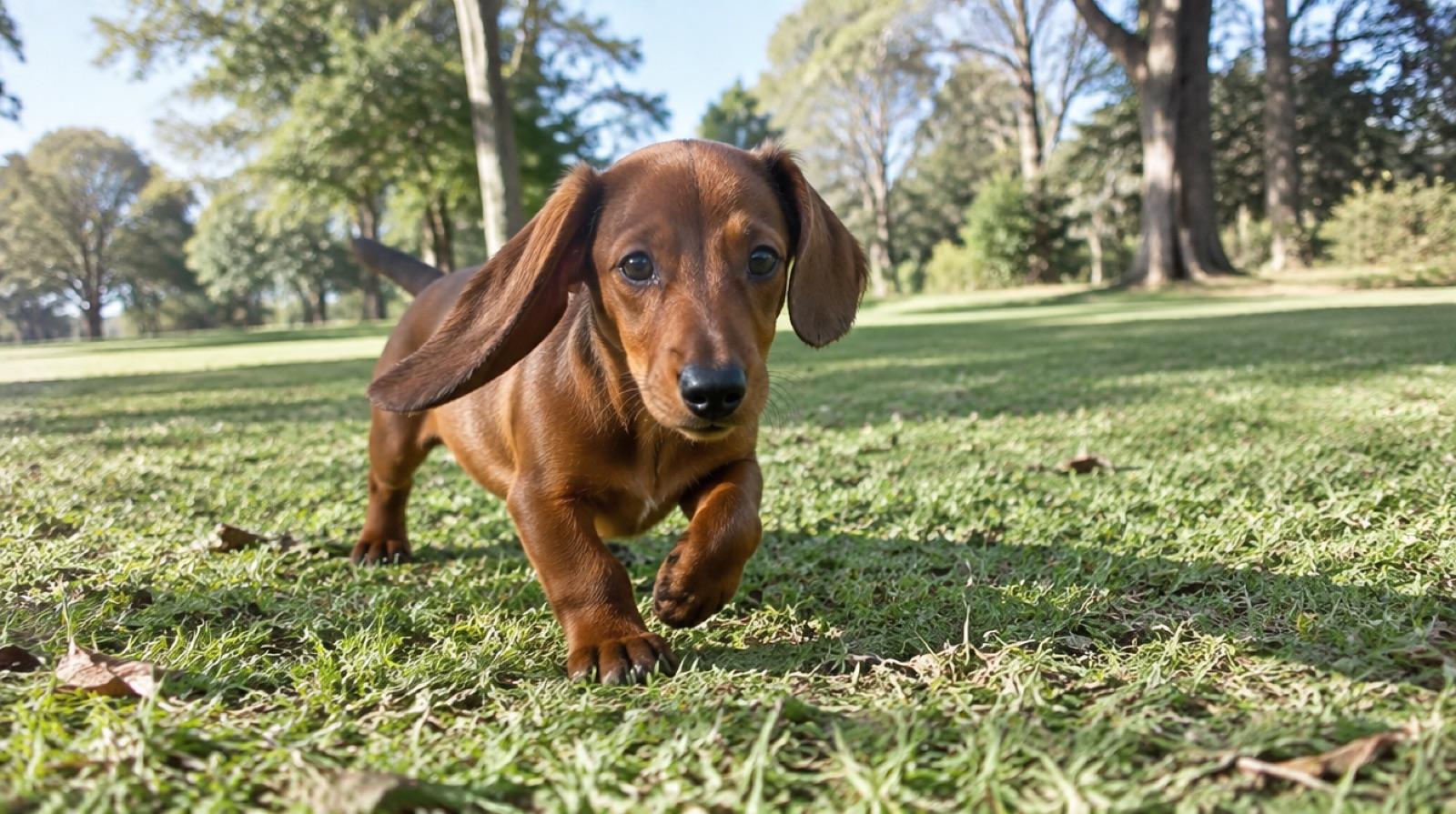
Should you adopt or buy a Dachshund?
Either can be the right call. Unlike some small breeds, Dachshunds and Dachshund crosses reach rescue regularly, so adopting is a realistic route if you are open to a young adult or a cross. Buying from a registered breeder makes sense if you need a specific size or coat, want a young puppy, and are willing to check the back screening on both parents.
The deciding factor for this breed is the spine. Dachshunds are a chondrodystrophic breed, which means short legs relative to a long body, and the Merck Veterinary Manual lists them among the breeds most commonly affected by intervertebral disc disease. Whoever you get your Dachshund from, you are signing up to protect its back for life.
| Route | Reference cost | What you usually get | Main risk |
|---|---|---|---|
| Dogs Australia registered breeder | About $3,000 to $4,000 or more (Dachshund Club of NSW) | A puppy of known size and coat, pedigree papers, parents you can meet | Back scoring is voluntary, so you must ask for it |
| Rescue or breed rescue | Usually the standard adoption fee (see below) | Young adults, adults and crosses, desexed and microchipped | Unknown back history of the parents |
| Online ad or social media | Often below the club figure | Anything from a real litter to a puppy that does not exist | Scams and unscreened parents |
Reference figures read on 9 November 2026 on the Dachshund Club of NSW breed page and the rescue fee pages below. Not quotes: breeders and rescues set their own prices.
What does a Dachshund puppy cost from a registered breeder?
About $3,000 to $4,000 or more. The Dachshund Club of NSW says the cost varies between varieties and gives that range as what to expect. It is the only published breed-club figure we found, so treat it as a reference point rather than a fixed band.
The same club page sets out what a buyer should receive: a puppy that is at least 8 weeks old (in most cases over 10 weeks), regularly wormed, registered with Dogs NSW or another Dogs Australia state body, vaccinated for the first time and microchipped. If a seller cannot tick those boxes, the price is not the problem.
Miniature or standard: which Dachshund?
The Dogs Australia breed standard covers six varieties: standard and miniature sizes, each in smooth, long and wire coats. (The Dachshund Club of NSW also mentions a rabbit size, which is not one of the six varieties in the Dogs Australia standard.)
| Trait | Standard | Miniature |
|---|---|---|
| Ideal weight (breed standard) | 9 to 12 kg | 4.5 kg; desired maximum 5 kg |
| Coats | Smooth, long, wire | Smooth, long, wire |
| Bred to hunt | Small game that goes to ground, mainly badger | Smaller game, with the same attributes |
| Spine risk | Chondrodystrophic, prone to IVDD | Chondrodystrophic; Merck gives a lifetime IVDD prevalence of approximately 20% |
Sizes from the Dogs Australia standard (last updated 1 September 2021), which notes that a dog may be larger or smaller than the figures given. IVDD figure from the Merck Veterinary Manual.
Coat changes the grooming, not the dog's needs. The Dachshund Club of NSW describes the smooth coat as easy care, the long coat as needing weekly brushing and foot trimming, and the wire coat as benefiting from regular visits to a groomer. On temperament, the standard says faithful, versatile and good tempered, and describes the breed as intelligent, lively and courageous to the point of rashness. That last phrase is worth taking seriously with a dog whose back does not forgive leaps off the couch.
What is IVDD, and which tests should a breeder do?
Intervertebral disc disease is when one of the cushioning discs between the bones of the spine degenerates and bulges or ruptures into the spinal canal. In chondrodystrophic breeds, Merck says the discs start to degenerate within the first few months of life and can rupture as early as one to two years of age, with signs that are often sudden and severe. The Dachshund Club of NSW says a prolapsed disc is most likely between the ages of 5 and 7.
Back pain, a hunched back, crying when picked up, wobbly or weak back legs, or dragging paws in a Dachshund are reasons to call a vet the same day. Cornell's Riney Canine Health Center says early intervention gives the best outcome.
Back scoring: the test to ask for
The Dachshund Club of NSW describes back scoring as five detailed spinal X-rays, taken under sedation when the dog is between 2 and 4 years old, then read by a specialist who counts calcified discs. Breeders use the scores to choose which dogs to breed from. The club is careful about what it does not do: back scoring is a breeder's tool, not a diagnosis of IVDD, and no genetic mode of inheritance has been established yet. Dachshund IVDD Support Australia says X-ray screening and scoring at 24 to 48 months is currently the only way to reduce the incidence of IVDD, a practice used in Scandinavia for years.
The DNA test is not the answer
Some sellers offer a DNA result as proof against IVDD. Dachshund IVDD Support Australia does not recommend relying on it: it says the CDDY test is associated with disc degeneration but does not predict herniation, and that almost all Dachshunds tested carry two copies of the variant anyway. A breeder who answers “what are the parents' back scores?” with a DNA certificate has not answered the question.
What you control after you bring one home
Cornell and the Dachshund Club of NSW both stress the everyday basics: keep your Dachshund at a healthy weight and give it regular exercise. Cornell also suggests steps or ramps so it is not jumping on and off furniture. Pet insurance is worth arranging early, before any back episode is recorded as a pre-existing condition. Your vet is the right person for anything beyond that.
See Dachshunds listed by rescues right now
Purebreds, minis and crosses come through Australian rescues all year. The breed page shows what is listed today, with an alert for new arrivals.
See Dachshunds →What do Dachshunds in rescue look like?
A real mix. Dachshunds in rescue tend to include purebred standards and miniatures, plenty of young adults, and crosses with Chihuahuas, Jack Russells, Staffies and cattle dogs. Puppies do turn up, usually as crosses, but they go quickly. An adult Dachshund has one advantage a puppy cannot offer: a rescue can tell you whether it has had any back trouble so far.
Two breed-focused options are worth knowing. Dachshund Rescue Australia, formed in 2009, rehomes Dachshunds and charges new owners an adoption fee that goes towards vet care; check its site for which states it currently rehomes in. The Dachshund Club of NSW runs a rescue service that finds homes for older dogs, and notes that breeders sometimes place older desexed dogs into pet homes.
What does a rescue Dachshund cost?
| Rescue | Published fee | Checked |
|---|---|---|
| RSPCA NSW | $620 puppy under 12 months; $500 dog over 12 months | 9 Nov 2026 |
| RSPCA Victoria | $650 to $1,000 puppy under 6 months; adult dogs $500 to $1,000; each animal's fee is on its profile | 9 Nov 2026 |
| RSPCA ACT | $1,200 for popular small breed puppies and poodle mixes up to 12 months | 9 Nov 2026 |
| Dachshund Rescue Australia | Charges an adoption fee; amount not published on its home page | 9 Nov 2026 |
Fees as published on the date shown. A reference, not a quote: fees change and some dogs are priced individually. Adoption fees normally include desexing and microchipping; ask each rescue what else is included.
How do Dachshund puppy scams work?
Never send money for a Dachshund puppy you have not seen with its mother, in person or on a live video call. A second request for transport, crate or insurance money is the scam giving itself away.
Scamwatch describes the pattern: fake websites, social media profiles and marketplace listings for popular breeds that do not exist, with prices below what everyone else charges. A Dogs Victoria fact sheet adds a detail that catches careful buyers: scam ads can show real-looking microchip, source or membership numbers lifted from genuine breeders. Checking that a number exists is not enough; check that it belongs to that breeder, in that location, for that breed.
- Use the breed club. The Dachshund Club of NSW puppy referral service puts buyers in touch with breeders registered with Dogs NSW or another Dogs Australia state body, and its coordinator will tell you if an ad looks like a scam.
- Check registration yourself. Use the Dogs Australia registered breeder check with the breeder's prefix or membership number. Dogs Australia suggests asking a breeder about hereditary conditions in the breed, whether breeding stock is tested, and whether you can see the results.
- Check the state number. Each state's scheme is different. Our puppies for sale guide sets out the BIN in NSW, the Pet Exchange Register in Victoria, supply numbers in Queensland and the rest.
- Ask for back scores. A scammer has no X-rays to show you. A good breeder will have them for both parents.
Is a Dachshund right for you?
A Dachshund suits people who want a small dog with a big personality and will be home enough to give it company. The Dachshund Club of NSW is blunt that a Dachshund is not for anyone who wants a dog to leave in the yard, and that the breed is an enthusiastic eater, which matters because extra weight is hard on that long back. Expect a stubborn streak in training and a loud bark at the door.
If you are still deciding, the what dog breed am I quiz, the adoption readiness check and the dog cost calculator each take a few minutes. Our guides to apartment dogs and Cavalier puppies cover two other small breeds Australians often weigh up.
Find a Dachshund near you
Each page below shows Dachshunds and Dachshund crosses listed right now by rescues in that city. Every listing links to the rescue, and you apply with them directly.
- Dachshunds for adoption in Sydney
- Dachshunds for adoption in Melbourne
- Dachshunds for adoption in Brisbane
- Dachshunds for adoption in Perth
- Dachshunds for adoption in Adelaide
For local rescues and what to expect where you live, read the Dachshund adoption guide for Sydney, Melbourne, Brisbane, Perth, Adelaide, Gold Coast, Sunshine Coast or Newcastle.
For more on the breed's health, see our Dachshund health guide and Dachshund training and behaviour guide.
Frequently asked questions
How much does a Dachshund puppy cost in Australia?▼
The Dachshund Club of NSW tells buyers to expect $3,000 to $4,000 or more for a puppy from a registered breeder, with the price varying between varieties. That is the club's published figure, read in November 2026. It is a reference, not a quote: each breeder sets its own price. A Dachshund advertised far below that is worth extra checks before any money moves.
What is the difference between a miniature and a standard Dachshund?▼
Size. The Dogs Australia breed standard gives an ideal weight of 9 to 12 kg for a standard Dachshund, and an ideal of 4.5 kg for a miniature, with a desired maximum of 5 kg. Both come in three coats: smooth, long and wire. The standard itself notes that an individual dog may end up larger or smaller than these figures, so meet the parents if adult size matters to you.
What is IVDD in Dachshunds?▼
Intervertebral disc disease (IVDD) is when a disc between the bones of the spine degenerates and bulges or bursts, pressing on the spinal cord. The Merck Veterinary Manual names the Dachshund among the breeds most commonly affected and puts the lifetime prevalence in Miniature Dachshunds at approximately 20%. Signs can come on suddenly and range from back pain to paralysis, so any sign of it is a reason to see a vet the same day.
What are the signs of IVDD?▼
Cornell University's Riney Canine Health Center lists neck or back pain, reluctance to jump, walk or be lifted, crying out when moving, a stiff neck or arched back, weakness in the hind legs, knuckling or dragging the paws, wobbliness and paralysis. It says early intervention gives the best outcome. If your Dachshund shows any of these, contact your vet straight away rather than waiting to see if it settles.
What health tests should a Dachshund breeder do?▼
Ask about back scoring first. The Dachshund Club of NSW describes it as a set of five spinal X-rays taken under sedation between the ages of 2 and 4, then scored by a specialist, so breeders can favour dogs with fewer calcified discs. The club stresses that back scoring is a breeder's tool, not a diagnosis. Dachshund IVDD Support Australia says X-ray screening is currently the only way to reduce the incidence of IVDD and does not recommend relying on the DNA test sold as an IVDD test.
Is the IVDD DNA test worth asking for?▼
Not on its own. Dachshund IVDD Support Australia says the CDDY DNA test sold for IVDD is associated with disc degeneration but does not predict herniation, and that nearly all Dachshunds tested carry two copies of the variant anyway. A breeder who offers a DNA result as proof against IVDD has not answered the question. Ask for back X-ray scores on both parents instead.
Can I adopt a Dachshund from a rescue?▼
Yes. Dachshunds and Dachshund crosses, often with Chihuahuas, Jack Russells or Staffies, come through Australian rescues regularly, mostly as young adults and adults. Dachshund Rescue Australia is a breed rescue that rehomes Dachshunds and charges new owners an adoption fee, and the Dachshund Club of NSW runs a rescue service for older dogs. Watch the Dachshund breed page and set an alert.
How much does it cost to adopt a Dachshund?▼
Usually the rescue's standard fee for the dog's age. RSPCA NSW publishes $620 for a puppy under 12 months and $500 for a dog over 12 months, and RSPCA ACT lists $1,200 for popular small breed puppies and poodle mixes up to 12 months. These are reference figures read on 9 November 2026, not quotes. The fee normally includes desexing and microchipping.
How do I find a reputable Dachshund breeder?▼
Use a breeder registered with Dogs Australia through its state body, and check the prefix or membership number yourself on the Dogs Australia breeder check. The Dachshund Club of NSW runs a puppy referral service that matches buyers with registered breeders and will tell you if you may be dealing with a scam. Ask for back scores on both parents, meet the mother, and check the breeder number your state requires.
Are Dachshund puppy ads on social media scams?▼
Some are. Scamwatch warns that scammers set up fake websites and social media profiles for popular breeds and that a very cheap pet is likely a scam. Dogs Victoria adds that scam ads may show microchip, source or membership numbers copied from real breeders, so check the number belongs to that breeder, that location and that breed. Never pay for a puppy you have not seen with its mother.
Are Dachshunds good with children?▼
They can be. The Dogs Australia breed standard describes the temperament as faithful, versatile and good tempered, and the Dachshund Club of NSW calls the breed affectionate and playful but notes a stubborn streak and a loud watchdog bark. The bigger issue with young children is the dog's back: a Dachshund should not be picked up awkwardly or allowed to leap off furniture, so supervise every interaction.
Sources
- Dogs Australia: Dachshund breed standard (all varieties)
- Dogs Australia: Choosing a breeder
- The Dachshund Club of NSW: Breed information
- The Dachshund Club of NSW: Back scoring your Dachshund
- The Dachshund Club of NSW: Puppy enquiries
- Merck Veterinary Manual: Degenerative diseases of the spinal column and cord
- Cornell Riney Canine Health Center: Chondrodystrophy and IVDD
- Dachshund IVDD Support Australia: IVDD screening
- Dachshund Rescue Australia
- Scamwatch: Buying and selling scams (pet scams)
- Dogs Victoria: Identifying puppy scams and puppy farms (fact sheet)
- RSPCA NSW: Adoption fees
- RSPCA Victoria: The adoption process
- RSPCA ACT: Adoption process
Keep reading
Dachshunds listed by rescues
Dachshunds and Dachshund crosses listed right now by the rescues and shelters we aggregate across Australia.
Puppies for sale: adopt or buy?
Breeder numbers in every state, how to check them, and rescue puppy fees.
Cavalier puppies: adopt or buy?
The breeder price, the heart and MRI screening behind it, and the rescue route.
Dog cost calculator
Estimate food, vet care, insurance and registration for the first year, not just the price.