The short answer
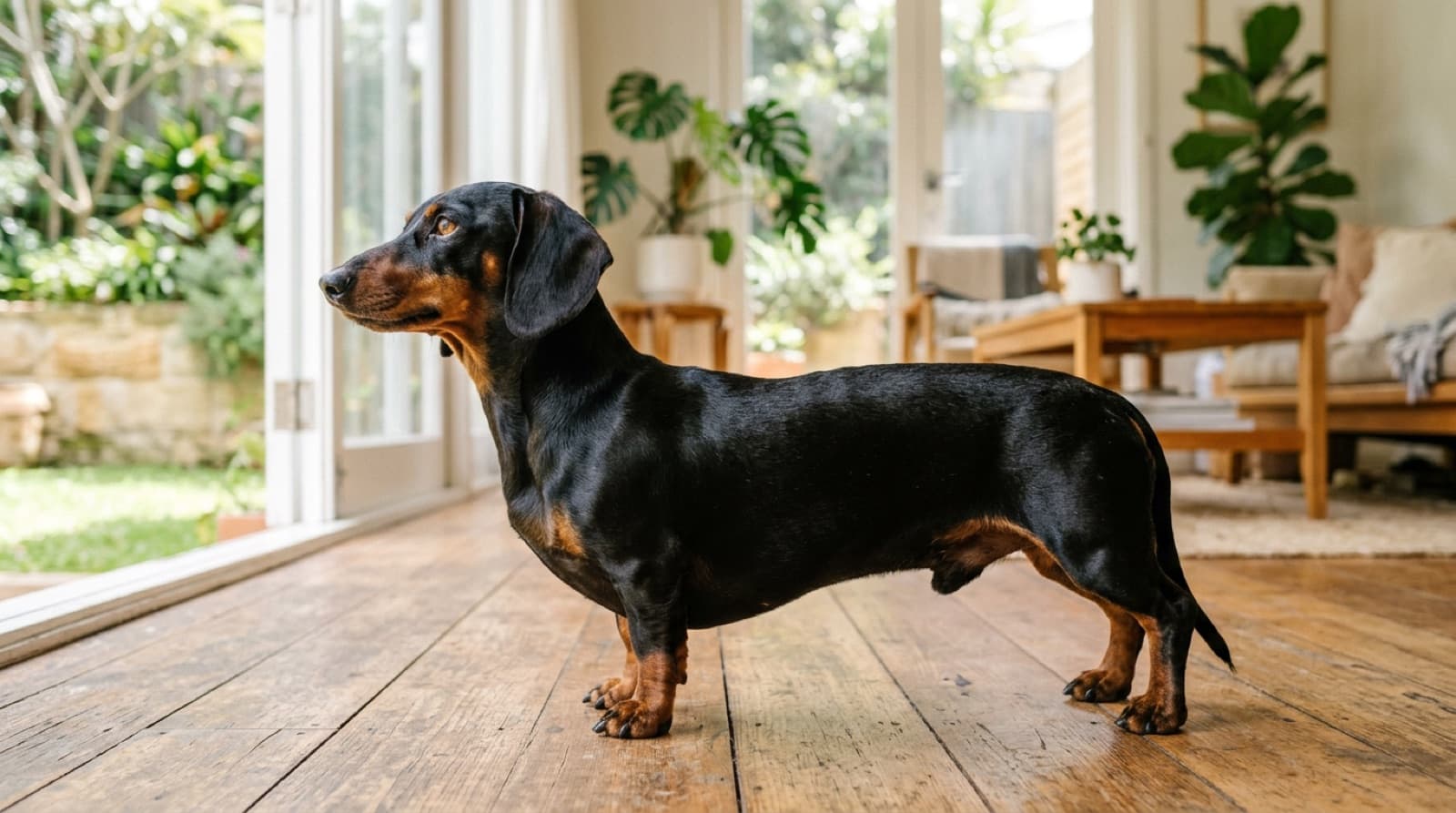
Dachshunds are the highest-risk breed for back (IVDD) problems, so protecting the back and keeping them lean is everything. The disc disease that comes with a long spine on short legs is the breed's most serious and most preventable issue, and a heavy Dachshund loads that spine every day. Keep the dog lean, discourage jumping on and off furniture, and use ramps. Watch too for a slipping kneecap, eye disease, dental problems and Cushing's in older dogs. If the back legs ever suddenly go weak, drag, or stop working, treat it as a spinal emergency and get to a vet immediately.
The long back and IVDD: the risk that defines the breed
If you understand one thing about Dachshund health, make it the back. The Dachshund has a long spine set on very short legs, and that shape carries a real cost. It makes the breed the single highest-risk dog for Intervertebral Disc Disease, usually shortened to IVDD. No other breed is affected as commonly, and that is not a coincidence. It is the direct result of the long, low body the dog was bred for.
The discs are the soft cushions that sit between the bones of the spine and act as shock absorbers. In a Dachshund those discs tend to harden and calcify earlier in life than they should, which makes them far more likely to bulge or rupture. When a disc pushes up into the spinal cord running above it, the pressure is what causes the pain and, in serious cases, the loss of movement in the back legs. It can come on slowly, or, frightening for owners, all at once after a jump, a twist, or sometimes nothing obvious at all.
The signs to know. Early IVDD is often quiet. A Dachshund in the beginning stages may become reluctant to jump on the couch or do stairs it used to manage, hold its back hunched or arched, yelp when you pick it up, tremble, or walk with a wobbly, uncoordinated gait. Any of those deserve a prompt vet visit. The signs that mean act now are different in scale: sudden weakness in the hind legs, back legs that drag or knuckle over, or a dog that suddenly cannot stand or use its back end at all.
Emergency: sudden hind-leg weakness or paralysis
If your Dachshund suddenly cannot use its back legs, is dragging them, or has gone weak or paralysed at the back end, this is a spinal emergency. Get to a vet immediately, day or night. With disc injuries the speed of treatment directly affects whether the dog walks again, and prompt surgery can save mobility, so do not wait to see if it improves overnight. Keep the dog still and supported on the way in, carry it with the spine level, and phone ahead. Sydney has 24/7 emergency and specialty hospitals such as SASH that handle exactly this.
Protecting the back. You cannot change the shape a Dachshund was bred with, but you can lower the load on it, and that is where nearly all your control sits. Keep the dog lean, because weight is the biggest factor you can change. Discourage jumping on and off the bed, the couch and out of the car, and give a ramp or a set of low steps instead. Lift the dog properly, one hand under the chest and one under the bottom, so the spine stays level rather than sagging or dangling. Skip repeated hard stairs where you can and avoid the twisting, high-impact play that jars the spine. These habits are not about treating a Dachshund as delicate. They head off the most preventable serious problem the breed has. The RSPCA Australia Knowledgebase is a good plain-language starting point on how body shape affects a dog's health and welfare.
Obesity is the number-one lever
Here is the truth most Dachshund owners hear from their vet sooner or later: the dog is carrying too much weight. Dachshunds are food-driven, they have a real talent for begging, and they gain weight easily, so obesity is common in the breed. It is also the single biggest modifiable risk to their health, which is another way of saying it is the problem most within your power to fix.
Weight and the long spine are a bad combination. Every extra bit of body weight loads the back and its discs, so an overweight Dachshund is far more likely to run into the disc trouble described above. For a breed that already tops the IVDD risk list, that is a direct threat to the dog's mobility, not a cosmetic worry. The same load speeds arthritis in the joints, and carrying too much fat feeds other diseases that shorten a dog's life. Keeping a Dachshund lean protects the back, the joints and the years all at once. The Australian Veterinary Association treats pet obesity as a serious welfare issue, not a vanity one.
What lean looks like: you should be able to feel the ribs easily under a thin layer, and see a waist when you look down from above. If you cannot, book a vet visit and ask them to score the body condition and set a target weight. Then feed to it. Measure meals rather than free-pouring, count treats as part of the daily total, and use some of the daily food for training so it does its double duty. A begging Dachshund is very persuasive. Holding the line on the food bowl is the most valuable thing you will do for its health.
Other conditions worth knowing
Luxating patella (slipping kneecap). This is where the kneecap slips out of its normal groove, common in small breeds. Signs include a sudden skip or hop in the back leg, a dog that runs on three legs for a few strides then carries on, or stiffness. Mild cases are managed and monitored, and keeping the dog lean helps here too. A vet can grade it and talk through whether it needs any intervention.
Eye disease (progressive retinal atrophy). Progressive retinal atrophy, or PRA, is an inherited condition where the light-sensing part of the eye gradually breaks down, causing slow vision loss and eventual blindness. It is not painful and it comes on gradually, so an affected dog often adapts well, but it is worth knowing the breed carries the risk. If your Dachshund seems to lose confidence in dim light or bumps into things it used to avoid, have a vet check the eyes.
Dental disease. Dachshunds have small mouths with teeth that can be crowded, and that makes dental disease common. Left alone it causes pain, tooth loss and infection that can affect the whole dog. Regular tooth brushing at home and dental checks at the vet are the simple prevention. It is easy to overlook because dogs hide mouth pain well, so make the mouth part of the routine rather than waiting for bad breath or a dropped chew.
Cushing's disease. Cushing's is a hormonal condition seen more often in older dogs, where the body produces too much of the stress hormone cortisol. Signs to notice include increased drinking and urinating, a bigger appetite, a pot-bellied look, hair thinning and reduced energy. It is diagnosed and managed by a vet, so if an older Dachshund starts drinking noticeably more or changes shape, book a check rather than putting it down to age.
A breeding-ethics note: double-merle dogs. The dapple pattern in Dachshunds is a merle coat. When two dapple (merle) dogs are bred together, some pups are double-merle, often called double-dapple, and these dogs can be born with serious congenital eye and ear defects, including blindness and deafness. This is a welfare problem caused by irresponsible breeding, not by adopting. It is one more reason to skip the shortcut of a cheap online litter and choose a rescue dog that has already been vet-checked. Reputable rescues such as RSPCA NSW and AWL NSW assess every dog before it is listed.
Why adopting a Dachshund is not a health disadvantage
People sometimes worry that a rescue dog is a health gamble compared with a breeder puppy. For a Dachshund the opposite is often closer to the truth. A Dachshund adopted through a reputable Sydney rescue arrives desexed, vaccinated, microchipped, treated for parasites and vet-checked, with all of that included in the fee. You are not taking on an unassessed animal, and you have skipped the risk of a badly bred litter.
Adopting an adult also answers questions a puppy cannot. With a breed defined by its back, being able to see the dog's current weight and how it moves, and to hear from the rescue or foster carer whether they have noticed any spinal history, joint stiffness or eye trouble, is genuinely useful. A foster carer who has lived with the dog can tell you how it copes with stairs, how it holds its weight, and whether it has ever shown back pain. That is far more information than you get from a photo of a puppy. Groups like Sydney Dogs and Cats Home, Monika's Doggie Rescue and Maggie's Rescue foster their dogs and can share that history. If you are weighing it up, our Dachshund adoption guide for Sydney covers where to look and what it costs.
Keeping a Dachshund healthy: the checklist
Most of what keeps a Dachshund sound is routine and within your control. The habits below do the heavy lifting.
- Keep the dog lean. Feed to a visible waist, measure meals, count treats, and ask your vet to set a target weight. This one habit protects the back, the joints and the lifespan.
- Protect the spine. Discourage jumping on and off furniture and out of the car, use ramps or low steps, and lift the dog with the spine supported and level, never dangling by the front end.
- Book regular vet checks. Annually while the dog is adult, then twice yearly once it is a senior, so problems like a slipping kneecap, eye changes, dental disease or early weakness get caught before they are advanced.
- Stay on year-round tick and parasite prevention. Use a vet-recommended product every month without a gap, because the paralysis tick on the NSW coast is a fatal risk and prevention is far safer than treatment.
- Look after the teeth. Regular tooth brushing and dental checks prevent painful disease in a small, crowded mouth that is prone to it.
- Watch for changes in older dogs. Increased drinking, a bigger appetite or a changed body shape can flag Cushing's or other conditions, so book a check rather than putting it down to age.
- Give steady, sensible exercise. A Dachshund needs daily activity for body and mind, but favour flat walks, sniffing and gentle play over the hard, jarring jumps that stress the back. Our Dachshund training and behaviour guide goes into detail.
The Sydney paralysis tick point
One health risk is not about the Dachshund's shape at all: it is about where you live. The paralysis tick is native to the east coast of Australia, including the coastal and bushland areas around Sydney, and its bite releases a toxin that causes an ascending paralysis which is fatal without veterinary treatment. It is a year-round risk here, not just a summer one.
The response is straightforward. Keep your Dachshund on a vet-recommended tick prevention product every single month with no gaps, and after any walk through bush or long grass run your hands slowly over the whole dog, including inside the ears, around the face, under the collar and between the toes, feeling for a lump. If your dog develops a wobbly back end, a changed or weak bark, gagging or heavy breathing, treat it as an emergency and get to a vet at once. Do not try to work out whether it is a tick or a disc problem yourself. Both need a vet, fast.
Browse adoptable Dachshunds in Sydney
Adopting an adult lets you see the back and weight condition for yourself, with a vet check already done. Browse live NSW listings and set an alert so you hear the moment a Dachshund or Dachshund cross comes in.
See Available Dachshunds →When to see the vet urgently
Most Dachshund health issues are managed at a normal appointment. A few are emergencies where minutes and hours matter, and the back is the reason. Get to a vet immediately, including out of hours, if you see any of these:
- Sudden weakness, dragging or paralysis of the back legs, or a dog that cannot stand or use its back end.
- Crying out in pain, a rigid or arched back, or refusing to move.
- A wobbly back end together with a changed or weak bark, gagging or laboured breathing (possible paralysis tick).
- Collapse, repeated vomiting, or a suddenly bloated, painful belly.
For the gradual things, such as a slipping kneecap, stiffness after rest, vision that seems to be fading, or an older dog that is drinking and eating much more, book a normal vet visit soon rather than waiting. Catching those early gives your Dachshund the best outcome. When in doubt, phone your vet or a 24/7 hospital and describe what you are seeing. They would far rather you called and it was nothing than the other way around. For a broader look at the breed before you commit, start with our Sydney adoption resources hub.
Frequently Asked Questions
What health problems do Dachshunds have?
The defining risk is the back. A Dachshund has a long spine on very short legs, which makes it the highest-risk breed for Intervertebral Disc Disease (IVDD), where a spinal disc bulges or ruptures and presses on the spinal cord. Obesity is the biggest thing an owner controls, because extra weight loads that long back every day and makes disc trouble more likely. Beyond those two, watch for luxating patella (a slipping kneecap), progressive retinal atrophy (an inherited eye disease), dental disease from their small crowded mouths, and hormonal conditions like Cushing's disease in older dogs. With good care Dachshunds often live 12 to 16 years, so most of these are manageable if you keep the dog lean, protect the spine, and see your vet early when something looks off.
Why are Dachshunds prone to back problems (IVDD)?
Because of their body shape. Dachshunds were bred long and low with short legs, a form called chondrodystrophy, and that same shape changes how their spinal discs age. The discs that cushion the spine can harden and calcify early, which makes them far more likely to bulge or rupture and press on the spinal cord. That is why the Dachshund tops every list of breeds affected by disc disease. It is not something you did wrong. It is built into the breed. What you can influence is the load on that spine, which is why keeping the dog lean and stopping it launching off furniture matters so much.
How do I protect my Dachshund's back?
Keep the dog lean and stop it jumping. Weight is the single biggest lever, so feed to a visible waist and count treats, because every extra bit loads that long spine. Discourage jumping on and off the couch, the bed and out of the car, and give a ramp or low steps instead. Pick the dog up with one hand supporting the chest and one under the bottom so the whole back stays level, and never let a Dachshund dangle by the front end. Avoid repeated hard stairs where you can, keep nails trimmed for good footing, and skip twisting, high-impact play that jars the back. None of this makes a Dachshund fragile. It respects a body that was bred long, and it heads off the most preventable serious problem the breed faces.
Should I stop my Dachshund using stairs and furniture?
Reduce it rather than ban it, and remove the jumping. The riskiest movements are the jump up and the jump down from a height, because that impact travels straight into a long spine. So the aim is to keep the dog off the launching. Use a ramp or a set of low, wide steps to the couch and the bed, block access when you cannot supervise, and lift the dog for the car. Stairs are less of a single hard impact but repeated flights still add load, so limit them where the house allows and consider a baby gate. You do not need to wrap the dog in cotton wool. You are just taking the high jumps out of daily life, which is where most disc injuries come from.
Why is obesity dangerous for a Dachshund?
Because a Dachshund already carries a long spine, and extra weight makes that spine the first thing to suffer. Carrying too much load raises the strain that leads to disc problems and back pain, and for a breed already at the top of the IVDD risk list that is a direct threat to the dog's mobility. The same weight speeds arthritis in the joints and feeds other diseases that shorten a dog's life. Dachshunds are food-driven and very good at begging, so they gain weight easily, which makes obesity common and makes it the biggest modifiable risk in the breed. Keeping a Dachshund lean is genuinely the most valuable thing you can do for its health, and it is entirely within your control.
How long do Dachshunds live?
Dachshunds often live around 12 to 16 years with good care, which is a long life for a dog. Lifespan is not fixed by the breed alone. The dog's weight, how well the back is protected, its dental health, and how early problems get caught all shift the number. A lean Dachshund with regular vet checks, tick prevention and dental care has a real advantage over one that is overweight and only seen when something is clearly wrong. That is the useful part of the question: the years are partly in your hands. Keep the dog at a healthy weight, stay on top of the back, and treat the annual check as maintenance rather than something you only do when there is a problem.
Do rescue Dachshunds come health checked?
Yes. A Dachshund adopted through a reputable Sydney rescue is desexed, vaccinated, microchipped, treated for worms and fleas, and given a vet check before it is listed, and the fee covers all of that. Adopting an adult also gives you something a puppy never can: you can see the dog's current back condition and body weight, and the rescue or foster carer can tell you about any spinal history, mobility concerns or joint issues they have noticed while living with it. For a breed defined by its back, that is a real advantage. A rescue Dachshund is not a health gamble compared with a puppy. In many ways it is the lower-risk choice, because the guesswork about how the body has held up is already partly answered.
How do I keep my Dachshund healthy?
Keep it lean, protect the back, and stay on top of routine care. Feed to a visible waist and go easy on treats, because weight is the biggest lever you control. Discourage jumping on and off furniture, use ramps or steps, and lift the dog with the spine supported and level. Book an annual vet check and move to twice-yearly once the dog is a senior, so problems get caught early. Keep up year-round paralysis tick and parasite prevention with a vet-recommended product, because the tick is a fatal risk on the NSW coast. Brush the teeth regularly, because small crowded mouths get dental disease. Give steady daily exercise that suits the dog without the hard, jarring jumps. Do those things and most Dachshunds stay sound and happy for a long life.
Keep reading
Adoptable Dachshunds in Sydney
Live listings of Dachshunds and Dachshund crosses across Sydney and NSW rescues.
Dachshund Adoption in Sydney
Where to adopt a Dachshund, why they end up in rescue, and what adoption costs against a breeder.
Dachshund Training & Behaviour
Housetraining a stubborn scent hound, managing the digging and barking, and gentle exercise that spares the back.
All Sydney Adoption Guides
Browse every breed and how-to guide for adopting a rescue dog in Sydney.