The short answer
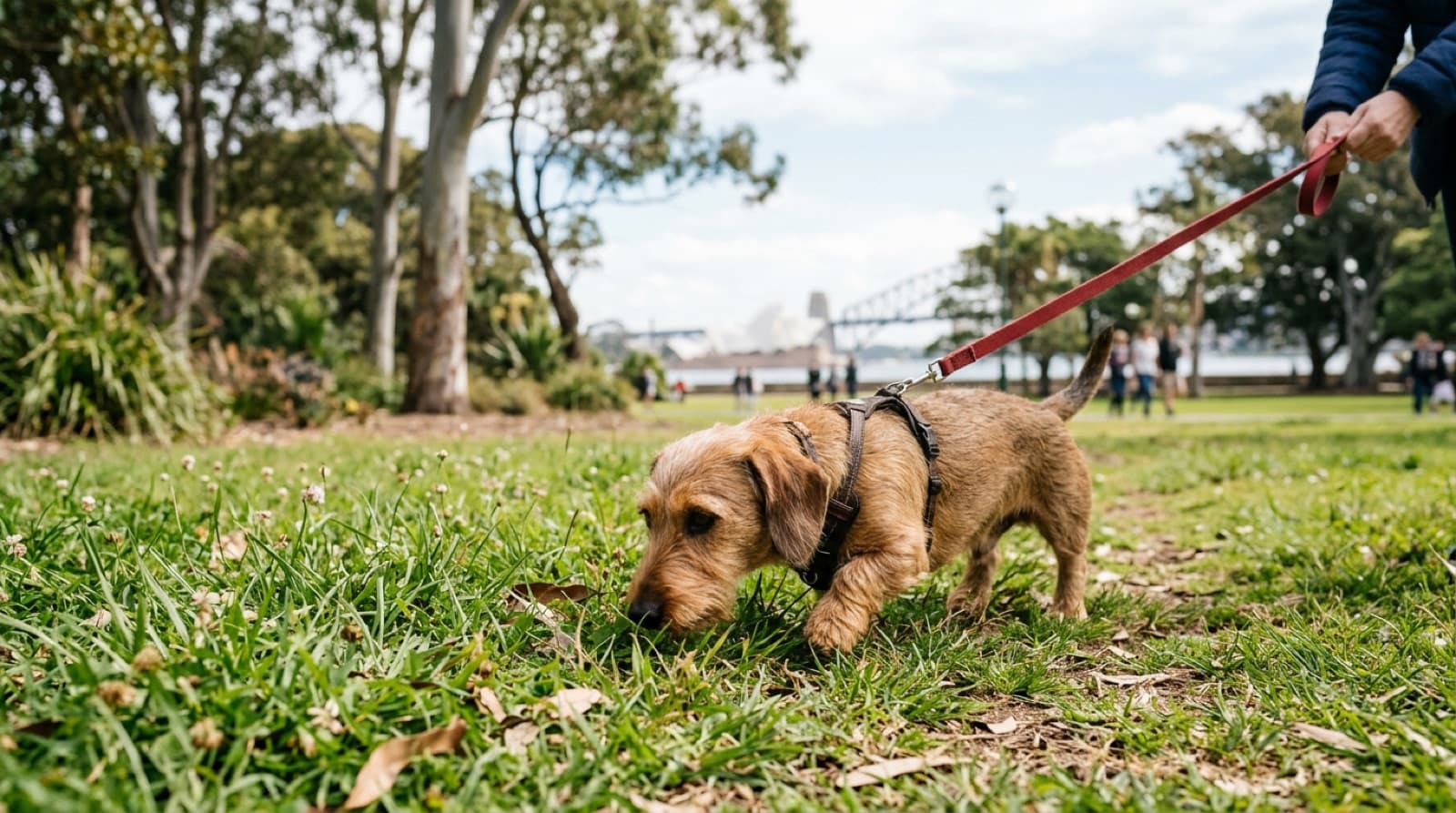
Dachshunds are smart, stubborn and barky: patient reward-based training, a solid house-training routine, and back-safe activity are what the breed needs. Bred to hunt badgers underground, they are bold, independent and scent-driven, with a strong dig instinct and a big bark for their size. That makes them slower to house train, prone to barking, and quick to chase small animals. Keep training short, fun and force-free, build a consistent toileting routine with a crate or confined area, give the digging and prey drive a legal outlet, and protect the long back by keeping the dog lean and skipping repetitive jumping.
The badger-hunter temperament
The single most useful thing to understand about a Dachshund is what it was bred to do. The name is German for badger dog, and the breed was built to track a badger by scent, dig into its underground set, and take it on alone in the dark. That is a job for a bold, tenacious, independent little dog, and it shaped the whole personality you live with today.
Everything follows from that history. The stubbornness is independence, because a dog working alone underground had to make its own decisions without waiting for orders. The barking is boldness and alarm, prized in a hunting dog that needed to be heard. The nose runs the show, because a scent hound follows a trail with single-minded focus. And the digging is the badger-dog instinct with no badger at the end of it. None of these are faults. They are a working breed doing exactly what it was built to do.
Knowing this changes how you approach the breed. A Dachshund is not a stubborn dog being difficult for the sake of it, and it is not a barky dog that never learned better. It is a clever, driven hunter in a small body. Work with the instincts, give them a legal outlet, and train with rewards rather than force, and you get an affectionate, funny, deeply loyal companion. Fight the instincts head-on and you get a frustrated dog and a frustrated owner.
House training a Dachshund
Dachshunds have a fair reputation as one of the harder breeds to house train, and it pays to expect that going in rather than being caught out. The same independence that made them good hunters means they do not always accept your rules, and a small, quick dog can be sneaky about nipping off to a quiet corner. This is normal for the breed, not a sign of a bad dog.
The answer is routine and patience, never punishment. Build the toileting habit like this:
- Take the dog out often, and always after sleep, food, drink and play. Young dogs and new arrivals need very frequent trips.
- Go with them. Wait until the dog toilets in the right spot, then reward the moment it happens so the dog links the place with something good.
- Use a crate or a confined area when you cannot supervise. A dog that is settled in a den-sized space learns to hold on rather than wander off to toilet.
- Never punish an accident. Telling off a dog after the fact just teaches it to hide from you and toilet out of sight, which makes the problem worse.
- Clean accidents properly with an enzyme cleaner so no scent marker is left to draw the dog back to the same spot.
Consistency is the whole game. Every person in the house needs to follow the same routine, or a clever Dachshund will find the gaps. An adopted adult Dachshund may not be reliably house trained yet, even if it seems grown up, so treat a new rescue dog as if you are starting from scratch and give it a full reset. Sydney rain and cold mornings tempt everyone to cut trips short, but skipping the routine is how accidents creep back in. The RSPCA Australia Knowledgebase is a solid general reference on reward-based toilet training.
Barking and strata living
Dachshunds are vocal, with a surprisingly big, deep bark for such a small dog, and they are not shy about using it. That comes straight from the hunting job, where a bold, loud dog was an asset. It is worth knowing before you commit, especially if you live in a unit or close to neighbours.
The barking usually traces back to one of a few causes, and the fix depends on which one you are dealing with. Alarm barking fires at visitors, noise and movement. Prey-driven barking goes off at birds, possums and other animals. Boredom barking comes from a dog with too little to do. And barking from being left alone points to a separation problem. Managing it starts with the cause, not the noise. A bored, under-exercised, lonely Dachshund barks far more, so exercise, mental work and company are your first tools. On top of that, reward-based training to teach a quiet cue and to reward calm at the window makes a real difference over time. Never punish the barking itself, because that adds stress without addressing why the dog is sounding off.
In NSW this is more than a neighbour-relations issue, it can become a legal one. Persistent barking is a recognised nuisance under NSW companion-animal law, and a neighbour can raise a complaint with the local council, which the council can act on. The NSW Office of Local Government covers how councils handle nuisance-dog and barking matters. The point is not to scare you off the breed, it is to be honest that a barky dog in strata needs active management rather than hope.
Prey drive and digging
A Dachshund is a hunter, and two instincts come with that: chasing small animals and digging. Both are strong, both are hard-wired, and neither trains away. The realistic plan is to manage the environment and give each drive a legal outlet.
The prey drive means a Dachshund will lock onto and chase small moving things: birds, possums, rabbits, lizards, and sometimes cats it does not know. Once the dog is following a scent or a moving animal, that focus can override even good recall, so recall is never fully reliable off a strong scent no matter how much you train it. That is why a Dachshund should stay on lead in any unfenced area, and only run free in a securely fenced space. A long line lets the dog sniff and explore with a safety net. Introductions to cats and small pets need care and supervision, and some Dachshunds simply cannot be trusted with very small animals.
The digging is the badger-dog instinct in a suburban backyard. You will not stop a Dachshund wanting to dig, so redirect it. A sandpit or a dedicated digging patch, seeded with buried toys or treats, gives the dog somewhere it is allowed to excavate. Plenty of exercise and mental work drains the spare energy that goes into destructive digging. And secure fencing matters twice over, because a determined Dachshund will dig under a fence to follow a scent, so check that the fence goes to ground and there are no gaps.
Training a stubborn but clever dog
Dachshunds are intelligent and stubborn at the same time, which is a particular combination to train. They learn quickly when they see the point, but the independent hunting brain means a Dachshund often asks what is in it for me before deciding to cooperate. That is not defiance for its own sake. It is a dog bred to make its own calls underground, now being asked to sit on command.
The training that works follows from that. Keep sessions short, upbeat and reward-based, and use rewards the dog genuinely wants, like tiny bits of chicken or cheese and a favourite game. Pay generously for the behaviour you want and end each session on a win. Force, yelling, endless repetition and harsh corrections all backfire on this breed, turning a bright, sensitive dog anxious, sneaky or shut down instead of obedient. Start socialisation and basic manners early so a young Dachshund meets a wide range of people, dogs, sights and sounds while it is still forming its view of the world. Stay consistent across the whole household, because a Dachshund will happily exploit the gap when one person enforces a rule and another does not. The Australian Veterinary Association supports reward-based, force-free training as the approach best backed by welfare evidence.
A rescue Dachshund deserves extra patience. It may arrive with gaps in its training, rehearsed habits like barking or toileting indoors, or a wariness that takes time to soften. The intelligence is still there and still on your side. Go at the dog's pace, build a routine, and reward the behaviour you want. Remember too that every NSW dog must be microchipped and registered with the council through the NSW Pet Registry, which a rescue will usually have started for you.
Browse adoptable Dachshunds in Sydney
Dachshunds are a clever, stubborn hunting breed that thrives with owners who train with patience and rewards. Browse live NSW listings and set an alert so you hear the moment one comes in.
See Available Dachshunds →Back-safe activity and enrichment
The long body on short legs is the Dachshund's signature and its weak point. That build puts the spine under more load than a normally proportioned dog, so how you exercise and play with a Dachshund matters as much as how much. The goal is an active, fit, mentally busy dog that is not doing the things that strain its back.
A few habits protect the spine. Keep the dog lean, because extra weight loads the back and is the single biggest thing you control. Avoid repetitive jumping, especially on and off the couch, the bed and out of the car, and use ramps or steps for those instead. Go easy on stairs where you can. Choose flat, steady walks over hard, high-impact bursts. Do the harder activity in the cool of early morning or the evening rather than the middle of a hot Sydney day, since a low-slung dog overheats faster than you expect, and keep year-round paralysis tick prevention going with a vet-recommended product because the tick is a fatal risk in the Sydney area.
This is where mental work earns its keep, because it tires a clever dog without loading the back at all. Scent games are ideal for a nose-driven breed: hide food around the yard or the living room and let the dog hunt it out. Puzzle feeders and food-dispensing toys make the dog work for its dinner instead of gulping a bowl in seconds. A short daily training session counts too. Low-impact enrichment like this settles a Dachshund better than exercise alone, and it protects the spine while doing it. The back deserves its own conversation, because disc disease is a serious concern in the breed and there is more to know about prevention and warning signs than fits here. We cover it in full in the Dachshund health issues guide.
Separation and company
Dachshunds bond hard to their people. They were bred to work closely with a handler, and it shows in how devoted they are, often following one person around the house like a shadow. That loyalty is a big part of the breed's charm, and it is also why some Dachshunds find being left alone genuinely difficult.
Separation-related distress is common in the breed, and it shows up as barking or howling when you leave, chewing and destruction, toileting indoors despite being house trained, and obvious anxiety at the door. The way to prevent it is to build up alone-time slowly from short absences, keep departures and returns calm and low-key rather than a big emotional event, and leave the dog with something good to do, like a food puzzle or a long-lasting chew. A Dachshund that has been well exercised and mentally worked before you leave settles far more easily than one full of unspent energy. If the distress is severe or getting worse, treat it as a real welfare problem worth proper help rather than something the dog will grow out of.
When behaviour needs a professional
Most Dachshund behaviour is normal breed instinct that the right routine and training settle down. But some things are worth getting help with rather than pushing through alone. Get a professional involved if barking is constant or driven by distress at being left, if you see genuine reactivity to other dogs or people that is getting worse rather than better, or if separation anxiety is severe.
Two rules make this safer. First, rule out pain before you treat any behaviour as purely behavioural. A sudden change in temper, a dog that snaps when touched or lifted, reluctance to move, jump or use stairs, or a hunched back can all be a sore spine or another medical problem talking, and in a long-backed breed that always deserves a vet check first. Second, choose the right kind of help. Look for a qualified force-free or reward-based trainer for training and manners, and a veterinary behaviour service for serious anxiety, fear or aggression. Avoid anyone who leans on punishment, prong or shock tools, which tend to make a clever, sensitive breed worse. If you would like a starting point on rescues, costs and adoption in Sydney, our Dachshund adoption guide and the full Sydney resources hub are good next reads.
Frequently Asked Questions
Are Dachshunds hard to train?
Dachshunds are clever but stubborn, so they are not the easiest breed, though they are very trainable when you make it worth their while. They were bred to hunt badgers underground on their own, so they think for themselves and often weigh up whether your request is worth doing rather than just obeying. That is not stupidity, it is independence. Short, upbeat, reward-based sessions with high-value food and play get results, while force and endless repetition make a smart dog tune out. Start socialisation and basic manners early, stay consistent across the household, and keep training fun. A rescue Dachshund may arrive with gaps or bad habits and need extra patience, but the intelligence is on your side.
Are Dachshunds hard to house train?
Yes, Dachshunds have a reputation as one of the trickier breeds to house train, and it takes more patience and consistency than average. The independence that made them good hunters means they do not always see the point of your rules, and a small dog can be quick and sneaky about slipping off to the wrong spot. The fix is routine, not punishment. Take the dog out often and always after sleep, food and play, go with them, reward the moment they toilet in the right place, and use a crate or a confined area when you cannot supervise so they learn to hold on. Never punish an accident, because that just teaches the dog to hide from you. An adopted adult Dachshund may not be reliably trained yet and often needs a full reset as if starting from scratch.
Why does my Dachshund bark so much?
Dachshunds have a big, deep bark for their size and they use it, because they were bred to be bold and vocal while hunting. The barking usually comes from a few causes: alarm at visitors and noise, the prey drive firing at birds or other animals, plain boredom, and distress at being left alone. Work out which cause you are dealing with, because the fix differs. Boredom barking eases with more exercise, mental work and company. Alarm barking responds to reward-based training that teaches a quiet cue and rewards calm. Barking driven by being left alone is a separation problem worth getting proper help with. Never punish the barking itself, address the reason behind it. In a Sydney unit or close to neighbours this matters, because persistent barking can become a council nuisance issue in NSW.
Do Dachshunds dig?
Yes, Dachshunds are strong, enthusiastic diggers, and it is one of the most hard-wired parts of the breed. The name means badger dog in German, and they were built to dig their way into a badger set, so digging up the garden is the same instinct with no badger at the end of it. You will not train it out of them, so the better plan is to give it an outlet. A sandpit or a dedicated digging patch where you bury toys or treats lets the dog dig where it is allowed. Plenty of exercise and mental work leaves less spare energy for excavation. Secure fencing matters too, because a determined Dachshund will happily dig under a fence to follow a scent.
Can Dachshunds be off-lead?
Be very careful with a Dachshund off-lead, because the scent and prey drive can override even good recall. This is a hunting breed built to follow a trail with single-minded focus, so once a Dachshund locks onto an interesting smell or a small moving animal, calling it back becomes very hard. Recall is never fully reliable off a strong scent, no matter how much you train. Keep the dog on lead in any unfenced area, and only let it off in a securely fenced space where it cannot bolt after a rabbit or a bird. A long line gives freedom to sniff and explore with a safety net. Treat off-lead reliability as something to always manage rather than assume.
Are Dachshunds good apartment dogs in Sydney?
Dachshunds can suit apartment life because they are small and do not need a big yard, but the barking and the stairs are the two honest catches. A vocal breed in close quarters means barking can become a neighbour and strata issue in NSW, so you need to manage it actively rather than hope the dog settles. The long back is the other consideration, as repeated stair-climbing and jumping on and off furniture load the spine, so a lift or ground-floor access helps. If you can commit to daily walks, mental work, company and managing the bark, and dogs are allowed in your building, a Dachshund adapts to a Sydney unit better than its big personality suggests.
How do I train a stubborn Dachshund?
Make training worth the dog's while and keep it short and fun, because a Dachshund is a what-is-in-it-for-me learner rather than an eager-to-please one. Use high-value rewards the dog genuinely wants, like tiny bits of chicken or cheese and a favourite game, and pay generously for the behaviour you want. Keep sessions to a few minutes so a clever dog does not get bored, and end on a win. Be consistent, because a Dachshund will exploit the gap when one person enforces a rule and another does not. Above all, stay reward-based and force-free. Harsh corrections, yelling and punishment backfire on this breed, making a bright, sensitive dog anxious, sneaky or shut down rather than more obedient.
Do Dachshunds have separation anxiety?
Dachshunds bond very hard to their people and can struggle when left alone, so separation-related distress is common in the breed. They were bred to work closely with a handler and they like being a shadow, which is lovely company but means some Dachshunds find being left genuinely difficult. Signs include barking or howling when you leave, destruction, toileting indoors despite being house trained, and obvious distress at the door. Build up alone-time gradually from short absences, make departures and returns calm and low-key, and leave the dog with something good to do like a food puzzle. If the distress is severe or getting worse, it is worth getting help from a force-free trainer or a veterinary behaviour service rather than pushing through it alone.
Keep reading
Adoptable Dachshunds in Sydney
Live listings of Dachshunds and Dachshund crosses across Sydney and NSW rescues.
Dachshund Adoption in Sydney
Where to adopt, why Dachshunds end up in rescue, and what adoption costs against a breeder.
Dachshund Health Issues in Sydney
Back and disc disease, weight management, plus Sydney heat and year-round paralysis tick prevention.
All Sydney Adoption Guides
Browse every breed and how-to guide for adopting a rescue dog in Sydney.