The short answer
A Pug is a flat-faced (brachycephalic) toy breed, and UK vet records show it is far more likely than other dogs to be diagnosed with BOAS, a breathing disorder, as well as eye ulcers and skin fold infections. If you buy, use a Dogs Australia registered breeder who DNA tests, x-rays spines and hips, has the parents' eyes checked by a specialist, and shows you parents that breathe quietly. Few member breeders publish a price; one member breeder published $4,500 (November 2026), and one breeder is not a range. If you adopt, Pug rescues and general rescues both list Pugs, mostly adults. Prices and fees are reference figures, not quotes.
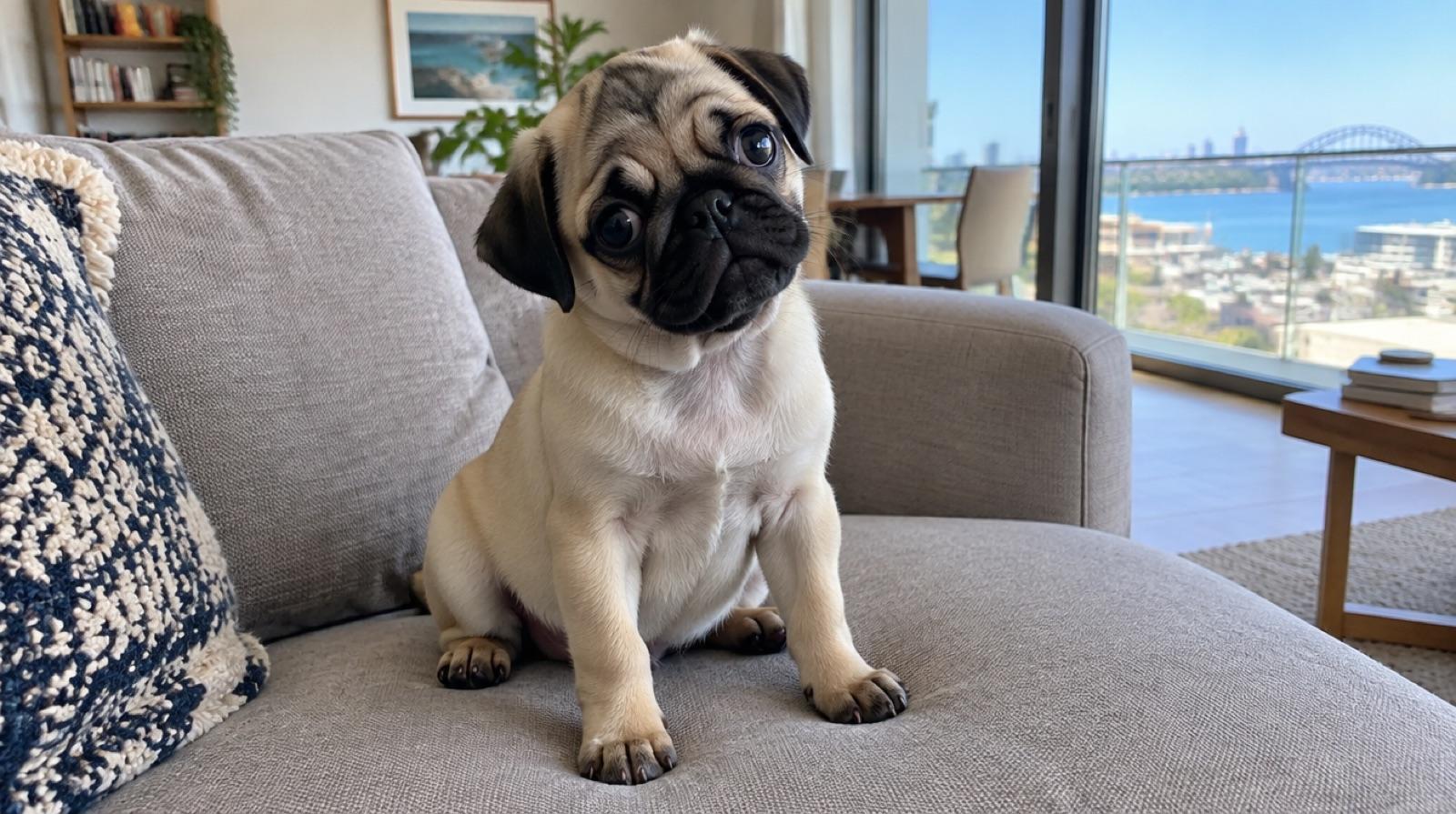
Should you adopt or buy a Pug?
Start with the breed, not the route. A Pug is brachycephalic, meaning its skull and muzzle are shortened, and that shape narrows the airway. The RSPCA describes brachycephalic obstructive airway syndrome (BOAS) as common in flat-faced dogs and as a lifelong, often progressive disorder, and the Australian Veterinary Association keeps brachycephalic breeds out of its own advertising and events. Go in knowing that vet bills and summer planning come with the breed.
If you still want a Pug, either route can work. A registered breeder who DNA tests, x-rays and has the parents' eyes checked gives you the best odds of a healthier puppy. A rescue gives you an adult whose breathing, eyes and skin you can see and ask about before you commit, and Australia has Pug-specific rescues as well as general ones. The route to avoid is an online ad for a cheap or “rare colour” Pug with no results for the parents.
| Route | Reference cost | What you usually get | Main risk |
|---|---|---|---|
| Dogs Australia registered breeder | Few publish a price; one member breeder published $4,500 (November 2026), which is not a range | A fawn, apricot, silver or black puppy with pedigree papers, often on the Limited Register with a desexing contract | BOAS and eye problems can still develop; testing lowers the risk |
| Pug rescue | $950 to $1,500 at Pug Patrol Rescue Australia | Mostly adult Pugs and Pug crosses, with the vet work the rescue has done listed | Waiting lists, and some dogs need ongoing care |
| General rescue or pound | The standard fee, for example $500 to $1,200 at the RSPCA rows below | Pugs and crosses when they appear, desexed, microchipped and vaccinated | Few Pugs at any time |
| “Rare colour” seller or online ad | Anything from cheap to colour-priced | Brindle, chocolate, merle or “exotic” Pugs, or a puppy that does not exist | Crossbreeding, untested parents and scams |
Reference figures: one Dogs Australia member breeder's own website, Pug Patrol Rescue Australia's adoption FAQs, and the RSPCA NSW and RSPCA ACT fee pages, read November 2026. They are not quotes. Breeders and rescues set their own prices and change them.
What does the Pug's flat face mean for its health?
It means breathing and eyes are the first things to check, in the parents and in any adult you meet. The RSPCA Knowledgebase lists the signs of BOAS as difficulty breathing, noisy breathing and snoring, exercise intolerance, coughing, gagging, regurgitation, collapse and overheating. It also notes eye, ear, skin, dental and spinal problems in flat-faced dogs, and asks would-be owners to consider the cost of ongoing care and their access to an emergency vet.
The best large study comes from the Royal Veterinary College's VetCompass programme in the UK, which compared the vet records of 4,308 Pugs with 21,835 other dogs over a year. The researchers found Pugs were 1.9 times as likely to have at least one disorder recorded, with higher risk for 23 of the 40 most common disorders and lower risk for 7. Their conclusion was that the Pug can no longer be considered a typical dog from a health perspective.
| Condition | Odds compared with other dogs | What it is |
|---|---|---|
| BOAS | Almost 54 times | The flat-face breathing disorder |
| Narrowed nostrils | 51.3 times | Pinched nostrils that restrict airflow |
| Eye ulceration | 13.0 times | Damage to the surface of the eye |
| Skin fold infection | 11.0 times | Infection in the facial folds |
| Ear discharge | 9.6 times | Ear infection and inflammation |
| Obesity | 3.4 times | Excess weight, which makes breathing and heat worse |
| Heart murmur | 0.2 times (lower) | One of the conditions Pugs were less likely to have |
| Aggression | 0.3 times (lower) | Fits the breed's gentle reputation |
Source: Royal Veterinary College VetCompass, 2022 (UK primary-care vet records). UK records are not Australian records, but the body shape is the same here.
Even the breed standard flags it. The Dogs Australia Pug standard, updated in December 2022, asks for well-open nostrils, says pinched nostrils and a heavy wrinkle over the nose are unacceptable and should be heavily penalised, says the eyes should never be protruding or exaggerated, and calls obesity highly undesirable. A breeder working to that description is breeding away from the worst of the table above.
Heat is the everyday risk
The RSPCA says flat-faced breeds have a reduced capacity to cool down by panting, and that overweight dogs overheat faster, which is why a lean Pug matters. In practice that means walks early and late in summer, shade and a cool indoor space, and never a car. Heatstroke is an emergency; get to a vet immediately. Our city guides cover the local version: Sydney, Brisbane, Gold Coast.
Which health tests should a Pug breeder show you?
Dogs Australia's buying guide for the breed, which quotes a Dogs Australia registered Pug breeder and club secretary, lists the tests its registered breeders have access to and are recommended to do on their breeding dogs. Hip, elbow and eye checks are done after a certain age.
| Test | What it looks for | What to ask |
|---|---|---|
| DNA: degenerative myelopathy | A progressive disease of the spinal cord | Are the parents clear, carriers or affected? |
| DNA: pyruvate kinase deficiency | An inherited red blood cell disorder | Can I see both certificates? |
| DNA: Pug dog encephalitis | Susceptibility to an inflammatory brain disease | What risk group are the parents in? |
| Spine x-rays | Hemivertebrae, misshapen bones in the spine | Were both parents x-rayed? |
| Hip and elbow x-rays | Malformed joints | What were the scores? |
| Kneecap check | Slipping kneecaps (patellar luxation) | When was it done? |
| Eye examination by a specialist | Inward-rolling eyelids, extra eyelashes, pigment on the eye surface | Who examined the parents, and when? |
| Heart check | Heart murmurs | Can I see the result? |
Source: Dogs Australia, What to look for when buying a Pug puppy, read 9 November 2026. The guide also lists a DNA test for May-Hegglin anomaly, a blood condition, while noting how rarely it has been found.
Two cautions on reading the results. Dogs Australia notes that the Pug dog encephalitis test shows susceptibility, not a diagnosis, and a dog in the susceptible group may never develop the disease. And the breeder quoted in the guide argues that a Pug you can hear breathing is not always unhealthy. That can be true of a fit individual, and the RVC figures are still the population picture. Listen to the parents at rest and after a short walk, and treat loud breathing at rest, gagging or collapse as signs to take to a vet.
Why are “rare colour” Pugs a warning sign?
Because the colour tells you something about the pedigree. The breed standard lists four colours: silver, apricot, fawn and black. Dogs Australia's buying guide says Pugs with non-standard coats are often marketed as “rare”, “exotic” and purebred, but that purebred Pugs do not carry the genes for those colours, so the only way they appear is through crossbreeding at some point, which can bring in diseases not previously found in the breed.
The registration rules reflect this. Under the Dogs Australia registration regulations, since 1 January 2015 a brindle Pug can only go on the Limited Register, flagged not to be upgraded, and a brindle Pug imported into Australia cannot be registered on any register. Merle to merle matings have been banned for every breed since the same date, because the merle gene carries an increased risk of impaired hearing and sight. If a seller charges extra for chocolate, brindle or merle, you are paying more for colour, not for health.
How much is a Pug puppy from a registered breeder?
There is no published figure for the breed from a Pug club or from Dogs Australia, and few registered breeders put a price on their own websites. We read the websites of Dogs Australia member breeders of Pugs in November 2026, leaving out listing sites and anything that said “price on application”. Only one listed a price: $4,500 for a pet puppy from a 2026 litter, from a DogsWest member in Western Australia. One breeder is too small a sample to call a market range.
So treat that as one example and ask each breeder directly. Compare what the price includes: which DNA tests and x-rays the parents had, the eye examination, whether the puppy is desexed or sold with a desexing contract, and whether the breeder will take the dog back if your circumstances change.
Budget for what comes after, too. The dog cost calculator gives a first-year figure, and our guides to cheaper vet care and desexing costs help with the rest. The RSPCA notes that sedation and anaesthesia carry extra risks in flat-faced dogs, so talk to your vet before your Pug needs a procedure.
Reference figure from one breeder's own website, read November 2026. Not a quote; breeders change their prices.
See the Pugs listed right now
Pugs and Pug crosses from the rescues, shelters and council pounds we aggregate, each with its rescue, desexing and microchip details. Every listing links to the rescue, where you apply directly.
What do Pugs in rescue look like?
Mostly adults, plus Pug crosses. Pugs reach rescue when owners move or their lives change, and when vet costs for breathing, eyes or skin become more than an owner can carry. A rescue Pug may already have had airway or eye surgery, or may need ongoing care, and a good rescue will tell you what it knows.
Australia has Pug-specific rescues, which is not true of every breed:
- Pug Patrol Rescue Australia is a registered charity that rescues Pugs, Pug crosses and other flat-faced breeds through foster carers. Applications are reviewed by its team in your state (it lists teams in NSW and the ACT, Queensland and South Australia), and it says that as a general rule it does not arrange interstate adoptions.
- Pug Rescue & Adoption Victoria rehomes Pugs in Victoria. Check its current dogs and fee on its own site.
The honesty is the advantage of adopting. With a puppy from an ad, you find out about the airway and eyes later. With an adult in rescue, you can watch the dog breathe and play before you sign anything, and read its vet notes.
What does a rescue Pug cost?
| Rescue | Fee | Checked |
|---|---|---|
| Pug Patrol Rescue Australia | From $950 up to $1,500, depending on age, health and vet work | 9 Nov 2026 |
| RSPCA NSW | $620 puppy under 12 months; $500 dog over 12 months | 9 Nov 2026 |
| RSPCA ACT | $1,200 for popular small breed puppies and poodle mixes up to 12 months | 9 Nov 2026 |
Fees as published on the date shown. They are a reference, not a quote: rescues change fees and price some dogs individually. The fee normally covers desexing, microchipping, vaccinations and a vet check.
Other small dogs come through rescue far more often than Pugs, so it is worth browsing small dogs as well: Sydney, Melbourne, Brisbane, Perth, Adelaide.
How do Pug puppy scams work?
Never send a deposit for a Pug puppy you have not seen with its mother, in person or at least on a live video call. A seller who asks for more money after the first payment, for transport, a crate or insurance, is following the standard scam script.
Pugs are a named scam target. Dogs Victoria's fact sheet on puppy scams names Pugs among the breeds that feature commonly, and warns that fake ads may display microchip numbers, source numbers or membership numbers of legitimate breeders, often lifted from other online sources. Scamwatch adds that scammers set up fake websites, social media profiles and marketplace listings for popular breeds that do not exist, and that a very cheap pet is likely a scam. Pug versions of the pattern to watch for:
- Borrowed numbers. A real breeder's membership or source number in an ad proves nothing on its own. Contact the breeder through the state body's directory, not the ad.
- The colour menu. Ads that price chocolate, brindle, merle and “exotic” Pugs differently are selling colour, not health.
- “Vet checked” instead of tested. A puppy vet check says nothing about the parents' DNA results, spines or eyes.
- Stock photos. Pug puppies photograph alike. A reverse image search often finds the same picture on another site.
Our guide to puppies for sale in Australia has the state-by-state table of breeder numbers, how to check each one, and what to do if you have already paid.
When is a registered breeder the better choice?
Rescue is not right for everyone. A registered breeder is a reasonable choice if you want a puppy and are prepared to wait for one from tested parents, if you need to know a dog's history from birth, or if you have kept the breed before and know what it needs. Dogs Australia's checklist says to be prepared to wait, to contact Pug clubs or use the Dogs Australia website to find breeders, to visit the breeder and see their dogs and puppies, and to sign a contract and ask for a receipt.
- Registration. Ask for the breeder's membership number and prefix and enter them in the Dogs Australia registered breeder check. It confirms membership, not puppy quality.
- The parents' breathing. Watch and listen to the mother at rest and after a short walk. Ask whether either parent has had airway surgery.
- The test results in the table above, for both parents, with names that match the litter.
- Colour. A silver, apricot, fawn or black puppy from a breeder who talks about health first.
- A written contract covering health problems, register type, desexing and whether the breeder will take the dog back.
Is a Pug the right dog for you?
The appeal is real. The Dogs Australia standard describes great charm, dignity and intelligence, and an even-tempered, happy and lively disposition, in a small, square dog with an ideal weight of 6.3 to 8.1 kg. The low aggression risk in the RVC study fits that reputation. Dogs Australia also says Pugs are companion animals that do not do well left alone, which matters if everyone in the house works long days.
Be honest about three things before you apply anywhere. Money: a breed with known airway, eye and skin risks needs pet insurance or savings set aside. Heat: you need a plan for every summer, including a cool room on hot days. Weight: a lean Pug breathes and copes with heat better, so treats and portions need watching for life. Not sure it fits? Try the what dog breed am I quiz and the adoption readiness check, and read our guides to apartment dogs and calm dog breeds for other options.
Find a Pug near you
Pugs and Pug crosses listed by rescues, by city:
- Pugs for adoption in Sydney
- Pugs for adoption in Melbourne
- Pugs for adoption in Brisbane
- Pugs for adoption in Perth
- Pugs for adoption in Adelaide
Local guides to adopting a Pug, with the rescues that serve each city: Sydney, Melbourne, Brisbane, Perth, Adelaide, Gold Coast, Sunshine Coast. For health in more depth, see the Pug health guides for Sydney, Brisbane, Gold Coast.
Frequently asked questions
How much is a Pug puppy in Australia?▼
Few registered breeders publish a price. Of the Dogs Australia member breeders whose own websites we read in November 2026, only one published a price for a pet Pug puppy: $4,500 (November 2026), from a DogsWest member. One breeder is not a range, so ask each breeder and compare what is included. This is a reference figure, not a quote.
Are Pugs healthy?▼
Pugs carry real health risks linked to their flat face. A 2022 Royal Veterinary College VetCompass study of UK vet records found Pugs were 1.9 times as likely as other dogs to have at least one disorder in a year, and almost 54 times as likely to be diagnosed with BOAS, the flat-face breathing disorder. The same study found Pugs had a lower risk of heart murmurs and aggression. Careful breeding and a lean, cool dog lower the risks; they do not remove them.
What health tests should a Pug breeder do?▼
Dogs Australia lists DNA tests for degenerative myelopathy, pyruvate kinase deficiency, May-Hegglin anomaly and a susceptibility test for Pug dog encephalitis, plus hip and elbow x-rays, spine x-rays for hemivertebrae, kneecap checks, eye checks by an eye specialist, and a heart check. Ask to see the results for both parents, and ask how the parents breathe at rest and after a walk.
What is Pug dog encephalitis?▼
Pug dog encephalitis, or necrotising meningoencephalitis, is an inflammatory brain disease. Dogs Australia notes that the available DNA test shows susceptibility rather than certainty: a dog in the susceptible group may never develop it. That is still a reason to ask for the result, and to talk to your vet early about any seizures or changes in behaviour.
Are brindle, chocolate or merle Pugs purebred?▼
Not in the Dogs Australia sense. The breed standard lists silver, apricot, fawn and black. A Pug breeder quoted by Dogs Australia says purebred Pugs do not carry the genes for non-standard colours, so they can only come from crossbreeding at some point. Under Dogs Australia rules, brindle Pugs can only go on the Limited Register, and an imported brindle Pug cannot be registered at all.
Are Pugs a target for puppy scams?▼
Yes. Dogs Victoria's puppy scam fact sheet names Pugs among the breeds that feature commonly, and warns that fake ads may display microchip, source or membership numbers lifted from legitimate breeders. Scamwatch says a very cheap pet is likely a scam. Only pay for a puppy you have seen with its mother, in person or at least on a live video call.
Can I adopt a Pug in Australia?▼
Yes. Pugs and Pug crosses reach general rescues and pounds, usually as adults, and there are Pug-specific rescues. Pug Patrol Rescue Australia, a registered charity, rehomes Pugs and other flat-faced breeds, has teams in NSW and the ACT, Queensland and South Australia, and says it generally does not arrange interstate adoptions. Pug Rescue & Adoption Victoria works in Victoria. Watch the breed page, set an alert and apply quickly.
How much does it cost to adopt a Pug?▼
Pug Patrol Rescue Australia says its adoption fees start from $950 and range up to $1,500, depending on the dog's age, health and vet work. At general rescues, RSPCA NSW lists $620 for a puppy under 12 months and $500 for an older dog, and RSPCA ACT charges $1,200 for popular small breed puppies up to 12 months. These are reference figures read in November 2026, not quotes.
Can Pugs cope with Australian summers?▼
Only with care. The RSPCA says flat-faced breeds have a reduced capacity to cool down by panting, and that overweight dogs overheat faster. Walk early and late, keep the dog lean, give shade and a cool indoor space, and never leave a Pug in a car. Heatstroke is an emergency: get to a vet immediately.
Is a Pug a good apartment dog?▼
Often, yes. Pugs are a toy breed with an ideal weight of 6.3 to 8.1 kg under the Dogs Australia standard, and Dogs Australia's buying guide says they are companion animals that do not do well left alone. They need modest exercise but need cooling in summer, which matters more in a flat without air conditioning. Check your strata by-laws and lease before you apply.
How do I check a Pug breeder is registered?▼
Ask for the breeder's prefix and membership number, as Dogs Australia advises, and enter them in the Dogs Australia registered breeder check. Then check any breeder or source number your state requires on the official state register yourself, not through a link the seller sends. Membership confirms registration, not the health of a particular puppy.
Sources
- Dogs Australia: What to look for when buying a Pug puppy
- Dogs Australia: Pug breed standard (last updated 1 December 2022)
- Dogs Australia: Regulations Part 6, the register and registration (effective 1 July 2025)
- Dogs Australia: registered breeder check
- RSPCA Knowledgebase: What do I need to know about brachycephalic dogs?
- RSPCA Knowledgebase: How can I protect my dog from heatstroke?
- Australian Veterinary Association: dog breeds with exaggerated features in marketing (policy)
- Royal Veterinary College VetCompass: Pugs can no longer be considered a typical dog from a health perspective (2022)
- Scamwatch: Buying and selling scams (pet scams)
- Dogs Victoria: A7 Identifying puppy scams and puppy farms (fact sheet)
- Pug Patrol Rescue Australia: Adoption FAQs
- Pug Rescue & Adoption Victoria
- RSPCA NSW: Adoption fees
- RSPCA ACT: Adoption process
Keep reading
Pugs listed by rescues
Pugs and Pug crosses listed right now by the rescues and shelters we aggregate across Australia.
Puppies for sale: adopt or buy?
The breeder number each state requires, how to check it, and rescue puppy fees.
French Bulldog puppies: adopt or buy?
The other small flat-faced breed, its spine and breathing checks, and the off-colour trap.
British Bulldog puppies: adopt or buy?
The heavier bulldog, the health scheme its clubs run, and Bulldogs in rescue.