The short answer
The British Bulldog (the English Bulldog to many buyers) is a flat-faced breed with well documented breathing, skin and eye problems, so the parents' health results matter more than anything else. If you buy, use a Dogs Australia registered breeder who tests breathing, nostrils, heart, hips, elbows, spine and eyes, and skip “rare colour” puppies, which Dogs Australia does not treat as standard. No member breeder we read in November 2026 published a current price, so ask each breeder in writing. If you adopt, expect an adult with a known vet history at a rescue's standard fee. Rescue fees are reference figures, not quotes.
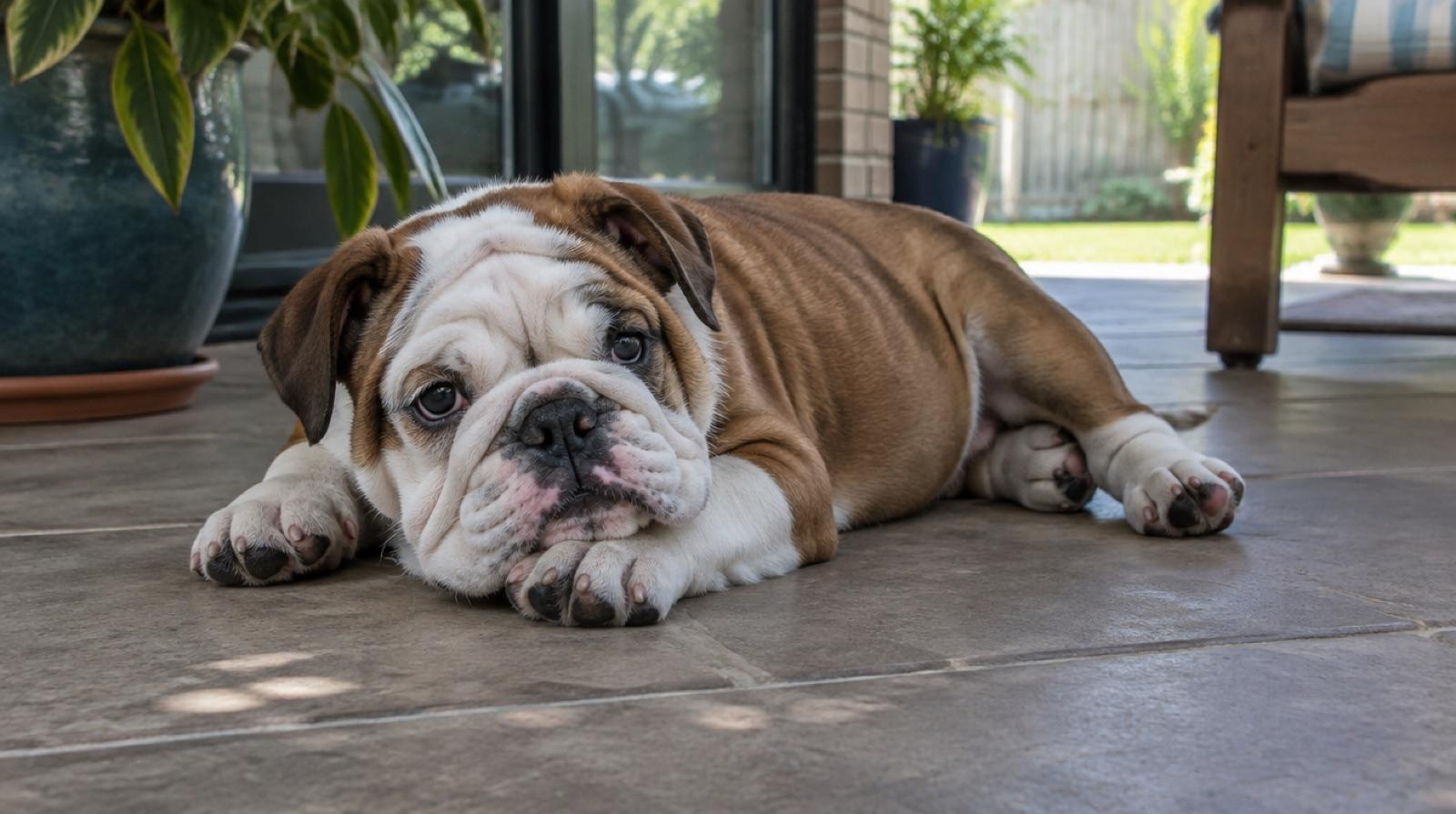
Should you adopt or buy a British Bulldog?
Start with the breed, not the route. A British Bulldog is brachycephalic, meaning its skull and muzzle are shortened, and that shape narrows the airway. The RSPCA describes brachycephalic obstructive airway syndrome (BOAS) as common in flat-faced dogs and as a lifelong, often progressive disorder, and the Australian Veterinary Association keeps brachycephalic breeds out of its own advertising and events. Add the skin folds and eyes the breed is known for, and you are choosing a dog with planned vet costs, not just a puppy price.
If you still want a Bulldog, either route can work. A registered breeder who tests breathing, hearts, joints and eyes gives you the best odds of a healthier puppy, and lets you see the parents breathe. A rescue gives you an adult whose breathing, skin and eyes you can see and ask about before you commit. The route to avoid is the one many buyers stumble into: an online ad for a “rare colour” or cheap puppy with no health results for the parents.
| Route | Reference cost | What you usually get | Main risk |
|---|---|---|---|
| Dogs Australia registered breeder | No current price published; ask each breeder in writing | A standard-coloured puppy with pedigree papers, from parents tested for breathing, heart, joints and eyes | BOAS, skin and eye problems can still develop; testing lowers the risk |
| Rescue or pound | The standard fee, for example $500 to $1,000 at the RSPCA rows below | Mostly adult Bulldogs and crosses, desexed, microchipped and vaccinated, with what the rescue knows of their health | Few dogs at any time, and some arrive with diagnosed conditions |
| “Rare colour” seller | Often priced by colour | Blue, lilac, merle or black and tan puppies, often on papers from registries outside Dogs Australia | Breeding for colour, not health |
| Online ad or social media | Often below the going rate | Anything from a real litter to a puppy that does not exist | Scams and untested parents |
Reference figures: the RSPCA NSW and RSPCA Victoria fee pages, read 9 November 2026. They are not quotes. Breeders and rescues set their own prices and change them.
Is a British Bulldog the same as an English Bulldog?
Yes. In Australia the national registry, Dogs Australia, uses the name British Bulldog, and many breeders, rescues and overseas registries say English Bulldog or just Bulldog. If you search either name, you are looking for the same dog. Rescues list them under both names, which is why our Bulldog breed page catches both.
It is not the same as three dogs that share part of the name: the French Bulldog (a much smaller breed with its own guide, French Bulldog puppies: adopt or buy?), the American Bulldog, and the Australian Bulldog, which is registered through its own clubs rather than Dogs Australia. If an ad mixes these names, ask exactly what the parents are and which registry holds their papers.
What does the Bulldog's shape mean for its health?
It means breathing, skin and eyes are the first things to check, in the parents and in any adult you meet. The RSPCA Knowledgebase lists the signs of BOAS as difficulty breathing, noisy breathing and snoring, exercise intolerance, coughing, gagging, regurgitation, collapse and overheating, and notes eye, ear, skin, dental and spinal problems in flat-faced dogs. It also asks would-be owners to think hard about the cost of ongoing care.
The best large study comes from the Royal Veterinary College's VetCompass programme in the UK. It compared the vet records of 2,662 English Bulldogs with 22,039 other dogs over a year. The researchers found English Bulldogs were more than twice as likely to have at least one disorder recorded, with higher risk for 24 of the 43 most common disorders and lower risk for 6. The biggest gaps:
| Condition | Odds compared with other dogs | What it is |
|---|---|---|
| Skin fold dermatitis | 38.1 times | Infection in the folds of the face, tail or body |
| Cherry eye | 26.8 times | A gland bulging from the inner corner of the eye |
| Protruding lower jaw | 24.3 times | The jaw shape the breed is known for, taken to extremes |
| BOAS | 19.2 times | The flat-face breathing disorder |
| Dry eye | 12.2 times | Too few tears, which often needs lifelong drops |
| Inward-rolling eyelids | 11.6 times | Lashes rubbing the eye, which may need surgery |
Source: Royal Veterinary College VetCompass, 15 June 2022 (UK primary-care vet records). UK records are not Australian records, but the body shape is the same here.
The study also found the Bulldogs in its sample were young: an average age of 2.7 years against 4.42 for other dogs, and only 9.7% were over eight. That is not a lifespan figure, but it is worth knowing before you buy. Dogs Australia's breed profile agrees on the eyes, naming cherry eye, inward and loose eyelids and extra lashes as the most common problems, and says the facial folds need checking and cleaning daily.
Even the breed standard flags breathing. The Dogs Australia British Bulldog standard says dogs showing respiratory distress are highly undesirable, asks for large, wide, open nostrils, and says pinched nostrils and a heavy roll over the nose are unacceptable. A puppy bred to that description is a better bet than one bred for the flattest face.
Heat is the everyday risk
The RSPCA says flat-faced breeds have a reduced capacity to cool down by panting, and that overweight dogs overheat faster. Dogs Australia goes further for this breed: some individuals with breathing problems should not be exercised in hot weather at all, and should be kept cool, quiet and shaded with plenty of water. Plan walks for dawn and late evening, keep the dog lean, and never leave one in a car. Heatstroke is an emergency; get to a vet immediately. Our city guides cover the local version: Sydney, Brisbane, Perth, Gold Coast.
Which health tests should a British Bulldog breeder show you?
Dogs Australia's buying guide for the breed strongly recommends that its registered British Bulldog breeders test their breeding dogs for the conditions below, mostly between 12 and 18 months of age. It adds that the seven British Bulldog clubs in Australia formed a health committee, and that the resulting health scheme has been accepted by the National British Bulldog Council and Dogs Australia.
| Check | What it looks for | What to ask |
|---|---|---|
| Exercise tolerance test | How the dog breathes and recovers after set exercise | Did both parents pass, and when? |
| Nostril examination | Stenotic (pinched) nostrils that restrict airflow | How were the parents' nostrils graded? |
| Heart check | Heart murmurs | Who examined the parents? |
| HUU DNA test | Hyperuricosuria, an inherited cause of bladder stones | Are the parents clear, carriers or affected? |
| Trachea examination | Tracheal hypoplasia, a narrow windpipe | Can I see the result? |
| Hip, elbow and spine x-rays | Joint and spinal malformation | What were the scores? |
| Kneecap, eye and thyroid checks | Slipping kneecaps, eye disease, thyroid conditions | Which were done, and when? |
Source: Dogs Australia, What to look for when buying a British Bulldog puppy, read 9 November 2026.
The National British Bulldog Council's health scheme turns those tests into levels: bronze for a heart assessment, the HUU DNA test and one more test, silver for any six, and gold for any nine. Its list includes respiratory function grading or the exercise tolerance test with a nostril assessment. The council's page says the scheme will go live once Dogs Australia adds the relevant tests to its ORCHID database, so ask which of those tests the parents have had rather than for a level. A breeder who answers “all Bulldogs snore” is telling you the parents' breathing was not checked.
One caution on how to read a breeder's optimism. The Dogs Australia article quotes an experienced breeder who says it is not true that every Bulldog has BOAS. That can be right for a well-bred individual, and the RVC figures above are still the population picture. Judge the parents you can see and the results you can read.
Why are blue, lilac and merle Bulldogs a warning sign?
Because the colour tells you what the breeder was selecting for. The breed standard lists brindles, reds, fawns, fallows, white and pied, and says Dudley (a liver or flesh-coloured nose), black and black with tan are extremely undesirable. The breeder quoted in Dogs Australia's buying guide says off-standard colours and coats are sold for large amounts, and that the merle, long-hair and hairless genes do not exist in British Bulldogs, so buyers think they are getting a purebred when they are not.
The registration rules back this up. Under the Dogs Australia registration regulations:
- Since 1 July 2015, black, black and tan, Dudley, or British Bulldogs showing marked variation from the standard (including those registered overseas) can only go on the Limited Register, flagged not to be upgraded.
- Merle to merle matings have been banned for all breeds since 1 January 2015, because the merle gene carries an increased risk of impaired hearing and sight.
The NSW Country Region British Bulldog Association warns that several registries not affiliated with Dogs Australia have sprung up, some providing papers for “rare coloured” Bulldogs, and that their main and limited registers are not the same thing as Dogs Australia's. If a seller charges extra for colour and the papers come from elsewhere, you are paying more for a dog the national registry would not treat as standard.
How much is a British Bulldog puppy from a registered breeder?
There is no published figure. No Bulldog club or Dogs Australia page states a puppy price, and when we read the websites of Dogs Australia member breeders of British Bulldogs in November 2026, leaving out listing sites and anything that said “price on application”, none showed a current price. The only figure we found sat beside a litter from 2023, which is too old to repeat.
So ask each breeder for the price in writing, and compare what it includes: which tests the parents had, whether the puppy goes on the Main or Limited Register, and what the contract says about health problems and taking the dog back. A high price does not prove testing was done; the results do.
Budget for what comes after, too. The dog cost calculator gives a first-year figure, and our guides to cheaper vet care and desexing costs help with the rest. The RSPCA notes that sedation and anaesthesia carry extra risks in flat-faced dogs, so talk to your vet before your dog needs a procedure, and look at pet insurance before any condition is on record.
No reference price is given because no current one is published. Prices on classified and listing sites are not a reliable guide, and we did not use them.
See the British Bulldogs listed right now
Bulldogs and Bulldog crosses from the rescues, shelters and council pounds we aggregate, each with its rescue, desexing and microchip details. Every listing links to the rescue, where you apply directly.
What do British Bulldogs in rescue look like?
Mostly adults, plus Bulldog crosses. Bulldogs reach rescue when owners move or their lives change, when vet costs for skin, eyes or breathing become more than the owner can carry, and when breeders downsize and retire dogs. That last group can include young adults that were never bred from. A rescue Bulldog may come with a diagnosis, such as dry eye that needs daily drops, and a good rescue will tell you what it is and what care it needs.
That honesty is the advantage of adopting this breed. With a puppy from an ad, you find out about the airway and the eyes later. With an adult in rescue, you can watch the dog breathe, walk and play before you sign anything, and read its vet notes. There is also a breed-specific route: Mini's Bulldog Rescue Club is a volunteer-run registered charity that rescues, rehabilitates and rehomes bulldogs through foster carers. Check its current dogs and the areas it adopts to before you apply.
What does a rescue Bulldog cost?
| Rescue | Fee | Checked |
|---|---|---|
| RSPCA NSW | $620 puppy under 12 months; $500 dog over 12 months | 9 Nov 2026 |
| RSPCA Victoria | $500 to $1,000 adult dog | 9 Nov 2026 |
| Smaller rescues and breed rescues | Set per dog; check each listing | Varies |
Fees as published on the date shown. They are a reference, not a quote: rescues change fees and price some dogs individually. The fee normally covers desexing, microchipping, vaccinations and a vet check.
Bulldogs are a low-energy breed, and other calm, low-energy dogs come through rescue far more often, so it is worth browsing those as well: Sydney, Melbourne, Brisbane, Perth, Adelaide.
How do British Bulldog puppy scams work?
Never send a deposit for a Bulldog puppy you have not seen with its mother, in person or at least on a live video call. A seller who asks for more money after the first payment, for transport, a crate or insurance, is following the standard scam script.
Scamwatch says scammers set up fake websites, social media profiles and marketplace listings offering popular breeds that do not exist, and that a very cheap pet is likely a scam. An expensive breed like the Bulldog is an easy target, because a price well under the going rate looks like a lucky find. Bulldog versions of the pattern to watch for:
- The colour menu. Ads that price blue, lilac, merle and tri-colour puppies differently are selling colour, not health.
- “Vet checked” instead of tested. A puppy vet check says nothing about the parents' breathing, hearts, joints or eyes.
- Papers from somewhere else. “Registered” can mean a registry outside Dogs Australia. Ask which state body holds the litter's papers and check the membership yourself.
- Stock photos. Bulldog puppies photograph alike. A reverse image search often finds the same picture on another site.
- No breeder number. Several states require an identifying number in puppy ads. Look it up yourself on the official register, not through a link the seller sends.
Our guide to puppies for sale in Australia has the state-by-state table of breeder numbers, how to check each one, and what to do if you have already paid.
When is a registered breeder the better choice?
Rescue is not right for everyone. A registered breeder is a reasonable choice if you want a puppy and are prepared to wait for one from tested parents, if you need to know a dog's history from birth, or if you have kept the breed before and know what it needs. Dogs Australia advises buyers to meet the breeder and their dogs if they can, and to be prepared to wait for a puppy.
- Registration. Enter the breeder's prefix or membership number in the Dogs Australia registered breeder check. It confirms membership, not puppy quality.
- The parents' breathing. Watch and listen to the mother at rest and after a short walk. Ask for the exercise tolerance or respiratory grading result, and whether either parent has had airway surgery.
- The test results in the table above, for both parents, with names that match the litter.
- Colour and papers. A standard-coloured puppy, registered with a Dogs Australia state body.
- A written contract covering health problems, register type and whether the breeder will take the dog back.
Is a British Bulldog the right dog for you?
The appeal is real. The Dogs Australia standard says the Bulldog should convey an impression of determination, strength and activity, with a most desirable weight of 25 kg for males and 23 kg for females, so this is a heavy dog in a compact body. Dogs Australia's breed profile describes Bulldogs as renowned for being extremely tolerant and good around children, while warning never to leave toddlers and Bulldogs together unsupervised because of the dog's weight.
Be honest about three things before you apply anywhere. Money: a breed with known airway, skin and eye risks needs pet insurance or savings set aside. Heat: you need a plan for every summer, including a cool room on hot days. Daily care: face folds cleaned every day, and weight watched closely, because Dogs Australia says the breed puts on weight all too easily. Not sure it fits? Try the what dog breed am I quiz and the adoption readiness check, and read our guides to calm dog breeds and low maintenance breeds for other options.
Find a British Bulldog near you
British (English) Bulldogs and Bulldog crosses listed by rescues, by city:
- British Bulldogs for adoption in Sydney
- British Bulldogs for adoption in Melbourne
- British Bulldogs for adoption in Brisbane
- British Bulldogs for adoption in Perth
- British Bulldogs for adoption in Adelaide
Local guides to adopting a Bulldog, with the rescues that serve each city: Sydney, Melbourne, Brisbane, Perth, Adelaide, Gold Coast. For health in more depth, see the Bulldog health guides for Sydney, Brisbane, Perth, Gold Coast.
Frequently asked questions
How much is a British Bulldog puppy in Australia?▼
No Australian Bulldog club or Dogs Australia page publishes a puppy price, and when we read Dogs Australia member breeders' own websites in November 2026, none showed a current price for a British Bulldog puppy. Ask each breeder for the price in writing and compare what it includes: the parents' test results, the register type and the contract. Any price a breeder gives you is their quote, not a market figure.
Is an English Bulldog the same as a British Bulldog?▼
Yes. Dogs Australia, the national registry for purebred dogs, calls the breed the British Bulldog, while many buyers and overseas registries say English Bulldog or simply Bulldog. It is not the same as the Australian Bulldog, the American Bulldog or the French Bulldog, which are separate dogs with separate registries or standards.
Are British Bulldogs healthy?▼
They carry real health risks linked to their flat face, skin folds and build. A 2022 Royal Veterinary College VetCompass study of UK vet records found English Bulldogs were more than twice as likely as other dogs to have at least one disorder in a year, with much higher odds of skin fold dermatitis, cherry eye and BOAS, a breathing disorder. Careful breeding, a lean dog and a cool home lower the risk; they do not remove it.
What health tests should a British Bulldog breeder do?▼
Dogs Australia lists an exercise tolerance test for breathing, a vet check of how open the nostrils are, a heart check, a DNA test for hyperuricosuria (bladder stones), a check for a narrow windpipe, hip, elbow and spine x-rays, a kneecap check, an eye examination and a thyroid blood test. Most breeding dogs are tested between 12 and 18 months. Ask to see the results for both parents.
Are blue, merle or lilac British Bulldogs purebred?▼
Not in the Dogs Australia sense. The breed standard lists brindles, reds, fawns, fallows, white and pied, and calls black and black with tan extremely undesirable. Since 1 July 2015, black, black and tan, Dudley and markedly off-standard Bulldogs can only go on the Limited Register, flagged not to be upgraded. A Dogs Australia registered breeder quoted by Dogs Australia says the merle, long-hair and hairless genes do not exist in British Bulldogs.
What do Bulldog registration papers actually prove?▼
Papers from a Dogs Australia state body (Dogs NSW, Dogs Victoria and so on) show the puppy is registered as a purebred to the breed standard. The NSW Country Region British Bulldog Association warns buyers that other registries advertising Bulldog papers are not affiliated with Dogs Australia, and that their main and limited registers are not the same as Dogs Australia's. No paper of any kind proves a puppy is healthy; the parents' test results do.
Can I adopt a British Bulldog in Australia?▼
Yes, though not often as a puppy. Bulldogs and Bulldog crosses reach general rescues and pounds, usually as adults, and some come from breeders downsizing. Mini's Bulldog Rescue Club, a volunteer-run registered charity, rescues and rehomes bulldogs through foster carers. Watch the breed page, set an alert and apply quickly, and ask the rescue for the dog's vet history.
How much does it cost to adopt a British Bulldog?▼
Usually the rescue's standard fee, with desexing, microchipping and vaccinations included. RSPCA NSW lists $620 for a puppy under 12 months and $500 for an older dog, and RSPCA Victoria lists $500 to $1,000 for adult dogs. Smaller rescues set their own fees, sometimes per dog. These are reference figures read in November 2026, not quotes.
Can British Bulldogs cope with Australian summers?▼
Only with careful management. The RSPCA says flat-faced breeds have a reduced capacity to cool down by panting, and Dogs Australia says some Bulldogs should not be exercised in hot weather at all. Walk at dawn or late evening, keep the dog lean, give shade, water and a cool room, and never leave one in a car. Heatstroke is an emergency: get to a vet immediately.
Are British Bulldogs good with children?▼
Often, yes. Dogs Australia's breed profile describes the Bulldog as renowned for being extremely tolerant and good around children, but warns that because they are such heavy dogs, toddlers and Bulldogs should never be left together unsupervised. As with any dog, judge the individual: a rescue can tell you how a particular Bulldog behaves with children.
How do I check a British Bulldog breeder is registered?▼
Enter the breeder's prefix or membership number in the Dogs Australia registered breeder check, then check any breeder or source number your state requires on the official state register yourself, not through a link the seller sends. Dogs Australia says registered breeders record health results on its ORCHID database, so ask which results are recorded for the parents.
Sources
- Dogs Australia: What to look for when buying a British Bulldog puppy
- Dogs Australia: British Bulldog breed standard (last updated 2 April 2020)
- Dogs Australia: British Bulldog breed profile
- Dogs Australia: Regulations Part 6, the register and registration (effective 1 July 2025)
- Dogs Australia: registered breeder check
- National British Bulldog Council of Australia: health scheme
- NSW Country Region British Bulldog Association: things to look out for when buying a British Bulldog
- RSPCA Knowledgebase: What do I need to know about brachycephalic dogs?
- RSPCA Knowledgebase: How can I protect my dog from heatstroke?
- Australian Veterinary Association: dog breeds with exaggerated features in marketing (policy)
- Royal Veterinary College VetCompass: English Bulldogs twice as likely to have a health problem (15 June 2022)
- Scamwatch: Buying and selling scams (pet scams)
- Mini’s Bulldog Rescue Club
- RSPCA NSW: Adoption fees
- RSPCA Victoria: The adoption process
Keep reading
British Bulldogs listed by rescues
Bulldogs and Bulldog crosses listed right now by the rescues and shelters we aggregate across Australia.
Puppies for sale: adopt or buy?
The breeder number each state requires, how to check it, and rescue puppy fees.
French Bulldog puppies: adopt or buy?
The smaller bulldog, its breathing and spine checks, and the scam pattern the ACCC flagged.
Pug puppies: adopt or buy?
The toy breed with the same airway questions, the tests Dogs Australia lists, and Pug rescues.