The short answer
A Bulldog cools itself by panting, and its flat face makes panting far less effective, so it overheats fast and a humid Sydney summer is a real danger. The rules are simple and non-negotiable: air conditioning on hot days, exercise only in the cool of the morning and evening, constant shade and water, a harness never a collar, and never a hot car or yard, ever. Learn the signs of heatstroke (heavy laboured panting, bright red gums, drooling, weakness, distress) before summer, and if you see them, cool the dog and get to a vet immediately. Manage the heat well and a Bulldog thrives in Sydney; manage it carelessly and the climate can kill.
A note on this guide. This is general safety information to help you plan, not veterinary advice, and heatstroke is a medical emergency. It is checked against the RSPCA Knowledgebase and Australian Veterinary Association guidance. Every dog is different. Always see your own vet for assessment and treatment, and in a suspected emergency contact a vet immediately rather than relying on an article.
Why a Bulldog overheats
To manage the risk you have to understand it. Dogs do not sweat the way people do; they shed heat mainly by panting, moving air across the moist surfaces of the mouth, tongue and airway so that evaporation carries heat away. It is an efficient system in a normal-muzzled dog.
A Bulldog is brachycephalic: the skull is shortened and the soft tissues of the airway are crowded into a smaller space, with narrowed nostrils and an overlong soft palate. Far less air moves through, so panting sheds far less heat. The dog heats up faster and cools down slower than other breeds, and the stocky build and any extra weight add to the load. That is the whole problem in one sentence: a Bulldog cannot cool itself well, and Sydney gets hot and humid. Accept that, and you manage the dog safely. Ignore it, and the climate becomes a real danger.
Managing a Sydney summer
Keeping a Bulldog safe through the warm months is mostly about planning the day around the heat. The core habits:
- Air conditioning on hot and humid days. For a Bulldog in Sydney this is close to essential, not a luxury. A cool indoor space is the single most reliable protection you can give.
- Exercise only in the cool hours. Early morning and evening, short and gentle. On hot or humid days, skip the walk entirely and let the dog rest inside. A missed walk never hurt a Bulldog.
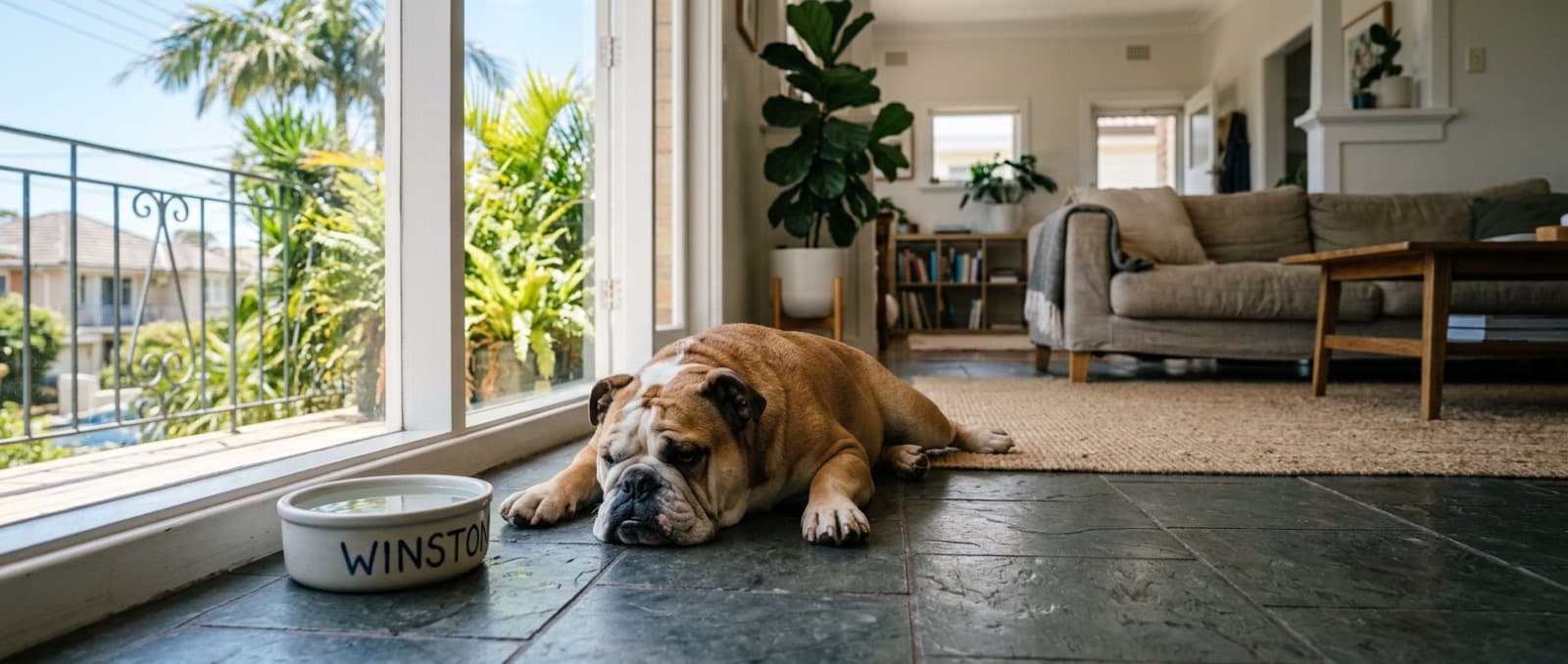
- Shade and water always. Constant access to fresh water and deep shade, indoors and out. Add a cool tiled floor, a raised cooling mat, or a frozen wet towel to lie on.
- Check the pavement. Test the footpath with the back of your hand. If it is too hot for your hand, it is too hot for paws, and it radiates heat up at a low dog.
- A harness, never a collar. A collar presses on an already compromised windpipe. A Y-front harness is far kinder to a brachycephalic dog.
- Never a hot car or yard. No exceptions, no cracked windows, no quick errands. This is the most preventable cause of Bulldog death in summer.
The RSPCA Knowledgebase and the Australian Veterinary Association publish seasonal heat-safety guidance for flat-faced breeds each summer, and both are worth reading before your first hot spell.
Recognising and responding to heatstroke
Because a Bulldog cannot cool itself, heatstroke can come on fast and turn life-threatening quickly, so knowing the signs and the response before summer matters. The signs to watch for are heavy, laboured or frantic panting, excessive drooling, bright red or dark gums and tongue, weakness or stumbling, vomiting or diarrhoea, glazed eyes, obvious distress, and in severe cases collapse. A Bulldog in trouble often makes more airway noise than usual as the throat swells.
If you suspect heatstroke, act at once. Move the dog into shade or air conditioning. Offer small amounts of cool water to drink. Begin cooling the body with cool, not icy, water over the belly, groin, armpits and paws, with air moving over the dog from a fan or breeze. Avoid ice and ice-cold water, which can constrict surface blood vessels and slow cooling. Then get to a vet immediately, even if the dog seems to recover, because heat can cause internal damage that is not visible, and call ahead so the clinic is ready. The order is simple: cool first, travel fast, do not wait to see if it passes.
If you are not sure where your nearest emergency vet is, find out now and save the number, rather than searching for it during a crisis. A Sydney referral and emergency hospital such as the Small Animal Specialist Hospital (SASH) runs 24/7 emergency care, and your regular vet can tell you the closest after-hours option to you.
Everyday breathing management
Heat is the acute danger, but the underlying breathing needs year-round management too. Keep your Bulldog lean, because weight worsens both breathing and heat tolerance and is the biggest lever you control. Use a harness rather than a collar. Keep exercise gentle and short, let the dog set the pace, and stop at the first sign of laboured breathing rather than pushing through it.
Learn what your dog's normal breathing sounds like so you notice a change. Persistent noisy breathing, heavy snoring, coughing, gagging, or real difficulty on a gentle walk in cool weather are worth a veterinary airway assessment. For dogs affected enough, surgery to open the nostrils and shorten the soft palate can meaningfully improve both breathing and heat tolerance, and whether it is right is a decision to make with your vet after they assess your individual dog. For the full medical picture of the breed, see our Bulldog health guide.
Thinking about adopting a Bulldog?
Managed for the heat, a Bulldog is a gentle, devoted companion. Browse adoptable Bulldogs across Sydney and NSW, and read the full adoption guide first.
Read the Bulldog Adoption Guide →Frequently Asked Questions
Why do English Bulldogs overheat so easily?
Because dogs cool themselves mainly by panting, and a Bulldog cannot pant efficiently. The short flat face and crowded airway of a brachycephalic breed mean far less air moves across the moist surfaces that shed heat, so a Bulldog heats up faster and cools down slower than a normal-muzzled dog. On top of that, the breed is stocky and often carries extra weight, which adds to the load. The result is a dog that can get into heat trouble on a day another breed would handle comfortably. In the Sydney climate this is the single most important thing an owner manages.
What temperature is too hot to walk a Bulldog in Sydney?
There is no single safe number, because humidity matters as much as temperature and every dog differs, but the practical rule is to avoid walking a Bulldog in the heat of the day at all through summer. Walk in the cool of the early morning and the evening, keep it short and gentle, and on hot or humid days skip the walk entirely and let the dog rest indoors in the cool. Test the footpath with the back of your hand first, because hot pavement burns paws and radiates heat up at a low dog. If in doubt, do not go. A missed walk never hurt a Bulldog; an overheated one can die.
What are the signs of heatstroke in a Bulldog?
Heavy, laboured or frantic panting, excessive drooling, bright red or dark gums and tongue, weakness, stumbling, vomiting or diarrhoea, glazed eyes, distress and, in severe cases, collapse. A Bulldog in trouble may make more breathing noise than usual as the airway swells. Because the breed struggles to cool itself, heatstroke can come on fast and become life-threatening quickly. If you see these signs, treat it as an emergency: begin cooling the dog and contact a vet immediately. Learn these signs before summer, not during your first scare.
What should I do if my Bulldog is overheating?
Act immediately. Move the dog into shade or air conditioning, offer small amounts of cool water to drink, and start cooling the body with cool (not icy) water on the belly, groin, armpits and paws, with air moving over it from a fan or breeze. Do not use ice-cold water or ice, which can cause the surface blood vessels to constrict and slow cooling. Then get to a vet straight away, even if the dog seems to improve, because heatstroke can cause internal damage that is not visible. Call ahead so the clinic is ready. This is a genuine emergency, so cool first and travel fast; do not wait to see if it passes.
How do I keep my Bulldog cool at home in summer?
Air conditioning on hot and humid days is the simplest and most reliable answer, and for this breed in Sydney it is close to essential rather than a luxury. Beyond that: constant access to fresh water and deep shade, a cool tiled floor or a raised cooling mat to lie on, fans for air movement, and blinds drawn against afternoon sun. Never leave a Bulldog in a hot yard without shade and water, or in a car for even a minute. Freeze some treats or a wet towel for the dog to lie on. Plan the day around the heat: outdoor time and any exercise in the cool hours, rest inside during the heat.
Is it safe to leave a Bulldog in the car for a few minutes?
No, never, not even for a minute and not with the windows cracked. A parked car heats to lethal temperatures within minutes even on a mild day, and a Bulldog, which already cannot cool itself, is one of the breeds most likely to die in that situation. There is no safe version of leaving a Bulldog in a car in an Australian summer. If you cannot take the dog with you out of the car, leave it at home in the cool. This is the most preventable cause of Bulldog death in the warm months, and the rule is simply absolute.
What is BOAS and can surgery help my Bulldog breathe?
BOAS, brachycephalic obstructive airway syndrome, is the breathing difficulty caused by the flat face crowding the airway: narrowed nostrils, an overlong soft palate and sometimes a narrow windpipe. Signs are noisy breathing, snoring, snorting, tiring quickly and struggling in heat. For dogs affected enough, surgery to widen the nostrils and shorten the soft palate can meaningfully improve breathing and heat tolerance, and it is worth discussing with your vet if your Bulldog shows real difficulty. Whether surgery is right is a veterinary decision based on assessing your individual dog, so book an airway assessment and follow your vet's advice rather than an article.
Should a Bulldog wear a harness or a collar?
A harness, always, for this breed. A collar puts pressure directly on the throat and windpipe of a dog that already has a compromised airway, which can worsen breathing and coughing. A well-fitted Y-front harness spreads the pressure across the chest and is much kinder to a brachycephalic dog. Keep walks gentle and short, let the dog set the pace, and stop at the first sign of laboured breathing. If your Bulldog is puffing hard on a slow walk in cool weather, that is worth mentioning to your vet.
How much exercise can a Bulldog safely have?
Much less than most breeds, and that is by design rather than laziness. Short, gentle, low-intensity activity in the cool part of the day is right for a Bulldog: a couple of easy walks and some calm play. Over-exercising the breed is genuinely dangerous, because a Bulldog cannot shed the heat that exertion generates, so pushing one to run, play hard or keep going in warmth risks a breathing or heat emergency. Watch the breathing, not the clock: when a Bulldog starts working hard to breathe, the session is over. A Bulldog is a companion, not an endurance dog.
Does every Bulldog struggle with heat and breathing to the same degree?
No, it varies. Some Bulldogs are more moderately built with better airways and cope better; others are severely affected and need very careful management. Weight makes a big difference, so a lean Bulldog manages heat and breathing better than an overweight one. When you adopt, ask the rescue how the dog breathes at rest and on a gentle walk and how it copes with warmth, and have your vet assess the airway early so you know what you are working with. Whatever the individual dog, though, the core Sydney-summer rules (cool hours, air conditioning, shade, water, no hot cars) apply to every Bulldog.
Keep reading
English Bulldog Adoption in Sydney
Where to adopt, the true cost against a breeder, and why so many need rescue.
English Bulldog Health Issues in Sydney
Breathing, skin, eyes, joints and the real lifetime vet costs to budget for.
Adoptable English Bulldogs in Sydney
Live listings of Bulldogs and Bulldog crosses, with filters for age, size and compatibility.
How to Adopt a Dog in Sydney
The full Sydney adoption process, paperwork, vet questions and home-check tips.