The short answer
An English Bulldog's flat-faced airway makes panting inefficient, so it overheats far faster than a normal-nosed dog, which makes the Brisbane heat a real, life-threatening risk. Keep a Bulldog cool: exercise only briefly in the cool of the morning and evening, provide constant shade, water and indoor air conditioning, never exert the dog in the heat, and never leave it in a car. Bulldogs also cannot swim and can drown quickly, so fence pools and never leave one unsupervised near water. Learn the warning signs, worsening laboured panting, bright red or bluish gums, drooling, weakness, collapse, and treat any of them as an emergency: cool the dog and get to a vet immediately. BOAS surgery can help affected dogs breathe and cope with heat better. This is general information, not veterinary advice.
Why a Bulldog cannot handle heat
Dogs do not sweat to cool down the way people do; they shed heat mainly by panting, moving air over the wet surfaces of the mouth and airway so that evaporation carries heat away. That system depends on being able to move a lot of air efficiently, and this is exactly what a brachycephalic breed cannot do. The English Bulldog's shortened skull crowds its airway, with narrowed nostrils, an overlong soft palate and often a narrow windpipe, so the same anatomy that causes the breed's snorting also cripples its cooling system.
The result is a dog that heats up quickly and struggles to cool down again, and in a hot, humid Brisbane summer that is dangerous. Humidity makes it worse, because evaporation, the whole basis of panting, is less effective in humid air. This is why heat is a safety issue for the breed and not a comfort one, and it is the single most important thing a Brisbane Bulldog owner has to manage. The RSPCA Knowledgebase has good general guidance on brachycephalic breeds and hot-weather care.
Why Bulldogs cannot swim
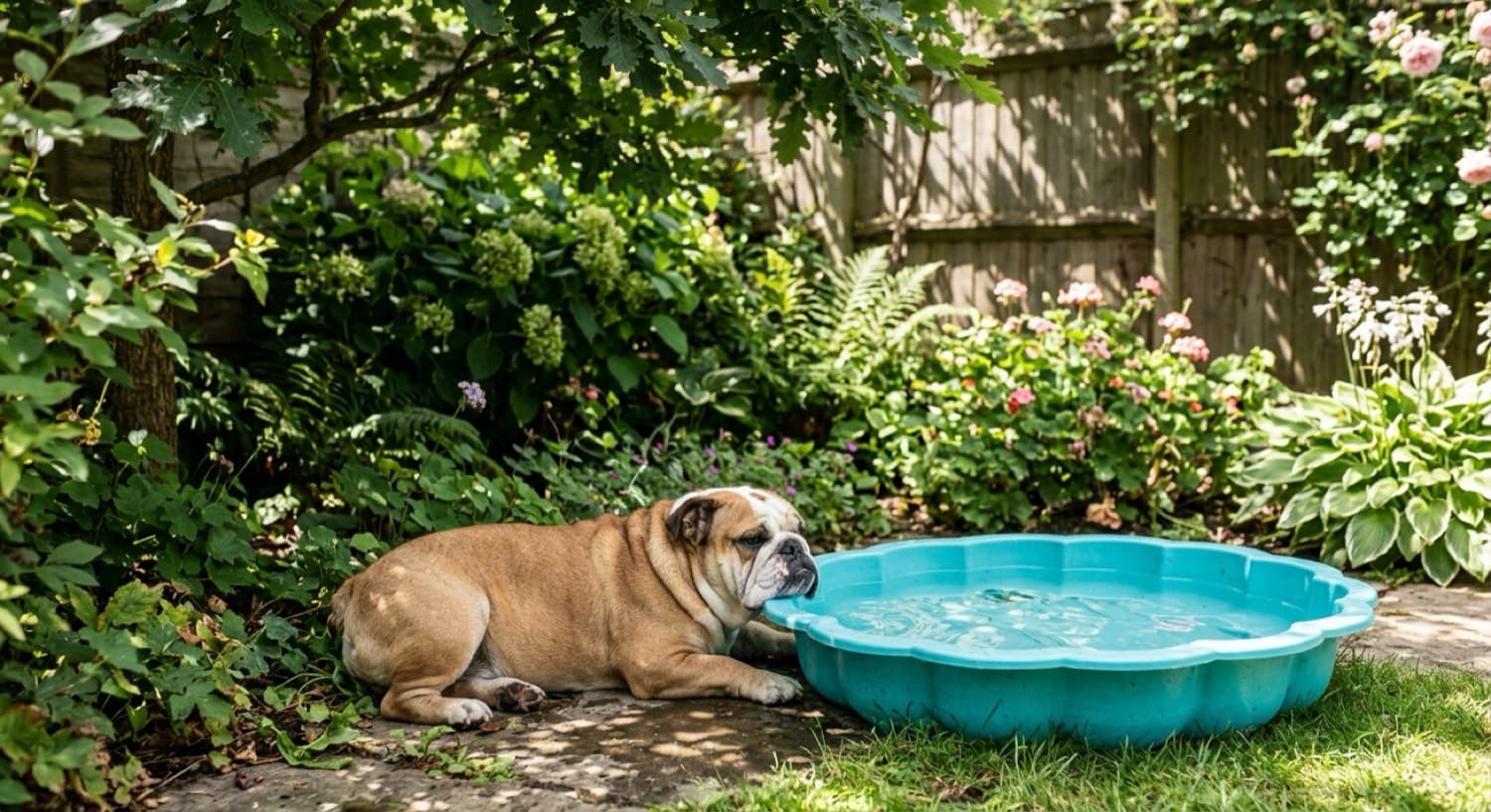
It surprises many new owners, but the English Bulldog cannot swim, and this is a genuine drowning risk in a city where backyard pools are common. The breed's heavy, front-loaded body, short legs and flat face mean it cannot keep its nose and mouth above the water, and a Bulldog that falls into a pool can sink and drown within moments. Never leave a Bulldog unsupervised anywhere near water, keep pools fenced or covered, and know that a dog can get into trouble even in a shallow or ornamental pond. If you want your Bulldog to enjoy water, a well-fitted canine life jacket and your hands-on supervision are essential, and a shallow shell pool it can stand up in, placed in the shade, is a safer way for it to cool off than any depth of water.
The warning signs to know
Because a Bulldog's breathing is already noisy, the trick is to watch for it getting worse, not to expect a silent dog. Learn these signs of overheating and respiratory distress:
- Frantic or increasingly laboured panting, or breathing that sounds harsher or louder than the dog's normal.
- Gums that are bright red, or turning blue, purple or pale. A blue or purple tinge means the dog is not getting enough oxygen and is an emergency.
- Heavy drooling, thick and ropey.
- Restlessness, anxiety or obvious distress, then weakness, wobbliness or stumbling.
- Vomiting or diarrhoea, and in severe cases collapse or loss of consciousness.
Any of these in the heat is a get-to-a-vet-now situation. Heatstroke escalates fast and can be fatal, so do not wait to see whether the dog settles.
What to do in a heat emergency
If you suspect your Bulldog is overheating: move it into shade or air conditioning at once, offer small amounts of cool (not icy) water, and wet its coat and skin with cool water, concentrating on the belly, groin and paws where cooling is most effective. Use a fan to help the water evaporate. Do not use ice or ice-cold water, which can constrict blood vessels and actually slow cooling. Then get to a vet immediately, calling ahead so they are ready, because heatstroke can keep causing internal damage even after the dog appears to recover. Brisbane after-hours emergencies are handled by hospitals such as Animal Emergency Service at Jindalee and Underwood. Know your nearest emergency hospital before summer, not during a crisis.
Keeping a Bulldog safe through a Brisbane summer
- Exercise only in the cool. Short, gentle walks in the early morning and evening, never the middle of the day, and stop at the first laboured breath. On very hot or humid days, skip the walk for indoor play in the air conditioning.
- Cool indoors. A Bulldog needs a genuinely cool place to be, with air conditioning or fans on hot days, and wants to be inside with the family anyway. A cooling mat helps.
- Shade and water outdoors, always. Never rely on a shaded yard alone on a hot day.
- Pavement check. If it is too hot for the back of your hand, it is too hot for paws, and a struggling Bulldog on hot ground overheats faster.
- Keep the dog lean. Excess weight worsens both breathing and heat tolerance, so weight control is part of heat safety.
- Never the car. Never leave a Bulldog in a parked car, even briefly, even with windows cracked. For this breed it can be fatal in minutes.
Finally, if your Bulldog struggles to breathe even at rest or in mild conditions, ask your vet about a BOAS assessment. Corrective airway surgery helps many affected dogs breathe and cope with heat better, and it is covered alongside the breed's other conditions in the Bulldog health guide.
Meet an English Bulldog in Brisbane rescue
If you can offer the cool home, the strict heat care and the pool safety this breed needs, a Bulldog is a devoted, comical companion. Browse English Bulldogs and crosses available in Brisbane and Queensland rescue.
See Available English Bulldogs →Frequently Asked Questions
Why is heat so dangerous for an English Bulldog?
Because dogs cool themselves mainly by panting, and a Bulldog’s brachycephalic (flat-faced) airway makes panting far less effective. The crowded, obstructed airway that causes the breed’s snorting also means it cannot move air efficiently to shed heat, so a Bulldog overheats much faster than a normal-nosed dog and cannot recover as well. In a hot, humid Brisbane summer that turns heatstroke from a remote risk into a real one. It is the reason heat management is not a comfort issue but a genuine safety issue for the breed, and why a Bulldog needs a cool environment and strict limits on exertion in the warmth.
Can English Bulldogs swim?
No, and this catches owners out. The Bulldog’s heavy, front-loaded body, short legs and flat face mean it cannot keep its head above water, and a Bulldog can sink and drown very quickly, even in a shallow backyard or hotel pool. This is a real danger in a Brisbane home with a pool. Never leave a Bulldog unsupervised near water, fence or cover pools, and if you want your dog to enjoy water, use a proper canine life jacket and stay right beside it. A shallow shell pool it can stand in, in the shade, is a safe way for a Bulldog to cool off; deep water is not.
What are the signs a Bulldog is overheating or in breathing distress?
Learn these, because they can escalate fast: frantic or increasingly laboured panting, gums that are bright red or turning blue or pale, drooling, a rasping or louder-than-usual breathing sound, restlessness or distress, weakness, stumbling, vomiting or diarrhoea, and in severe cases collapse. A blue or purple tinge to the tongue or gums means the dog is not getting enough oxygen and is an emergency. Because a Bulldog’s normal breathing is already noisy, watch for it getting worse rather than expecting silence. Any of these signs in the heat is a get-to-a-vet-now situation, not a wait-and-see one.
What do I do if my Bulldog overheats?
Act immediately. Move the dog into shade or air conditioning, offer small amounts of cool (not icy) water, wet the coat and skin with cool water especially on the belly, groin and paws, use a fan to help evaporation, and get to a vet straight away, because heatstroke can keep causing internal damage even after the dog seems to improve. Do not use ice or ice water, which can constrict blood vessels and slow cooling. Call the vet on the way so they are ready. In Brisbane, after-hours emergencies are handled by hospitals such as Animal Emergency Service at Jindalee and Underwood. With a flat-faced breed, treat any suspected overheating as urgent.
How should I exercise an English Bulldog in Brisbane?
Gently, briefly, and only in the cool of the day. A Bulldog is a low-energy dog that needs modest exercise for weight and wellbeing but must never be pushed, especially in heat. Walk in the early morning or evening when it is cool, keep walks short and at the dog’s pace, and stop at the first sign of laboured breathing. Avoid the middle of the day entirely in summer, skip walks altogether on very hot or humid days in favour of indoor play in the air conditioning, and check the pavement is not too hot for paws. Keeping the dog lean is also exercise’s real job here, because excess weight worsens both breathing and heat tolerance.
Does BOAS surgery help a Bulldog cope with heat?
It can, significantly, in many dogs. Corrective surgery for brachycephalic obstructive airway syndrome, typically widening the nostrils and shortening the overlong soft palate, improves airflow, which makes both breathing and heat-shedding more effective. A vet, ideally one experienced with brachycephalic breeds, can assess whether an individual Bulldog would benefit and when. Surgery is not a cure-all and does not remove the need for strict heat management, but for a moderately or severely affected dog it can meaningfully improve quality of life and safety. If you adopt a Bulldog that struggles to breathe, ask your vet about a BOAS assessment.
Keep reading
Adoptable English Bulldogs in Brisbane
Live listings with foster carer notes on temperament, health and care needs.
English Bulldog Adoption in Brisbane
Where to look, why they reach rescue, real costs, and whether one suits your home.
English Bulldog Health Issues
Breathing (BOAS), skin folds, eyes, joints and dental, and why insuring early matters.
Brisbane Adoption Resources
Guides on adopting, costs, council rules and settling a rescue dog in Brisbane.