The short answer
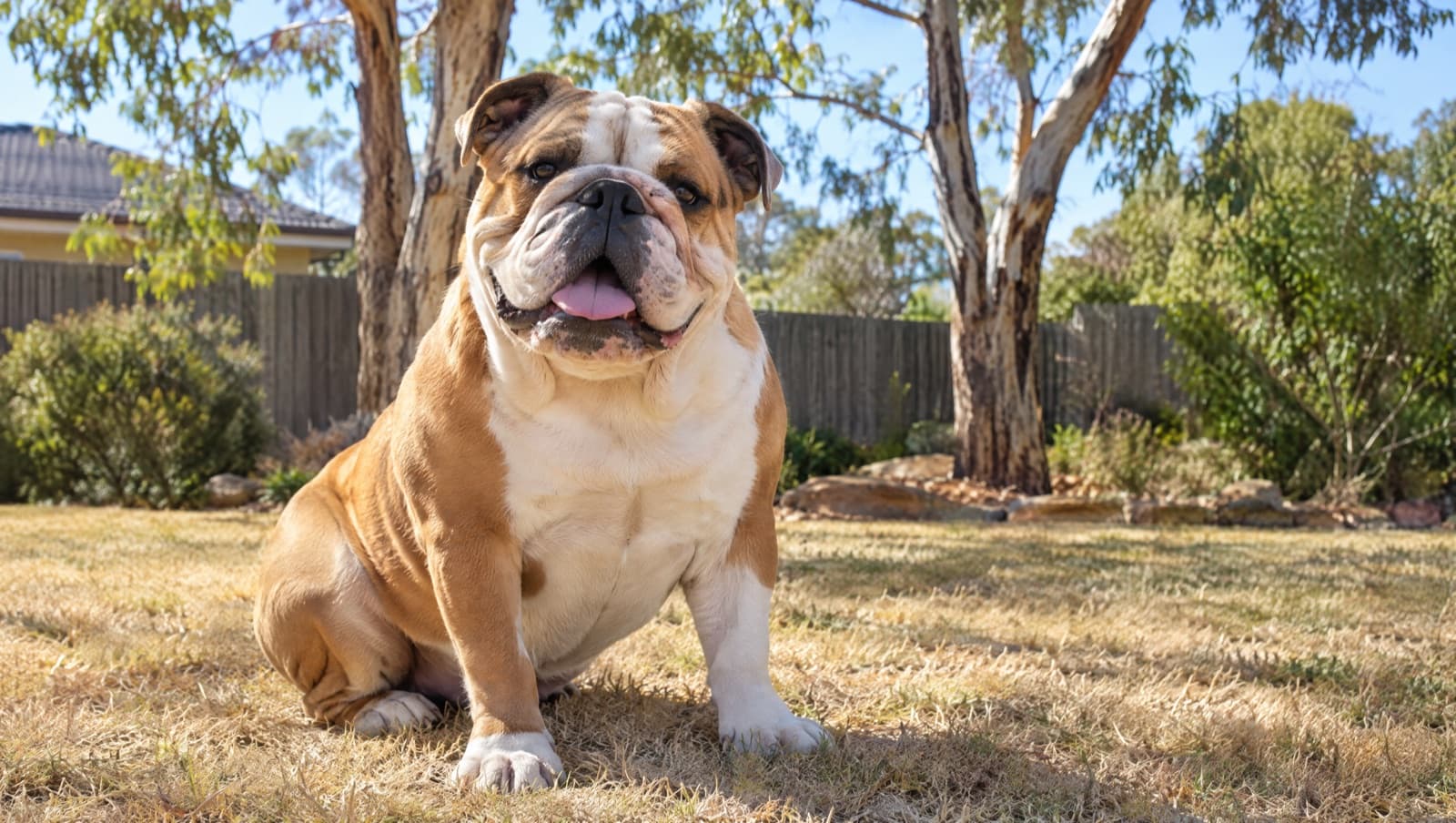
The English Bulldog is a health-prone breed, and the central issue is brachycephalic obstructive airway syndrome (BOAS): a flat face crowds the airway, so the snorting many people think is normal is actually laboured breathing, and it makes heat and exertion dangerous. Bulldogs are also prone to skin fold dermatitis, eye conditions (cherry eye, entropion, dry eye), a very high rate of hip dysplasia and other joint problems, dental crowding, and screw-tail and spinal issues, and most litters are born by caesarean. They are one of the shorter-lived purebreds, commonly around eight to ten years. Their health genuinely improves with weight control, strict heat management (essential in Perth), daily fold and eye care, BOAS surgery where a vet advises, and early pet insurance taken out before any condition is on record. This is general information, not veterinary advice.
BOAS: the breathing problem at the centre
Brachycephalic obstructive airway syndrome is the defining health issue of the English Bulldog, and understanding it reframes a lot of what people assume is normal. The breed's skull is shortened but the soft tissue inside is not, so the airway is crowded and obstructed: the nostrils are often narrowed, the soft palate is overlong and partly blocks the throat, and the windpipe can be narrow. The familiar snorting, snoring and noisy breathing are not quirks. They are the sound of a dog working hard to move air.
BOAS ranges from mild to severe. In worse cases a Bulldog genuinely struggles to get enough air, particularly in heat or with exertion, which is why heat is so dangerous for the breed and has its own guide. Corrective surgery, widening the nostrils and shortening the soft palate, helps many affected dogs significantly, and keeping the dog lean and cool reduces the load on a compromised airway. The animal-welfare concerns around breeding dogs with these features are discussed openly by the RSPCA Knowledgebase, and the Australian Veterinary Association has a welfare position on brachycephalic breeds. Both are worth reading before you commit to the breed.
Skin folds and dermatitis
The wrinkles that define the Bulldog trap moisture, warmth and debris, and become inflamed or infected, a condition called skin fold dermatitis. The usual trouble spots are the facial folds, the rope over the nose and the tail pocket beneath the screw tail. The management is daily and simple but non-negotiable: gently clean the folds and, crucially, dry them thoroughly, because it is trapped moisture that causes the problem. Watch for redness, odour, discharge or the dog rubbing its face. Many Bulldogs also have allergies and sensitive skin that need veterinary management. Fold care is simply part of daily life with the breed.
Eye conditions
- Cherry eye. The tear gland of the third eyelid prolapses and shows as a red mass in the corner of the eye; it usually needs surgical repair.
- Entropion. The eyelid rolls inward so the lashes rub the eye, which is painful and is corrected surgically.
- Dry eye and irritation. The prominent, exposed eyes are prone to dryness and irritation.
See a vet promptly for redness, discharge, cloudiness, a visible pink mass, or any sign of pain. Eye conditions in the breed are often very treatable and are far more comfortable for the dog when caught early.
Joints, dental, spine and birth
Despite a moderate size, the Bulldog has a very high rate of hip dysplasia, and also suffers elbow dysplasia and patellar luxation, because its heavy, front-loaded build stresses the joints. Screening in breeding dogs is described by the Orthopedic Foundation for Animals, and a rescue Bulldog benefits from a vet assessment. The breed also has crowded teeth prone to dental disease, so daily tooth brushing and vet dental checks matter, and some Bulldogs have spinal problems linked to the screw tail and vertebral malformation. The same body shape is why most Bulldog litters are delivered by caesarean rather than born naturally, part of the wider welfare conversation about the breed. Across all of it, the single biggest lever an owner controls is weight: a lean Bulldog has healthier joints, easier breathing and better heat tolerance.
Heat intolerance in Perth, and why they cannot swim
A dog that cannot breathe efficiently also cannot cool itself efficiently, because dogs shed heat mainly by panting, and a compromised airway makes that far less effective. That makes the English Bulldog genuinely heat-intolerant, and in a Perth summer, with long runs of mid-30s to 40-degree days, heatstroke is a real and life-threatening risk, not a remote one. Strict heat management, exercise only in the cool of the day, constant shade and water, indoor cooling, and never any exertion in the heat, is a core part of keeping the breed healthy here, and it is important enough to have its own guide. Bulldogs also cannot swim and can drown quickly, so pool, river and beach safety is a health issue too.
Heatstroke is an emergency. If your Bulldog shows worsening laboured panting, bright red or bluish gums, drooling, weakness or collapse in the heat, cool it with shade, cool (not icy) water on the belly and groin, and a fan, then get to a vet immediately. In Perth, 24/7 emergency hospitals include Perth Vet Emergency at Cannington, The Animal Hospital at Murdoch University, and WAVES at Success. Know your nearest before summer.
WA parasite prevention, snakes and 1080
Perth's parasite picture is different from the east coast, and it matters for a Bulldog whose breathing you are already managing. Paralysis ticks are effectively a non-issue here: the Australian paralysis tick is an eastern-seaboard species and is not established in WA, so there is no year-round paralysis-tick regime to follow in Perth. Keep up routine flea, intestinal worm and heartworm prevention on your vet's advice, and only think about paralysis-tick cover if you are travelling east with your dog.
Two WA hazards are worth a Bulldog owner's attention. Dugites, gwardars and tiger snakes near water are active around Perth's bushland and river foreshores in the warmer months, and a slow-moving Bulldog cannot get out of the way quickly, so keep it leashed near long grass and water and know your nearest emergency vet. And in reserves and bushland, the state's Western Shield 1080 baiting program lays fox and feral-cat baits that are lethal to dogs, signposted “1080 POISON”, so check for signage and keep your dog under control on bush walks.
Thinking about an English Bulldog in Perth?
A rescue Bulldog comes with a vet check and honest foster notes, so you adopt knowing the dog's real health. Browse English Bulldogs and crosses available in Perth and WA rescue.
See Available English Bulldogs →Frequently Asked Questions
What is BOAS in English Bulldogs?
BOAS stands for brachycephalic obstructive airway syndrome, and it is the central health issue of the breed. Because the Bulldog's skull is shortened but the soft tissue is not, the airway is crowded: narrowed nostrils, an overlong soft palate and a narrow windpipe all obstruct airflow. The result is the snorting and snoring that people think of as normal for the breed but which is actually laboured breathing, and in worse cases real difficulty getting enough air, especially in heat or with exertion. BOAS ranges from mild to severe, corrective surgery can help significantly in many dogs, and keeping the dog lean and cool is essential. It is also why heat is so dangerous for the breed, covered in the heat and breathing guide.
Do English Bulldogs have skin problems?
Commonly, yes, because the folds and wrinkles that define the breed trap moisture, warmth and debris and become inflamed or infected (skin fold dermatitis). The facial folds, the nose rope and the tail pocket are the usual trouble spots. Daily care is the answer: gently clean and thoroughly dry the folds, watch for redness, odour or the dog rubbing, and keep up with any allergies or sensitive skin the dog has. Left unmanaged, fold infections are painful and recurrent, so fold care is a daily part of owning the breed rather than an occasional chore.
What eye problems affect English Bulldogs?
Several. Cherry eye (prolapse of the tear gland of the third eyelid) is common and usually needs surgical repair. Entropion, where the eyelid rolls inward and the lashes rub the eye, is painful and also surgically corrected. Bulldogs are also prone to dry eye and to general irritation because the prominent eyes are exposed. See a vet promptly for any redness, discharge, cloudiness, a visible pink mass in the corner of the eye, or signs of pain, because eye conditions are often treatable and sometimes urgent, and are more comfortable for the dog when caught early.
Are English Bulldogs prone to joint problems?
Yes. Despite their moderate size, Bulldogs have a very high rate of hip dysplasia, and also suffer elbow dysplasia and patellar luxation (slipping kneecaps). The breed's heavy, front-loaded build puts unusual stress on the joints. Keeping a Bulldog lean is the single biggest thing an owner controls, because excess weight worsens every joint problem and also makes breathing harder. Some Bulldogs additionally have spinal issues linked to the screw tail and vertebral malformations. Management ranges from weight control and joint support to pain relief and, in severe cases, surgery, and your vet is the right guide for an individual dog.
Do English Bulldogs need a caesarean to give birth?
Very often, yes. The combination of large-headed puppies and the mother's narrow pelvis means most English Bulldog litters are delivered by planned caesarean rather than naturally, and the breed cannot reliably whelp on its own. This is one of the reasons Bulldogs are expensive and difficult to breed, and it is part of the wider welfare conversation about the breed's shape. For an adopter it mostly matters as context: a rescue Bulldog will usually already be desexed, and desexing removes this risk entirely while also lowering the council registration fee.
How long do English Bulldogs live, and can their health be improved?
English Bulldogs are one of the shorter-lived purebred dogs, commonly living around eight to ten years, largely because of the accumulated effects of the conditions above. Their health can genuinely be improved: keeping the dog lean, managing the Perth heat strictly, daily skin and eye care, and addressing BOAS surgically where a vet advises all make a real difference to quality and length of life. Adopting an adult from rescue also lets you see the dog's actual health rather than gamble on a puppy. This is general information, not veterinary advice, and the animal-welfare concerns around brachycephalic breeding are discussed by the RSPCA.
Do I need year-round tick prevention for a Bulldog in Perth?
Not for the paralysis tick. The Australian paralysis tick is an eastern-seaboard species and is not established in WA, so Perth's paralysis-tick risk is low and there is no year-round paralysis-tick regime to follow here, unlike on the east coast. What you do keep up is routine flea, intestinal worm and heartworm prevention, which the warm Perth climate makes worthwhile all year on your vet's advice. The one time paralysis ticks become relevant is if you travel east with your dog, to coastal Queensland, New South Wales or eastern Victoria, when you should ask your vet about tick prevention before you go.
Is pet insurance worth it for an English Bulldog?
For this breed, strongly yes, and timing is critical: take out cover as soon as you adopt, before any condition is on record, because insurers exclude pre-existing conditions and a Bulldog is likely to develop several. BOAS surgery, cherry eye and entropion repairs, skin treatment, joint surgery and dental work can each run into the thousands. Read the waiting periods and exclusions carefully, consider a policy with a high annual limit, and pair insurance with the preventive basics, weight control, daily fold and eye care, strict heat management and routine parasite prevention, which are what keep a Bulldog healthier and out of the emergency clinic.
Keep reading
Adoptable English Bulldogs in Perth
Live listings with foster carer notes on temperament, health and care needs.
English Bulldog Adoption in Perth
Where to look, why they reach rescue, real costs, and whether one suits your home.
Bulldog Heat & Breathing in Perth
Why heat is a real danger, why they cannot swim, and how to keep a flat-faced dog safe.
All Dogs for Adoption in Perth
Every adoptable dog we track across Perth and WA shelters and rescues, updated regularly.