The short answer
A Lhasa Apso has two daily-care jobs: the long, heavy double coat and the eyes and face. The coat mats fast, so a full coat needs combing to the skin every day and a professional groom every four to six weeks. Most Sydney owners keep a shorter puppy cut instead, which drops brushing to a few times a week. Do not shave to the skin. For the face, keep the eye hair trimmed or tied up, and wipe the eyes and beard clean and dry every day. Watch for red, weepy or cloudy eyes and see your vet fast. And because this is a cold-weather breed, a puppy cut plus shade and water matter in Sydney heat.
Understanding the Lhasa Apso coat
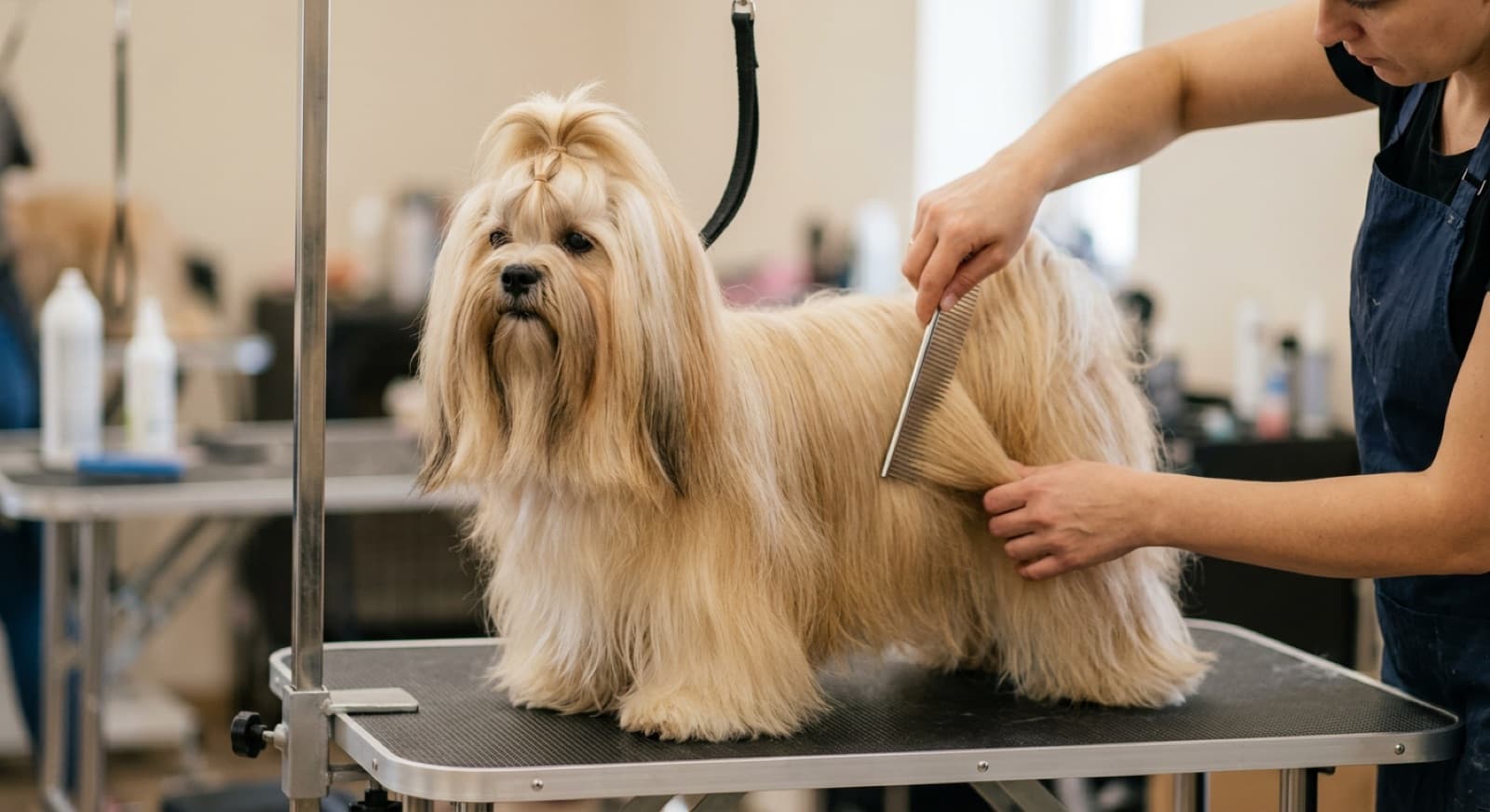
The Lhasa Apso wears a long, dense, straight and heavy double coat that in a full show trim reaches the floor. It was bred that way for a reason. The breed comes from the cold, high Tibetan plateau, where a thick insulating coat kept the dog warm. That heritage is lovely, but it also explains the maintenance. A heavy double coat holds onto loose hair, traps moisture and dirt, and tangles readily wherever the hair rubs.
The coat mats worst behind the ears, in the armpits, on the belly, around the collar or harness, on the rear, and in the beard and face. Because a Lhasa Apso sheds very little, the shed hair does not fall away. It stays caught in the coat and works itself into mats close to the skin. That is the paradox of the breed: low shedding, high maintenance. Left alone, the coat does not stay pretty and free-flowing, it turns into a tight, uncomfortable mat.
Brushing and preventing matting
Brushing is the heart of Lhasa Apso coat care, and the golden rule is to reach the skin, not just the surface. Surface brushing leaves mats quietly forming underneath. Use a pin brush to work through the coat, then a metal comb to confirm you have reached the skin and to catch tangles the brush skated over. For a long coat, line combing is the reliable method: part the coat, comb up in thin layers, and work section by section.
- Full coat: comb to the skin every day, or very close to it, to stay ahead of matting.
- Puppy cut: brush a few times a week, still down to the skin.
- Friction points: behind the ears, the armpits, the belly, around the harness, and the rear need extra care.
- Tangles: ease them out with your fingers and the comb, never by dragging a brush through.
- Rescue dogs: start slowly with short, calm sessions and treats so grooming becomes something the dog accepts.
A few minutes daily beats a long battle once a week, for both the coat and the dog's comfort. Keeping the coat clean and mat-free also protects the skin and lets you spot lumps, parasites or sore spots early, which ties grooming straight to health. For the medical picture, see our Lhasa Apso health guide. The RSPCA Knowledgebase also has sound general guidance on coat and grooming care.
Browse adoptable Lhasa Apsos in Sydney
If you can keep up the coat and the daily face routine, a Lhasa Apso is a devoted, dignified companion. Browse live NSW listings, including many crosses and seniors.
See Available Lhasa Apsos →The puppy cut, bathing and hygiene
The puppy cut. For most pet owners a shorter puppy cut is the practical, kinder choice, and it is very common in Sydney. It slashes brushing time and matting, keeps the dog cooler in warm weather, and is simple to keep clean. A full floor-length coat is beautiful but demands near-daily line combing and frequent professional grooming. One firm rule: do not shave a Lhasa Apso back to bare skin. The coat gives some protection from sun and heat, and shaving to the skin can damage how it grows back. Aim for a tidy, even short layer, not a bald dog.
Bathing and drying. Bathe roughly every three to four weeks, or when the dog is visibly dirty, with a gentle dog shampoo. Brush out every tangle before the bath, because water tightens mats and makes them much harder to remove. Afterwards, dry the coat thoroughly right down to the skin, since a heavy double coat holds damp against the skin, and a damp undercoat mats, smells and can irritate the skin. Keep water and shampoo out of the eyes and ears.
The rear and hygiene. A long coat around the rear traps mess, so keep the sanitary area clean and trimmed short. The ears are hairy and need to stay clean and dry to avoid infection, the nails need regular trimming, and the small mouth needs consistent dental care, since small breeds are prone to dental disease. A groomer can keep the feet, ears and rear tidy as part of a regular clip.
Eye and face care, the other daily job
The face is the second pillar of Lhasa Apso care, and it matters just as much as the coat. The long facial hair falls straight into the eyes and rubs against them, which is uncomfortable and can cause real irritation over time. Keep the hair around the eyes trimmed short, or tie it up in a small topknot if you keep a long coat. Both are normal, sensible ways to keep hair off the eyes.
Then build a simple daily face clean. Wipe the eye area with a soft damp cloth to clear discharge and tear staining, wipe the beard and muzzle to remove trapped food, water and staining, and dry the face afterwards. A face that stays damp gets irritated and can develop skin problems in the folds. Keeping the eyes clean and dry is the single best thing you can do at home to keep them comfortable.
Lhasa Apsos are prone to several eye conditions, so watch the eyes closely and act fast if something changes. Signs worth a same-week vet visit include redness, a sticky or gooey discharge, a thick or coloured discharge, squinting, pawing at the eye, or any cloudiness. A sticky, gooey discharge can point to dry eye, and other Lhasa Apso eye problems include the eyelid and eye conditions the breed is known for. We keep the medical detail in one place: read our Lhasa Apso health guide for what those conditions are and how vets manage them. The rule at home is simple: keep the eyes clean and dry, and get anything unusual seen quickly rather than waiting. The Australian Veterinary Association can help you find a local vet, and Sydney has specialty eye services such as the Small Animal Specialist Hospital for referrals when needed.
A cold-weather breed in the Sydney heat
A heavy-coated Tibetan breed feels the heat, so summer is the real weather risk in Sydney, not winter. Sydney summers average around 26°C but push past 35°C on heatwave days, and a dog built for the Himalayas struggles in that. A shorter puppy cut over summer helps a lot, along with shade, fresh water and access to air conditioning on hot days. Keep exercise to the cooler morning and evening hours, and never leave a dog in a parked car. Remember the shaving rule still applies: clip shorter, but not to the skin, because the coat still offers some sun protection.
One more Sydney essential: year-round paralysis tick prevention. The paralysis tick is present across NSW and is potentially fatal, and a thick Lhasa Apso coat easily hides a tick. Ask your vet for the right vet-recommended preventive product, and hand-check the skin after any bushwalk or park visit rather than relying on sight alone. If you are new to NSW pet ownership, the NSW Pet Registry covers microchipping and council registration, both of which are legal requirements here.
Beyond the coat and eyes, a Lhasa Apso needs only low to moderate exercise, a couple of short daily walks plus some play, which suits the heat and suits apartment life. For where to adopt one and what to expect, see our Lhasa Apso adoption guide, or start with the Sydney dog adoption listings. Rescues that regularly help small breeds like this include RSPCA NSW, AWL NSW, Sydney Dogs and Cats Home, Monika's Doggie Rescue and Maggie's Rescue.
Frequently Asked Questions
How often should I groom a Lhasa Apso?
It depends on the coat length you keep. A full-length Lhasa Apso coat needs brushing and combing right down to the skin every day, plus a professional groom, bath and blow-dry every four to six weeks. A shorter puppy cut, which most Sydney pet owners choose, drops the brushing to a few times a week and a professional clip every six to eight weeks. Whatever the length, the eyes and face need daily attention, and the ears, feet and rear need regular checks. The coat is the single biggest ongoing job of owning this breed, so be honest about how much brushing you will really do before you decide on a coat length.
Should I keep my Lhasa Apso in a puppy cut?
For most Sydney pet owners, yes, a shorter puppy cut is the sensible and kinder choice. It cuts brushing time and matting dramatically, keeps the dog far more comfortable in warm weather, and is simple to keep clean around the eyes, face and rear. A full floor-length coat is stunning but demands near-daily line-combing and frequent professional grooming. One caution: do not shave a Lhasa Apso right down to the skin. The coat gives some protection from sun and heat, and shaving to the skin can damage how it grows back. A tidy puppy cut that leaves a short, even layer is the goal, not a bald dog.
How do I care for a Lhasa Apso's eyes and face?
Keep the long facial hair out of the eyes and keep the eye area clean and dry every day. The hair that falls over a Lhasa Apso's eyes rubs and irritates, so either trim it short around the eyes or tie it up in a small topknot if you keep a long coat. Wipe the eye area and the beard daily with a soft damp cloth to clear discharge, tear staining and trapped food, then dry it, because a constantly damp face gets irritated and can develop skin problems. Watch for redness, a sticky or gooey discharge, squinting or cloudiness, and see your vet promptly if you notice any of them, since Lhasa Apsos are prone to several eye conditions.
Do Lhasa Apsos shed?
Lhasa Apsos shed very little, which is part of why the breed appeals to people who dislike hair around the house. Instead of dropping hair the way many breeds do, the loose hair from the long coat tends to stay caught in the coat itself. That sounds convenient, but it is exactly why they mat so readily: the shed hair tangles into the growing coat and forms mats close to the skin if it is not brushed out. So low shedding does not mean low maintenance. A Lhasa Apso still needs regular brushing or a short clip to stay comfortable, and the trapped-hair habit is the reason.
Why does a Lhasa Apso coat mat so easily?
The Lhasa Apso has a long, dense, heavy coat built to insulate a dog in the cold Tibetan highlands, and that thickness tangles readily, especially where hair rubs. The worst spots are behind the ears, in the armpits, on the belly, around the collar or harness, on the rear, and in the beard and face. Loose shed hair stays trapped in the coat and speeds matting up, and moisture and dirt make it worse. Once a mat forms it tightens against the skin, pulls painfully and can hide skin problems. The fix is prevention: comb down to the skin regularly, keep the coat clean and dry, and a shorter clip makes matting far less likely.
How do I brush a Lhasa Apso properly?
Brush and comb all the way down to the skin in sections, not just over the surface, because surface brushing leaves mats forming underneath. Use a pin brush to work through the coat, then follow with a metal comb to check you have reached the skin and caught any tangles. Line combing, where you part the coat and work up in layers, is the reliable method for a long coat. Be gentle around the face, ears, armpits and rear where tangles gather, and ease out small tangles with your fingers and the comb rather than dragging a brush through them. With a rescue dog, start slowly with short, calm sessions and treats so it learns to accept grooming.
Can I groom a Lhasa Apso at home or should I use a professional?
You can do a lot at home, and the daily brushing and face cleaning really need to be your job, but most Lhasa Apso owners also use a professional groomer for clipping, bathing and blow-drying every six to eight weeks. A good groomer keeps a puppy cut even, tidies the face, feet and rear, dries the dense coat properly to the skin, and spots skin, ear or eye trouble early. A sensible split is to handle the day-to-day brushing and eye care yourself and leave the clipping to a professional. If you adopt a Lhasa Apso with a badly matted coat, do not try to brush it out; a groomer can start the dog fresh with a clip.
How do I keep a Lhasa Apso cool in Sydney summer?
A puppy cut, shade, fresh water and access to air conditioning are the main ways to keep a heavy-coated Lhasa Apso comfortable in Sydney heat. This is a Tibetan breed built for cold, so summer is the real weather risk here, not winter. Walk in the cooler parts of the day, morning or evening, and skip the midday heat. Keep the coat clipped shorter over summer, but do not shave to the skin, since the coat still offers some sun and heat protection. Never leave the dog in a parked car. And keep up year-round paralysis tick prevention, because a thick coat easily hides ticks; ask your vet about the right product and hand-check the skin after walks.
Keep reading
Adoptable Lhasa Apsos in Sydney
Live listings of Lhasa Apsos and Lhasa crosses, including gentle seniors.
Lhasa Apso Adoption in Sydney
Where to adopt, what it costs, and why Lhasa Apsos end up in rescue.
Lhasa Apso Health Issues in Sydney
Eye conditions, kidney disease, luxating patella and keeping a long-lived small breed well.
All Sydney Adoption Guides
Browse every breed and how-to guide for adopting a rescue dog in Sydney.