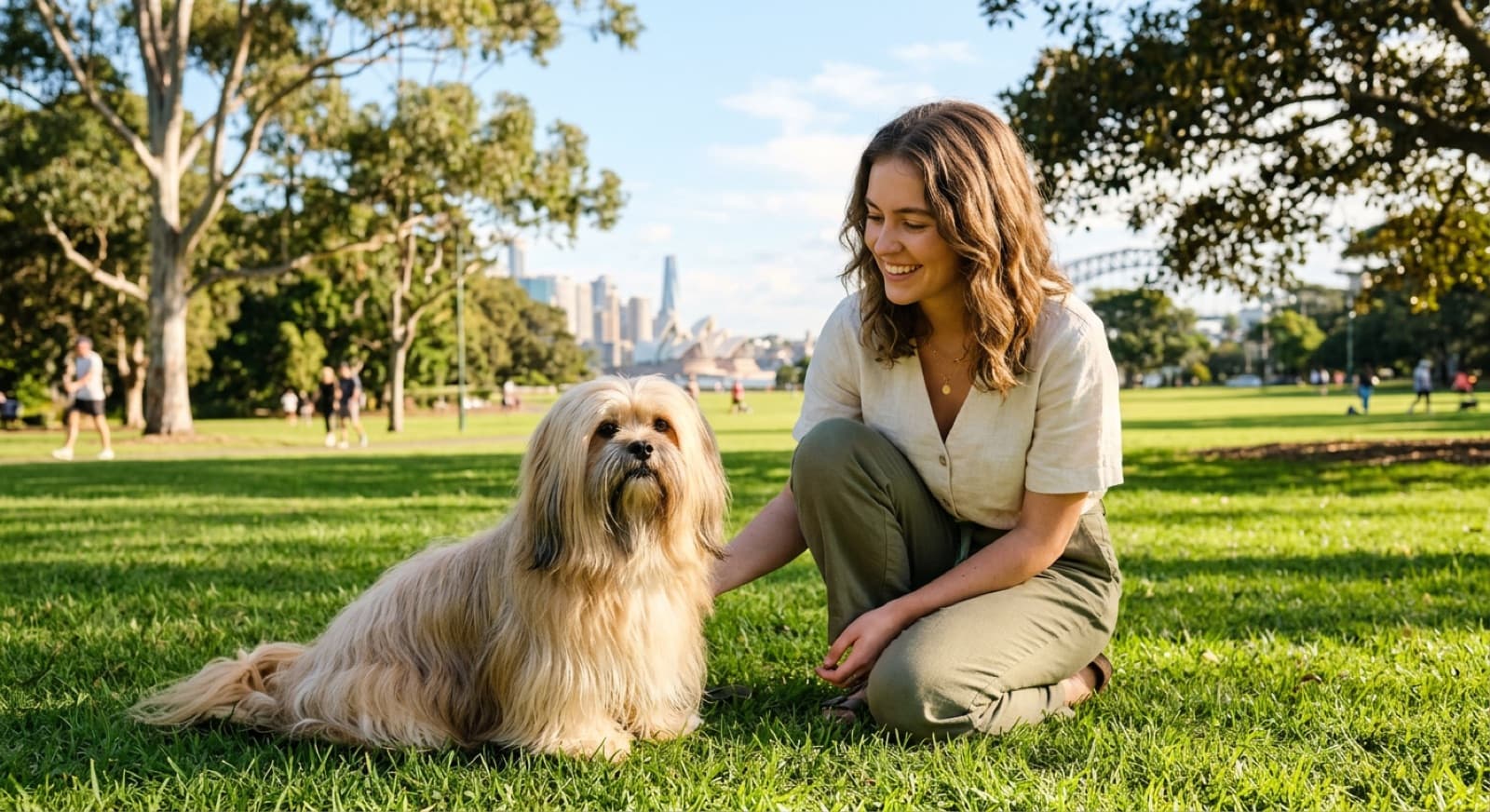
The short answer
You can adopt a Lhasa Apso in Sydney, but purebreds are uncommon in rescue, so most adopters end up with a Lhasa cross or an older dog. Set alerts across the five main NSW rescues, be application-ready, and stay patient. Adoption runs about $400 to $650 for an adult, all-inclusive, against several thousand dollars from a breeder, and the breed is not restricted in NSW. The honest part is that a Lhasa Apso is a coat commitment and an independent, strong-minded dog, not a soft lap toy: the long coat needs daily brushing or a regular short clip, and the breed guards its space and thinks for itself. Suit its temperament and stay on top of the coat, and you have a devoted, dignified companion that bonds deeply with its people.
Why Lhasa Apsos turn up in Sydney rescue
Most breed guides open with where to adopt. With the Lhasa Apso, the useful first lesson is why they come into rescue at all, because it shapes what you will find and what to be ready for. The Lhasa Apso is an ancient Tibetan breed, kept for centuries inside monasteries and homes as an alert indoor watchdog. Under the long, heavy coat is a solid, confident little dog of around 5 to 8 kg with an independent, dignified character. That history matters, because it explains both the charm and the surrender reasons.
The coat is underestimated. The long, flowing coat is the reason many people fall for the breed and the reason a good number surrender it. That dense coat needs daily brushing or a regular clip, and when it is left it mats painfully against the skin. Badly matted small dogs are a common rescue intake, and it is entirely preventable. If you are honest with yourself about the grooming before you adopt, you avoid being part of this cycle. We go deeper on the coat in our coat and eye care guide.
The temperament surprises people. This is the one that catches owners out most. A lot of people see a small, fluffy dog and expect a soft, obedient lap companion. The Lhasa Apso is affectionate and loyal with its own people, but it is also independent, self-possessed and sometimes aloof, wary of strangers, and quick to sound the alarm at the door. It is a watchdog at heart, not a pushover. When someone wanted an easy cuddle machine and met a strong-minded little dog that decides for itself, the mismatch can end in surrender.
Circumstances change. As with many small companion breeds, some Lhasa Apsos reach NSW rescue simply because an owner's life changed. Aged care, a move to a rental or apartment that does not allow dogs, a new baby, or a relationship breakdown all put dogs on the list through no fault of their own. Whatever the path, the dog itself is typically loyal and quick to bond once it trusts you. What a rescue Lhasa Apso needs is a home ready for the coat and comfortable with an independent breed, not a rescue from any behaviour problem.
Where to adopt a Lhasa Apso in Sydney
Because purebred Lhasa Apsos are uncommon in rescue, a wide alert net is the right approach. Set listing alerts on every rescue you would consider, add small-breed and toy-focused foster networks, and be ready to consider a Lhasa cross. For a fuller directory, see our guide to the best dog rescues in Sydney.
1. RSPCA NSW
The Sydney Adoption Centre at Yagoona plus regional NSW centres. Lhasa Apsos and Lhasa crosses come through occasionally via owner surrender, and every adoption includes desexing, vaccination, microchipping, a vet workup and a behavioural assessment. A surrendered Lhasa often arrives with a known history the team can talk you through, which is helpful for a breed where coat and temperament both matter. Apply at rspcansw.org.au.
2. Animal Welfare League NSW
AWL NSW runs the Kemps Creek Shelter plus around a dozen volunteer branches across the state. Small companion breeds and crosses appear on the roster from time to time. Adoption includes desexing, vaccination, microchipping and a vet check, with staff who can talk through a small dog's needs and how the dog has presented in care. Current listings on awlnsw.com.au.
3. Sydney Dogs and Cats Home
The city's oldest shelter, founded in 1946, at Strathfield South. It takes a broad mix of dogs through owner surrender and council contracts, so small breeds and crosses turn up regularly even if a purebred Lhasa is rarer. Adoption includes desexing, vaccination, microchipping, parasite treatment and a vet check. More at sydneydogsandcatshome.org.
4. Monika's Doggie Rescue
No-kill foster-based rescue at Doggiewood in Ingleside on the Northern Beaches. Because the dogs live in foster homes, the notes on a Lhasa's coat condition, temperament, house training and behaviour with people and other animals tend to be detailed and honest, which matters for matching an independent small breed well. Adoption includes a home check. Listings at doggierescue.com.
5. Maggie's Rescue
Inner West rescue based in Marrickville, running a foster-to-adopt model with a two-week trial built into every adoption, which is genuinely useful for making sure an independent dog fits your home and routine before you commit. Listings are published through the SavourLife portal, and adoption fees range $250 to $750. Information and application links at maggiesrescue.org.
Beyond these, small-breed and toy-focused foster networks across NSW place dogs of this type and understand the grooming and temperament needs. Some adopters search for a dedicated NSW Lhasa Apso rescue; we cannot verify a currently active organisation by that name, so use the general rescues above, set alerts, and be wary of any group that asks for money before you have confirmed a real address, a current adoptable-dog list and charitable status. Browse the current Lhasa Apsos and Lhasa crosses on the Sydney Lhasa Apso listings.
What a Lhasa Apso costs: adopt versus buy
Adoption is far cheaper at the outset. A rescue fee for an adult small dog through a Sydney rescue commonly runs about $400 to $650, and the rarer puppy $580 to $850, and that fee already covers desexing, vaccination, microchipping, worm and flea treatment and a vet check.
A Lhasa Apso puppy from a breeder in NSW, by contrast, typically runs into the thousands, with none of that vet work done yet. So adopting is many times cheaper up front, and the dog arrives already vetted and, if you adopt an adult, with a known temperament, which is a real advantage for a strong-minded breed.
Where a Lhasa Apso costs money over time is grooming and eye care, and this is the honest part. Budget for a professional clip every four to six weeks, or commit to daily brushing yourself, and plan for the breed's eye and dental care. Council registration through the NSW Pet Registry is a modest one-off, and desexing lowers the lifetime fee. Take out pet insurance while the dog is young, before anything becomes a pre-existing exclusion, and read our Lhasa Apso health guide before you commit.
Lhasa Apsos are not a restricted breed in NSW
It is worth stating plainly, because people sometimes ask. The Lhasa Apso is not on the NSW restricted-breed list. Under the NSW Office of Local Government, only five breeds are restricted under the Companion Animals Act 1998: the American Pit Bull Terrier, Dogo Argentino, Japanese Tosa, Fila Brasileiro and Perro de Presa Canario. A Lhasa Apso is legal to own and rehome normally, and simply needs to be microchipped and registered with your council.
As a small dog, the Lhasa Apso is one of the easier breeds to house in a Sydney apartment, but strata approval is still required. Confirm your building allows dogs before you apply, and note any size or number limits. One thing to plan for with this breed specifically: it is an alert watchdog that will bark at sounds and strangers, so early socialisation and training matter in a unit with close neighbours. A rescue will want to see the dog has a suitable home, and being organised on the strata question makes your application stronger.
Browse adoptable Lhasa Apsos in Sydney
Purebred Lhasa Apsos are uncommon in rescue, so setting an alert is the best way to hear the moment a Lhasa or Lhasa cross comes in. Browse live NSW listings and be ready to apply.
See Available Lhasa Apsos →The temperament: independent, not obedient
If you take one thing from this guide, make it this. The Lhasa Apso is not a soft lap dog, and expecting one is the most common way adopters and dogs end up mismatched. This is a self-possessed, dignified breed that was developed to guard the home and think independently. It bonds deeply with its own people and can be very affectionate on its own terms, but it is also wary of strangers, alert to every sound, and perfectly capable of deciding that your instruction is optional.
That independence is not stubbornness for its own sake, and it responds well to the right handling. Use short, positive, reward-based training sessions with food and patience, start early, and keep it consistent. Just as important is socialisation: a Lhasa Apso that meets a wide range of people, dogs and situations while young grows into a confident adult whose natural watchfulness stays in proportion rather than tipping into nuisance barking. A calm, respectful household that enjoys a bit of a character suits this breed far better than a home that wants an instantly biddable, endlessly cuddly dog. Exercise needs are low to moderate, around thirty minutes a day of walking plus indoor play, which is one reason the breed adapts so well to apartment life.
If you have been searching “Lhasa Apso puppies for sale”
Plenty of people arrive here after searching for a Lhasa Apso puppy to buy, and that makes sense: the for-sale listings vastly outnumber the rescue ones, so buying can feel like the only route. Reputable registered breeders do exist, and there is nothing wrong with orienting yourself by them. But before you spend anything, it is worth knowing that the online market for popular small breeds is one of the more scam-prone and backyard-bred corners of the pet world in Australia, and a cheap puppy or a deposit request for a dog you have not met is a warning sign rather than a bargain. The ACCC Scamwatch has documented deposit scams for puppies that do not exist.
Adoption is the better first move for most people. It costs a fraction of a breeder price, gives a vet-checked dog a home, and an older rescue Lhasa or Lhasa cross asks far less guesswork about health and temperament than a puppy does. Because purebreds are uncommon in rescue, patience and open-mindedness pay off here more than with a common breed. Set alerts, stay open to a cross or a senior, and be application-ready.
Adult or puppy, and is a Lhasa Apso right for you?
For almost every adopter an adult is the better choice, and adults are exactly what Lhasa rescue tends to have. An adult has a known temperament, an established size and energy level you can see rather than gamble on, usually house training in place, and a lower adoption fee. That matters more than usual with an independent breed, because you meet the dog as it actually is rather than guessing how a strong-minded puppy will develop. Older and senior Lhasa Apsos are calm, devoted and settled, they wait longest for a home, and their modest exercise needs suit a quieter household, so they are well worth considering.
Be honest about the commitment. The Lhasa Apso suits a calm, respectful home that will keep up the coat and enjoy a bit of an independent character. It needs daily brushing or a regular clip, careful eye and dental care, sensible heat management in the Sydney summer, and an owner who does not mind a watchful, opinionated little dog. It is generally better with a settled adult household than with rough young children, so supervise all interactions and teach gentle handling. If you can offer all of that, a rescue Lhasa Apso is a loyal and dignified companion that will bond deeply with you. If the coat care or the strong-minded temperament do not fit your life, it is kinder to choose a breed that suits you than to adopt a Lhasa and surrender it later, which is exactly the cycle that puts some of them in rescue.
Frequently Asked Questions
Where can I adopt a Lhasa Apso near me in Sydney?
Start with the main NSW rescues: RSPCA NSW (Sydney Adoption Centre at Yagoona), Animal Welfare League NSW (Kemps Creek plus regional branches), Sydney Dogs and Cats Home (Strathfield South), Monika's Doggie Rescue (Ingleside) and Maggie's Rescue (Marrickville). Purebred Lhasa Apsos are not common in rescue, so you will more often see Lhasa crosses (Lhasa x Shih Tzu and similar small mixes) than a papered purebred. Small-breed and toy-focused foster networks across NSW also rehome dogs of this type. Set listing alerts across every rescue you would consider, have your application and references ready, and be open to a cross or an older dog. Some adopters search for a dedicated NSW Lhasa Apso rescue by name; we cannot verify a currently active one, so work through the general rescues above, set alerts, and be wary of anyone asking for money before you have confirmed a real, registered rescue.
Why do Lhasa Apsos end up in Sydney rescue?
Usually because of a mismatch of expectations, not because of any fault in the dog. The most common story is the coat: people take on the long flowing coat without realising it needs daily brushing or a regular clip, the coat mats badly, and the dog is surrendered. The next is temperament. A lot of people expect a soft, biddable lap dog and meet an independent, dignified and sometimes aloof little dog that decides for itself, guards its space and barks at the doorbell. When someone wanted an easy cuddle machine, that mismatch can end in surrender. Others come into rescue when an owner's circumstances change, through aged care, a move to a place that does not allow dogs, or a family change. The dogs themselves are typically loyal, confident and quick to bond once they trust you.
How much does it cost to adopt a Lhasa Apso in Sydney versus buying one?
Adoption is far cheaper up front. A rescue fee for an adult small dog through a Sydney rescue commonly runs about $400 to $650, and the rarer puppy $580 to $850, and that fee already includes desexing, vaccination, microchipping, worm and flea treatment and a vet check. A Lhasa Apso puppy from a breeder in NSW typically runs into the thousands, with none of that vet work done yet. So adopting is many times cheaper at the outset and the dog arrives already vetted. Where a Lhasa Apso costs money over time is grooming and eye care: budget for a professional clip every four to six weeks (or commit to daily brushing), and be ready for the breed's eye and dental needs. Taking out pet insurance while the dog is young is a sensible move.
Are Lhasa Apsos restricted in NSW?
No. The Lhasa Apso is not on the NSW restricted-breed list and is legal to own and rehome normally. Only five breeds are restricted under the Companion Animals Act 1998: the American Pit Bull Terrier, Dogo Argentino, Japanese Tosa, Fila Brasileiro and Perro de Presa Canario. A Lhasa Apso simply needs to be microchipped and registered with your council through the NSW Pet Registry. As a small dog it is one of the easier breeds to house in a Sydney apartment, though you still need strata approval before you apply, so confirm dogs are allowed and note any size or number limits in your building.
Do Lhasa Apsos need a lot of grooming?
Yes, the long coat is a genuine commitment and it is the single most underestimated thing about the breed. The traditional flowing floor-length coat needs daily brushing to stay free of mats, or a professional clip every four to six weeks. Most Sydney owners sensibly keep their Lhasa in a short puppy cut, which is far more practical in the local heat and much easier to maintain, though it still needs regular brushing and clipping. The face and eye area need particular attention because hair falls over the eyes. If you are not prepared to brush most days or pay for a groomer regularly, this is not the breed to take on. We cover the coat and eye routine in detail in our coat and eye care guide.
Are Lhasa Apsos easy to train?
Not especially, and it helps to know that going in. The Lhasa Apso is intelligent but independent and strong-minded, bred for centuries to think for itself as an alert indoor watchdog rather than to take orders. It is not a breed that lives to please the way a Retriever does, so it can look stubborn to someone expecting instant obedience. What works is short, positive, reward-based sessions using food and patience, started early and kept consistent, plus good socialisation so the natural wariness of strangers does not tip into nuisance barking. They house-train fine and learn what matters to them. If you want a dog that will heel perfectly off-lead on the first try, this is not it, but with gentle consistency a Lhasa Apso is a well-mannered and rewarding companion.
Are Lhasa Apsos good apartment dogs in Sydney?
Yes, they are well suited to apartment living in most respects, with one caveat about noise. Their small size and modest exercise needs suit unit life, and they were bred as indoor companions, so they are content to be near their person. The caveat is that the Lhasa Apso is an alert watchdog by nature and will bark at sounds and strangers, which can be an issue with close neighbours if it is not managed with training and socialisation from the start. You still need daily walks, and you still need strata approval before you adopt, so check your building allows dogs and note any restrictions. In the Sydney summer, an apartment with cooling or good airflow helps, and walks belong in the cooler parts of the day.
Are Lhasa Apsos good with children and other pets?
Yes with respectful, older children and sensible introductions, but they are not the most tolerant small breed for a busy young family. The Lhasa Apso is loyal and affectionate with its own people, but it is dignified and self-possessed and does not always enjoy being grabbed, chased or handled roughly, so it tends to do better in a calm household than with boisterous toddlers. Very young children need to be taught gentle handling, and interactions should be supervised. Most get on with other dogs and cats they are introduced to carefully, though the breed's watchdog streak means it may be assertive with strange dogs. Each rescue records how the individual dog has gone with kids, dogs and cats in foster care, and that note is the most reliable guide to a good match.
Should I adopt an adult Lhasa Apso or a puppy?
For almost every adopter an adult is the better choice, and adults are exactly what Lhasa rescue tends to have. An adult has a known temperament the rescue can describe, an established size and energy level, usually house training already in place, and a lower adoption fee. You meet the dog you are actually adopting rather than guessing how a strong-minded puppy will turn out, which matters more than usual for an independent breed. Older and senior Lhasa Apsos are especially worth considering: they are calm, devoted and settled, they wait longest for a home, and their modest exercise needs suit a quieter household well. Rescues assess each dog with children and other animals in foster or shelter care and note what suits, which takes a lot of guesswork out of the match.
Keep reading
Adoptable Lhasa Apsos in Sydney
Live listings of Lhasa Apsos and Lhasa crosses across Sydney and NSW rescues.
Lhasa Apso Health Issues in Sydney
Eye conditions, kidney and skin issues, dental disease, patella and back, plus Sydney heat and tick care.
Lhasa Apso Coat & Eye Care
The long double coat, the practical puppy cut for Sydney heat, the eye-area routine, and how to prevent matting.
All Sydney Adoption Guides
Browse every breed and how-to guide for adopting a rescue dog in Sydney.