The short answer
If you want a Havanese puppy, buy from a Dogs Australia registered breeder who can show the parents' hip and elbow, eye, kneecap and heart results, the checks Dogs NSW says dedicated breeders do. We found no member breeder publishing a current (2026) price on its own website when we read them in November 2026, so ask each breeder directly. Plan for a coat that mats without regular grooming. No dog is hypoallergenic: ASCIA says all dog breeds cause allergies. Purebred Havanese are rare across the rescues we aggregate, but small low-shedding dogs come through; RSPCA NSW listed $500 for a dog over 12 months when we read it in November 2026. Prices and fees change, so check with the breeder or rescue: reference only, not a quote.
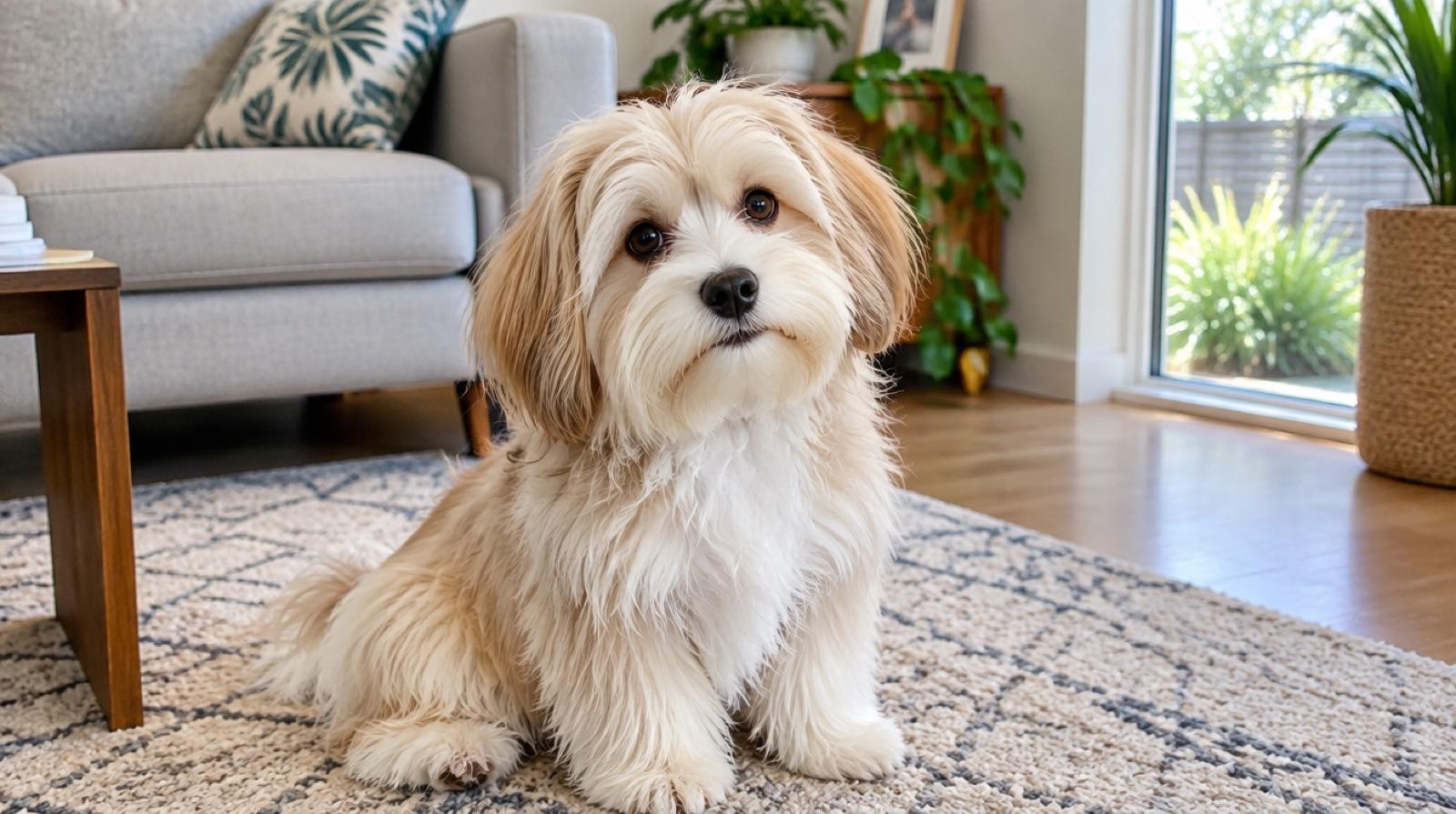
What is a Havanese?
A small companion breed from the Bichon family. The Dogs Australia standard describes “a sturdy little dog, low on his legs, with long abundant hair, soft and preferably wavy”, with a lively, elastic movement. It says the breed comes from the Western Mediterranean and was developed in Cuba, and that the old Cuban bloodlines disappeared, with descendants surviving in the USA. Dogs NSW places it in the Bichon family with the Bichon Frise, Maltese and Lowchen.
| Trait | What the standard says |
|---|---|
| Group | Group 1 (Toys) |
| Height | 23 to 27 cm at the withers; tolerance from 21 to 29 cm |
| Temperament | “Exceptionally bright he is easy to train as an alarm dog. Affectionate, of a happy nature, he is amiable, a charmer, playful and even a bit of a clown. He loves children and plays endlessly with them.” |
| Coat | Topcoat very long (12 to 18 cm in an adult), soft, flat or wavy; undercoat “not very well developed: it is often totally absent” |
| Colour | Rarely completely pure white; fawn, black, havana-brown, tobacco, reddish brown; patches and tan markings allowed |
| Disqualifying | Includes “aggressive or overly shy” and size over or under the standard |
From the Dogs Australia Havanese standard (FCI Standard No 250, effective in Australia from 1 January 2000), read 11 November 2026.
Should you adopt or buy a Havanese?
If it has to be a Havanese puppy, a Dogs Australia registered breeder who can show health results is the reasonable route, because purebred Havanese are rare across the rescues we aggregate. If what you want is a small, affectionate, low-shedding companion rather than this exact breed, rescue is the faster path: small dogs and small crosses are listed regularly, they come vet checked, desexed and microchipped for a published fee, and an adult's temperament is already on show.
| Route | Reference cost | What you usually get | Main risk |
|---|---|---|---|
| Registered breeder | No current published price found (November 2026); ask each breeder | A puppy from health-checked parents, with papers and a breeder to call | Waiting lists; checking the tests is still your job |
| Rescue or council pound | The rescue's published fee (see below) | Usually an adult or a small cross, desexed and microchipped | Purebred Havanese are rare; parents' health history usually unknown |
| Online ad or social media | Anything; a very cheap puppy is a warning sign | Anything from a real litter to a puppy that does not exist | Scams and untested parents |
Reference figures: the RSPCA NSW, RSPCA Victoria and RSPCA ACT fee pages, read 11 November 2026. Reference only, not a quote. Breeders and rescues set their own prices and change them, so check with them.
How much care does the Havanese coat need?
More than the size suggests. The standard asks for a very long, soft coat, shown untrimmed apart from the feet and a little tidying around the eyes and muzzle. Dogs NSW says that because most of the dead hair stays within the coat, matting is common, so regular grooming is needed, and that pet owners often choose to have the coat clipped short to reduce grooming time. It also suggests cleaning the corners of the eyes daily and checking the ears often.
A short pet clip is easier to keep comfortable, but it still means regular trips to a groomer. A matted coat is painful, so price grooming into the budget before you choose the breed.
Are Havanese hypoallergenic?
No dog is. The Australasian Society of Clinical Immunology and Allergy (ASCIA) says: “All dog breeds cause allergies, although some do not shed as much dander, and therefore less allergen is spread.” It also says the main source of dog allergen is saliva. Some breed sources, including the Dogs NSW profile, describe the Havanese as non-shedding and hypoallergenic; the same profile says it will still lose some coat in the brush and in its bedding. A low-shedding coat may help some people with milder allergies. It cannot remove the allergen.
If anyone at home has asthma or a dog allergy, see a doctor before you choose a dog, spend long, repeated visits with the actual dog, and read our guides to hypoallergenic dogs in Australia and dogs that don't shed.
Which health checks should a Havanese breeder show you?
Results for both parents. Dogs NSW says dedicated breeders health test hips and elbows, eyes, patellar luxation and cardiac, and calls the Havanese a relatively healthy breed. Dogs Victoria recommends asking breeders what health testing they do, and lists the conditions that can occur.
| Check | What to ask for |
|---|---|
| Hips and elbows | The parents' x-ray scores; Dogs Victoria also lists Legg-Calve-Perthes disease, a hip condition |
| Eyes | A current eye examination of the parents; Dogs Victoria lists eye disorders |
| Knees | A vet's patella (kneecap) check of the parents |
| Heart | A cardiac check of the parents; Dogs Victoria lists heart murmurs |
| Hearing and growth | Dogs Victoria lists deafness and chondrodysplasia (a growth disorder of the bones); ask whether either has appeared in the lines |
From the Dogs NSW and Dogs Victoria Havanese profiles, read 11 November 2026. A buying checklist, not veterinary advice.
Ask for the certificates themselves, with dates and each dog's name or microchip number; a verbal “they're all tested” is not a result. Dogs Australia also suggests asking whether your own vet can check the puppy before you buy. Our Havanese health issues guide covers the conditions in more depth.
See Havanese listed by rescues right now
Havanese and Havanese crosses from the rescues, shelters and council pounds we aggregate. Every listing links to the rescue, where you apply directly, and an alert tells you when a new one arrives.
What does a Havanese puppy cost?
There is no published guide price from an Australian Havanese club or from Dogs Australia. In November 2026 we read the websites of Havanese breeders that show membership of a Dogs Australia state body, leaving out listing and classified sites, breeders registered only with other registries, “contact us for pricing” pages and any price we could not confirm as current for 2026. None published a current price, so we cannot give a breeder figure.
So ask each breeder directly, and ask what the price includes: Limited or Main Register, desexing (or a desexing agreement), vaccinations, microchipping and the parents' health results. A high price does not buy health testing on its own.
What rescues publish, for reference:
| Source | Price or fee as published | Read |
|---|---|---|
| RSPCA NSW | $620 puppy under 12 months; $500 dog over 12 months | 11 Nov 2026 |
| RSPCA ACT | $1,200 for popular small breed puppies, breed mixes or poodle mixes of any size with high adoption demand, up to 12 months; $650 for popular breeds and mixes over 12 months and under 8 years | 11 Nov 2026 |
| RSPCA Victoria | Adult dogs $500 to $1,000; each animal's fee is on its profile | 11 Nov 2026 |
Reference only, not a quote. These are the fees each rescue published when we read it; fees change and some dogs are priced individually, so check with the rescue. Adoption fees normally include desexing and microchipping, which you would pay a vet for after buying a puppy.
The purchase price is the smaller number over a dog's life. Grooming is a regular cost for this breed on top of food, insurance and vet care, so run it through the dog cost calculator and read our guide to cheaper vet care.
What do Havanese in rescue look like?
Purebred Havanese are rare across the rescues we aggregate. When one comes through it is usually an adult, and Havanese crosses may be listed under another small-breed name, so search widely. Our Sydney Havanese adoption guide covers why they come into rescue.
If the coat and size are what draw you, small low-shedding dogs of every type are listed by city here: Sydney, Melbourne, Brisbane, Perth, Adelaide. An adopted adult arrives with its coat grown in and its temperament on show, and the rescue will usually have had it vet checked, desexed and microchipped. Our guide to adopting a dog in Australia walks through the process.
How do Havanese scams work, and how do you check a breeder?
Never pay for a Havanese you have not seen with its mother, in person or on a live video call. If a seller then asks for more money for transport, a crate or insurance, stop and check before paying anything else.
Scamwatch says scammers set up fake websites, social media profiles and marketplace listings for popular breeds and pets that do not exist, and that if a pet is very cheap, it is likely a scam. It advises viewing the pet in person or on a video call. A Dogs Victoria fact sheet warns that ads may display microchip, source or membership numbers lifted from legitimate breeders. Havanese versions of the pattern to watch for:
- “Hypoallergenic” guarantees. ASCIA says all dog breeds cause allergies.
- “Teacup” or “toy” Havanese. The standard sets one size range, 23 to 27 cm with a tolerance of 21 to 29 cm, and treats size outside it as a disqualifying fault.
- “Registered” without saying with whom. Ask which body; papers from a registry outside Dogs Australia are not Dogs Australia papers.
- Health talk without paperwork. Ask for the parents' hip, eye, knee and heart results, with names that match the litter.
Confirm the breeder's membership with its state canine body, then check the state number every breeder must have: a breeder identification number in NSW, a Pet Exchange Register source number in Victoria, a supply number in Queensland or a DACO breeder number in South Australia. Look it up on the official register yourself and confirm it matches the seller and the microchip. Our puppies for sale guide sets out every state's scheme and what to do if you have already paid.
Is a Havanese the right dog for you?
It suits a home where someone is around much of the day and is ready for regular grooming. Dogs NSW describes moderate exercise needs, a dog that thrives on human companionship, and a sensitive breed that should be trained with positive methods. If long days alone are the norm, think hard about any companion breed. Our Havanese apartment living and companionship guide covers life in a unit, and the what dog breed is right for me quiz and adoption readiness check can help you decide.
Weighing other dogs too? Other adopt-or-buy guides cover the Bichon Frise, Maltese, Chinese Crested and Bordoodle.
Find a Havanese near you
Each page shows Havanese listed right now by rescues in that city, and each listing links to the rescue where you apply directly.
Frequently asked questions
How much does a Havanese puppy cost in Australia?▼
There is no published figure we can give you. When we read the own websites of Havanese breeders who show membership of a Dogs Australia state body in November 2026, none published a price we could confirm as current for 2026, and there is no guide price from Dogs Australia or a Havanese club. Ask each breeder directly and compare what is included. Prices change, so check with the breeder.
How big is a Havanese?▼
Small. The Dogs Australia standard gives a height at the withers of 23 to 27 cm, with a tolerance from 21 to 29 cm, and describes a sturdy little dog, low on its legs, in the Toy group. The standard does not set a weight.
What is a Havanese like to live with?▼
Friendly and people-focused. The Dogs Australia standard describes the Havanese as exceptionally bright, affectionate, of a happy nature, amiable, playful and even a bit of a clown, and says it loves children. It also says the breed is easy to train as an alarm dog, so expect it to tell you when someone is at the door. Dogs NSW says it thrives on human companionship.
Are Havanese hypoallergenic?▼
No dog is. ASCIA, the Australasian allergy society, says all dog breeds cause allergies, although some shed less dander and so spread less allergen, and that the main source of dog allergen is saliva. Some breed sources call the Havanese hypoallergenic because it sheds little, but low shedding cannot remove the allergen. If someone at home is allergic, see a doctor first and spend long, repeated visits with the specific dog.
How much grooming does a Havanese need?▼
A lot, for life. The standard describes a very long, soft, flat or wavy topcoat of 12 to 18 cm in an adult. Dogs NSW says matting is common because dead hair stays in the coat, so regular grooming is needed, and that many pet owners have the coat clipped short to cut grooming time. Budget for brushing at home and professional grooming.
What health tests should a Havanese breeder show me?▼
Hips and elbows, eyes, knees and heart for both parents. Dogs NSW says dedicated breeders health test hips and elbows, eyes, patellar luxation and cardiac. Dogs Victoria lists eye disorders, chondrodysplasia, deafness, heart murmurs, Legg-Calve-Perthes disease and patella luxation as conditions that can occur in the breed. Ask for the written results, with dates and each dog's name or microchip number.
How long do Havanese live?▼
Dogs Victoria gives an average life span of 12 to 16 years, and Dogs NSW approximately 12 to 15 years. These are breed body figures, not a promise for any one dog.
Is a Havanese good in an apartment?▼
It can be. It is small, and Dogs NSW describes its exercise needs as moderate and says it is happiest when someone is with it. The harder question is time alone: a dog bred purely as a companion wants company. Check your strata by-laws, and read our Sydney guide to Havanese apartment living and companionship.
Can I adopt a Havanese from a rescue?▼
Sometimes, but purebred Havanese are rare across the rescues we aggregate. Small crosses and other small companion breeds are listed more regularly, and a Havanese cross may be listed under another name. Watch the Havanese breed page, set an alert, and widen your search to small and low-shedding dogs.
Is there a Havanese breed club in Australia?▼
We could not find an Australian club for the Havanese alone when we checked in November 2026. The state canine bodies, such as Dogs NSW and Dogs Victoria, publish breed profiles and can point you to member breeders, and you can meet the breed at dog shows.
How do I check a Havanese breeder?▼
Ask which state canine body the breeder belongs to and confirm the membership with that body; some Havanese sellers belong to other registries, which are not part of Dogs Australia. Then check the breeder number your state requires on the official register yourself, such as the breeder identification number in NSW, the Pet Exchange Register source number in Victoria or the supply number in Queensland. Meet the mother, ask for the parents' health results, and never pay a deposit for a puppy you have not seen in person or on a live video call.
Sources
- Dogs Australia: Havanese breed standard
- Dogs Australia: Choosing a breeder
- Dogs Victoria: Havanese breed profile
- Dogs NSW: Havanese breed profile
- ASCIA: Pet allergy
- Scamwatch: Buying and selling scams (pet scams)
- Dogs Victoria: Identifying puppy scams and puppy farms (fact sheet)
- RSPCA NSW: Adoption fees
- RSPCA Victoria: The adoption process
- RSPCA ACT: Adoption process and fees
Keep reading
Havanese listed by rescues
Havanese and Havanese crosses listed right now by the rescues and shelters we aggregate.
Havanese health problems
The eye, knee, hip and heart issues owners should know about.
Bichon Frise puppies: adopt or buy?
Another small Bichon-type companion: coat care, health checks and rescue.
Best apartment dogs in Australia
Small and quiet breeds for units, and what to check with your strata first.