The short answer
A Bichon Frise is a small, cheerful companion dog, under 30 cm, with a curly white coat that sheds little but needs brushing and regular clipping for life. It is not hypoallergenic: ASCIA says all dog breeds cause allergies, so see your doctor and test the individual dog first. If you buy, use a Dogs Australia registered breeder who can show eye and kneecap results for the parents; no member breeder whose website we read in November 2026 published a price, so ask each one. If you adopt, purebred Bichons are rare across the rescues we aggregate, but small low-shedding crosses come through more often. Any price or fee here is a reference, not a quote; check with the breeder or rescue.
Should you adopt or buy a Bichon Frise?
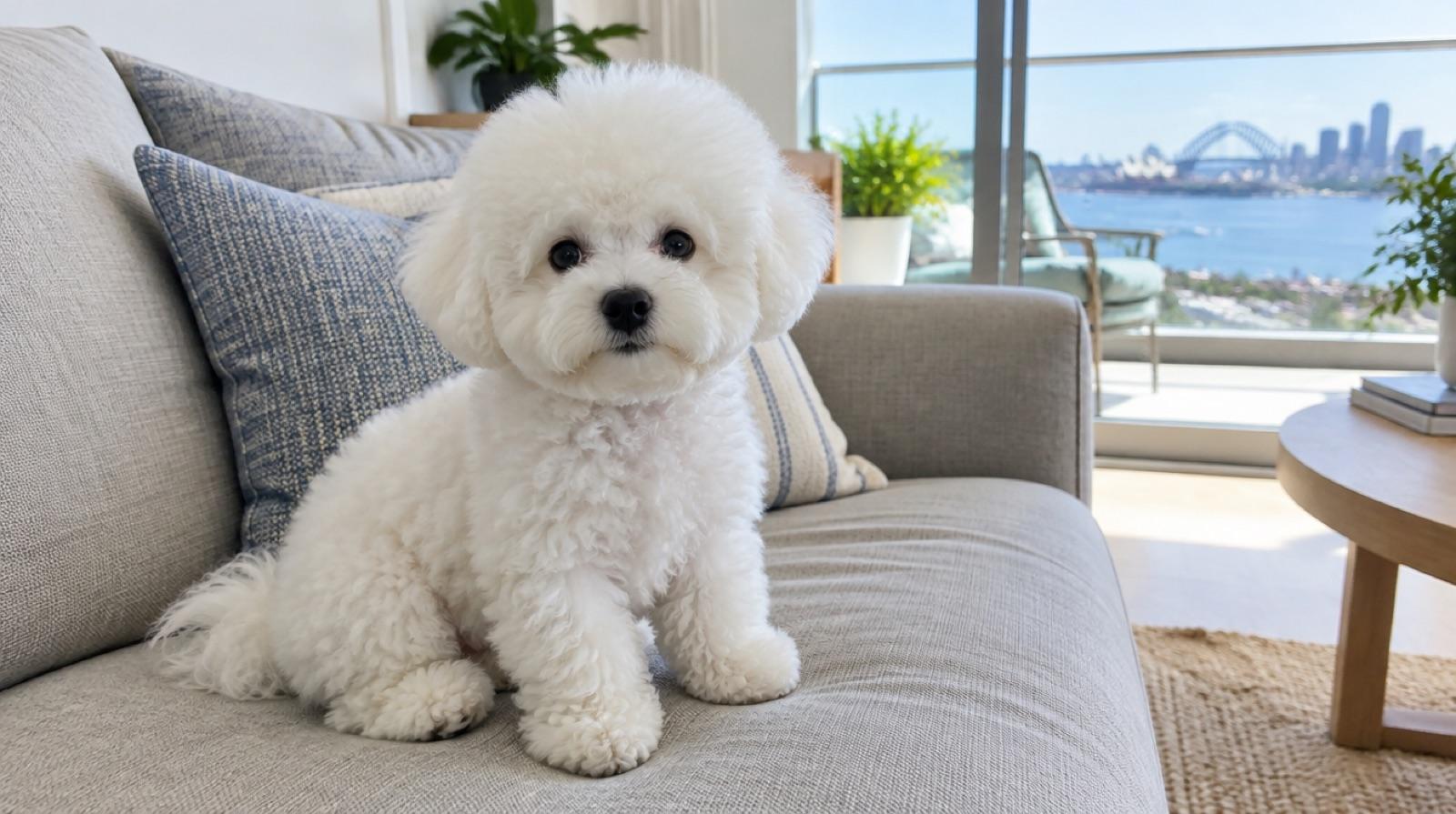
Either route can work. The Dogs Australia breed standard places the Bichon in the Toy group and describes a lively little dog under 30 cm at the shoulder, with a gay and happy temperament, a proud head carriage and a pure white coat that falls in soft corkscrew curls. It is a companion breed, bred to be with people.
A registered breeder who checks the parents' eyes and kneecaps gives you a known start and a puppy you raise yourself. Rescue gives you an adult whose coat, health and habits you can see first, though purebred Bichons are rare there. The route to avoid is an online ad selling a “hypoallergenic” white puppy with no health results for the parents and no breeder you can check.
| Route | Reference cost | What you usually get | Main risk |
|---|---|---|---|
| Dogs Australia registered breeder | No member breeder we checked published a price (November 2026); ask each one | A puppy with pedigree papers (ask whether it is sold on the Limited or Main Register) and, if the breeder tests, parents with known eye and kneecap results | Waiting lists; allergy is never guaranteed |
| General rescue or council pound | The rescue's standard fee; see the RSPCA examples below | More often Bichon crosses and other small low-shedding dogs than purebreds; RSPCA dogs are desexed and microchipped | Few purebred Bichons |
| Online ad with no checkable breeder | Anything, from suspiciously cheap to full price | Unknown parents, a cross sold as purebred, or a puppy that does not exist | Untested parents and scams |
Reference figures: the RSPCA NSW, RSPCA Victoria and RSPCA ACT fee pages, read November 2026. They are not quotes. Breeders and rescues set their own prices and change them, so check with them.
Is a Bichon Frise hypoallergenic?
No, and no dog is. The Australasian Society of Clinical Immunology and Allergy (ASCIA) says all dog breeds cause allergies, although some do not shed as much dander and so spread less allergen. It also says the main source of dog allergen is saliva, spread by dander, and that up to 50% of people allergic to animals do not get symptoms straight away, so a short visit can give a false all clear.
What a Bichon does offer is a coat that holds its hair. RSPCA South Australia lists the Bichon Frise among dogs that hardly shed or drool and may suit people with milder allergies, while saying no animal is 100% allergen free. You will still see breed material call the coat “non-allergenic”: the Dogs NSW breed page says “The coat is non-allergenic”. That is the state canine body's own breed description, not a medical finding, and ASCIA, the allergy specialists, say all dog breeds cause allergies.
If anyone in your home has allergies, see your GP first, then spend several long visits with the individual dog. Our guides to hypoallergenic dogs and dogs that don't shed cover the evidence and how to test a dog before you commit.
How much grooming does a Bichon need?
More than most first-time owners expect. The standard describes a fine, silky coat of soft corkscrew curls 7 to 10 cm long, and notes that in Australia it is usually trimmed to show the outline of the body. Dogs Australia's grooming advice warns that people often assume no shedding means no grooming, when these breeds need regular or daily brushing to avoid mats. The Royal Kennel Club lists daily grooming for the breed.
- At home: regular brushing through to the skin, so mats do not form close to it. The Dogs NSW breed page says a weekly groom, the Royal Kennel Club says every day; ask your groomer what your dog's clip needs.
- Professional clip: budget for regular grooming appointments for the whole of the dog's life.
- Ears: the Dogs NSW breed page says Bichons can be prone to fungal ear infections if the ears are not properly cleaned and dried after bathing.
- Eyes and face: keep the hair around the eyes tidy and clean.
Our Bichon grooming and care guide covers the routine step by step.
How healthy are Bichons?
Generally regarded as a sound breed, with a few things to ask about. The Dogs NSW breed page calls the Bichon a relatively worry free breed. It says a lack of genetic research in the early rush to import brought a few undesirable bloodlines into Australia, that a liver shunt occasionally appeared in stock from those lines, and that serious breeders have since identified and isolated them. It adds that the common toy-dog problems such as kneecap luxation and low blood sugar are not commonplace in the breed.
Bladder stones are one issue vet research points to. A 2019 US study of 258,898 urinary stone submissions, 124,285 of them calcium oxalate, listed the Bichon Frise among 12 high-risk breeds for calcium oxalate stones, all of them small breeds. Across the study, the mean age at a dog's first calcium oxalate stone was 8.4 years, and the authors recommended yearly imaging for high-risk breeds from 5 to 6 years of age. Ask your vet about it as your Bichon reaches middle age, and see a vet promptly about any change in how your dog urinates.
Our Bichon health guide covers skin, teeth and the other conditions owners plan for.
Which health tests should a Bichon breeder show you?
We could not find an Australian Bichon club that publishes a test list; Dogs Victoria simply recommends asking breeders about the breed's health and what testing they do. Here is what two other national kennel clubs ask of the breed, as a checklist to take to an Australian breeder:
| Test | Dogs New Zealand accredited breeders | American Kennel Club parent club list |
|---|---|---|
| Eye examination | Mandatory, yearly | Listed (ophthalmologist) |
| Kneecaps (patellar luxation) | Mandatory, yearly | Listed |
| Legg-Calve-Perthes (hip joint) | Mandatory | Not listed separately |
| Hip evaluation | Not listed | Listed |
| Heart (cardiac) certificate | Optional, yearly | Not listed |
Sources: Dogs New Zealand accredited breeder health tests and the American Kennel Club non-sporting group health testing list, read 11 November 2026. Dogs New Zealand also requires a DNA profile.
Ask to see the certificates for both parents, with names that match the litter. A breeder who offers only a puppy “vet check” has not screened the parents.
How much is a Bichon puppy from a registered breeder?
There is no published figure to give you. In November 2026 we checked Bichon breeders who are members of Dogs Australia state bodies, using only their own websites and leaving out listing and classified sites and crossbreed sellers. None published a current puppy price on its own website, and no Australian Bichon club publishes a guide price, so we quote no breeder price and have no range or median to report.
Ask each breeder for the price in writing and compare what it includes: the parents' eye and kneecap results, the vet check, vaccination and microchip, whether the puppy is sold on the Limited Register with a desexing agreement, and whether the breeder will take the dog back. Be cautious of a seller who prices a puppy higher because it is “hypoallergenic”.
Few Bichons are registered each year. Dogs Australia's registration figures show 245 Bichon Frises registered in 2025, down from 376 in 2018. Budget for the grooming, too: the dog cost calculator gives a first-year figure.
Survey of member breeders' own websites, November 2026. Prices change; check with the breeder.
See the Bichons listed right now
Bichon Frises and Bichon crosses from the rescues, shelters and council pounds we aggregate, each with its rescue, desexing and microchip details. Every listing links to the rescue, where you apply directly.
What do Bichons in rescue look like?
Purebred Bichons are rare across the rescues we aggregate. What comes through more often are Bichon crosses and other small, low-shedding crosses, such as Maltese and Poodle crosses. A good rescue will tell you about the dog's coat, skin, teeth and how it copes alone.
An adult has a real advantage for an allergic household: you can spend time with that exact dog, and its adult coat, before you commit. Browse low-shedding dogs listed by rescues: Sydney, Melbourne, Brisbane, Perth, Adelaide.
What does a rescue Bichon cost?
| Rescue | Fee as published | Read |
|---|---|---|
| RSPCA NSW | $620 puppy under 12 months; $500 dog over 12 months | 11 Nov 2026 |
| RSPCA Victoria | $650 to $1,000 puppy under 6 months; $500 to $1,000 adult dog | 11 Nov 2026 |
| RSPCA ACT | $1,200 for popular small-breed puppies and mixes up to 12 months; $650 for popular breeds and mixes over 12 months and under 8 years; $195 band for seniors and some others | 11 Nov 2026 |
Reference only, not a quote. These are the fees each rescue published on the date shown; fees change and some dogs are priced individually, so check with the rescue. Each of these RSPCA pages says its adopted dogs are desexed, microchipped and vet checked; check what else the fee includes. Read our guides to adopting a dog in Australia and adopting a senior dog.
How do Bichon puppy scams work?
Never send a deposit for a Bichon puppy you have not seen with its mother, in person or at least on a live video call. Dogs Victoria's scam fact sheet warns that scammers often ask for more money after the first payment, for shipping or transport of the puppy.
Scamwatch warns that scammers set up fake websites, social media profiles and marketplace listings for pets that do not exist, and that a very cheap pet is likely a scam. Dogs Victoria's puppy scam fact sheet adds that fake ads may display microchip, source or membership numbers lifted from legitimate breeders. Bichon versions of the pattern to watch for:
- Allergy promises. No seller can promise a puppy will not trigger allergies; ASCIA says all dog breeds can.
- A cross sold as a purebred. Ask for both parents' registration papers and see the parents.
- Borrowed numbers. A real breeder's membership or source number in an ad proves nothing on its own. Dogs Victoria advises contacting the organisation the seller claims to belong to and checking that the number, name, location and breed match its records.
- Stock photos. The Dogs Victoria fact sheet passes on the ACCC's advice to use a reverse image search to check whether the puppy photos appear elsewhere.
Our guide to puppies for sale in Australia has the state-by-state table of breeder numbers, how to check each one, and what to do if you have already paid.
When is a registered breeder the better choice?
Rescue is not right for everyone. A registered breeder is a reasonable choice if you want a purebred Bichon puppy and will wait for one from checked parents, or if you want to know a dog's history from birth. Check these before you pay:
- Registration. Ask for the breeder's prefix and membership number and check them through Dogs Australia's breeder search or your state body.
- The test results in the table above, for both parents.
- The mother's coat, skin and ears. Meet her and ask about skin, ear and bladder problems in the line.
- Grooming handover. A good breeder will show you how to brush the coat and when the first clip is due.
- A written contract covering health problems, register type, desexing and whether the breeder will take the dog back.
Is a Bichon the right dog for you?
The appeal is real: a small, happy, sociable dog that fits a flat and loves company. The Dogs NSW breed page says the Bichon's love for its human family is exceptional and that it loves contact with other dogs of any breed. The Royal Kennel Club lists up to 30 minutes of exercise a day.
Be honest about three things before you apply anywhere. Grooming: it never stops, and a neglected coat mats to the skin. Company: a companion breed suits a home where it is not alone all day. Allergies: test the individual dog, not the breed label. Comparing small breeds? See toy dog breeds and apartment dogs, or try the what dog breed is right for me quiz and the adoption readiness check.
Find a Bichon near you
Bichon Frises and Bichon crosses listed by rescues, by city:
- Bichons for adoption in Sydney
- Bichons for adoption in Melbourne
- Bichons for adoption in Brisbane
- Bichons for adoption in Perth
- Bichons for adoption in Adelaide
Local guides to adopting a Bichon, with the rescues that serve each city: Sydney, Melbourne, Brisbane, Perth, Adelaide, Gold Coast.
More adopt-or-buy guides: Maltese, Poodle, Shih Tzu, Border Terrier, Fox Terrier, Airedale Terrier, Moodle.
Frequently asked questions
How much is a Bichon Frise puppy in Australia?▼
We quote no breeder price. In November 2026 we checked Bichon breeders who are members of Dogs Australia state bodies, and none published a current puppy price on its own website. No Australian Bichon club publishes a guide price. Ask each breeder for the price in writing and what it includes, and treat it as that breeder's own figure.
Is a Bichon Frise hypoallergenic?▼
No dog is. The Australasian Society of Clinical Immunology and Allergy (ASCIA) says all dog breeds cause allergies, although some do not shed as much dander and so spread less allergen, and that the main dog allergen is in saliva. A low-shedding Bichon may suit some people with milder allergies, but see your doctor first and spend long periods with the individual dog before you commit.
Do Bichons shed?▼
Very little, but the hair has to go somewhere. Dogs Australia describes the Bichon among the low-shedding breeds and says these breeds need regular or daily brushing to avoid mats. Loose hair stays caught in the curly coat, so a Bichon that is not brushed and clipped will mat.
How much grooming does a Bichon need?▼
A lot, for life. The Royal Kennel Club lists daily grooming, and the Dogs Australia standard notes that in Australia the coat is usually trimmed to show the outline of the body. Dogs Australia says low-shedding breeds need regular or daily brushing to avoid mats, so plan for brushing at home and regular professional clips, plus ear care: the Dogs NSW breed page says Bichons can be prone to fungal ear infections if the ears are not cleaned and dried after bathing.
Are Bichons healthy dogs?▼
The Dogs NSW breed page calls the Bichon a relatively worry free breed, says a liver shunt occasionally appeared in stock from some early imported lines, and says kneecap problems and low blood sugar are not commonplace in the breed. Bladder stones are worth knowing about: a large US study of stone submissions listed the Bichon among 12 high-risk breeds for calcium oxalate stones.
What health tests should a Bichon breeder do?▼
Ask about eyes, kneecaps and hips. Dogs New Zealand's accredited breeder scheme makes a yearly eye certificate, a yearly kneecap certificate and a Legg-Calve-Perthes (hip joint) check mandatory for Bichons, with a heart certificate optional. The American parent club recommends kneecap, hip and eye checks. Dogs Victoria suggests asking every breeder what health testing they do.
Can I adopt a Bichon Frise in Australia?▼
Sometimes, but purebred Bichons are rare across the rescues we aggregate. Bichon crosses and other small, low-shedding crosses, such as Maltese and Poodle crosses, come through more often. Watch the Bichon listings, set an alert and also browse the low-shedding dog pages for your city.
How much does it cost to adopt a Bichon?▼
You pay the rescue's standard fee. RSPCA NSW listed $620 for a puppy under 12 months and $500 for a dog over 12 months, RSPCA Victoria listed $650 to $1,000 for puppies under 6 months and $500 to $1,000 for adult dogs, and RSPCA ACT listed $650 for popular breeds and mixes over 12 months and $1,200 for popular small-breed puppies and mixes up to 12 months. These were the fees published when we read them in November 2026; they are a reference, not a quote, and fees change, so check with the rescue.
Is a Bichon good for an apartment?▼
It can be. The Royal Kennel Club lists the Bichon as suited to a flat or apartment with up to 30 minutes of exercise a day. The bigger question is company: Bichons are people-focused companion dogs, so a home where the dog is not left alone all day suits them best.
How big does a Bichon Frise get?▼
Small. The Dogs Australia breed standard says under 30 cm at the shoulder, with smallness highly desirable, and describes a lively little dog with a gay and happy temperament and a pure white coat of soft corkscrew curls. The standard gives no weight.
How do I avoid Bichon puppy scams?▼
Only pay for a puppy you have seen with its mother, in person or at least on a live video call. Scamwatch says a very cheap pet is likely a scam, and the Dogs Victoria scam fact sheet warns that fake ads may show microchip, source or membership numbers lifted from real breeders. Be wary of any ad that promises a puppy will be allergy-free.
Sources
- Dogs Australia: Bichon Frise breed standard (last updated 23 January 2015)
- Dogs Australia: National Animal Registration Analysis 2018 to 2025
- Dogs Australia: Grooming and what you need to consider
- Dogs Australia: Find a breeder
- Dogs NSW: Bichon Frise breed page
- Dogs Victoria: Bichon Frise breed page
- Australasian Society of Clinical Immunology and Allergy (ASCIA): Pet allergy
- RSPCA South Australia: Pets for people with allergies
- Royal Kennel Club (UK): Bichon Frise breed page
- Dogs New Zealand: Accredited breeder health tests for the Bichon Frise
- American Kennel Club: Non-sporting group health testing requirements
- Hunprasit et al. (2019), Epidemiologic evaluation of calcium oxalate urolithiasis in dogs in the United States, Journal of Veterinary Internal Medicine
- Scamwatch: Buying and selling scams (pet scams)
- Dogs Victoria: A7 Identifying puppy scams and puppy farms (fact sheet)
- RSPCA NSW: Adoption fees
- RSPCA ACT: Adoption process
- RSPCA Victoria: The adoption process
Keep reading
Bichons listed by rescues
Bichon Frises and Bichon crosses listed right now by the rescues and shelters we aggregate across Australia.
Hypoallergenic dogs in Australia
What ASCIA and the research say, and how to test a dog before you commit.
Dogs that don’t shed
The three kinds of low-shedding coat and the grooming each one needs.
Toy dog breeds in Australia
The Toy group compared from the breed standards, with sizes and coat care.