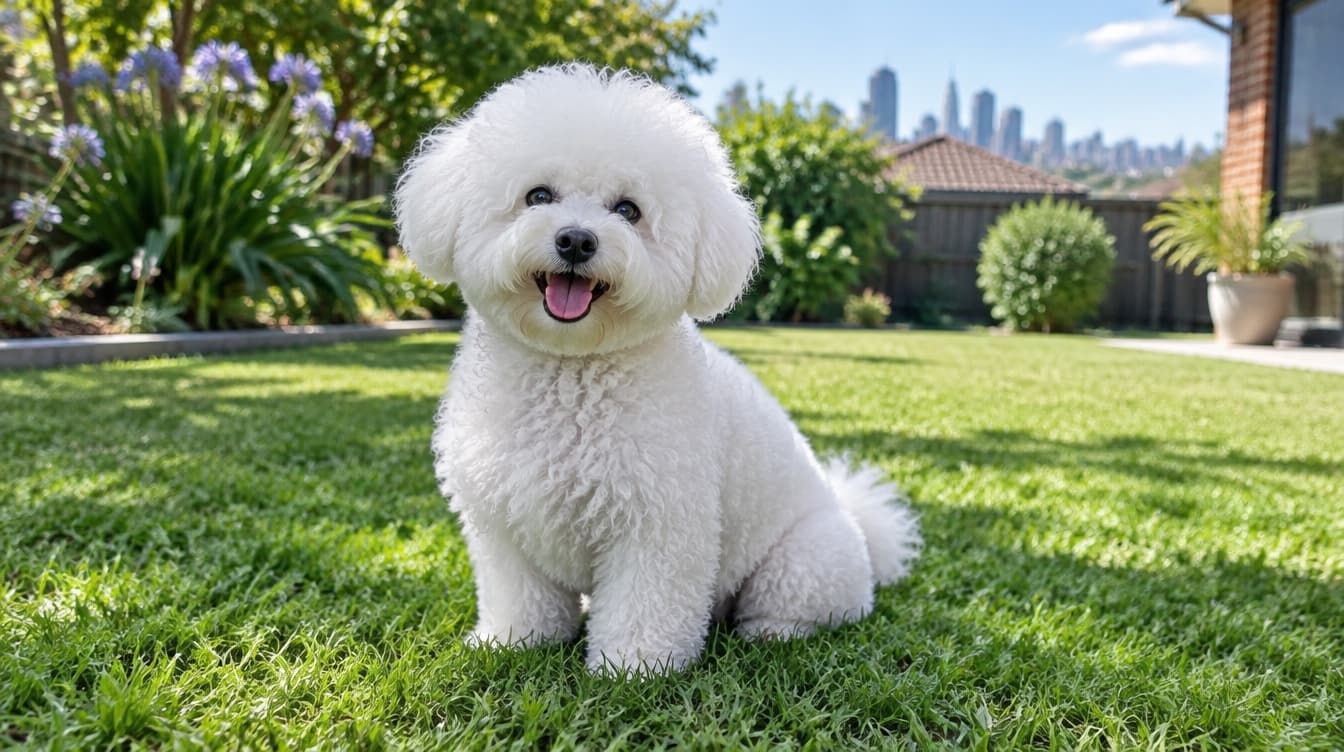
The short answer
You can adopt a Bichon Frise in Melbourne, though a purebred is uncommon in rescue, so set alerts across the main Victorian rescues, be application-ready, and stay open to a Bichon cross. Adoption runs about $350 to $700 for an adult and $500 to $900 for a puppy, all-inclusive, against well into the thousands from a breeder, and the breed is not restricted in Victoria. The honest parts are the grooming and the company: the curly coat needs a professional clip every few weeks, and the Bichon is a companion breed prone to separation anxiety, so it does best in a home that is around during the day. Meet both and a Bichon is a cheerful, gentle, low-shedding little dog.
Why Bichon Frises reach Melbourne rescue
A purebred Bichon Frise is uncommon in rescue, but a steady few reach Victorian rescue, along with Bichon crosses, usually for one of a few predictable reasons, and almost never because of a fault in the dog.
Grooming cost underestimated. People take on a Bichon for the cute, low-shedding coat without budgeting for the regular professional clipping it needs, and when the cost and effort add up the dog is surrendered.
Separation anxiety and life changes. The Bichon is a companion breed that bonds closely and can struggle to be left alone, so a change to a household that is out all day can leave it distressed, and a move, illness or death in the family can make even a small, easy dog hard to keep.
Puppy farming. Small white companion breeds are heavily overbred by puppy farms and backyard breeders, often without the health testing or early socialisation the breed needs, and rescues take in surrendered and ex-breeding dogs that, in the right home, become loving pets.
Where to adopt a Bichon Frise in Melbourne
A purebred is uncommon, so a wide alert net and an open mind about Bichon crosses are the way in. Set listing alerts on every rescue you would consider. For a fuller directory, see our list of Melbourne rescues and shelters.
1. RSPCA Victoria
The state body runs adoption centres at Burwood East and RSPCA Peninsula at Pearcedale. Small companion dogs and Bichon crosses come through via owner surrender, and every adoption includes desexing, vaccination, microchipping, a vet workup and a behavioural assessment. Apply at rspcavic.org.
2. The Lost Dogs' Home
Melbourne's long-established metro shelter, based in North Melbourne with a second facility at Cranbourne. It handles a large intake of stray and surrendered dogs, so small companion breeds and Bichon crosses turn up regularly, each with a behavioural assessment. Adoption includes desexing, vaccination, microchipping and a vet check. Listings at dogshome.com.
3. Lort Smith
Lort Smith runs an Adoption Centre at Campbellfield with a full vet workup behind every dog, which matters for a small breed with dental and skin risks. A broad mix of breeds means small companion dogs feature regularly. More at lortsmith.com.
4. Save-A-Dog Scheme
A Melbourne-based no-kill rescue running since 1985, with a mix of shelter and foster placements. Because many dogs live in foster homes, the notes on a Bichon's temperament, how it copes alone and its behaviour with children and other pets tend to be detailed and honest. More at saveadog.org.au.
5. Second Chance Animal Rescue
A Victorian foster-based rescue that takes a broad mix of dogs and crosses, including small companion breeds. Because dogs live in foster, you get a clear picture of the real temperament before you commit, and the application usually includes a home check. Listings at secondchanceanimalrescue.com.au.
Beyond these, Animal Aid at Coldstream and the Australian Animal Protection Society at Keysborough both rehome small dogs, and the fastest way to scan many Victorian rescues at once is PetRescue, a national aggregator that lists animals from hundreds of member rescues in one searchable place. Be wary of any group calling itself a Bichon rescue that asks for money before you have confirmed a real address, a current adoptable-dog list and charitable status. Browse the current Bichon Frises and Bichon crosses on the Melbourne Bichon Frise listings.
What a Bichon Frise costs: adopt versus buy
Adoption is far cheaper at the outset. A rescue fee for an adult Bichon Frise through a Melbourne rescue commonly runs about $350 to $700 for an adult, with puppies usually $500 to $900, and that fee already covers desexing, vaccination, microchipping, worm and flea treatment and a vet check.
A purebred Bichon Frise puppy from a breeder in Victoria, by contrast, typically runs well into the thousands, with none of that vet work done yet. So adopting is many times cheaper up front, and the dog arrives already vetted and, if you adopt an adult, with a known temperament.
The one ongoing cost to plan for is grooming: the curly coat needs a professional clip every few weeks plus regular brushing at home, which adds up over a year, so factor it in. Beyond that the costs are small-dog ones, good food, weight-dosed preventatives and routine vet care, with attention to dental health. Council registration under the Domestic Animals Act 1994 is a modest yearly cost, reduced for a desexed and microchipped dog, and pet insurance taken out while the dog is young is worth having.
Living with a Bichon Frise, and the health picture
The Bichon Frise is cheerful, gentle, playful and affectionate, and in a home that is around for it the breed is an easy, loving little companion that generally gets on well with children and other pets. The two things to plan for are the coat and the company: the curly coat needs regular clipping and brushing to stay comfortable, and the Bichon bonds closely and can be prone to separation anxiety, so it does best where someone is home for much of the day. Meet both and the breed is low-fuss and delightful.
On health the Bichon can be prone to skin and allergy problems, to dental disease as a small breed, to ear issues under the curly coat, and to some eye conditions, so routine dental, ear and coat care matter. A rescue Bichon arrives vet-checked, so ask the rescue what the in-care assessment found, keep up the grooming and dental care, and insure it while it is young.
Bichon Frises and Victorian breed law
The Bichon Frise is not one of Victoria's restricted breeds, which under the Domestic Animals Act 1994 are the pit bull terrier, dogo argentino, fila brasileiro, japanese tosa and perro de presa canario. A Bichon is legal to own and rehome normally, and simply needs to be microchipped and registered with your local council from three months of age, re-registered each year. Check Agriculture Victoria and your council for registration details.
Browse adoptable Bichon Frises in Melbourne
A purebred is uncommon, so set an alert and stay open to a Bichon cross. Browse live Victorian listings now.
See Available Bichon Frises →If you have been searching “Bichon Frise puppies for sale”
Plenty of people arrive here after searching for a Bichon puppy to buy, and an adult rescue dog has a real advantage: it lets you see the temperament, how it copes alone and the coat you are taking on, where a puppy is a gamble. The for-sale listings are easy to find, but small white companion breeds are heavily puppy-farmed, which skips the health testing and early socialisation the breed needs, along with the occasional scam, so a cheap puppy or a deposit request for a dog you have not met is a warning sign rather than a bargain. In Victoria, any advertisement to sell or give away a dog must display the animal's microchip number and a Pet Exchange Register source number, so check that number on the Pet Exchange Register before you pay, and cross-check anything that feels off against Scamwatch.
Adoption costs a fraction of a breeder price and gives a vet-checked dog a home. If a cheerful little companion suits your household, register your interest, set alerts, and be patient; the right dog does come up.
Adult or puppy, and is a Bichon Frise right for you?
For most adopters an adult is the better choice, because an adult shows you its real temperament, how it copes alone and how it is with children and other pets, where a puppy is more of an unknown. An adult is often house-trained, past the chewing stage, and comes with a lower adoption fee. A foster-assessed adult Bichon, matched to a home that is around during the day, settles in quickly.
Be honest about whether the breed fits your life. A Bichon Frise is a cheerful, gentle, affectionate dog for a household that is around for much of the day and will keep up the regular grooming. It is not the dog for a home that is out for long hours or that does not want the clipping cost. If you can offer the company and the coat care, a rescue Bichon is a delightful companion; if not, a lower-maintenance breed will suit you both far better than adopting and surrendering later.
Frequently Asked Questions
Where can I adopt a Bichon Frise near me in Melbourne?
Start with the live listings on this page, which pull Bichon Frises and Bichon crosses from shelters and foster-based rescues across Victoria, then widen out. RSPCA Victoria, the Lost Dogs' Home, Lort Smith, Save-A-Dog Scheme and Second Chance Animal Rescue all rehome small companion dogs, and PetRescue aggregates many smaller Victorian rescues in one place. A purebred Bichon is uncommon in rescue but does come through, and Bichon crosses such as Cavoodle and Maltese types appear more often, so set listing alerts, have your application ready, and stay open to a cross.
Why do Bichon Frises end up in rescue?
Rarely because of a fault in the dog. The Bichon Frise is a small, cheerful companion breed, and it reaches rescue most often when the grooming cost catches an owner by surprise, when its tendency to separation anxiety makes it hard to leave alone, or on a life change such as a move, illness or a death in the family. Puppy-farm overbreeding of small white companion breeds also sends surrendered and ex-breeding dogs into rescue. In a home that is around and keeps up the grooming, the Bichon is an affectionate, playful, easy little dog.
How much does it cost to adopt a Bichon Frise in Melbourne versus buying one?
Adoption is far cheaper at the outset. A rescue fee for an adult Bichon Frise through a Melbourne rescue commonly runs about $350 to $700 for an adult, with puppies usually $500 to $900, and that fee already covers desexing, vaccination, microchipping, worm and flea treatment and a vet check. A purebred Bichon Frise puppy from a breeder, by contrast, typically runs well into the thousands, with none of that vet work done yet. The one ongoing cost to plan for is grooming: the curly coat needs regular professional clipping, so budget for that every few weeks whichever way you get your dog.
Are Bichon Frises a restricted breed in Victoria?
No. The Bichon Frise is not one of Victoria's restricted breeds, which are the pit bull terrier, dogo argentino, fila brasileiro, japanese tosa and perro de presa canario. A Bichon Frise is legal to own and rehome normally and simply needs to be microchipped and registered with your local council from three months of age. A rescue Bichon arrives already desexed and microchipped.
Do Bichon Frises need a lot of grooming?
Yes, and this is the main thing to budget for. The Bichon's soft, curly, low-shedding coat does not drop much hair but it keeps growing and mats easily, so it needs regular brushing at home and a professional clip every few weeks to stay comfortable and clean. That ongoing grooming cost is one of the things new owners underestimate, and it is a common reason the breed ends up in rescue. If you are happy to keep up the grooming or pay for it, the coat is manageable and the low shedding suits many households.
Are Bichon Frises good with children and other pets, and can they be left alone?
A Bichon Frise is typically gentle, playful and good with children and other pets, which makes it a popular family companion. The main thing to plan for is that it is a companion breed that bonds closely and can be prone to separation anxiety, so it does best in a home where someone is around for much of the day rather than one that is out for long hours. A foster carer who has lived with the individual dog can tell you how it is with children, other animals and time alone.
Should I adopt an adult Bichon Frise or a puppy?
For most adopters an adult is the better choice, because an adult shows you its real temperament, how it copes alone and how it is with children and other pets, where a puppy is more of an unknown. An adult is often house-trained, past the chewing stage, and comes with a lower adoption fee. A vet-checked, foster-assessed adult Bichon, matched to a home that is around during the day, settles in quickly.
Are there free Bichon Frises in Melbourne, or ones under $500?
Be careful with free or very cheap Bichon Frises. A legitimate rescue charges an adoption fee, commonly $350 to $700 for an adult and $500 to $900 for a puppy, so the lower end lands under the $500 people search for, because that fee part-covers the desexing, vaccination, microchipping and vet check the dog has already had. A Bichon advertised free to a good home, or well under a rescue fee, is one of the classic scam and puppy-farm setups for a small white companion breed, so treat a bargain as a warning sign and check any seller against the Victorian rules below before paying anything.
I keep seeing Bichon Frise puppies for sale. Is adopting really an option?
It is, and an adult rescue Bichon has a real advantage, because it lets you see the temperament, how it copes alone and the coat you are taking on, where a puppy is a gamble. The for-sale listings are easy to find, but small white companion breeds are heavily puppy-farmed, which skips the health testing and early socialisation the breed needs, along with the occasional scam, so a cheap puppy or a deposit request for a dog you have not met is a warning sign rather than a bargain. In Victoria, any advertisement to sell or give away a dog must display the microchip number and a Pet Exchange Register source number, so check that number on the Pet Exchange Register before paying anything. Adoption costs a fraction of a breeder price and gives a vet-checked dog a home.
Keep reading
Adoptable Bichon Frises in Melbourne
Live listings with foster carer notes on temperament and grooming.
Best Dog Rescues in Melbourne
The verified shelters and foster rescues to set alerts with across Victoria.
Registering a Dog in Melbourne
Council registration, microchipping and the Victorian rules for a new dog.
Melbourne Adoption Resources
Guides on adopting, costs, council rules and settling a rescue dog in Melbourne.