The short answer
A Keeshond is a medium spitz, ideally 46 cm at the shoulder for dogs and 43 cm for bitches, that the breed standard calls sturdy, intelligent and adaptable, an ideal companion and a good guard; the Dogs Australia breed page says it is also a barker. If you buy, use a Dogs Australia registered breeder who can show both parents' hip and elbow scores, an eye examination and their PHPT status (negative by DNA test or by descent). None of the member breeders whose websites we read in November 2026 published a price, so ask each one. If you adopt, check the live Keeshond listings (numbers change daily), set an alert and look at other family dogs too. Any fee here is a reference, not a quote; check with the breeder or rescue.
Should you adopt or buy a Keeshond?
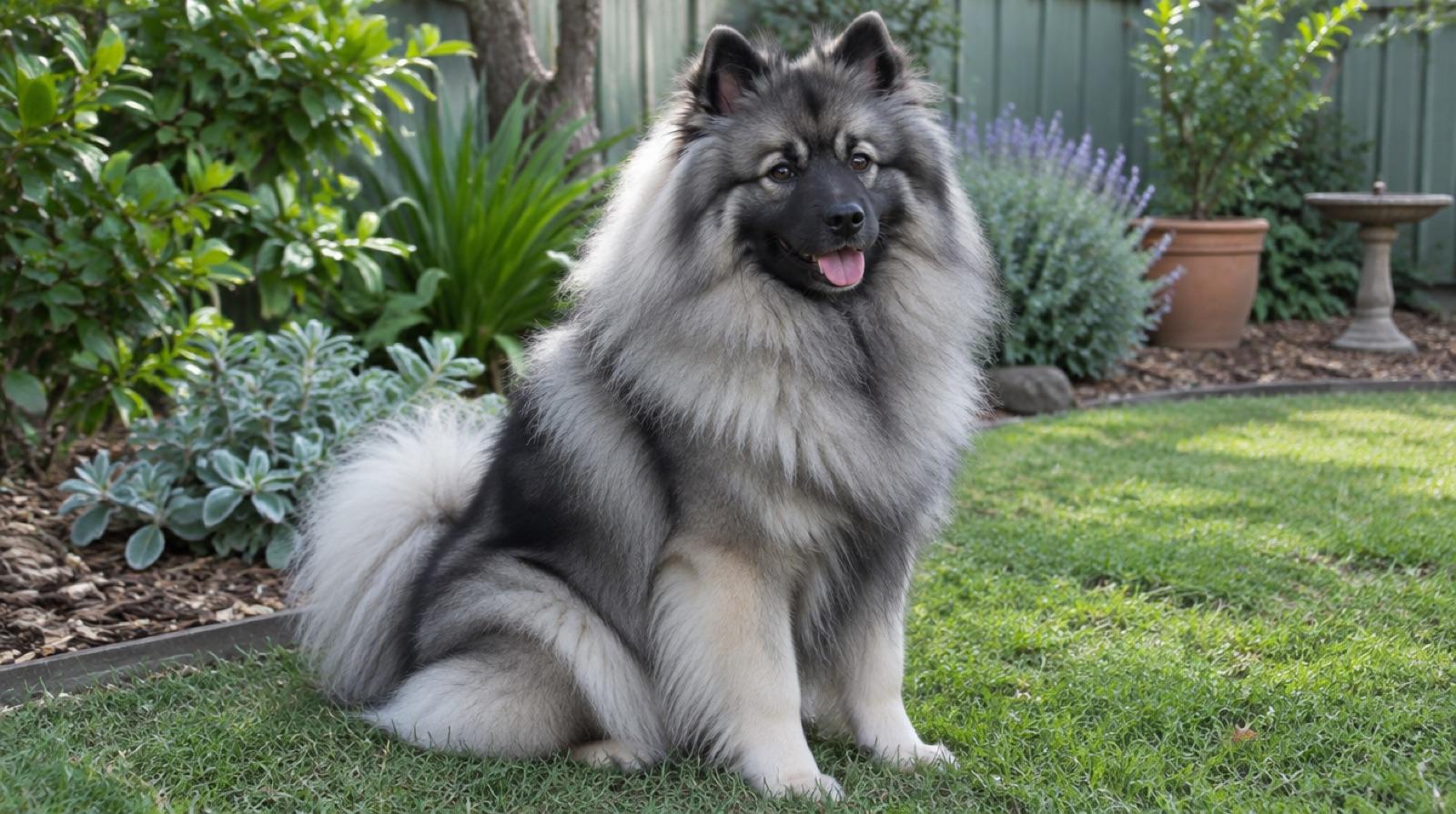
Either route can work. The Dogs Australia breed standard describes a dog with a “short, compact body, confident carriage”, a fox-like head and a well feathered tail curled over the back, whose characteristics are “sturdy, intelligent and adaptable, ideal companion, good guard, shows boldly” and whose temperament is “bold, alert, friendly with marked guarding tendency”. The ideal height is 46 cm for dogs and 43 cm for bitches.
A registered breeder who scores hips and elbows and knows the PHPT status of the parents gives you the best odds against the breed's known inherited problems and a puppy you raise yourself. Rescue gives you a dog whose temperament you can see first; check the live listings to see what is available, as numbers change daily. The route to avoid is an online ad for a cheap “Keeshond” with no health results and no breeder you can check.
| Route | Reference cost | What you usually get | Main risk |
|---|---|---|---|
| Dogs Australia registered breeder | No member breeder we checked published a price (November 2026); ask each one | A pedigree puppy; ask for both parents' hip, elbow and PHPT results | Waiting lists |
| General rescue or council pound | The standard fee, for example $500 to $1,000 at the RSPCA rows below | An occasional Keeshond or Keeshond cross, desexed and microchipped | Availability changes daily; check the live listings |
| Online ad with no checkable breeder | Anything, from suspiciously cheap to full price | Unknown parents, no health results, or a puppy that does not exist | Untested parents and scams |
Reference figures: the RSPCA NSW and RSPCA Victoria fee pages, read November 2026. They are not quotes. Breeders and rescues set their own prices and change them, so check with them.
What is a Keeshond like to live with?
Cheerful, adaptable and vocal. The Dogs Australia breed page, written on behalf of the Keeshond Club of NSW, describes a dog with a sense of humour, quick witted and observant, and an ideal playmate for children. It says that, true to its heritage as a barge dog, the Keeshond has moderate exercise needs, will be satisfied with a walk on leash or playtime in a yard, generally adapts to its owner's activity level, and suits life in a smaller space. Dogs Victoria calls it very suitable for families, happy on long walks and content to relax at home.
There is one caveat, in the breed page's own words: “He is a barker.” It says that makes him a good watchdog but that he can easily cross the line into nuisance, so it is essential to teach him when barking is okay. If you live close to neighbours, read our guide to dog barking and complaint rules before you commit.
| Trait | What the source says |
|---|---|
| Size | Ideal height 46 cm for dogs, 43 cm for bitches (breed standard) |
| Colour | A mixture of grey and black; undercoat very pale grey or cream, not tawny; well defined “spectacles” around the eyes (breed standard) |
| Coat | Harsh, off standing and straight, with a dense ruff and a soft, thick, light-coloured undercoat (breed standard) |
| Grooming | A 10-minute session a couple of times a week (Dogs Australia breed page); at least 2 to 3 times a week (Dogs Victoria) |
| Shedding | Males usually moult once a year and females twice (Dogs Australia breed page); Dogs Victoria says unless desexed |
| Exercise | Moderate: a walk on leash or playtime in a yard (Dogs Australia breed page); up to 1 hour a day (Royal Kennel Club) |
| Life span | Average 10 to 13 years (Dogs Australia breed page); 12 to 16 years (Dogs Victoria) |
Sources: Dogs Australia breed standard, Dogs Australia breed page, Dogs Victoria and the Royal Kennel Club, read 11 November 2026.
The breed page says one of the breed's nicknames is the “lazy man's glamour dog”, because the dense coat needs less work than it looks. Our Keeshond temperament and care guide covers coat care in a warm climate.
What is PHPT, and is there a test?
Primary hyperparathyroidism (PHPT) is an inherited disorder of calcium metabolism that appears in adult dogs. Canine Genetic Testing, the University of Cambridge laboratory that offers the test, explains that in affected dogs the parathyroid glands produce too much parathyroid hormone, which raises blood calcium, that signs can be subtle and mistaken for normal ageing, and that it may lead to kidney failure if not treated. Both the Dogs Australia breed page and Dogs Victoria name it among the conditions seen in the breed.
There is now a DNA test. The Canine Genetics Centre at the University of Cambridge launched it in March 2025, from research done in collaboration with Professor Claire Wade of the University of Sydney and others, and the UK Royal Kennel Club announced an official DNA testing scheme for it on 1 April 2025. The kennel club says the disease is believed to be autosomal dominant, meaning a dog need only inherit one copy of the abnormal gene for its health to be affected, and the Cambridge laboratory says carriers should not be bred from, even to a clear dog.
The practical step for a buyer: ask whether both parents are PHPT negative by DNA test, or negative by descent. The Keeshond Club of America notes that a sire or dam may be absent of the gene by descent, meaning earlier generations were shown to be free of it. If you adopt an adult Keeshond whose status is unknown, ask your vet about the test and about checking blood calcium as the dog ages.
Which health tests should a Keeshond breeder show you?
The Dogs Australia breed page says health conditions seen in the breed include hip dysplasia, epilepsy, primary hyperparathyroidism, and skin and coat problems, and that a reputable breeder will be honest and open about health problems in the breed and how often they occur in their lines. Here is what the overseas kennel club and US parent club list; use it to ask an Australian breeder questions, not as an Australian rule.
| Test | Dogs Australia breed page | Royal Kennel Club (UK) | Keeshond Club of America |
|---|---|---|---|
| Hip scoring | Hip dysplasia named | Good practice | CHIC requirement |
| Elbow scoring | Not stated | Good practice | CHIC requirement |
| Eye examination | Not stated | Best practice | CHIC requirement (veterinary ophthalmologist) |
| Kneecaps (patella) | Not stated | Not listed | CHIC requirement |
| PHPT (DNA test) | PHPT named | Best practice | Additional test; discuss with the breeder |
| Genetic diversity | Not stated | Good practice | Not listed |
| Epilepsy | Named; no test listed | Not listed | Not listed |
Sources: Dogs Australia breed page, Royal Kennel Club, Keeshond Club of America health information and its 2015 health testing recommendations, read 11 November 2026.
Ask to see the certificates for both parents, with names that match the litter. Our Keeshond health guide covers what owners plan for.
How much is a Keeshond puppy from a registered breeder?
We quote no breeder price, because none of the member breeders whose websites we read published one. In November 2026 we read the own websites of Keeshond breeders who are members of Dogs Australia state bodies, leaving out listing and classified sites, and found no published price. We also found no guide price from Dogs Australia or the state bodies. We cannot speak for every breeder, so ask each one.
Ask for the price in writing and compare what it includes: the parents' hip, elbow and PHPT results, the vet check, vaccination and microchip, whether the puppy is on the Limited Register with a desexing agreement, and whether the breeder will take the dog back if your circumstances change.
You may need to wait for a litter. Dogs Australia's registration figures show 87 Keeshonds registered in 2025, against 175 in 2021. The dog cost calculator gives a first-year budget beyond the purchase.
Survey of member breeders' own websites, November 2026. Any price a breeder gives you is theirs to set; fees change, so check with them. Nothing here is a quote.
See the Keeshonds listed right now
Keeshonds and Keeshond crosses from the rescues, shelters and council pounds we aggregate, each with its rescue, desexing and microchip details. Every listing links to the rescue, where you apply directly.
What do Keeshonds in rescue look like?
It varies. Check the live listings above, as numbers change daily; a Keeshond in rescue may be an adult or a Keeshond cross, and a good rescue will tell you how the dog is with children, other dogs, barking and time alone. If you adopt, ask the rescue whether the dog's PHPT status is known, and if not, ask your vet about the DNA test.
If you are flexible on breed, browse family dogs listed by rescues: Sydney, Melbourne, Brisbane, Perth, Adelaide.
What does a rescue Keeshond cost?
| Rescue | Fee as published | Read |
|---|---|---|
| RSPCA NSW | $620 puppy under 12 months; $500 dog over 12 months | 11 Nov 2026 |
| RSPCA Victoria | $650 to $1,000 puppy under 6 months; $500 to $1,000 adult dog | 11 Nov 2026 |
Reference only, not a quote. These are the fees each rescue published on the date shown; fees change and some dogs are priced individually, so check with the rescue. Read our guides to adopting a dog in Australia and adopting a senior dog.
How do Keeshond puppy scams work?
Never send a deposit for a Keeshond puppy you have not seen with its mother, in person or at least on a live video call. A seller who asks for more money after the first payment, for shipping or transport, matches the scam pattern Dogs Victoria describes.
Scamwatch warns that scammers set up fake websites, and fake profiles on social media and online marketplaces, for pets that do not exist, and that if a pet is very cheap it is likely a scam. Dogs Victoria's puppy scam fact sheet adds that fake ads may display microchip, source or membership numbers lifted from legitimate breeders, and that scam sites often use puppy photos downloaded from other websites. Checks to make before you pay:
- Health results. Ask for the parents' PHPT status and hip and elbow scores, with certificates whose names match the litter.
- Colour. The standard describes a mixture of grey and black with a very pale grey or cream undercoat. If a puppy is sold as another colour, ask why; it is not a colour the breed standard describes.
- Borrowed numbers. Dogs Victoria says to contact the organisation a seller claims membership of and check the number is valid and matches the breeder's name, location and breed.
- Copied photos. Dogs Victoria passes on the ACCC's advice to use a reverse image search to check whether the photos appear on other websites.
Our guide to puppies for sale in Australia has the state-by-state table of breeder numbers, how to check each one, and what to do if you have already paid.
When is a registered breeder the better choice?
Rescue is not right for everyone, and if you want a Keeshond puppy specifically, waiting for a registered breeder is reasonable. Check these before you pay:
- Registration. Ask for the breeder's prefix and membership number and check them through Dogs Australia's breeder search or your state body.
- PHPT status of both parents, by DNA test or by descent.
- Hip and elbow scores for both parents, and an eye examination.
- An honest health history of the lines, including epilepsy and skin problems.
- A written contract covering health problems, register type, desexing and whether the breeder will take the dog back.
Is a Keeshond the right dog for you?
The appeal is real: a friendly, adaptable, medium-sized family dog with moderate exercise needs. Be honest about three things before you apply anywhere: it barks and needs to be taught when to stop, the double coat moults once or twice a year and needs more grooming then, and it wants to be part of family life. Not sure? Try the what dog breed is right for me quiz and the adoption readiness check, and compare with our guides to family dogs and medium sized dog breeds.
Find a Keeshond near you
Keeshonds and Keeshond crosses listed by rescues, by city:
- Keeshonds for adoption in Sydney
- Keeshonds for adoption in Melbourne
- Keeshonds for adoption in Brisbane
- Keeshonds for adoption in Perth
- Keeshonds for adoption in Adelaide
Local guides to adopting a Keeshond, with the rescues that serve each city: Sydney, Melbourne, Brisbane, Perth, Adelaide, Gold Coast.
More adopt-or-buy guides: Samoyed, Japanese Spitz, Pomeranian, Siberian Husky, Alaskan Malamute, Shiba Inu.
Frequently asked questions
How much is a Keeshond puppy in Australia?▼
We have no current published figure to quote. In November 2026 we read the own websites of Keeshond breeders who are members of Dogs Australia state bodies, and none published a price; the prices we saw were on listing sites, which we do not use, and we found no guide price from Dogs Australia or the state bodies. Ask each breeder for the price in writing and compare what is included.
What is a Keeshond?▼
A medium-sized Dutch spitz breed, once known as the Dutch barge dog. The Dogs Australia breed page says Keeshonds rode on vessels on the Rhine as watchdogs and companions to barge captains, and that the breed's development in Australia began in 1949 when Mrs Bourne emigrated from England with four Keeshonden. Dogs Australia places it in Group 7, Non Sporting.
What is PHPT in Keeshonds?▼
Primary hyperparathyroidism, or PHPT, is an inherited adult-onset disorder in which the parathyroid glands make too much parathyroid hormone, raising blood calcium. The University of Cambridge laboratory that offers the DNA test says it can lead to kidney failure if not treated. Ask the breeder whether both parents are PHPT negative by DNA test or by descent.
Is there a DNA test for PHPT in Keeshonds?▼
Yes. The Canine Genetics Centre at the University of Cambridge launched a DNA test for PHPT in Keeshonds in March 2025, built on research in collaboration with Professor Claire Wade of the University of Sydney, and the UK Royal Kennel Club announced an official DNA testing scheme for it on 1 April 2025. The Cambridge laboratory says carriers should not be bred from, even to a clear dog.
What health tests should a Keeshond breeder do?▼
Ask for hip and elbow scores, an eye examination and the PHPT status of both parents. The UK Royal Kennel Club lists genetic diversity and hip and elbow scoring as good practice and eye testing and PHPT as best practice. The Keeshond Club of America's CHIC requirements are hips, elbows, kneecaps and an eye examination by a veterinary ophthalmologist.
How long do Keeshonds live?▼
The sources differ. The Dogs Australia breed page, written for the Keeshond Club of NSW, gives an average life span of 10 to 13 years and says many have lived well into their teens; Dogs Victoria gives 12 to 16 years; the UK Royal Kennel Club lists over 10 years.
Do Keeshonds bark a lot?▼
They can. The Dogs Australia breed page says the Keeshond is a barker, which makes him a good watchdog, but that he can easily cross the line into nuisance, so it is essential to teach him when barking is okay. The breed standard describes a marked guarding tendency.
How much grooming does a Keeshond need?▼
Less than the coat suggests. The Dogs Australia breed page says a 10-minute session a couple of times a week keeps a Keeshond knot free, with more grooming in the shedding seasons, and Dogs Victoria says regular grooming at least 2 to 3 times a week. The breed standard penalises any shortening of the coat that alters the natural outline.
Are Keeshonds good family dogs?▼
Often, yes. Dogs Victoria calls the breed very suitable for families, and the breed standard describes a dog that is sturdy, intelligent and adaptable, an ideal companion and a good guard, bold, alert and friendly. Always supervise children and dogs together.
Can I adopt a Keeshond in Australia?▼
Sometimes. A Keeshond in rescue may be an adult or a Keeshond cross, and numbers change daily, so check the live Keeshond listings, set an alert, and also browse family dogs in your city.
How much does it cost to adopt a Keeshond?▼
You pay the rescue's standard fee. RSPCA NSW listed $620 for a puppy under 12 months and $500 for a dog over 12 months, and RSPCA Victoria listed $500 to $1,000 for adult dogs. These were the fees published when we read them in November 2026; they are a reference, not a quote, and fees change, so check with the rescue.
How do I avoid Keeshond puppy scams?▼
Only pay for a puppy you have seen with its mother, in person or at least on a live video call. Scamwatch says a very cheap pet is likely a scam, and Dogs Victoria warns that fake ads may show microchip, source or membership numbers lifted from real breeders. Check any membership number with the state body yourself, and ask about the parents' PHPT status.
Sources
- Dogs Australia: Keeshond breed standard (last updated 24 February 2015)
- Dogs Australia: Keeshond breed page (words on behalf of the Keeshond Club of NSW)
- Dogs Australia: National Animal Registration Analysis 2018 to 2025
- Dogs Australia: Find a breeder
- Dogs Victoria: Keeshond breed profile
- Royal Kennel Club (UK): Keeshond breed page and health tests
- Royal Kennel Club (UK): New DNA testing scheme for the Keeshond (1 April 2025)
- Canine Genetics Centre, University of Cambridge: Spotlight on the Keeshond (March 2025)
- Canine Genetic Testing (University of Cambridge): Primary hyperparathyroidism (PHPT)
- Keeshond Club of America: Keeshond health information (CHIC requirements)
- Keeshond Club of America: Health testing recommendations (approved 7 December 2015)
- Scamwatch: Buying and selling scams (pet scams)
- Dogs Victoria: A7 Identifying puppy scams and puppy farms (fact sheet, 23 September 2022)
- RSPCA NSW: Adoption fees
- RSPCA Victoria: The adoption process
Keep reading
Keeshonds listed by rescues
Keeshonds and Keeshond crosses listed right now by the rescues and shelters we aggregate across Australia.
Puppies for sale: adopt or buy?
The breeder number each state requires, how to check it, and rescue puppy fees.
Dog barking: how to stop it
Reward-based steps from RSPCA Australia and how barking complaints work in each state.
Keeshond health issues
PHPT, hips, epilepsy and the skin and coat problems Keeshond owners plan for.