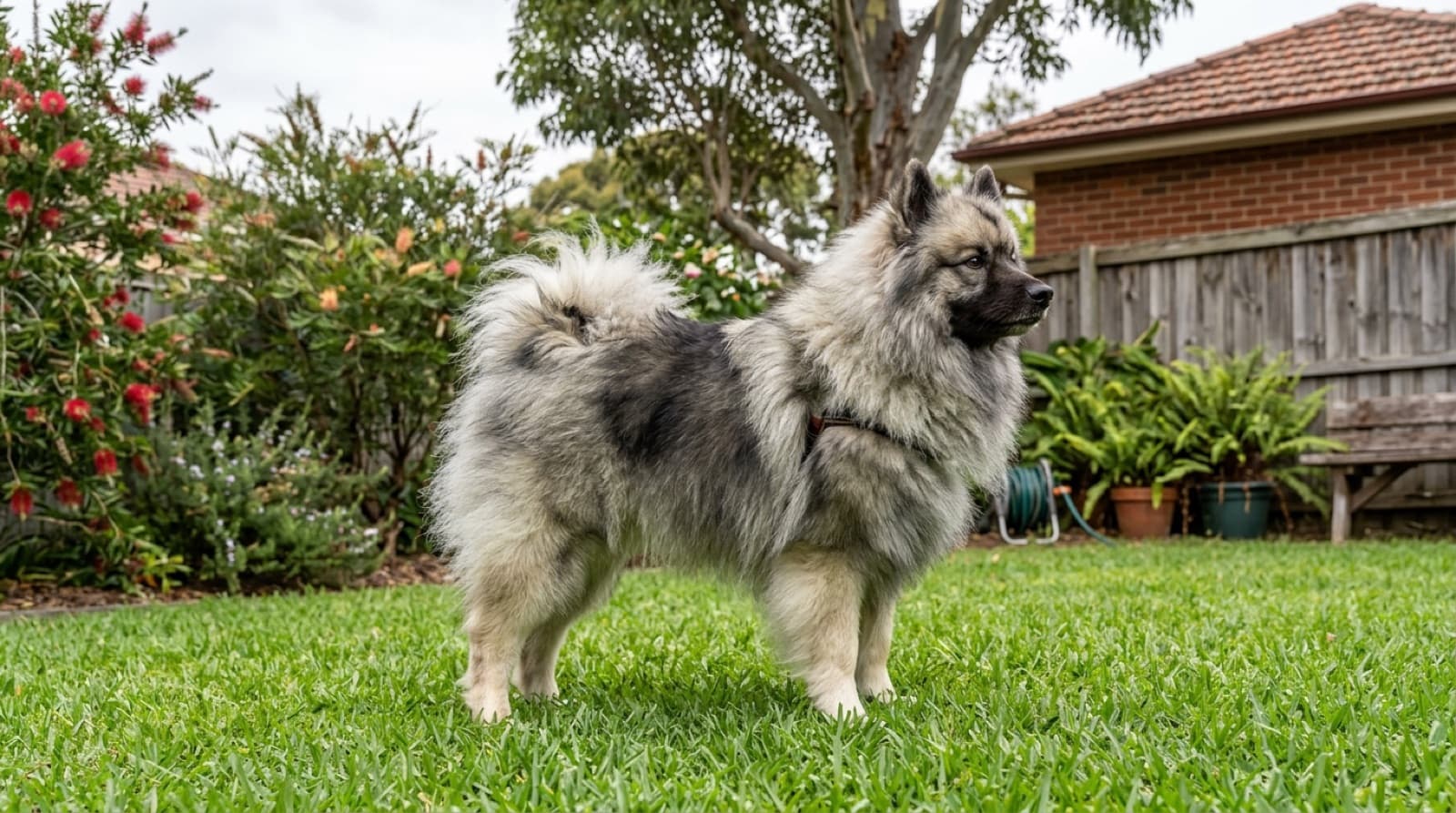
The short answer
The Keeshond is a genuinely sound breed that often lives 12 to 15 years, so start from a place of reassurance. One condition is worth understanding early: primary hyperparathyroidism, a hormonal problem that raises blood calcium, shows as increased thirst, more urination and lethargy, and now has a DNA test a vet or breeder can use. Beyond that, watch for hip dysplasia, slipping kneecaps, epilepsy, an underactive thyroid and some heart conditions, keep the dog lean, and stay on year-round paralysis tick prevention. Learn the signs of a prolonged seizure and a tick, because those are emergencies.
A sound breed first
Before the list of conditions, the honest headline is a good one. The Keeshond is one of the sounder medium breeds you can own. It was developed in the Netherlands as a companion and watchdog on river barges and farms, valued for temperament and alertness rather than an extreme look, so it kept a balanced build and a robust constitution. What that leaves you with is a hardy, functional spitz with a long life to match. Most Keeshonden live around 12 to 15 years, and plenty stay bright and active well into old age.
So this article is not a warning label. It is a plan. The conditions below are worth knowing so you can spot them early and act, but most Keeshonden will only ever brush against one or two, and much of what keeps the breed well is ordinary care: a lean weight, real exercise, clean teeth, and steady tick prevention. The RSPCA Australia Knowledgebase has good general guidance on preventative care and healthy weight that applies to any dog.
Primary hyperparathyroidism: the distinctive Keeshond condition
If there is one condition to understand in this breed, it is primary hyperparathyroidism. It is a hormonal problem that the Keeshond is distinctly prone to, more so than most breeds, which is why it is worth knowing about before you ever see a sign of it. The parathyroid glands are four tiny glands in the neck whose job is to keep blood calcium in a narrow, healthy range. In primary hyperparathyroidism one or more of these glands become overactive and push out too much of their hormone, which drives the calcium level in the blood too high.
What the signs look like. Raised blood calcium is what causes the trouble, and the signs are easy to miss because they are vague and creep in slowly. The common ones are drinking noticeably more and urinating more as a result, lower energy or lethargy, a reduced appetite, and sometimes general weakness. It usually appears in middle-aged and older dogs. Because these signs can be put down to age or the weather, the pattern to hold onto is a mature Keeshond that is suddenly thirstier, weeing more and a bit flat, which earns a vet visit rather than a wait-and-see.
The DNA test is the good news. The important development for this breed is that a genetic DNA test now exists for the condition. A vet or a responsible breeder can use it to identify dogs that carry the risk, so breeders can make informed pairings and owners can watch a known-risk dog more closely. On the diagnosis side, a straightforward blood test measures the calcium level, and your vet can investigate from there. It is a manageable condition once found, so the whole point of knowing about it is to act on that vague early pattern rather than dismissing it.
Joints: hips and kneecaps
As a medium-sized dog the Keeshond can have hip dysplasia, where the hip joint does not form smoothly and the surfaces wear unevenly over the years. It shows as stiffness, a reluctance to jump into the car or onto the couch, a rolling or wobbly gait, or slowing down on walks. Responsible breeders screen their breeding dogs' hips to reduce it, which is one reason a known background helps, but it can appear in any line. Weight is the biggest lever an owner controls: a lean Keeshond puts far less load through an imperfect hip than a heavy one.
The breed can also have patellar luxation, a slipping kneecap common across small and medium breeds, where the kneecap pops out of its groove and back again. It often looks like a brief skip or hop on a back leg that then rights itself, and many dogs cope with a mild version, while more serious cases cause ongoing lameness. A Keeshond with a persistent limp, stiffness, or a repeated hop on a back leg should be seen by a vet, since both conditions are diagnosed with an examination and imaging and are very manageable when caught early.
Epilepsy: what a seizure means and when it is urgent
Epilepsy is seen in the Keeshond, usually the idiopathic kind, which simply means recurring seizures with no other detectable cause. It often shows up first in young to middle-aged adults. A seizure can look frightening even when it is short. The dog may collapse, stiffen or paddle its legs, drool, lose bladder or bowel control, and then be dazed and unsteady for a while afterwards as it recovers.
Here is the part to be clear about. A single short seizure that stops on its own is not usually an emergency in the moment, but it always warrants a vet visit to work out the cause and decide whether treatment is needed. What does need emergency care is a seizure lasting more than about five minutes, or several seizures coming one after another without the dog fully recovering in between. That is covered in the emergency box below. The reassuring part is that canine epilepsy is often well controlled once a vet has assessed it, so a first seizure should prompt a call, and a prolonged or clustered one should prompt an immediate trip.
Emergency: a paralysis tick or a prolonged or clustered seizure
Two situations mean get to a vet straight away. The first is paralysis tick: weakness or a wobbly, unsteady back end, a changed or weakened bark, gagging, retching or a wet cough, vomiting, or laboured breathing all point to it, and it is fatal without treatment. Check your Keeshond over by hand after any bushy or grassy walk, because that thick double coat hides a tick easily. The second is a seizure that lasts more than about five minutes, or several seizures in a row without a full recovery in between, because prolonged seizure activity is dangerous. In either case phone ahead and head to a 24/7 hospital such as SASH, which offers round-the-clock emergency care in Sydney. Do not wait to see if it settles.
The Sydney paralysis tick point
One health risk has nothing to do with the breed and everything to do with where you live. The paralysis tick is native to the east coast of Australia, including the coastal and bushland areas around Sydney, and its bite releases a toxin that causes an ascending paralysis which is fatal without veterinary treatment. It is a year-round risk here, not just a summer one, which matters for a curious spitz that enjoys nosing along bush tracks and through long grass.
The response is straightforward. Keep your Keeshond on a vet-recommended tick prevention product every single month with no gaps, and after any walk through bush or long grass run your hands slowly over the whole dog, feeling through the coat for a lump. This is the breed where hand-checking really counts. That dense, stand-off double coat gives a tick excellent cover, so a visual scan is not enough, and you need to part the fur and feel the skin, especially around the head and face, under and inside the ear flaps, under the collar, in the armpits, around the tail and between the toes. If your dog develops a wobbly back end, a changed or weak bark, gagging or heavy breathing, treat it as the emergency it is. Ask your own vet which prevention product suits your dog.
Browse adoptable Keeshonden in Sydney
Adopting an adult lets you learn a dog's health history directly, with a vet check already done and any known issues shared by the foster carer. Keeshonden reach rescue less often than mainstream breeds, so browse live NSW listings and set an alert to hear the moment one comes in.
See Available Keeshonden →Thyroid and heart
Hypothyroidism. An underactive thyroid can occur in the Keeshond and tends to show in middle age as weight gain despite a normal appetite, low energy, and coat or skin changes such as thinning, a dull, brittle coat, or bare patches. In a thick-coated breed those coat changes can be hard to notice, so the weight and energy shift is often the first clue. It is diagnosed with a blood test and managed well once identified, so it is worth mentioning to your vet if an older Keeshond slows down and gains weight without an obvious reason.
Heart conditions. Some heart conditions are seen in the breed. The signs to act on are a dog that tires easily, coughs, breathes faster at rest, or seems short of breath on gentle exercise. A vet can listen to the heart with a stethoscope at routine visits and pick up a murmur or rhythm change early, then investigate further if needed. This is one of the practical reasons to keep up regular check-ups as a Keeshond ages, so a heart change is found while there is time to manage it.
Skin, teeth and weight
Allergies and skin. Keeshonden can develop atopic dermatitis, an allergic skin condition where the dog reacts to things in the environment such as pollens, grasses or dust mites. It shows as itching, licking and chewing, especially at the feet, face, ears and belly, and it can flare with the seasons. In a Sydney climate with a long warm growing season, environmental allergies are common across many breeds. Under a thick coat, a skin problem can smoulder before you spot it, so a dog that is scratching, chewing its feet or smelling off needs a vet, because scratching leads to skin infections and there are several approaches depending on the cause.
Dental disease. Like many companion breeds, Keeshonden can suffer dental disease as plaque builds and hardens on the teeth. Left alone it causes pain, tooth loss and infection that can affect the rest of the body. Regular tooth brushing, dental chews and professional cleans when your vet advises keep it in check, and it is one of the easiest problems to stay ahead of.
Weight. A Keeshond that is not exercised enough will gain weight, and the thick coat can hide it until it is well underway, so go by feel rather than the eye and check for a waist and easily felt ribs. A heavy dog is a set-up for joint strain and a harder-working heart. This is an active spitz that needs a good daily walk and play, so give it the exercise it enjoys and measure meals rather than free-feeding. In a Sydney summer, walk in the cooler hours of the early morning or evening and carry water, because heat, not cold, is the local dog-safety risk, and a heavily coated breed feels it. Our Keeshond temperament and care guide covers the coat, exercise and companionship routine alongside this.
Why adopting a Keeshond is not a health disadvantage
People sometimes worry that a rescue dog is a health gamble next to a breeder puppy. For a generally sound breed like the Keeshond the picture is more balanced than that. A Keeshond adopted through a reputable Sydney rescue arrives desexed, vaccinated, microchipped, treated for parasites and vet-checked, with all of it included in the fee. You are not taking on an unassessed animal.
Adopting also means the day-to-day picture is often known upfront. A foster carer who has lived with the dog can tell you whether it has any skin issues, how it copes on walks, and how it has gone day to day, which is real information a puppy cannot offer. If you are weighing it up, our Keeshond adoption guide for Sydney covers where to look and what it costs. Sydney rescues worth watching include RSPCA NSW, AWL NSW, Sydney Dogs and Cats Home and Monika's Doggie Rescue.
Is pet insurance worth it for a Keeshond?
For a generally healthy breed, pet insurance is really about the uncommon big event rather than the routine visits. The Keeshond is sound, but the conditions on this page can still bring a serious bill: investigating and managing primary hyperparathyroidism, imaging and treating a hip, working up epilepsy, or an emergency tick admission are all far more affordable when a policy is carrying most of the cost. The catch that catches people out is pre-existing conditions, which insurers will not cover, so the sensible move is to insure a young and healthy dog before anything is on record, or to insure an adopted adult from the day you bring it home, before its first claim.
It is worth understanding how the Australian market is structured. A single underwriter, PetSure, sits behind many of the brand-name policies you will see, so comparing the actual product detail matters more than the logo. Independent brands such as Bow Wow Meow and Petplan Australia are worth a look. Read the annual limit, the percentage of the bill covered, the excess, and any sub-limits or exclusions before you choose, and weigh a monthly premium against the peace of mind of not having to make a treatment decision on cost alone.
Keeping a Keeshond healthy: the checklist
Most of what keeps a Keeshond well is routine. This is a sound breed, so the habits below do the heavy lifting.
- Give it real exercise. A good daily walk plus play keeps an active spitz fit and holds a healthy weight, which protects joints and heart alike.
- Keep the dog lean. Go by feel under that thick coat, checking for a waist and ribs you can feel easily, and measure meals rather than free-feeding.
- Watch the thirst. A mature Keeshond that is suddenly drinking and weeing more and seeming flat deserves a vet visit, since that pattern fits primary hyperparathyroidism.
- Know your seizure plan. A first or short seizure needs a vet visit; a seizure over about five minutes, or several in a row, is an emergency.
- Mind the skin. Itching, chewing feet or an off smell under the coat deserves a vet visit before it turns into a skin infection.
- Look after the teeth. Regular tooth brushing and dental checks prevent painful disease.
- Book regular vet checks. Annually while adult, then twice yearly for a senior, so calcium or thyroid changes, a heart murmur or an early joint issue are caught early.
- Stay on year-round tick prevention and hand-check the coat. Use a vet-recommended product every month without a gap, and feel through that dense coat after every bushy walk, because the paralysis tick on the NSW coast is a fatal risk.
When to see the vet urgently
Most Keeshond health issues are handled at a normal appointment. A few need a faster response. Get to a vet immediately, including out of hours, if you see any of these:
- A wobbly back end with a changed or weak bark, gagging, retching, a wet cough or heavy breathing (possible paralysis tick).
- A seizure lasting more than about five minutes, or several seizures close together without a full recovery in between.
- Sudden collapse, laboured breathing at rest, or a dog that cannot get comfortable and seems in pain.
- Repeated vomiting with obvious weakness in a dog you know has raised calcium or a parathyroid problem.
For the everyday things, such as a mature dog drinking more, a slow slide in energy, an intermittent skip on a back leg, itchy skin, or steady weight gain, book a normal vet visit soon rather than waiting. Catching those early gives your Keeshond the best outcome. When in doubt, phone your vet or a 24/7 hospital and describe what you are seeing. They would far rather you called and it was nothing than the other way around. For a broader look at the breed before you commit, browse the full Sydney adoption resources hub, or talk to your own vet, whom the Australian Veterinary Association can help you find.
Frequently Asked Questions
Are Keeshonden a healthy breed?
Yes, broadly. The Keeshond is a generally sound, long-lived spitz breed, and that hardiness is part of its appeal. It was bred as a companion and watchdog on the barges and farms of the Netherlands, not for extreme looks, so it has kept a functional build and a robust constitution. No breed is problem-free, though. The one condition genuinely distinctive to the Keeshond is primary hyperparathyroidism, a hormonal problem that raises blood calcium and now has a genetic DNA test. Beyond that, the breed can have hip dysplasia, slipping kneecaps, epilepsy, an underactive thyroid and some heart conditions, plus the small everyday things like skin allergies, dental disease and weight gain if under-exercised. Most of it is manageable with routine vet care, a lean weight and year-round tick prevention. Keeshonden often live around 12 to 15 years.
What health problems do Keeshonden have?
The main ones to know are primary hyperparathyroidism, a distinctive hormonal condition that raises blood calcium and has a DNA test, along with hip dysplasia, patellar luxation (a slipping kneecap), idiopathic epilepsy, hypothyroidism and some heart conditions. Alongside those, the breed shares the ordinary issues of many companion dogs: atopic skin allergies, which are common in the warm Sydney climate, dental disease in a fairly small mouth, and weight gain if a busy spitz is not exercised and fed to a lean shape. There is also the paralysis tick, which is not a breed problem at all but a serious year-round risk anywhere on the NSW coast. None of this changes the headline that the Keeshond is generally sound. It simply gives you a sensible list to watch, and most Keeshonden will only ever meet one or two things on it.
What is primary hyperparathyroidism in Keeshonds?
Primary hyperparathyroidism is a hormonal condition that the Keeshond is distinctly prone to, where one or more of the small parathyroid glands in the neck become overactive and push too much calcium into the blood. Raised blood calcium is what causes the trouble, and the signs are easy to miss because they are vague: drinking and urinating more than usual, low energy or lethargy, reduced appetite, and sometimes weakness. It tends to appear in middle-aged and older dogs. The important development for this breed is that a genetic DNA test now exists, which a vet or a responsible breeder uses to identify dogs at risk so the condition can be caught or bred away from. If your Keeshond is drinking and weeing noticeably more and seems flat, that pattern is worth a vet visit, because a simple blood test can measure calcium and your vet can take it from there.
How long do Keeshonden live?
Keeshonden often live around 12 to 15 years, a good long life that reflects a generally sound breed without the extreme features that shorten many popular dogs. With sensible care a Keeshond has every chance of an active old age. The things that most affect a long life are within your control: keeping the dog lean and fit under that thick coat, staying on top of dental care, keeping up year-round paralysis tick prevention, and booking regular vet checks that become twice-yearly for a senior. Ask about the dog's health history when you adopt, learn the early signs of the breed's distinctive condition, primary hyperparathyroidism, and get any increase in thirst and urination checked rather than waiting.
Do Keeshonden have hip or knee problems?
Some do. As a medium-sized dog the Keeshond can have hip dysplasia, where the hip joint does not form smoothly and wears unevenly over time, showing as stiffness, a reluctance to jump or climb, or a rolling, wobbly gait. Responsible breeders screen breeding dogs' hips to reduce it. The breed can also have patellar luxation, a slipping kneecap common across small and medium breeds, which often looks like a brief skip or hop on a back leg that then rights itself. A Keeshond with a persistent limp, stiffness or a repeated hop on a back leg should be seen by a vet, since both are diagnosed with an examination and imaging and are very manageable when caught early. Keeping the dog lean takes strain off every joint and is the single simplest thing you can do for its legs.
Do Keeshonden get epilepsy?
Epilepsy is seen in the Keeshond, usually the idiopathic kind, which means recurring seizures with no other detectable cause. It often first appears in young to middle-aged adults. A seizure can look frightening: the dog may collapse, stiffen or paddle its legs, drool, lose bladder or bowel control, and be dazed for a while afterwards. A single short seizure is not usually an emergency in the moment, but it always warrants a vet visit to work out what is going on. What does need emergency care is a seizure that lasts more than about five minutes, or several seizures close together without the dog fully recovering in between, because prolonged seizure activity is dangerous. Epilepsy in dogs is often well controlled once a vet has assessed it, so a first seizure should prompt a call to your vet, and a prolonged or repeated one should prompt an emergency trip.
Do Keeshonden have thyroid or heart problems?
Both can occur, though neither defines the breed. Hypothyroidism, an underactive thyroid, tends to show in middle age as weight gain despite a normal appetite, low energy, and coat or skin changes such as thinning or a dull, brittle coat, which can be hard to spot under a Keeshond's dense fur. It is diagnosed with a blood test and managed well once identified. Some heart conditions are also seen in the breed, and the sign to act on is a dog that tires easily, coughs, breathes faster at rest or seems short of breath on gentle exercise. A vet can check the heart with a stethoscope at routine visits and investigate further if needed. Both are reasons to keep up regular check-ups, especially as a Keeshond ages, so changes are picked up before they become problems.
Do rescue Keeshonden come health checked?
Yes. A Keeshond adopted through a reputable Sydney rescue arrives desexed, vaccinated, microchipped, treated for worms and fleas, and vet-checked before it is listed, with all of that included in the adoption fee. Any known health issue, such as a skin allergy, a heart murmur or a joint problem, is usually noted on the listing or shared by the foster carer. That is a real advantage, because a foster carer who has lived with the dog can tell you how it has been day to day, which is information a puppy from a listing cannot offer. Keeshonden reach rescue less often than mainstream breeds in Sydney, so setting an alert is the practical way to hear when one comes in.
Keep reading
Adoptable Keeshonden in Sydney
Live listings of Keeshonden and Keeshond crosses across Sydney and NSW rescues.
Keeshond Adoption in Sydney
Where to adopt a Keeshond or Keeshond cross, the real costs, and the coat and companionship needs to plan for.
Keeshond Temperament & Care
The friendly spitz personality, the barking, the plush double coat, and daily exercise and companionship needs.
All Sydney Adoption Guides
Browse every breed and how-to guide for adopting a rescue dog in Sydney.