The short answer
A Japanese Spitz is a pure white companion spitz, 30 to 37 cm at the shoulder, that Dogs NSW calls an extremely healthy breed with one known problem: slipping kneecaps (patella luxation). If you buy, use a Dogs Australia registered breeder who has had both parents' kneecaps checked and will show you the results. None of the member breeders whose websites we read in November 2026 published a current price, so ask each one. If you adopt, purebred Japanese Spitz are rare across the rescues we aggregate, so set an alert and look at other small dogs too. Any fee here is a reference, not a quote; check with the breeder or rescue.
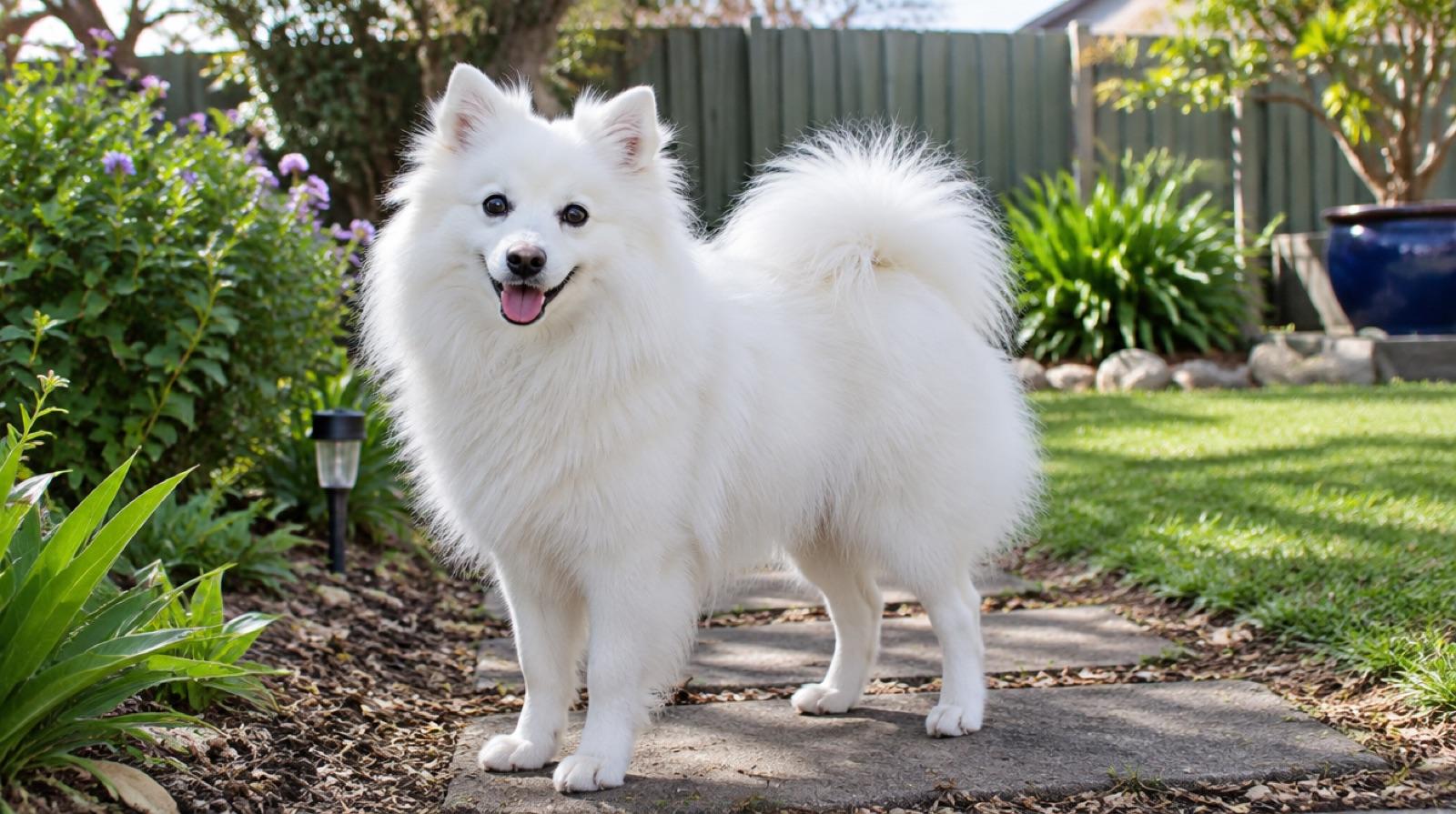
Should you adopt or buy a Japanese Spitz?
Either route can work. The Dogs Australia breed standard describes a dog with a “profuse, pure white, stand-off coat”, a pointed muzzle, erect triangular ears and a plumed tail carried over the back. Its characteristics are “affectionate, companionable” and “slightly chary at first meeting with strangers”; its temperament is “alert, intelligent, bold and lively”.
A registered breeder who checks both parents' kneecaps gives you the best odds against the breed's one known problem, and a puppy you raise yourself. Rescue gives you a dog whose temperament and health you can see first, though purebred Japanese Spitz are rare across the rescues we aggregate. The route to avoid is an online ad for a cheap “Japanese Spitz” with no checkable breeder and no kneecap results.
| Route | Reference cost | What you usually get | Main risk |
|---|---|---|---|
| Dogs Australia registered breeder | No member breeder we checked published a current price (November 2026); ask each one | A pedigree puppy; ask about the register and both parents' kneecap checks | Waiting lists |
| General rescue or council pound | The standard fee, for example $500 to $1,000 at the RSPCA rows below | An occasional Japanese Spitz or Spitz cross, desexed and microchipped | Very few at any one time |
| Online ad with no checkable breeder | Anything, from suspiciously cheap to full price | Unknown parents, no kneecap checks, a cross, or a puppy that does not exist | Untested parents and scams |
Reference figures: the RSPCA NSW, RSPCA Victoria and RSPCA ACT fee pages, read November 2026. They are not quotes. Breeders and rescues set their own prices and change them, so check with them.
What is a Japanese Spitz like to live with?
A companion first. The Dogs NSW breed page says the breed was developed in Japan between 1920 and 1950, purely as a companion dog, that it is eager to please, and that it thrives on human company and wants to be wherever you are. It arrived in Australia in 1979 and the first Australian litter was born in 1981.
| Trait | What the source says |
|---|---|
| Size | Dogs 34 to 37 cm, bitches 30 to 34 cm at the shoulder; no weight set (breed standard) |
| Colour | Pure white (breed standard) |
| Coat | Straight stand-off outer coat over a profuse, short, dense, soft undercoat (breed standard) |
| Shedding | Once a year in males, twice a year in females (Dogs NSW) |
| Grooming | Weekly brushing and combing; regular bathing and drying (Dogs Victoria) |
| Exercise | About 20 minutes a day (Dogs NSW quick guide); up to 1 hour a day (Royal Kennel Club) |
| Life span | Average 12 to 14 years (Dogs Victoria) |
Sources: Dogs Australia breed standard, Dogs NSW, Dogs Victoria and the Royal Kennel Club, read 11 November 2026.
That coat looks like hard work, but Dogs NSW says it is relatively easy to look after, because mud and dirt fall off or brush out of the soft texture. It does shed, so it is not a dog for people who want little hair in the house; our guide to dogs that don't shed covers the breeds that do. Our Japanese Spitz coat and care guide explains the routine.
How healthy are Japanese Spitz?
Generally healthy, with one condition to ask about. The Dogs NSW breed page calls the Japanese Spitz an extremely healthy breed and says the only problem it may suffer from is patella luxation, or slipping kneecaps, which a vet can assess in puppies and adults. It says registered breeders are conscious of it and should strive to eliminate it from their breeding. Dogs Victoria also names luxating patellas.
The UK Japanese Spitz Club recommends that both parents be tested for patella luxation, and that exercise and jumping be restricted while puppies are young, as this is believed to increase the risk or severity of the condition. Dogs NSW and the UK club both mention tear staining, the brown marks under the eyes, which can have several causes; see your vet if the eyes look sore.
Our Japanese Spitz health guide covers what owners plan for over the dog's life.
Which health checks should a Japanese Spitz breeder show you?
Kneecaps first. The kennel clubs here and overseas ask for very little in this breed, which fits its healthy reputation; use the table to ask an Australian breeder questions, not as an Australian rule.
| Check | Who lists it |
|---|---|
| Kneecaps (patella luxation) on both parents | Recommended by the UK Japanese Spitz Club; Dogs NSW says breeders should be working to eliminate it |
| Genetic diversity | Royal Kennel Club good practice (its only listed item for the breed) |
| DNA profile (parentage) | Dogs New Zealand accredited breeders (its only mandatory test for the breed) |
| Vet check of the puppy | Dogs NSW says a vet can assess the kneecaps in puppies as well as adults |
Sources: UK Japanese Spitz Club, Dogs NSW, Royal Kennel Club and Dogs New Zealand, read 11 November 2026.
Ask to see the kneecap results for both parents, with names that match the litter, and the vet check for the puppy you are offered.
How much is a Japanese Spitz puppy from a registered breeder?
We quote no breeder price, because none of the member breeders whose websites we read published one. In November 2026 we read the own websites of Japanese Spitz breeders who are members of Dogs Australia state bodies in New South Wales, Victoria and Queensland, leaving out listing and classified sites, and found no current price. We cannot speak for every breeder, so ask each one.
Ask for the price in writing and compare what it includes: the parents' kneecap results, the vet check, vaccination and microchip, whether the puppy is on the Limited Register with a desexing agreement, and whether the breeder will take the dog back if your circumstances change.
Expect to wait. Dogs Australia's registration figures show 151 Japanese Spitz registered in 2025, against a recent high of 366 in 2020. The dog cost calculator gives a first-year budget beyond the purchase.
Survey of member breeders' own websites, November 2026. Prices change; check with the breeder.
See the Japanese Spitz listed right now
Japanese Spitz and Spitz crosses from the rescues, shelters and council pounds we aggregate, each with its rescue, desexing and microchip details. Every listing links to the rescue, where you apply directly.
What do Japanese Spitz in rescue look like?
Rare. Purebred Japanese Spitz are rare across the rescues we aggregate; when one comes through it may be an adult or a Spitz cross, and a good rescue will tell you how the dog is with children, other dogs and time alone. With an average life span of 12 to 14 years, according to Dogs Victoria, an adult can still have many years ahead.
If you are flexible on breed, other small fluffy dogs and crosses come through more often. Browse small dogs listed by rescues: Sydney, Melbourne, Brisbane, Perth, Adelaide.
What does a rescue Japanese Spitz cost?
| Rescue | Fee as published | Read |
|---|---|---|
| RSPCA NSW | $620 puppy under 12 months; $500 dog over 12 months | 11 Nov 2026 |
| RSPCA Victoria | $500 to $1,000 for adult dogs | 11 Nov 2026 |
| RSPCA ACT | $650 for popular breeds and mixes over 12 months and under 8 years | 11 Nov 2026 |
Reference only, not a quote. These are the fees each rescue published on the date shown; fees change and some dogs are priced individually, so check with the rescue. The fee normally covers desexing, microchipping, vaccinations and a vet check. Read our guides to adopting a dog in Australia and adopting a senior dog.
How do Japanese Spitz puppy scams work?
Never send a deposit for a Japanese Spitz puppy you have not seen with its mother, in person or at least on a live video call. A seller who asks for more money after the first payment, for shipping or transport, matches the scam pattern Dogs Victoria describes.
Scamwatch warns that scammers set up fake websites, social media profiles and marketplace listings for pets that do not exist, and that a very cheap pet is likely a scam. Dogs Victoria's puppy scam fact sheet adds that fake ads may display microchip, source or membership numbers lifted from legitimate breeders. Japanese Spitz versions of the pattern to watch for:
- Not pure white. The breed standard allows one colour: pure white. A cream or coloured puppy sold as a purebred Japanese Spitz does not meet the standard; ask what it really is.
- No kneecap answer. A breeder should be able to tell you whether both parents' kneecaps have been checked.
- Borrowed numbers. A real breeder's membership or source number in an ad proves nothing on its own. Check it with the state body yourself.
- Stock photos. White fluffy puppies photograph alike. A reverse image search can show whether the same picture appears on another site.
Our guide to puppies for sale in Australia has the state-by-state table of breeder numbers, how to check each one, and what to do if you have already paid.
When is a registered breeder the better choice?
Rescue is not right for everyone, and with a breed this rare across the rescues we aggregate, waiting for a registered breeder is reasonable if you want a Japanese Spitz puppy specifically. Check these before you pay:
- Registration. Ask for the breeder's prefix and membership number and check them through Dogs Australia's breeder search or your state body.
- Kneecap results for both parents.
- The puppy's vet check, including the kneecaps.
- Pedigree papers and the register the puppy is on.
- A written contract covering health problems, register type, desexing and whether the breeder will take the dog back.
Is a Japanese Spitz the right dog for you?
The appeal is real. Dogs NSW calls it a family dog that is eager to please, and Dogs Victoria says it suits many different owners and lifestyles, as an energetic breed that loves regular exercise and needs grooming. Be honest about two things: it wants to be with you, so long days alone do not suit it, and the white coat sheds. Not sure? Try the what dog breed is right for me quiz and the adoption readiness check, and compare with our guide to apartment dogs.
Find a Japanese Spitz near you
Japanese Spitz and Spitz crosses listed by rescues, by city:
- Japanese Spitz for adoption in Sydney
- Japanese Spitz for adoption in Melbourne
- Japanese Spitz for adoption in Brisbane
- Japanese Spitz for adoption in Perth
- Japanese Spitz for adoption in Adelaide
Local guides to adopting a Japanese Spitz, with the rescues that serve each city: Sydney, Melbourne, Brisbane, Perth, Adelaide, Gold Coast.
More adopt-or-buy guides: Samoyed, Pomeranian, Shiba Inu, Bichon Frise, Maltese, Shetland Sheepdog.
Frequently asked questions
How much is a Japanese Spitz puppy in Australia?▼
We have no current published figure to quote. In November 2026 we read the own websites of Japanese Spitz breeders who are members of Dogs Australia state bodies, and none published a current price; the prices we saw were on listing sites, which we do not use. Ask each breeder for the price in writing and compare what is included.
What health problems do Japanese Spitz have?▼
Few, according to the breed bodies. The Dogs NSW breed page calls it an extremely healthy breed whose one known problem is patella luxation, or slipping kneecaps, and says some dogs get tear staining. Dogs Victoria also names luxating patellas. Ask a breeder whether both parents have had their kneecaps checked by a vet.
Is a Japanese Spitz the same as a Samoyed or a Pomeranian?▼
No. They are separate breeds with separate Dogs Australia standards. On height, the Japanese Spitz standard gives 30 to 37 cm at the shoulder, well below the Samoyed standard's 46 to 56 cm. The Pomeranian standard sets an ideal weight (1.8 to 2.5 kg) and no height, while the Japanese Spitz standard sets a height and no weight, so the two cannot be compared figure for figure; Dogs NSW groups the Japanese Spitz with small dogs under 11 kg. The Japanese Spitz standard allows one colour, pure white, while the Pomeranian standard allows a range of whole colours. The UK Japanese Spitz Club says that, contrary to belief, it is not a spin-off of the Samoyed.
How big does a Japanese Spitz get?▼
Small to medium. The Dogs Australia breed standard gives a height at the shoulder of 34 to 37 cm for dogs and 30 to 34 cm for bitches. The standard sets no weight. Dogs NSW groups it with small dogs under 11 kg.
Do Japanese Spitz shed a lot?▼
Yes, seasonally. Dogs NSW says the coat sheds once a year in males and twice a year in females, and that its soft texture lets dirt brush out easily. Dogs Victoria recommends weekly brushing and combing. It is not a low-shedding breed, so it is not one for people who want a dog that does not shed.
Is a Japanese Spitz good with children and families?▼
Often, yes. Dogs NSW calls it a family dog, developed purely as a companion and thriving on human company. The breed standard describes it as affectionate and companionable but slightly chary at first meeting with strangers. As with any dog, supervise young children.
How long do Japanese Spitz live?▼
Dogs Victoria gives an average life span of 12 to 14 years. The UK Royal Kennel Club lists the breed's lifespan as over 12 years.
Can I adopt a Japanese Spitz in Australia?▼
Sometimes, but purebred Japanese Spitz are rare across the rescues we aggregate; when one comes through it may be an adult or a Spitz cross. Watch the Japanese Spitz listings, set an alert, and also browse small dogs in your city.
How much does it cost to adopt a Japanese Spitz?▼
You pay the rescue's standard fee. RSPCA NSW listed $620 for a puppy under 12 months and $500 for a dog over 12 months, RSPCA Victoria listed $500 to $1,000 for adult dogs, and RSPCA ACT listed $650 for popular breeds and mixes over 12 months and under 8 years. These were the fees published when we read them in November 2026; they are a reference, not a quote, and fees change, so check with the rescue.
Are Japanese Spitz good apartment dogs?▼
They can be. Dogs NSW lists about 20 minutes of exercise a day and says the breed enjoys living indoors and outdoors as long as it is with you. The UK Royal Kennel Club lists up to one hour of exercise a day and a small house with a small to medium garden. A dog that wants company all day suits a home where someone is around.
How do I avoid Japanese Spitz puppy scams?▼
Only pay for a puppy you have seen with its mother, in person or at least on a live video call. Scamwatch says a very cheap pet is likely a scam, and Dogs Victoria warns that fake ads may show microchip, source or membership numbers lifted from real breeders. The breed standard allows only pure white, so ask questions about a cream or coloured puppy sold as a purebred Japanese Spitz.
Sources
- Dogs Australia: Japanese Spitz breed standard (last updated 1 June 2022)
- Dogs Australia: National Animal Registration Analysis 2018 to 2025
- Dogs Australia: Find a breeder
- Dogs NSW: Japanese Spitz breed page
- Dogs Victoria: Japanese Spitz breed page
- The Japanese Spitz Club (UK): About the breed
- Royal Kennel Club (UK): Japanese Spitz breed page and health tests
- Dogs New Zealand: Accredited breeder health tests for the Japanese Spitz
- Scamwatch: Buying and selling scams (pet scams)
- Dogs Victoria: A7 Identifying puppy scams and puppy farms (fact sheet)
- RSPCA NSW: Adoption fees
- RSPCA ACT: Adoption process
- RSPCA Victoria: The adoption process
Keep reading
Japanese Spitz listed by rescues
Japanese Spitz and Spitz crosses listed right now by the rescues and shelters we aggregate across Australia.
Puppies for sale: adopt or buy?
The breeder number each state requires, how to check it, and rescue puppy fees.
Samoyed puppies: adopt or buy?
The larger white spitz, its coat and the checks to ask for.
Japanese Spitz health issues
Kneecaps, tear staining and the other conditions owners plan for.