The short answer
A Sheltie is a small working sheepdog, about 35 to 37 cm at the shoulder, that the breed bodies describe as gentle, intelligent and suited to most family homes, with an average lifespan of 12 to 16 years. If you buy, use a Dogs Australia registered breeder who has the puppy eye tested by a veterinary ophthalmologist and can show both parents' DNA results (including CEA and MDR1) and hip scores. None of the member breeders whose websites we read in November 2026 published a current price, so ask each one. If you adopt, purebred Shelties are rare across the rescues we aggregate, so set an alert and look at other small dogs too. Any fee here is a reference, not a quote; check with the breeder or rescue.
Should you adopt or buy a Sheltie?
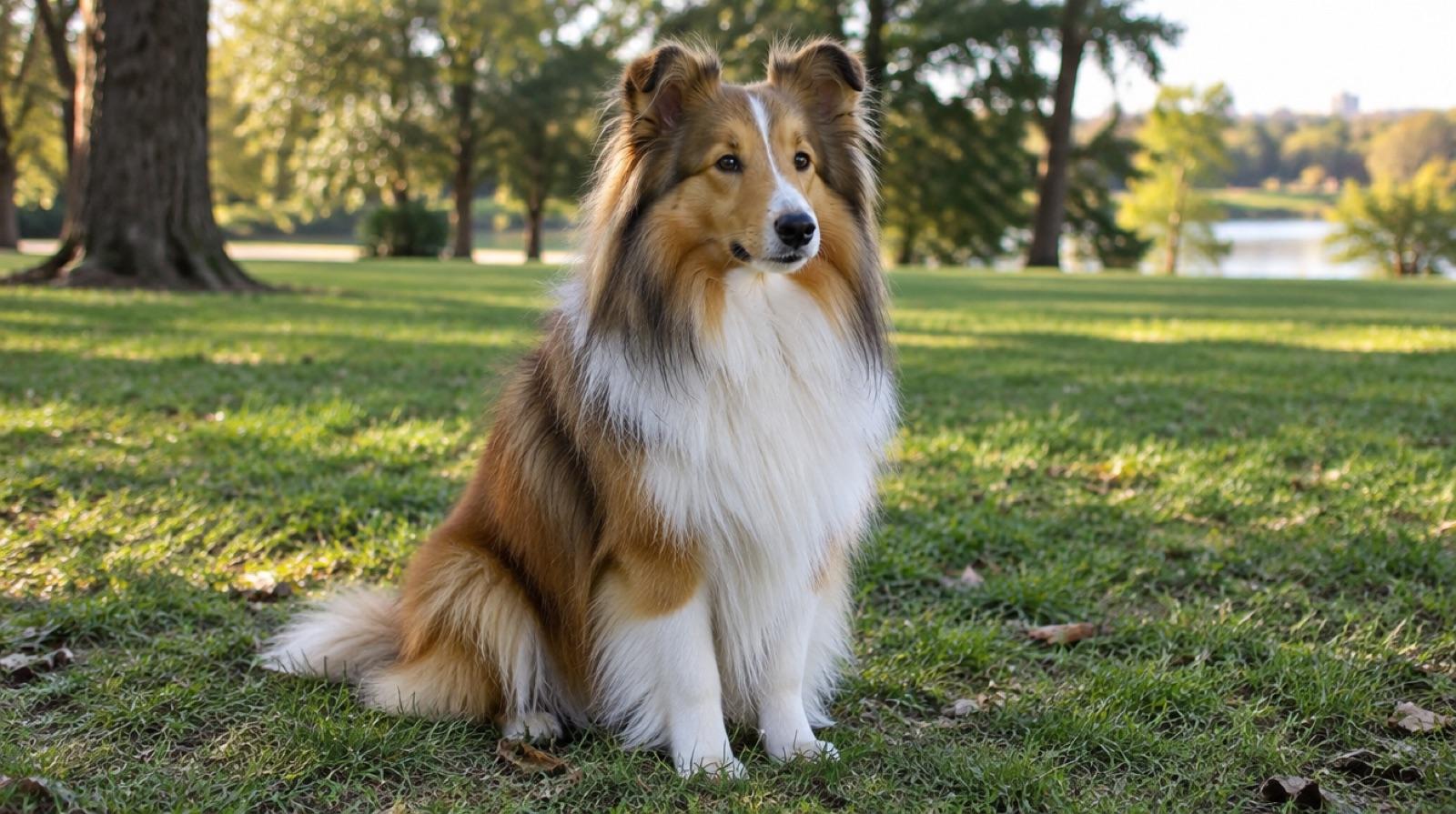
Either route can work. The Dogs Australia breed standard describes a “small, long haired, working dog of great beauty”, whose characteristics are “alert, gentle, intelligent, strong and active” and whose temperament is “affectionate and responsive to his owner, reserved towards strangers, never nervous”. The ideal height is 37 cm for dogs and 35.5 cm for bitches.
A registered breeder who eye tests every puppy and DNA tests the parents gives you the best odds against the breed's known inherited problems and a puppy you raise yourself. Rescue gives you a dog whose temperament and health you can see first, though Shelties are rare across the rescues we aggregate. The route to avoid is an online ad for a cheap “Sheltie” with no eye test certificate and no breeder you can check.
| Route | Reference cost | What you usually get | Main risk |
|---|---|---|---|
| Dogs Australia registered breeder | No member breeder we checked published a current price (November 2026); ask each one | A pedigree puppy; ask for its eye test and both parents' DNA and hip results | Waiting lists |
| General rescue or council pound | The standard fee, for example $500 to $1,000 at the RSPCA rows below | An occasional Sheltie or Sheltie cross, desexed and microchipped | Very few at any one time |
| Online ad with no checkable breeder | Anything, from suspiciously cheap to full price | Unknown parents, no eye test, or a puppy that does not exist | Untested parents and scams |
Reference figures: the RSPCA NSW, RSPCA Victoria and RSPCA ACT fee pages, read November 2026. They are not quotes. Breeders and rescues set their own prices and change them, so check with them.
What is a Sheltie like to live with?
Gentle, bright and adaptable. The Dogs Australia breed page, with information from the Shetland Sheepdog Club of NSW, says Shelties are hardy little sheepdogs that thrive on attention and praise, make great companions for children and adults, suit the average suburban backyard and make superb house pets. It says their aptitude for training suits obedience, agility and herding, and that their easy-going nature makes them good companions for other pets.
| Trait | What the source says |
|---|---|
| Size | Ideal height 37 cm for dogs, 35.5 cm for bitches; more than 2.5 cm either way highly undesirable (breed standard) |
| Colours | Sables, tri-colours, blue merles, black and white, black and tan (breed standard) |
| Coat | Double: long, harsh, straight outer coat over a soft, short, close undercoat (breed standard) |
| Grooming | A thorough 10-minute brush about once a week; undercoat sheds about every six months (Dogs Australia breed page) |
| Exercise | Up to 1 hour a day; town or country (Royal Kennel Club) |
| Life span | Average 12 to 16 years (Dogs Australia breed page) |
Sources: Dogs Australia breed standard, Dogs Australia breed page and the Royal Kennel Club, read 11 November 2026.
Remember it is still a working dog: Dogs Australia places it in the Working Dogs group, and the standard describes a strong, active dog. Our Sheltie grooming and coat care guide explains the coat routine, and our guide to the smartest dog breeds covers where the Sheltie sits in Stanley Coren's well-known ranking.
What is Collie eye anomaly (CEA)?
An inherited eye condition. The Shetland Sheepdog Club of Victoria explains that in CEA, also called choroidal hypoplasia, the choroid, the layer that supplies blood and nutrients to the retina, does not develop properly. Mild cases may show only on an eye exam between about 5 and 12 weeks of age and may cause no obvious vision problems; severe cases can involve malformations, retinal detachment, bleeding inside the eye and blindness. The Dogs Australia breed page describes it as congenital and recessively inherited.
Two things follow for a buyer. First, the club says breeders should have puppies eye tested by a veterinary ophthalmologist between 6 and 8 weeks of age and give a copy of the results to new owners, because mild changes can be hidden by normal pigment later. Second, a DNA test shows whether a dog is clear, a carrier or affected, so ask for both parents' results. The club says that, thanks to careful breeding, Shelties in Australia are most often unaffected or only mildly affected.
What is MDR1 medicine sensitivity?
MDR1 is a gene mutation that can cause severe reactions to some common medicines. The Shetland Sheepdog Club of Victoria explains that affected dogs cannot produce a protein that pumps certain drugs and toxins out of the central nervous system. Washington State University, whose Dr Katrina Mealey discovered the mutation in dogs, says dogs with it can become very ill or die if given certain medications, and its table of dog breeds commonly affected lists an approximate frequency of 15% for the Shetland Sheepdog. The club stresses that MDR1 is not a disease: a dog with it is not at risk as long as it is not given the problem medicines, and carriers as well as affected dogs should be treated as sensitive.
The practical step is simple. Ask the breeder for the puppy's or parents' MDR1 result, or have your own dog tested, and make sure your vet has the result on file. Do not change any medicine yourself; your vet will choose what is safe for your dog.
Which health tests should a Sheltie breeder show you?
The Australian club list comes first. The Shetland Sheepdog Club of Victoria recommends for all breeding dogs an ophthalmologist eye exam (often done as litter screening), DNA tests for breed-specific diseases and hip and elbow scoring after 12 months of age. Here is how that compares with overseas kennel clubs; use it to ask an Australian breeder questions, not as an Australian rule.
| Test | Sheltie Club of Victoria | Royal Kennel Club (UK) | Dogs New Zealand | American parent club |
|---|---|---|---|---|
| Eye exam by an ophthalmologist | Recommended; puppies at 6 to 8 weeks | Good practice, incl. litter screening | Mandatory, yearly | Required |
| DNA: CEA | Recommended | Best practice | Mandatory | Elective |
| DNA: MDR1 | Recommended | Best practice | Optional | Elective |
| DNA: von Willebrand disease type III | Recommended | Best practice | Optional | Elective |
| DNA: degenerative myelopathy | Recommended | Not listed | Optional | Not listed |
| DNA: dermatomyositis | Recommended | Not listed | Not listed | Elective |
| DNA: progressive retinal atrophy | Not listed | Best practice (two variants) | Not listed | Required (one variant) |
| Hip scoring | Recommended, after 12 months | Best practice | Mandatory | Required |
| Elbow scoring | Recommended, after 12 months | Best practice | Not listed | Elective |
Sources: Shetland Sheepdog Club of Victoria, Royal Kennel Club, Dogs New Zealand accredited breeder health tests and the American Shetland Sheepdog Association (which requires at least two of its elective tests), read 11 November 2026. Dogs New Zealand also requires a DNA profile.
Ask to see the certificates for both parents, with names that match the litter, and the puppy's own eye test. Our Shetland Sheepdog health guide covers the other conditions owners plan for.
How much is a Sheltie puppy from a registered breeder?
We quote no breeder price, because none of the member breeders whose websites we read published one. In November 2026 we read the own websites of Shetland Sheepdog breeders who are members of Dogs Australia state bodies in Victoria, New South Wales and Queensland, leaving out listing and classified sites, and found no current price. The breeder lists published by the Sheltie clubs of Victoria, Queensland and South Australia give no guide price either. We cannot speak for every breeder, so ask each one.
Ask for the price in writing and compare what it includes: the puppy's eye test, the parents' DNA and hip results, the vet check, vaccination and microchip, whether the puppy is on the Limited Register with a desexing agreement, and whether the breeder will take the dog back if your circumstances change.
Expect to wait. Dogs Australia's registration figures show 304 Shetland Sheepdogs registered in 2025, against 609 in 2021. The dog cost calculator gives a first-year budget beyond the purchase.
Survey of member breeders' own websites, November 2026. Prices change; check with the breeder.
See the Shelties listed right now
Shetland Sheepdogs and Sheltie crosses from the rescues, shelters and council pounds we aggregate, each with its rescue, desexing and microchip details. Every listing links to the rescue, where you apply directly.
What do Shelties in rescue look like?
Rare. Purebred Shelties are rare across the rescues we aggregate; when one comes through it may be an adult or a Sheltie cross, and a good rescue will tell you how the dog is with children, other dogs and time alone. With an average lifespan of 12 to 16 years, according to the Dogs Australia breed page, an adult can still have many years ahead. If you adopt, ask the rescue whether the dog's MDR1 status is known, and if not, ask your vet about testing.
If you are flexible on breed, other small dogs and herding crosses come through more often. Browse small dogs listed by rescues: Sydney, Melbourne, Brisbane, Perth, Adelaide.
What does a rescue Sheltie cost?
| Rescue | Fee as published | Read |
|---|---|---|
| RSPCA NSW | $620 puppy under 12 months; $500 dog over 12 months | 11 Nov 2026 |
| RSPCA Victoria | $500 to $1,000 for adult dogs | 11 Nov 2026 |
| RSPCA ACT | $650 for popular breeds and mixes over 12 months and under 8 years | 11 Nov 2026 |
Reference only, not a quote. These are the fees each rescue published on the date shown; fees change and some dogs are priced individually, so check with the rescue. The fee normally covers desexing, microchipping, vaccinations and a vet check. Read our guides to adopting a dog in Australia and adopting a senior dog.
How do Sheltie puppy scams work?
Never send a deposit for a Sheltie puppy you have not seen with its mother, in person or at least on a live video call. A seller who asks for more money after the first payment, for shipping or transport, matches the scam pattern Dogs Victoria describes.
Scamwatch warns that scammers set up fake websites, social media profiles and marketplace listings for pets that do not exist, and that a very cheap pet is likely a scam. Dogs Victoria's puppy scam fact sheet adds that fake ads may display microchip, source or membership numbers lifted from legitimate breeders. Sheltie versions of the pattern to watch for:
- No eye test. A Sheltie breeder should be able to show the puppy's ophthalmologist certificate. Vagueness is a warning.
- “Miniature Collie” or “toy Sheltie”. The standard sets an ideal height and calls more than 2.5 cm either way highly undesirable. A seller pushing a tiny version is selling something other than the breed standard.
- Borrowed numbers. A real breeder's membership or source number in an ad proves nothing on its own. Check it with the state body or the breed club list yourself.
- Stock photos. A reverse image search can show whether the same puppy picture appears on another site.
Our guide to puppies for sale in Australia has the state-by-state table of breeder numbers, how to check each one, and what to do if you have already paid.
When is a registered breeder the better choice?
Rescue is not right for everyone, and with a breed this rare across the rescues we aggregate, waiting for a registered breeder is reasonable if you want a Sheltie puppy specifically. Check these before you pay:
- Registration. Ask for the breeder's prefix and membership number and check them through Dogs Australia's breeder search or your state body. The state Sheltie clubs, such as the Shetland Sheepdog Club of Victoria, also list member breeders.
- The puppy's eye test by a veterinary ophthalmologist.
- DNA results for both parents, including CEA and MDR1.
- Hip and elbow scores for both parents.
- A written contract covering health problems, register type, desexing and whether the breeder will take the dog back.
Is a Sheltie the right dog for you?
The appeal is real. The Dogs Australia breed page says Shelties will suit almost any family or home that can give them the love and attention they deserve. Be honest about three things before you apply anywhere: it is an intelligent working dog that wants something to do, it is reserved with strangers, and the coat sheds. Not sure? Try the what dog breed is right for me quiz and the adoption readiness check, and compare with our guides to family dogs and medium sized dog breeds.
Find a Sheltie near you
Shetland Sheepdogs and Sheltie crosses listed by rescues, by city:
- Shelties for adoption in Sydney
- Shelties for adoption in Melbourne
- Shelties for adoption in Brisbane
- Shelties for adoption in Perth
- Shelties for adoption in Adelaide
Local guides to adopting a Sheltie, with the rescues that serve each city: Sydney, Melbourne, Brisbane, Perth, Adelaide, Gold Coast.
More adopt-or-buy guides: Border Collie, Australian Shepherd, Corgi, Kelpie, Japanese Spitz, Cavalier King Charles.
Frequently asked questions
How much is a Sheltie puppy in Australia?▼
We have no current published figure to quote. In November 2026 we read the own websites of Shetland Sheepdog breeders who are members of Dogs Australia state bodies, and none published a current price; the prices we saw were on listing sites, which we do not use. The state Sheltie club breeder lists we read publish no guide price. Ask each breeder for the price in writing and compare what is included.
Is a Sheltie a miniature Collie?▼
No. The Shetland Sheepdog is its own breed with its own Dogs Australia standard, although it looks like a small Rough Collie. The Dogs Australia breed page says Shelties resemble a small Collie but are an individual breed with features, apart from size, that tell them apart. The UK Royal Kennel Club notes the breed was first shown at Crufts in 1906 as a miniature Collie.
What is Collie eye anomaly in Shelties?▼
Collie eye anomaly, or CEA, is an inherited eye condition in which a layer of tissue under the retina does not develop properly. The Shetland Sheepdog Club of Victoria says mild cases may cause no obvious vision problems while severe cases can lead to blindness, and that breeders should have puppies eye tested by a veterinary ophthalmologist at 6 to 8 weeks and give the results to new owners. A DNA test is also available.
What is MDR1 and why does it matter for a Sheltie?▼
MDR1 is a gene mutation that can cause severe reactions to some common medicines. Washington State University, whose Dr Katrina Mealey discovered the mutation in dogs, says dogs with it can become very ill or die if given certain medications, and its table of dog breeds commonly affected lists an approximate frequency of 15% for the Shetland Sheepdog. A simple DNA test tells you your dog's status; give the result to your vet so they can choose medicines accordingly.
What health tests should a Sheltie breeder do?▼
Ask for an eye examination by a veterinary ophthalmologist, DNA results for both parents and hip scores. The Shetland Sheepdog Club of Victoria recommends an ophthalmologist eye exam, DNA tests for CEA, MDR1, von Willebrand disease type III, degenerative myelopathy and dermatomyositis, and hip and elbow scoring after 12 months of age for all breeding dogs.
How long do Shelties live?▼
Usually a long time. The Dogs Australia breed page, with information from the Shetland Sheepdog Club of NSW, gives an average lifespan of 12 to 16 years. The UK Royal Kennel Club lists over 10 years.
Can I adopt a Sheltie in Australia?▼
Sometimes, but purebred Shelties are rare across the rescues we aggregate; when one comes through it may be an adult or a Sheltie cross. Watch the Sheltie listings, set an alert, and also browse small dogs in your city.
How much does it cost to adopt a Sheltie?▼
You pay the rescue's standard fee. RSPCA NSW listed $620 for a puppy under 12 months and $500 for a dog over 12 months, RSPCA Victoria listed $500 to $1,000 for adult dogs, and RSPCA ACT listed $650 for popular breeds and mixes over 12 months and under 8 years. These were the fees published when we read them in November 2026; they are a reference, not a quote, and fees change, so check with the rescue.
Are Shelties good family dogs?▼
Often, yes. The Dogs Australia breed page calls Shelties gentle dogs that make great companions for children and adults, superb house pets, and suited to an average suburban backyard. The breed standard says they are affectionate and responsive to their owner and reserved towards strangers, so expect a dog that warms up to visitors slowly.
How much grooming does a Sheltie need?▼
Less than the coat suggests. The Dogs Australia breed page says most breeders recommend a thorough 10-minute brush about once a week, with attention to the legs, stomach and behind the ears, and that Shelties shed their undercoat about every six months. The UK Royal Kennel Club lists daily grooming, so expect more brushing when the coat drops.
How do I avoid Sheltie puppy scams?▼
Only pay for a puppy you have seen with its mother, in person or at least on a live video call. Scamwatch says a very cheap pet is likely a scam, and Dogs Victoria warns that fake ads may show microchip, source or membership numbers lifted from real breeders. Ask for the puppy's eye test certificate; a genuine breeder of this breed will expect the question.
Sources
- Dogs Australia: Shetland Sheepdog breed standard (last updated 29 June 2010)
- Dogs Australia: Shetland Sheepdog breed page (information from the Shetland Sheepdog Club of NSW)
- Dogs Australia: National Animal Registration Analysis 2018 to 2025
- Dogs Australia: Find a breeder
- Shetland Sheepdog Club of Victoria: Health testing in Shetland Sheepdogs
- Shetland Sheepdog Club of Victoria: Breeders directory
- Royal Kennel Club (UK): Shetland Sheepdog breed page and health tests
- Dogs New Zealand: Accredited breeder health tests for the Shetland Sheepdog
- American Shetland Sheepdog Association: Recommended tests (CHIC)
- Washington State University: MDR1 in dogs
- Scamwatch: Buying and selling scams (pet scams)
- Dogs Victoria: A7 Identifying puppy scams and puppy farms (fact sheet)
- RSPCA NSW: Adoption fees
- RSPCA ACT: Adoption process
- RSPCA Victoria: The adoption process
Keep reading
Shelties listed by rescues
Shetland Sheepdogs and Sheltie crosses listed right now by the rescues and shelters we aggregate across Australia.
Puppies for sale: adopt or buy?
The breeder number each state requires, how to check it, and rescue puppy fees.
Border Collie puppies: adopt or buy?
The bigger, busier herder, its DNA tests and what rescue looks like.
Shetland Sheepdog health problems
The eye, hip, thyroid and MDR1 issues Sheltie owners plan for.