The short answer
Buy from a Dogs Australia registered breeder if you want a purebred Pembroke or Cardigan puppy, and ask for the parents' DNA and hip results: vWD1 for Pembrokes, PRA for Cardigans. Very few member breeders publish a price; the three that did in the Welsh Corgi Club of NSW directory in November 2026 showed $3,500, $3,750 and $4,000, too few to call a range. Adopt if you are open to an adult corgi or a corgi cross: it arrives desexed, microchipped and vaccinated for the rescue's standard fee (RSPCA NSW $500 to $620). Prices and fees are reference figures read in November 2026, not quotes.
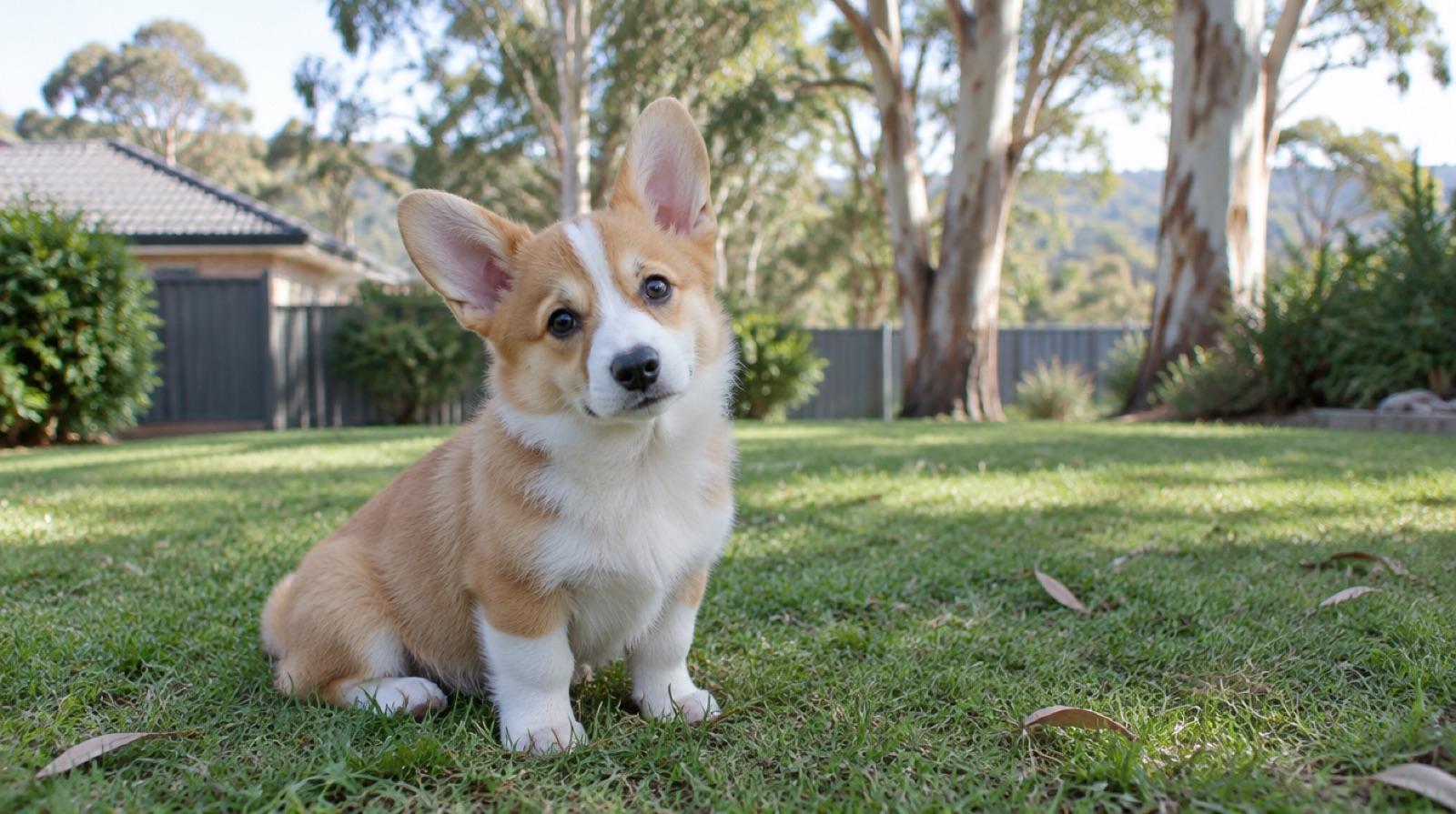
Should you adopt or buy a Corgi?
It depends on whether it has to be a purebred puppy. Purebred corgi puppies rarely reach rescue in Australia, so if you want an eight-week-old Pembroke or Cardigan with known parents, a registered breeder is the realistic route. If what you want is the dog (the fox face, the big personality, the busy little herder), an adult corgi or a corgi cross from a rescue costs less, comes desexed and vaccinated, and arrives with a temperament you can already see.
The RSPCA Australia Knowledgebase puts the order plainly: look at the RSPCA or a reputable rescue first, and if you go to a breeder, make sure they are registered, visit where the puppies were born and meet the parents.
| Route | Reference cost | What you usually get | Main risk |
|---|---|---|---|
| Dogs Australia registered breeder | Few publish a price; three club members showed $3,500, $3,750 and $4,000 (see below) | A purebred Pembroke or Cardigan puppy, pedigree papers (usually limited register), parents with DNA and hip results | Waiting lists, and testing that varies between breeders |
| General rescue or pound | The rescue's standard dog fee (see the RSPCA rows below) | Adult corgis and corgi crosses, desexed, microchipped and vaccinated | Few purebred puppies; unknown parent health history |
| Online ad or social media | Often below breeder prices, or above them for “fluffy” or rare colours | Anything from a real litter to a puppy that does not exist | Scams and untested parents |
Reference figures read on 9 November 2026, not quotes. Breeders and rescues set their own prices and change them.
Pembroke or Cardigan: which corgi is which?
They are two breeds with separate Dogs Australia standards, and the differences matter when you read an ad. The Pembroke is the corgi most people picture, and it is the one most often listed by breeders and rescues.
| Trait | Pembroke Welsh Corgi | Cardigan Welsh Corgi |
|---|---|---|
| Height | About 25 to 30 cm at the shoulder | Ideal 30 cm at the shoulder |
| Weight | Dogs 10 to 12 kg, bitches 9 to 11 kg | In proportion to size |
| Tail | Undocked, set in line with the back | Like a fox's brush, moderately long |
| Coat | Medium length, straight, dense undercoat, never soft, wavy or wiry | Short or medium, hard texture, weatherproof |
| Colours | Red, sable, fawn, black and tan, with or without white | Blue merle, brindle, red, sable, and tri colours |
| Temperament | Outgoing and friendly, never nervous or aggressive; bold in outlook | Alert, intelligent, steady, not shy or aggressive |
From the Dogs Australia Pembroke and Cardigan breed standards, read 9 November 2026. Individual dogs vary.
Two details catch buyers out. Blue merle and brindle are Cardigan colours; the Pembroke standard does not list them. And the Pembroke standard describes an undocked tail, so a Pembroke with a full tail is normal, while some are born with a naturally short one.
How much is a Corgi puppy from a registered breeder?
There is no published guide price from an Australian corgi club, and most member breeders do not put a price on their own website. In November 2026 we read the websites of Pembroke and Cardigan breeders that show Dogs Australia membership, and none of them published one; most corgi breeders advertise litters on listing sites, which we leave out because the membership and the price cannot be checked together.
The Welsh Corgi Club of NSW member directory is the exception. It lists each member breeder with a Dogs NSW prefix and NSW Breeder Identification Number, and three showed a price when we read it: $4,000 for a Pembroke puppy, and $3,500 and $3,750 for Cardigan puppies. The directory does not say whether a price is for a pet or a show puppy, and three is too small a sample to call a range or a typical price, so treat these as examples. Ask each breeder what the price covers, such as the register type, microchip, vaccinations, a vet check and any pet insurance.
| Source | Reference price | Checked |
|---|---|---|
| Member breeders' own websites | None published a price | Nov 2026 |
| Welsh Corgi Club of NSW directory, Pembroke (one breeder) | $4,000 | 9 Nov 2026 |
| Welsh Corgi Club of NSW directory, Cardigan (two breeders) | $3,500 and $3,750 | 9 Nov 2026 |
Reference figures only, not quotes, and too few to show a range. A breeder sets its own price for each litter. The dog cost calculator covers the first year after the price tag.
Which health tests should a Corgi breeder show you?
The clearest Australian benchmark comes from the Welsh Corgi Club of Victoria. Before a member can list a litter or an older dog on its puppy register, it needs a certificate showing at least one parent tested clear or normal for von Willebrand's disease type 1 in Pembrokes, or progressive retinal atrophy in Cardigans. Asking for both parents' results is a reasonable step up from that minimum.
| Test | Breed | What it screens for | Who asks for it |
|---|---|---|---|
| DNA: vWD1 | Pembroke | Von Willebrand's disease type 1, an inherited bleeding disorder | Welsh Corgi Club of Victoria register |
| DNA: PRA-rcd3 | Cardigan | Progressive retinal atrophy, an inherited eye disease that leads to blindness | Welsh Corgi Club of Victoria register; Royal Kennel Club best practice |
| Eye examination | Cardigan | Inherited eye conditions, checked by a veterinary eye specialist | Royal Kennel Club best practice |
| Hip scoring | Both | Hip dysplasia, by x-ray and scoring | Royal Kennel Club best practice for both breeds |
| DNA: DM (SOD1) | Pembroke | A gene linked to degenerative myelopathy, a spinal cord disease of older dogs | Some breeders run it; read the result with care (below) |
Sources: Welsh Corgi Club of Victoria, and the Royal Kennel Club (UK) Pembroke and Cardigan breed pages, read 9 November 2026. The UK schemes are a reference point; Australian breeders use Australian hip scoring and eye schemes. This is a buying checklist, not veterinary advice.
The DM test needs a word of caution. An article published by the Pembroke Welsh Corgi Club of America, written by a veterinary geneticist, explains that the gene is very common in Pembrokes and that the test is a poor predictor of disease: a clear result rules DM out, but an “at risk” result does not mean the dog will develop it. So a DM result is useful information, not a pass or fail. A breeder who explains that nuance is a good sign.
The back is the other big question. Both corgis are long in the body and short in the leg, and Cornell University's College of Veterinary Medicine lists Pembroke and Cardigan corgis among the breeds predisposed to intervertebral disc disease. Ask how the parents move and whether any relatives have had back trouble, and plan to keep your corgi lean. Our corgi health guide covers the signs to watch for.
Then check the breeder. Look up the prefix or membership number with Dogs Australia or your state canine body yourself, and check the breeder number your state requires on its official register. The state-by-state table is in our puppies for sale guide, so we have not repeated it here.
See the corgis listed right now
Corgis and corgi crosses from the rescues, shelters and council pounds we aggregate, with the foster carer's notes on energy, kids and other pets. Every listing links to the rescue, where you apply directly.
What do Corgis in rescue look like?
Mostly adults and corgi crosses. Across the rescues, shelters and council pounds we aggregate, dogs listed as corgis are more often crosses than purebreds, and purebred corgi puppies are rare. When a purebred corgi does appear, it tends to be adopted quickly, so an alert matters more than for most breeds.
Corgis reach rescue for ordinary reasons, such as a move, a change in work or a new baby, and for breed reasons: a family that did not expect the herding drive, the barking or the amount of hair a double coat drops. None of that makes a rescue corgi a problem dog. It means the right home is one that enjoys a clever, vocal dog, and the rescue's foster notes will usually tell you how the individual dog is with children, cats and other dogs.
We have not found a currently active corgi-only rescue we can verify, so we do not name one. The Welsh Corgi Club of Victoria runs a puppy and older dog register that can help place older corgis, and its members are encouraged to offer to rehome a dog its owner can no longer keep. If you are in New South Wales, the Welsh Corgi Club of NSW directory notes when a member has an older dog available, as retired show dogs are sometimes rehomed.
What does a rescue corgi cost?
| Rescue | Fee | Checked |
|---|---|---|
| RSPCA NSW | $500 dog over 12 months; $620 puppy under 12 months | 9 Nov 2026 |
| RSPCA Victoria | $500 to $1,000 adult dog; $650 to $1,000 puppy under 6 months, shown on each profile | 9 Nov 2026 |
| RSPCA ACT | $395 dog 6 months to 8 years; $650 popular breed or mix over 12 months; $700 puppy under 6 months; $900 or $1,200 popular-breed puppy up to 12 months, by size | 9 Nov 2026 |
Fees as published on the date shown. They are a reference, not a quote: rescues change fees and price some dogs individually. The fee normally covers desexing, microchipping and vaccination; ask each rescue what else is included.
How do Corgi puppy scams work?
Never send a deposit for a corgi puppy you have not seen with its mother, in person or at least on a live video call. A request for more money after the first payment, for transport, a crate or insurance, is the standard scam script.
Corgis are a popular, photogenic breed, which is exactly what scammers look for. Scamwatch says scammers set up fake websites, social media profiles and marketplace listings offering popular breeds or puppies that do not exist. Its advice: view the puppy in person, use a video call if you cannot visit, check that the breeder is legitimate, and compare prices, because a very cheap pet is likely a scam.
Corgi-specific versions of the pattern to watch for:
- The “fluffy corgi” premium. The Pembroke standard asks for a coat that is never soft, wavy or wiry. A long fluffy coat is outside the standard, so paying extra for it buys looks, not quality.
- “Rare” colours on the wrong breed. Blue merle and brindle are Cardigan colours. A blue merle “Pembroke” is either a Cardigan, a cross, or not what the ad says.
- No DNA results, “but the vet checked them”. A puppy vet check says nothing about the parents' vWD1, PRA or hip results. A scammer with stolen photos cannot produce real certificates.
- No breeder number. NSW, Victoria, Queensland, South Australia and the ACT all require an identifying number in puppy ads. Look it up yourself on the official register, not through a link the seller sends.
Our guide to puppies for sale in Australia has the full state-by-state table of breeder numbers and what to do if you have already paid.
When is a registered breeder the better choice?
Rescue is not right for everyone. A registered breeder is a reasonable choice if you specifically want a Cardigan (rarely seen in rescue), if you plan to do herding, agility or other dog sports and want known lines, or if you need to know the parents' DNA results before you commit. It also makes sense if you have owned corgis before and want another of the same type.
If you go that way, check the breeder properly:
- Registration. Check the prefix or membership number with Dogs Australia or your state canine body. It confirms membership, not puppy quality.
- Club membership. State corgi clubs such as the Welsh Corgi Club of NSW list members with their prefix and breeder number, which makes a quick cross-check.
- The DNA and hip results, for both parents, with names that match the litter.
- The mother, in person, and where the puppies are raised.
- A written contract covering health problems, register type and whether the breeder will take the dog back.
Is a Corgi the right dog for you?
The Pembroke standard describes a dog that is bold in outlook and workmanlike, and the Cardigan standard one that is tough, mobile and capable of endurance. Both were bred to move cattle, and that shows. The Royal Kennel Club lists up to an hour of exercise a day for each breed, and a corgi also wants something to think about.
Before you apply anywhere, be honest about three things. Noise: corgis are alert and many are vocal, which matters in a unit or a townhouse. Herding: chasing and heel-nipping need redirecting with reward-based training, especially around young children. Hair: the double coat sheds, and grooming more than once a week keeps it manageable. Not sure it fits? The what dog breed am I quiz and the adoption readiness check each take a few minutes, and our guide to the best apartment dogs compares quieter small breeds.
For exercise and training ideas, read corgi exercise, training and herding. If a long, short-legged dog appeals but you want to compare, Dachshund puppies: adopt or buy? covers the same decision for Dachshunds.
Find a Corgi near you
Corgis and corgi crosses listed by rescues, by city:
- Corgis for adoption in Sydney
- Corgis for adoption in Melbourne
- Corgis for adoption in Brisbane
- Corgis for adoption in Perth
- Corgis for adoption in Adelaide
Local guides to adopting a corgi, with the rescues that serve each city: Sydney, Melbourne, Brisbane, Perth, Adelaide, Gold Coast, Sunshine Coast.
Corgi health guides by city: Sydney, Melbourne, Brisbane, Perth, Gold Coast. Young dogs of any breed are on each city's puppies page, and fostering is an honest way to try life with a herding breed first; see fostering a dog or cat.
Frequently asked questions
Should I adopt or buy a Corgi puppy?▼
Buy from a registered breeder if it has to be a purebred Pembroke or Cardigan puppy, because purebred corgi puppies rarely reach Australian rescue. Adopt if you are open to an adult corgi or a corgi cross: you can see its energy, barking and temperament before you commit, and it comes desexed, microchipped and vaccinated. Whichever route you take, plan for a herding dog with a long back, not a lap dog.
How much is a Corgi puppy in Australia?▼
No Australian corgi club publishes a set price, and very few member breeders put a price on their own website. When we checked in November 2026, three member breeders listed in the Welsh Corgi Club of NSW directory showed one: $4,000 for a Pembroke, and $3,500 and $3,750 for Cardigans. The directory does not say whether those prices are for pet or show puppies, and three is too small a sample to call a range, so ask each breeder what the price includes. These are reference figures read on 9 November 2026, not quotes.
What is the difference between a Pembroke and a Cardigan Corgi?▼
They are two separate breeds. The Dogs Australia standards describe the Pembroke as low set and sturdy, 25 to 30 cm at the shoulder, in red, sable, fawn or black and tan, with an undocked tail set in line with the back. The Cardigan is a little longer, about 30 cm, with a fox-like brush tail, and it comes in more colours, including blue merle and brindle. The Pembroke is the one most people picture, and the one most often listed.
What health tests should a Corgi breeder show me?▼
For a Pembroke, ask for both parents' von Willebrand's disease type 1 (vWD1) DNA results and hip scores; for a Cardigan, progressive retinal atrophy (PRA-rcd3) DNA results, an eye examination and hip scores. The Welsh Corgi Club of Victoria requires at least one parent tested clear for vWD1 in Pembrokes or PRA in Cardigans before a litter goes on its puppy register. Ask to see the certificates, not a summary.
Should a Corgi breeder test for degenerative myelopathy?▼
If a breeder offers a DM result, read it carefully. Degenerative myelopathy (DM) is a genetic disease that damages the spinal cord in older dogs. An article published by the Pembroke Welsh Corgi Club of America explains that the common DM gene test is a poor predictor of disease in Pembrokes: a clear result rules DM out, but an at-risk result does not mean the dog will get it. Treat a DM result as one piece of information, and ask your vet if a dog you adopt later has hind-leg weakness.
Do Corgis have back problems?▼
They can. Both breeds are long in the body and short in the leg, and Cornell University's College of Veterinary Medicine lists Pembroke and Cardigan corgis among the breeds predisposed to intervertebral disc disease, a back problem. Keeping a corgi lean, building fitness gradually and limiting repeated jumps off furniture are sensible habits. If a corgi shows back pain, wobbliness or reluctance to move, see a vet the same day.
Is a fluffy Corgi a rare type worth paying more for?▼
No. The Dogs Australia Pembroke standard asks for a medium-length straight coat that is never soft, wavy or wiry, so a long fluffy coat is outside the standard, not a premium variety. A fluffy puppy can still make a lovely pet, but an ad that charges extra because of the coat is selling looks, not health. The same goes for a blue merle Pembroke, a colour the Pembroke standard does not list.
Can I adopt a Corgi in Australia?▼
Yes, but expect mostly adults and corgi crosses rather than purebred puppies. Corgis and corgi crosses are listed by general rescues, shelters and council pounds, and the Welsh Corgi Club of Victoria runs a register that can place older dogs. We have not found a currently active corgi-only rescue we can verify, so set an alert on the corgi breed page and check it regularly.
How much does it cost to adopt a Corgi?▼
Usually the rescue's standard dog fee. RSPCA NSW published $500 for a dog over 12 months and $620 for a puppy under 12 months, RSPCA Victoria $500 to $1,000 for an adult dog, and RSPCA ACT $650 for an adult of a popular breed or mix, or $900 to $1,200 for a popular-breed puppy up to 12 months depending on size, all read on 9 November 2026. Fees normally include desexing, microchipping and vaccination. These are reference figures, not quotes.
Are Corgis good family dogs?▼
For an active family, often yes. The Pembroke standard describes the breed as outgoing and friendly, never nervous or aggressive, and the Cardigan as alert, intelligent and steady. They are herding dogs, though, so many will chase and nip at running children's heels, and they bark. Supervise young children with any dog, and look for a rescue corgi already assessed with kids if you have them.
How do I check a Corgi breeder is registered?▼
Ask for the breeder's prefix or membership number and check it yourself with Dogs Australia or your state canine body, then check the breeder number your state requires on the official register. The Welsh Corgi Club of NSW directory lists each member's prefix and NSW Breeder Identification Number, which makes a quick cross-check. Membership confirms registration, not puppy quality, so still ask for health results.
Where can I see Corgis for adoption right now?▼
The Corgi breed page on LocalPetFinder shows corgis and corgi crosses listed by the rescues, shelters and council pounds we aggregate across Australia, and each big city has its own page. Every listing links to the rescue, where you apply directly. Set an alert, because corgis are adopted quickly when they appear.
Sources
- Dogs Australia: Welsh Corgi (Pembroke) breed standard
- Dogs Australia: Welsh Corgi (Cardigan) breed standard
- Welsh Corgi Club of NSW: Member directory
- Welsh Corgi Club of Victoria: Puppy register and rescue service
- Royal Kennel Club: Welsh Corgi (Pembroke) health tests
- Royal Kennel Club: Welsh Corgi (Cardigan) health tests
- Pembroke Welsh Corgi Club of America: Degenerative myelopathy and genetic testing
- Scamwatch: Buying and selling scams
- RSPCA Australia Knowledgebase: Where should I go for a new companion animal?
- RSPCA NSW: Adoption fees
- RSPCA Victoria: The adoption process
- RSPCA ACT: Adoption process
- Cornell University College of Veterinary Medicine: Chondrodystrophy and intervertebral disc disease
Keep reading
Corgis listed by rescues
Corgis and corgi crosses listed right now by the rescues and shelters we aggregate across Australia.
Corgi health issues
The long-back disc risk, weight, degenerative myelopathy and the signs every owner should watch.
Dachshund puppies: adopt or buy?
The other short-legged favourite, with the same back questions and the same scam pattern.
Puppies for sale: adopt or buy?
The breeder number each state requires, how to check it, and rescue puppy fees.