The short answer
Corgis are generally sturdy but the long back means IVDD is the risk to plan for, and obesity makes everything worse. The disc problems that come with a long spine are the breed's most serious and most preventable issue, and a heavy Corgi loads that spine every day. Keep the dog lean, discourage jumping on and off furniture, and use ramps. Watch too for degenerative myelopathy in older dogs, hip dysplasia, eye disease and a bleeding disorder called von Willebrand. If the back legs ever suddenly go weak, drag, or stop working, treat it as a spinal emergency and get to a vet immediately.
The long back and IVDD: the risk that defines the breed
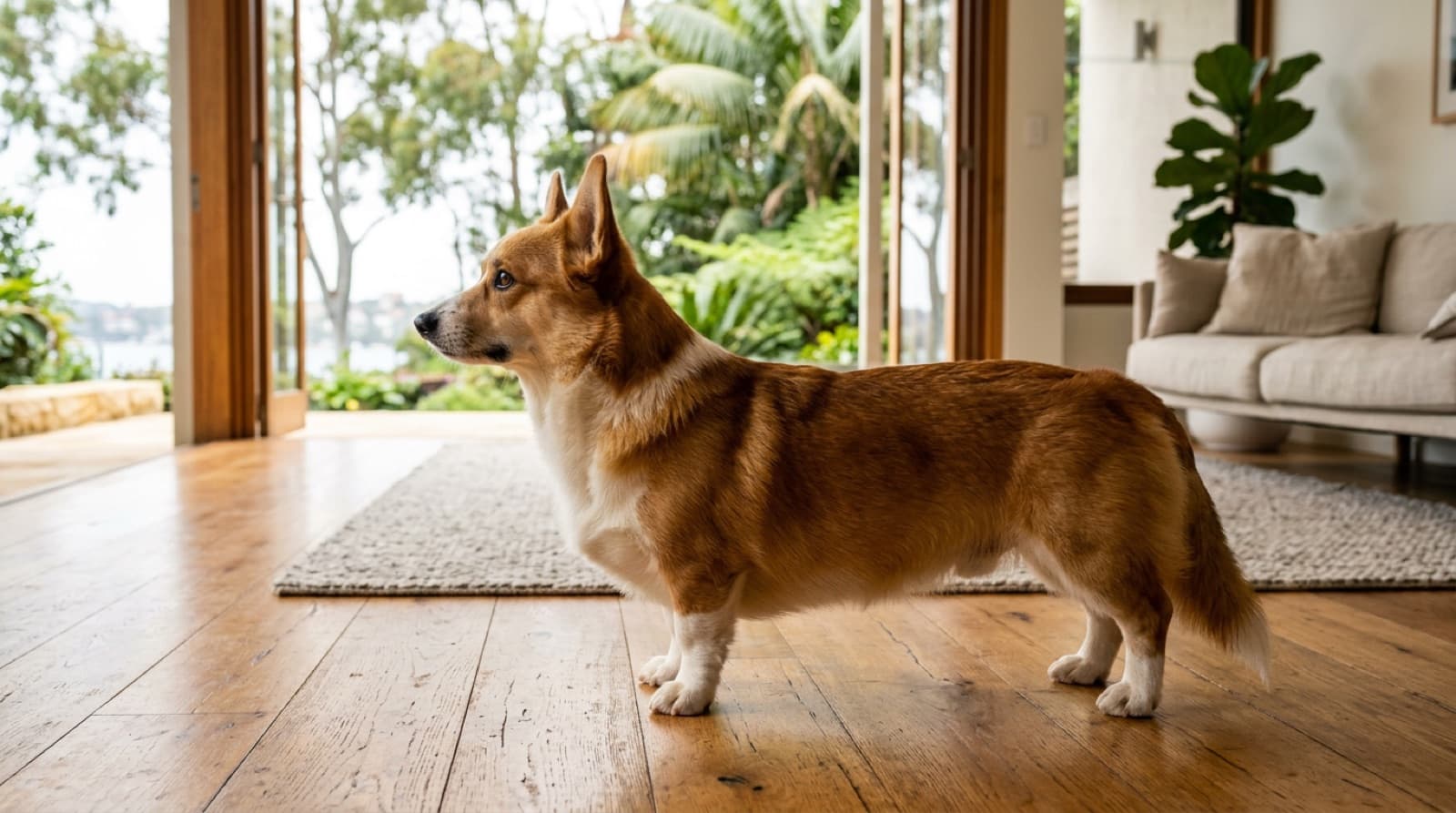
If you understand one thing about Corgi health, make it the back. The Corgi has a long spine set on short legs, the same dwarf build as the Dachshund, and that shape carries a cost. It predisposes the breed to Intervertebral Disc Disease, usually shortened to IVDD.
The discs are the soft cushions that sit between the bones of the spine and act as shock absorbers. In a long-backed dog those discs are under more strain, and one can bulge or rupture and press on the spinal cord running above it. That pressure is what causes the pain and, in serious cases, the loss of movement in the back legs. It can come on slowly or, frightening for owners, all at once after a jump or a twist.
The signs to know. Early IVDD is often quiet. A Corgi in the beginning stages may become reluctant to jump on the couch or do stairs it used to manage, hold its back hunched or arched, yelp when you pick it up, tremble, or walk with a wobbly, uncoordinated gait. Any of those deserve a prompt vet visit. The signs that mean act now are different in scale: sudden weakness in the hind legs, back legs that drag or knuckle over, or a dog that suddenly cannot stand or use its back end at all.
Emergency: sudden hind-leg weakness or paralysis
If your Corgi suddenly cannot use its back legs, is dragging them, or has gone weak or paralysed at the back end, this is a spinal emergency. Get to a vet immediately, day or night. With disc injuries the speed of treatment directly affects whether the dog walks again, so do not wait to see if it improves overnight. Keep the dog still and supported on the way in, carry it with the spine level, and phone ahead. Sydney has 24/7 emergency and specialty hospitals such as SASH that handle exactly this.
Protecting the back. You cannot change the shape a Corgi was bred with, but you can lower the load on it. Keep the dog lean, because weight is the biggest factor you control. Discourage jumping on and off the bed, the couch and out of the car, and give a ramp or a set of low steps instead. Lift the dog properly, one hand under the chest and one under the bottom, so the spine stays level rather than sagging. Skip repeated hard stairs where you can and avoid the twisting, high-impact play that jars the spine. These habits are not about treating a Corgi as delicate. They head off the most preventable serious problem the breed has. The RSPCA Australia Knowledgebase is a good plain-language starting point on how body shape affects a dog's health.
Obesity is the number-one lever
Here is the honest truth most Corgi owners hear from their vet sooner or later: the dog is carrying too much weight. Corgis have big appetites, a real talent for begging, and they gain weight easily, so obesity is common in the breed. It is also the single biggest modifiable risk to their health, which is another way of saying it is the problem most within your power to fix.
Weight and the long spine are a bad combination. Every extra kilo loads the back and its discs, so an overweight Corgi is far more likely to run into the disc trouble described above. The same load speeds arthritis in the hips and joints, and carrying too much fat feeds other diseases that shorten a dog's life. Keeping a Corgi lean protects the back, the joints and the years all at once. The Australian Veterinary Association treats pet obesity as a serious welfare issue, not a cosmetic one.
What lean looks like: you should be able to feel the ribs easily under a thin layer, and see a waist when you look down from above. If you cannot, book a vet visit and ask them to score the body condition and set a target weight. Then feed to it. Measure meals rather than free-pouring, count treats as part of the daily total, and use some of the daily food for training so it does its double duty. A begging Corgi is very persuasive. Holding the line on the food bowl is the most valuable thing you will do for its health.
Degenerative myelopathy in older Corgis
Degenerative myelopathy, or DM, is an inherited disease of the spinal cord that causes a slow, progressive weakness in the hind legs of older dogs. Corgis are one of the breeds it turns up in. Unlike a disc injury it is not painful, which is part of what makes it easy to miss at first.
It usually starts subtly. An older Corgi may develop a slight wobble at the back, scuff or drag its back paws, or knuckle a foot over so the top of the paw touches the ground. Over months the weakness worsens. Because early DM can look like the disc problems and arthritis Corgis also get, and because those are treated very differently, a vet needs to assess any older dog that develops hind-leg weakness rather than you guessing which one it is.
A DNA test exists that shows whether a dog carries the gene linked to DM, though carrying it does not mean the dog will definitely develop the disease. There is no cure. Care is supportive and about quality of life: keeping the dog mobile and lean, physiotherapy, good footing at home, and equipment like support harnesses or a wheeled cart as things progress. Many dogs live comfortably for a good while with the right management, so a diagnosis is not the end of a happy life, but it does need your vet steering it.
Other conditions worth knowing
Hip dysplasia. This is a malformation of the hip joint where the ball and socket do not fit together smoothly, which leads to wear, pain and arthritis over time. Signs include stiffness, a bunny-hopping run, reluctance to exercise, and trouble rising after rest. Keeping the dog lean matters here too, because weight worsens the strain on a poorly fitting joint. A vet can assess the hips and talk through management if your Corgi shows signs.
Eye disease (progressive retinal atrophy). Progressive retinal atrophy, or PRA, is an inherited condition where the light-sensing part of the eye gradually breaks down, causing slow vision loss and eventual blindness. It is not painful and it comes on gradually, so an affected dog often adapts well, but it is worth knowing the breed carries the risk. If your Corgi seems to lose confidence in dim light or bumps into things it used to avoid, have a vet check the eyes.
Von Willebrand disease. This is an inherited bleeding and clotting disorder, where the blood does not clot properly and even a small injury or a routine procedure can bleed more than expected. The practical point for an owner is simple: if your Corgi is diagnosed with it, or you are unsure of its history, tell your vet before any surgery or dental work so they can plan for it. Rescue dogs with an unknown background are a good reason to raise it proactively.
Why adopting a Corgi is not a health disadvantage
People sometimes worry that a rescue dog is a health gamble compared with a breeder puppy. For a Corgi the opposite is often closer to the truth. A Corgi adopted through a reputable Sydney rescue arrives desexed, vaccinated, microchipped, treated for parasites and vet-checked, with all of that included in the fee. You are not taking on an unassessed animal.
Adopting an adult also answers questions a puppy cannot. With a breed defined by its back, being able to see the dog's current weight and mobility, and to hear from the rescue or foster carer whether they have noticed any spinal history, joint stiffness or eye trouble, is genuinely useful. A foster carer who has lived with the dog can tell you how it moves, how it copes with stairs, and how it holds its weight. That is far more information than you get from a photo of a puppy. If you are weighing it up, our Corgi adoption guide for Sydney covers where to look and what it costs.
Keeping a Corgi healthy: the checklist
Most of what keeps a Corgi sound is routine and within your control. The habits below do the heavy lifting.
- Keep the dog lean. Feed to a visible waist, measure meals, count treats, and ask your vet to set a target weight. This one habit protects the back, the joints and the lifespan.
- Protect the spine. Discourage jumping on and off furniture and out of the car, use ramps or low steps, and lift the dog with the spine supported and level.
- Book regular vet checks. Annually while the dog is adult, then twice yearly once it is a senior, so problems like arthritis, eye changes or early weakness get caught before they are advanced.
- Stay on year-round tick and parasite prevention. Use a vet-recommended product every month without a gap, because the paralysis tick on the NSW coast is a fatal risk and prevention is far safer than treatment.
- Look after the teeth. Regular tooth brushing and dental checks prevent painful disease that can affect the whole dog.
- Groom the coat and ears. Corgis have a thick double coat that sheds hard, so regular brushing keeps skin healthy. Never shave the double coat, as it protects against both heat and cold.
- Give steady, sensible exercise. A Corgi is a herding dog and needs daily activity for body and mind, but favour flat walks, sniffing and gentle play over the hard, jarring jumps that stress the back. Our Corgi exercise and training guide goes into detail.
The Sydney paralysis tick point
One health risk is not about the Corgi's shape at all: it is about where you live. The paralysis tick is native to the east coast of Australia, including the coastal and bushland areas around Sydney, and its bite releases a toxin that causes an ascending paralysis which is fatal without veterinary treatment. It is a year-round risk here, not just a summer one.
The response is straightforward. Keep your Corgi on a vet-recommended tick prevention product every single month with no gaps, and after any walk through bush or long grass run your hands slowly over the whole dog, including inside the ears, around the face, under the collar and between the toes, feeling for a lump. If your dog develops a wobbly back end, a changed or weak bark, gagging or heavy breathing, treat it as an emergency and get to a vet at once. Do not try to work out whether it is a tick or a disc problem yourself. Both need a vet, fast.
Browse adoptable Corgis in Sydney
Adopting an adult lets you see the back and weight condition for yourself, with a vet check already done. Browse live NSW listings and set an alert so you hear the moment a Corgi or Corgi cross comes in.
See Available Corgis →When to see the vet urgently
Most Corgi health issues are managed at a normal appointment. A few are emergencies where minutes and hours matter, and the back is the reason. Get to a vet immediately, including out of hours, if you see any of these:
- Sudden weakness, dragging or paralysis of the back legs, or a dog that cannot stand or use its back end.
- Crying out in pain, a rigid or arched back, or refusing to move.
- A wobbly back end together with a changed or weak bark, gagging or laboured breathing (possible paralysis tick).
- Signs of unusual or heavy bleeding, especially before any planned surgery or dental work.
For the gradual things, such as a slow-onset hind-leg weakness in an older dog, stiffness after rest, or vision that seems to be fading, book a normal vet visit soon rather than waiting. Catching those early gives your Corgi the best outcome. When in doubt, phone your vet or a 24/7 hospital and describe what you are seeing. They would far rather you called and it was nothing than the other way around. For a broader look at the breed before you commit, start with our Sydney adoption resources hub.
Frequently Asked Questions
What health problems do Corgis have?
The defining risk is the back. A Corgi has a long spine on short legs, which predisposes it to Intervertebral Disc Disease (IVDD), where a spinal disc bulges or ruptures and presses on the spinal cord. Obesity is the biggest thing an owner controls, because extra weight loads that long back and its joints and makes every other problem worse. Beyond those two, watch for degenerative myelopathy (a gradual hind-leg weakness in older dogs), hip dysplasia, progressive retinal atrophy (an inherited eye disease), and von Willebrand disease (a bleeding and clotting disorder). Corgis are generally sturdy and often live 12 to 14 years, so most of these are manageable if you keep the dog lean and see your vet early when something looks off.
Do Corgis have back problems (IVDD)?
Yes, back problems are the Corgi's most important health risk. The breed has the same long-back, short-leg build as the Dachshund, and that shape predisposes both to Intervertebral Disc Disease. The discs that cushion the spine can bulge or rupture and press on the spinal cord, which causes pain and, in bad cases, weakness or paralysis of the back legs. The early signs are subtle: reluctance to jump or use stairs, a hunched or arched back, yelping when lifted, or a wobbly, uncoordinated walk. If you see those, get to a vet promptly. If the back legs suddenly go weak or drag or stop working, that is a spinal emergency and you should get to a vet immediately, because the speed of treatment affects the outcome.
How do I protect my Corgi's back?
Keep the dog lean and stop it launching off things. Weight is the single biggest lever, so feed to a visible waist and count treats, because every extra kilo loads that long spine. Discourage jumping on and off the couch and the bed, use a ramp or steps for the car and furniture, and pick the dog up with one hand under the chest and one under the bottom so the spine stays level rather than dangling. Avoid repeated hard stairs where you can, keep nails trimmed for good footing, and skip the sort of twisting, high-impact play that jars the back. None of this makes a Corgi fragile. It just respects a body shape that was bred long, and it heads off the most preventable serious problem the breed faces.
Why is obesity dangerous for a Corgi?
Because a Corgi already carries a long spine, and extra weight makes that spine and its joints the first thing to suffer. Corgis have big appetites and a talent for begging, and they gain weight easily, so obesity is common and it is the biggest modifiable risk in the breed. Carrying too much load raises the strain that leads to disc problems and back pain, speeds up arthritis in the hips and joints, and feeds other diseases that shorten a dog's life. Keeping a Corgi lean is genuinely the most valuable thing you can do for its health, and it is entirely within your control. If you are not sure what a healthy weight looks like for your dog, ask your vet to score its body condition and set a target.
What is degenerative myelopathy in Corgis?
Degenerative myelopathy (DM) is an inherited, progressive disease of the spinal cord that causes a gradual weakness in the hind legs of older dogs. It is not painful, and it usually starts as a subtle wobble or the back paws scuffing or knuckling over, then slowly worsens over months. Corgis are one of the breeds where it appears. A DNA test exists that shows whether a dog carries the gene, though carrying it does not guarantee the disease. There is no cure, so care is supportive: physiotherapy, keeping the dog mobile and lean, and equipment like harnesses or carts as it progresses. Because early DM can look like other spinal problems, a vet needs to assess any older Corgi that develops hind-leg weakness rather than you assuming which one it is.
How long do Corgis live?
Corgis often live around 12 to 14 years with good care, and many do well into their teens. Lifespan is not fixed by the breed alone. The dog's weight, its dental health, how well the back is protected, and how early problems get caught all shift the number. A lean Corgi with regular vet checks, tick prevention and dental care has a real advantage over one that is overweight and only seen when something is clearly wrong. That is the useful part of the question: the years are partly in your hands. Keep the dog at a healthy weight, stay on top of the back, and treat the annual check as maintenance rather than something you only do when there is a problem.
Do rescue Corgis come health checked?
Yes. A Corgi adopted through a reputable Sydney rescue is desexed, vaccinated, microchipped, treated for worms and fleas, and given a vet check before it is listed, and the fee covers all of that. Adopting an adult also gives you something a puppy never can: you can see the dog's current back condition and body weight, and the rescue or foster carer can tell you about any spinal history, joint issues or mobility concerns they have noticed. That is a real advantage for a breed defined by its back. A rescue Corgi is not a health gamble compared with a puppy. In many ways it is the lower-risk choice, because the guesswork about how the body has held up is already partly answered.
How do I keep my Corgi healthy?
Keep it lean, protect the back, and stay on top of routine care. Feed to a visible waist and go easy on treats, because weight is the biggest lever you control. Discourage jumping on and off furniture, use ramps or steps, and lift the dog with the spine supported and level. Book an annual vet check and move to twice-yearly once the dog is a senior, so problems get caught early. Keep up year-round paralysis tick and parasite prevention with a vet-recommended product, because the tick is a fatal risk on the NSW coast. Brush the teeth and keep the double coat and ears clean. Give steady daily exercise that suits a herding dog without the hard, jarring jumps. Do those things and most Corgis stay sound and happy for a long life.
Keep reading
Adoptable Corgis in Sydney
Live listings of Corgis and Corgi crosses across Sydney and NSW rescues.
Corgi Adoption in Sydney
Where to adopt a Corgi, why they end up in rescue, and what adoption costs against a breeder.
Corgi Exercise, Training & Herding
How to exercise a herding breed without jarring the back, plus channelling the herding instinct.
All Sydney Adoption Guides
Browse every breed and how-to guide for adopting a rescue dog in Sydney.