The short answer
There is no official definition of a medium sized dog: Dogs Australia does not sort breeds by size, and studies use their own classes. On our listing pages, small is roughly under 12 kg and large roughly 25 kg or more, so medium is the dogs in between, usually about 35 to 55 cm at the shoulder. Common medium breeds include the Australian Kelpie and Australian Cattle Dog (43 to 51 cm), Border Collie (46 to 53 cm), Staffordshire Bull Terrier (36 to 41 cm, 11 to 17 kg), Beagle (33 to 40 cm), Cocker Spaniel (13 to 14.5 kg) and Whippet (44 to 51 cm), all from Dogs Australia standards. The big split is energy, not size: working breeds need a job, while Whippets, Staffies and spaniels settle more easily. In rescue, medium dogs are mostly crosses, especially Staffy, Kelpie and Cattle Dog mixes. Costs mentioned are reference figures, not a quote.
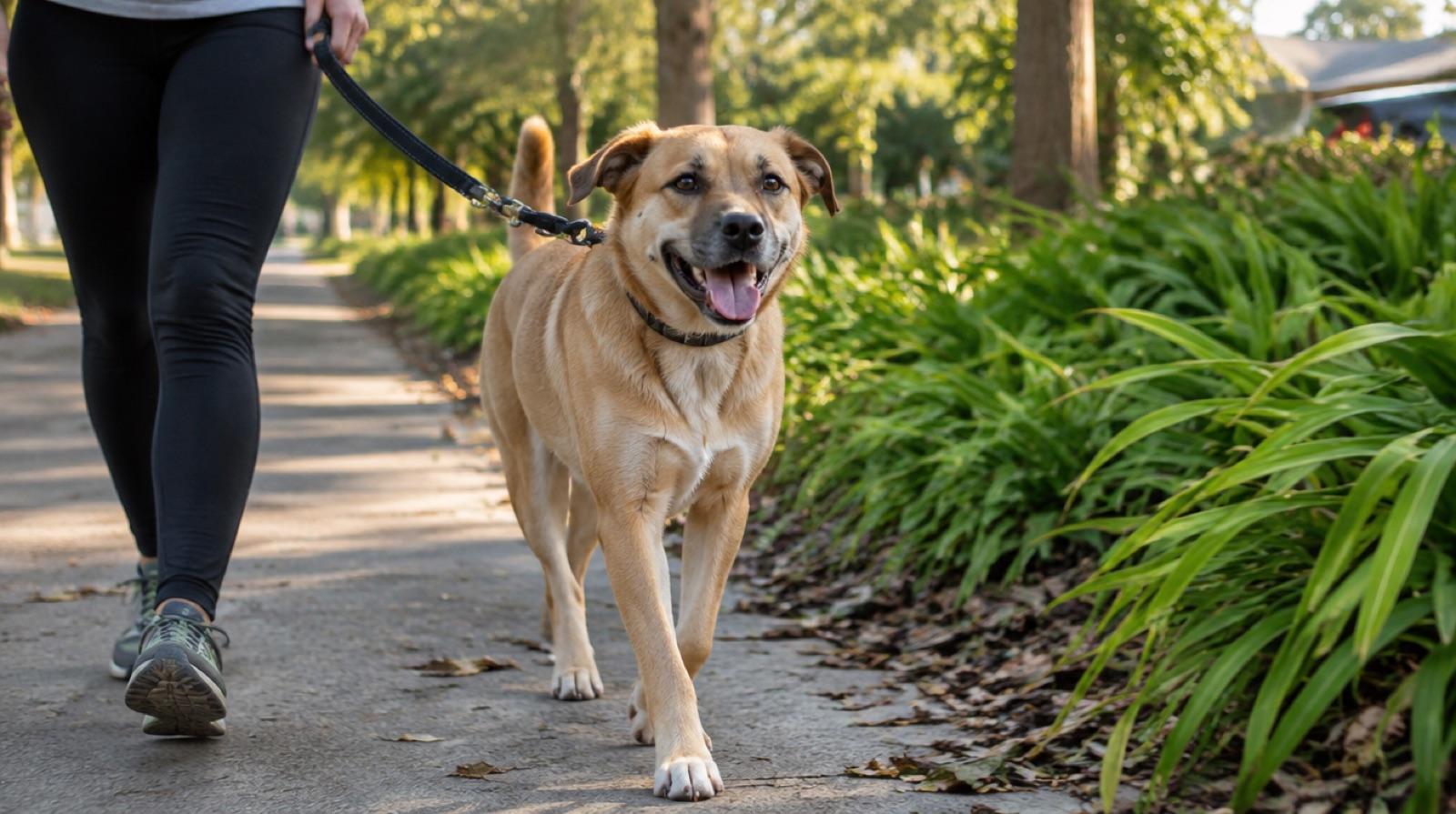
What counts as a medium sized dog?
Definitions vary, and no Australian authority sets one. Dogs Australia sorts the breeds it recognises into seven groups (Toys, Terriers, Gundogs, Hounds, Working Dogs, Utility and Non Sporting) by type, and only the Toys group is really about size. A large 2024 lifespan study of UK dogs (McMillan and colleagues) took its small, medium and large classes from Kennel Club and FCI listings and did not publish kilogram cut-offs.
The breed standards use the word loosely too. The Siberian Husky standard calls a 20 to 27 kg dog “a medium-sized working dog”, the Hungarian Vizsla standard calls a dog of up to 64 cm “medium sized”, and the Boxer standard describes a 30 kg dog as “medium sized”.
So here is the line this guide, and our listings, use: small is roughly under 12 kg and large roughly 25 kg or more, and medium is everything in between. In practice that is mostly dogs of about 35 to 55 cm at the shoulder (the withers). It is a working definition, not an official one, and the most useful question is less “what size is it?” than “how much does it need?”
Which breeds are medium sized?
These breeds fall in the medium range by their Dogs Australia standard sizes. Many standards set height only; where no weight is given, the table says so.
| Breed | Height (dogs / bitches) | Weight | Energy, from the standard |
|---|---|---|---|
| Australian Kelpie | 46 to 51 cm / 43 to 48 cm | Not set | Very high: “almost inexhaustible energy” |
| Australian Cattle Dog | 46 to 51 cm / 43 to 48 cm | Not set | High: “Always alert, extremely intelligent, watchful” |
| Border Collie | 48 to 53 cm / 46 to 51 cm | Not set | Very high: “an instinctive tendency to work” |
| Australian Shepherd | 51 to 58.5 cm / 45.5 to 53.5 cm | Not set | High: “strong herding and guarding instincts” |
| Staffordshire Bull Terrier | 36 to 41 cm | 13 to 17 kg / 11 to 15.4 kg | Moderate: “affectionate especially with children” |
| Beagle | 33 to 40 cm | Not set | Moderate to high, scent-driven: “a merry hound” |
| Cocker Spaniel | 39 to 41 cm / 38 to 39 cm | 13 to 14.5 kg | Moderate: “Gentle and affectionate, yet full of life” |
| English Springer Spaniel | About 51 cm | Not set | High: “Friendly, happy disposition, biddable” |
| Whippet | 47 to 51 cm / 44 to 47 cm | Not set | Low indoors, fast outdoors: “An ideal companion” |
| Brittany | 48 to 51 cm / 47 to 50 cm | Not set | High gundog: “sociable”, “mentally balanced” |
| Siberian Husky | 53.5 to 60 cm / 51 to 56 cm | 20 to 27 kg / 16 to 23 kg | Very high: bred to pull a light load over great distances |
| Samoyed | 51 to 56 cm / 46 to 51 cm | Not set | High: “full of action” |
| Schnauzer (Standard) | 48 cm / 46 cm (ideal) | Not set | Moderate |
| Soft Coated Wheaten Terrier | 46 to 49 cm | 16 to 20.5 kg | Moderate |
| Lagotto Romagnolo | 43 to 48 cm / 41 to 46 cm | 13 to 16 kg / 11 to 14 kg | Moderate to high |
| Shiba Inu | 39.5 cm / 36.5 cm | Not set | Moderate; its standard calls it a “small-sized dog” |
| Basenji | 43 cm / 40 cm (ideal) | 11 kg / 9.5 kg (ideal) | Moderate to high |
| Welsh Corgi (Pembroke) | 25 to 30 cm | 10 to 12 kg / 9 to 11 kg | Moderate: “alert and active” |
Source: Dogs Australia breed standards, checked 10 November 2026. Quotes are from each standard; “Moderate” without a quote is our summary where the standard says nothing about energy. A standard describes the breed ideal, not a promise about any one dog.
Notice the Corgi: short legs, medium weight. And at the top of the range, breeds such as the Labrador (55 to 57 cm) and the Boxer (about 28 to 30 kg) sit on the line between medium and large, which is why our big dog breeds guide covers them.
Which medium dogs suit a home with a yard?
The working breeds. Australia's own Kelpie and Cattle Dog and the Border Collie were bred to work stock all day, and their standards say so: “almost inexhaustible energy” for the Kelpie, “an instinctive tendency to work” for the Border Collie. A yard alone is not enough for these dogs. They need daily running, training and something to think about, and a bored working dog will dig, bark, or escape.
If you can give that, they are wonderful, loyal dogs. Read the breed guides first: Kelpie, Cattle Dog, Border Collie and Australian Shepherd. The Siberian Husky belongs here too: medium by its standard, with the exercise needs of a far bigger dog and a talent for leaving yards, which our Husky escape guide covers.
Which medium dogs suit an apartment?
Calm ones, more than small ones. The best apartment candidate in the medium range is often the Whippet, whose standard calls it “an ideal companion” that is “highly adaptable in domestic and sporting surroundings” and asks for a “gentle, affectionate, even disposition”. It needs a safe place to sprint and a warm bed, and little else. An adult Staffy or spaniel that a rescue describes as settled indoors can also suit unit life.
The breeds to think twice about are the high-drive working dogs above, and the Beagle, whose standard describes a scent hound bred to hunt. Whatever the breed, check your building's by-laws and your lease first; our renting with pets guide explains the rules state by state, and the best apartment dogs guide covers the breeds in more depth.
Which medium dogs suit families with children?
Medium dogs are a popular family size: sturdy enough to cope with children, not so big they bowl them over. A few breed standards describe a family-friendly nature directly:
- Staffordshire Bull Terrier: the standard calls it “highly intelligent and affectionate especially with children”. Staffies are not a restricted breed anywhere in Australia, a point often confused. See our Staffy guide.
- Beagle: “amiable and alert, showing no aggression or timidity” (standard), but a nose that leads it under fences. See our Beagle guide.
- Cocker Spaniel: “gentle and affectionate, yet full of life and exuberance” (standard). See our Cocker Spaniel guide.
- English Springer Spaniel: “friendly, happy disposition, biddable” (standard), with a working gundog's energy.
A standard describes the breed ideal, not the dog in front of you. Ask a rescue how a particular dog has been with children in foster care, and supervise young children with any dog. Our best family dogs guide and the good with kids listings go further.
Do medium dogs live longer than big dogs?
Yes, on average, and the bigger lesson is about face shape. In the 2024 UK study (McMillan and colleagues), median lifespans were 12.7 years for small purebreds, 12.5 for medium and 11.9 for large. But flat-faced medium purebreds, a group made up of a single breed in the study, had a median of only 9.4 years; the study found differences by face shape were most apparent among medium-sized dogs. The RSPCA Knowledgebase explains why: the breathing disorder common in flat-faced dogs is lifelong and often progressive, and these dogs struggle in heat.
So if you want a long-lived medium dog, pick one with a normal-length nose. Our healthiest dog breeds guide has the breed-by-breed figures and the health tests to ask a breeder for.
What medium dogs are in rescue?
Mostly crosses. Medium dogs in Australian rescue are often Staffy and bull-breed crosses, Kelpie and Cattle Dog crosses, and Border Collie mixes.
That is good news if you want a medium dog. An adult cross has its final size already, and its energy and temperament are known to the foster carer. The RSPCA Knowledgebase notes RSPCA animals are vaccinated, wormed, microchipped and desexed as appropriate before adoption, and most rescues do the same. Our guide to working out a rescue dog's breed explains what a mix label really tells you.
Our listings do not have a separate medium dogs page. Open the city listing page and tick Medium in the Size filter, or browse the neighbouring sizes: small dogs (roughly under 12 kg) and large dogs (roughly 25 kg or more). The mixed breed listings are full of medium dogs too.
Buying from a breeder is a reasonable choice if you need a particular breed, for example a low-shedding coat for allergies or a dog for herding trials. If so, use a breeder registered with Dogs Australia through their state body (Dogs Australia's breeder advice is a good start), and read our puppies for sale guide for state breeder rules and scam warnings.
How do you choose the right medium dog?
Start with energy, then coat, then size:
- Energy: be honest about how much exercise and training you will give every day, not on a good weekend. Low-energy households suit a Whippet or a settled adult cross; active ones can take on a Kelpie or Border Collie. Our calm dog breeds and easiest dogs to train guides help.
- Coat: short coats shed but need little grooming; curly coats such as the Lagotto or a Poodle cross need regular clipping, and RSPCA South Australia lists the Schnauzer and Soft-coated Wheaten Terrier among breeds that hardly shed. See dogs that don't shed.
- Cost: a medium dog costs less to feed and medicate than a big one. Animal Medicines Australia estimated dog-owning households spent about $2,520 a year on average in its 2025 survey, across all sizes; that is a reference figure, not a quote. Try the dog cost calculator.
- First dog? Read dogs for first-time owners and take the adoption readiness check, or the what dog breed am I quiz.
Find a medium dog near you
Open your city's listings and choose Medium in the Size filter. Dogs from the shelters and rescues we aggregate, refreshed regularly.
Prefer a size-specific list? See small dogs or large dogs in Sydney.
Frequently asked questions
What is a medium sized dog?▼
There is no official definition, and sources draw the line in different places. Dogs Australia does not sort breeds by size, and a large 2024 lifespan study used Kennel Club and FCI size classes without stating kilogram cut-offs. On our listing pages, small means roughly under 12 kg and large roughly 25 kg or more, so medium is the dogs in between. That is our working line, not an official one.
What are the most popular medium sized dog breeds in Australia?▼
Among the medium breeds most familiar to Australians are the Australian Kelpie, Australian Cattle Dog, Border Collie, Staffordshire Bull Terrier, Beagle and Cocker Spaniel. We have not found a published ranking of medium breeds by popularity in Australia, so treat this as a list of common breeds rather than a league table.
How tall is a medium sized dog?▼
Most breeds people call medium stand about 35 to 55 cm at the shoulder under their Dogs Australia standards. For example, the Staffordshire Bull Terrier is 36 to 41 cm, the Cocker Spaniel 38 to 41 cm, the Kelpie and Cattle Dog 43 to 51 cm, and the Border Collie 46 to 53 cm. Height and weight do not always line up: the Pembroke Welsh Corgi is only 25 to 30 cm tall but weighs 9 to 12 kg.
Which medium sized dogs are good for apartments?▼
Calm, quiet medium dogs with modest exercise needs suit apartments best, and the Whippet is a common example: its Dogs Australia standard calls it 'an ideal companion' and 'highly adaptable in domestic and sporting surroundings'. High-drive working breeds such as the Kelpie, whose standard mentions 'almost inexhaustible energy', are usually a poor fit for a unit. Check your strata by-laws before you apply.
Which medium sized dogs are good with kids?▼
Several medium breed standards describe a family-friendly temperament. The Staffordshire Bull Terrier standard calls the breed 'highly intelligent and affectionate especially with children', the Beagle is 'amiable', and the Cocker Spaniel 'gentle and affectionate'. A standard describes the breed ideal, so ask the rescue how the individual dog has been with children, and always supervise young children with any dog.
What is a good medium sized dog that doesn't shed?▼
No dog is truly non-shedding. RSPCA South Australia lists the Soft-coated Wheaten Terrier and the Schnauzer among breeds that hardly shed, and the Lagotto Romagnolo has a coat of woolly curls under its Dogs Australia standard. Low-shedding coats need regular clipping and brushing instead. Our dogs that don't shed and hypoallergenic dogs guides cover allergy facts from the Australasian Society of Clinical Immunology and Allergy.
Do medium sized dogs live longer than big dogs?▼
Yes, on average. In a 2024 study of UK dogs (McMillan and colleagues, Scientific Reports), median lifespans were 12.7 years for small purebreds, 12.5 for medium and 11.9 for large. Face shape made the biggest difference within the medium group: flat-faced medium purebreds (a group made up of a single breed in the study) had a median of just 9.4 years, so a medium dog with a normal-length nose is the safer bet.
Is a Kelpie or Border Collie a good medium dog for a family?▼
For an active family that will give it a job, yes; for a quiet household, often not. The Kelpie standard describes 'almost inexhaustible energy' and the Border Collie standard 'an instinctive tendency to work'. These dogs need daily running, training and mental work.
Is a Husky a medium sized dog?▼
Yes, by its own standard. The Dogs Australia Siberian Husky standard calls it 'a medium-sized working dog', with males 53.5 to 60 cm and 20 to 27 kg and females 51 to 56 cm and 16 to 23 kg. It is a demanding dog for its size, with high exercise needs and a reputation for escaping yards.
Are medium dogs cheaper to keep than large dogs?▼
Usually, because food and many vet medicines scale with body weight. We could not find a published Australian cost figure split by dog size. Animal Medicines Australia's 2025 survey estimated dog-owning households spent about $2,520 a year on average across all dog sizes; that is a reference average from September 2025, not a quote. The dog cost calculator gives an estimate for your situation.
Where can I adopt a medium sized dog?▼
Use the size filter on our city listing pages and choose Medium. Medium dogs are the middle of the market in rescue: Staffy crosses, Kelpie and Cattle Dog crosses and Border Collie mixes are listed by shelters and rescues across Australia. Listings are refreshed regularly, and most rescue dogs come desexed, vaccinated, microchipped and vet checked.
Sources
- Dogs Australia (breed standards for each breed named in the tables)
- Dogs Australia: Siberian Husky breed standard
- Dogs Australia: Boxer breed standard
- Dogs Australia: Hungarian Vizsla breed standard
- Dogs Australia: Staffordshire Bull Terrier breed standard
- Dogs Australia: Australian Kelpie breed standard
- Dogs Australia: Border Collie breed standard
- Dogs Australia: Australian Cattle Dog breed standard
- Dogs Australia: Whippet breed standard
- Dogs Australia: Beagle breed standard
- Dogs Australia: Cocker Spaniel breed standard
- Dogs Australia: English Springer Spaniel breed standard
- Dogs Australia: Welsh Corgi (Pembroke) breed standard
- Dogs Australia: Choosing a breeder
- McMillan et al. (2024), Longevity of companion dog breeds: those at risk from early death, Scientific Reports
- RSPCA Australia Knowledgebase: What do I need to know about brachycephalic dogs?
- RSPCA South Australia: Pets for people with allergies
- RSPCA Australia Knowledgebase: Where should I go for a new companion animal?
- Animal Medicines Australia: Pets in Australia 2025 media release
Keep reading
Big dog breeds
Large and giant breeds with their standard sizes, costs and health risks.
Best family dogs
The breeds and rescue dogs that suit homes with children.
Best apartment dogs
Calm dogs that cope with units, and how strata rules work.
What dog breed am I?
A quick quiz that matches your lifestyle to a breed type.