The short answer
If it has to be a Dogue de Bordeaux puppy, buy from a Dogs Australia registered breeder who shows you hip, elbow and heart results for both parents, as Dogs Australia's breed profile and the Dogue de Bordeaux Club of Australia recommend. None of the breeder or club websites we read in November 2026 published a price we could show was current, so ask each breeder. If you are open to an adult or a mastiff cross, adopt: rescues charge their standard fee, for example $500 for an adult dog at RSPCA NSW, read on 12 November 2026; that is a reference, not a quote, and fees change, so check with the rescue. Either way, plan for a short life: Dogs Victoria gives an average of 6 to 8 years.
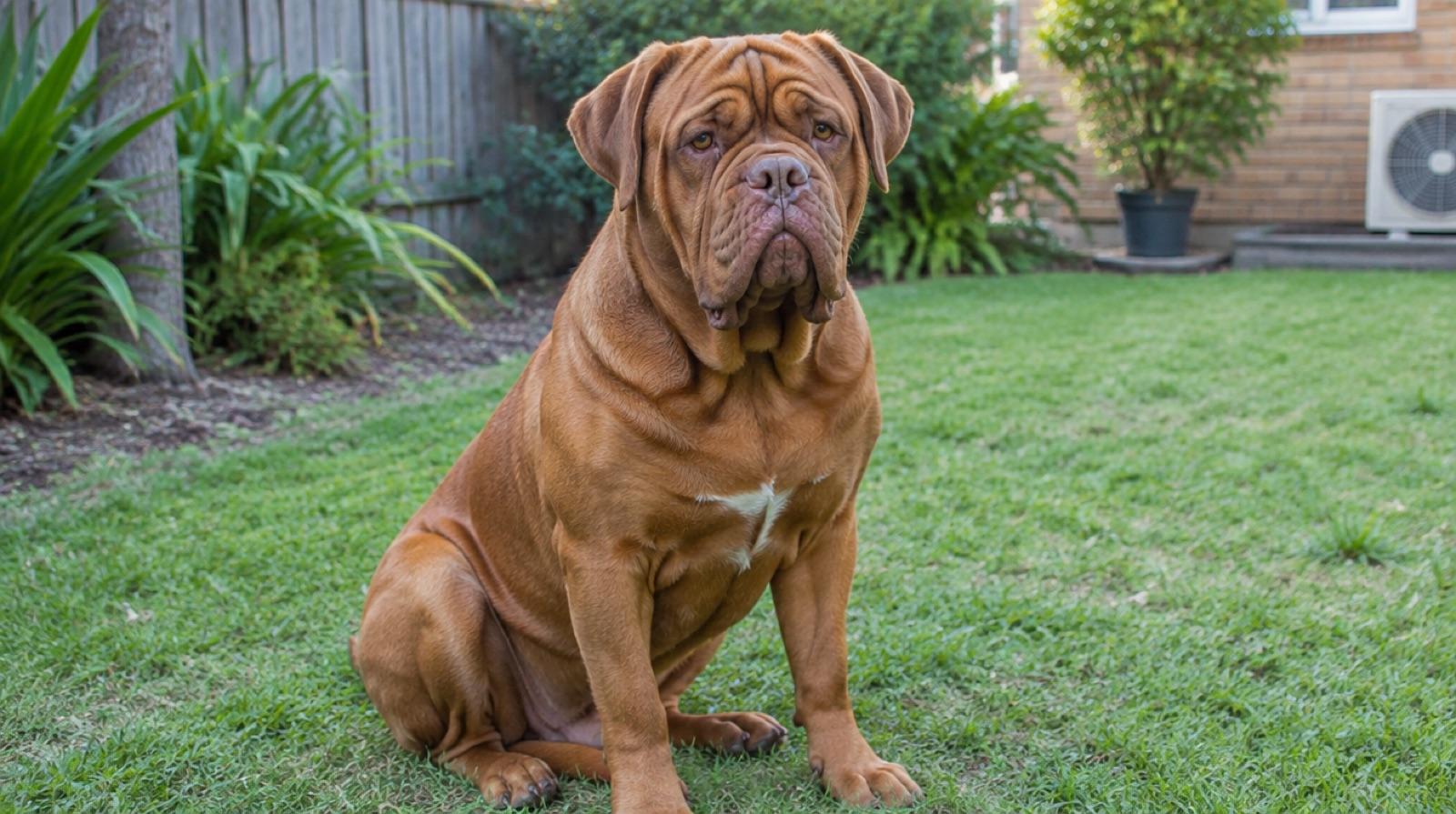
Should you adopt or buy a Dogue de Bordeaux?
It depends on whether it has to be a Dogue puppy, and on how carefully the breeder tests. Dogs Australia's Dogue de Bordeaux profile says the breed comes from a small gene pool and, as such, suffers a number of heritable disorders, and that breeding animals should be hip, elbow and heart certified by relevant specialists. The Dogue de Bordeaux Club of Australia strongly recommends buying only from health tested parents, and if possible grandparents.
So if you buy, buy from a registered breeder who can show you those results. If what you want is a big, loyal, calm house dog, adult mastiff types and crosses are listed by rescues and pounds, and an adult comes with a known size, breathing, drool level and temperament. Our guide to adopting a dog in Australia covers the rescue process step by step.
| Route | Reference cost | What you usually get | Main risk |
|---|---|---|---|
| Dogs Australia registered breeder | No breeder or club website we read published a current price (November 2026); ask each one | A pedigree puppy, ideally from hip, elbow and heart tested parents | Testing varies between breeders, so ask to see certificates |
| General rescue or council pound | The standard fee, for example $500 for an adult dog at RSPCA NSW | Dogues, mastiff types and crosses when listed, desexed, microchipped and vaccinated | A listing's breed label may be a best guess; health history may be unknown |
| Online ad with no checkable breeder | Anything | Untested parents, a cross sold as purebred, or a puppy that does not exist | Heart and joint problems, scams |
Reference only, not quotes. The RSPCA NSW fee was read on 12 November 2026. Breeders and rescues set their own prices and change them, so check with them.
What is a Dogue de Bordeaux like?
The Dogs Australia breed standard (adopted in Australia in October 1995 from FCI Standard No 116; country of origin France) describes a “Typical concave lined brachycephalic mollossoid”, meaning a short-headed mastiff type, that is “Stocky, athletic, imposing”. On temperament it says the breed is “gifted for guarding, which he assumes with vigilance and great courage, but without aggressiveness. A good companion, very attached to his master and very affectionate. Calm, balanced with a high stimulus threshold. The male normally has a dominant character.”
| Trait | What the source says |
|---|---|
| Size | Dogs 60 to 68 cm and at least 50 kg; bitches 58 to 66 cm and at least 45 kg (breed standard) |
| Colour | Self-coloured, all shades of fawn from mahogany to Isabella; limited white patches permissible on the chest and the extremities of the limbs (breed standard) |
| Coat | Fine, short and soft (breed standard); a weekly brush (Dogs Victoria) |
| Head and bite | Muzzle between one quarter and one third of the head; undershot bite is a breed characteristic (breed standard) |
| Activity | Only moderately active, but enjoy water (Dogs Australia profile); up to 1 hour of exercise a day (Royal Kennel Club) |
| Home | Most suited to being an inside dog; you will need to cope with slobber (Dogs Australia profile) |
| Experience | May not be suitable for an inexperienced dog owner (Dogs Victoria) |
Sources: Dogs Australia breed standard, Dogs Australia breed profile, Dogs Victoria and the Royal Kennel Club, read 12 November 2026.
Dogs Australia's profile adds that puppies should be well socialised from the earliest occasion after their final vaccination, and that the breed is excellent with other animals given early exposure. It is a different breed from the Mastiff and Bullmastiff, each with its own standard; our Mastiff guide compares all four mastiff breeds side by side, and our Cane Corso guide covers the Italian one.
Which health tests should a Dogue de Bordeaux breeder show you?
Hips, elbows and heart for both parents. Dogs Australia's profile lists the heritable problems: hip and elbow dysplasia; osteochondritis dissecans (OCD), most often of the shoulder; subaortic stenosis (SAS), which it calls a common heritable heart condition in the breed; brachycephalic obstructive airway syndrome, for which breeders should select clean-breathing dogs; allergic skin conditions and demodectic mange; and bloat. It says footpad hyperkeratosis has a genetic test but does not appear to be common in Australian Dogues. Dogs Victoria lists hip dysplasia, elbow dysplasia, heart disease and bloat.
| Check | Who asks for it | What to ask for |
|---|---|---|
| Hip score | Dogs Australia profile; breed club (no unscored dog bred); Royal Kennel Club (good practice); Dogs NZ (mandatory) | Both parents' scores; the club recommends the two parents' scores add up to no more than 25 |
| Elbow grade | Dogs Australia profile; breed club; Royal Kennel Club (good practice); Dogs NZ (mandatory) | Both parents' grades; the club says a grade 3 dog should not be bred from |
| Heart | Dogs Australia profile; breed club; Dogs NZ (yearly cardiac certificate, mandatory) | An echocardiogram certificate from a specialist veterinary cardiologist, done at 12 months or older |
| Eyes | Royal Kennel Club (good practice); Dogs NZ (optional) | A recent eye certificate |
| Breathing | Dogs Australia profile (select clean-breathing dogs) | Watch both parents at rest and after a walk; noisy breathing is a question to ask |
| DNA tests | Breed club (DM, CMR1 and HFH-B tests exist, all rarely seen in the breed); Dogs NZ (DNA profile mandatory) | Which tests the parents have had, and the results |
Sources: Dogs Australia, Dogs Victoria, the Dogue de Bordeaux Club of Australia's health, HD / ED and heart testing pages, the Royal Kennel Club and Dogs New Zealand, read 12 November 2026. This is a buying checklist, not veterinary advice.
The club's heart testing page is blunt: it says heart disease is sadly widespread in the breed, that subaortic stenosis and dilated cardiomyopathy are among the leading causes of death in Dogues, and that puppy buyers should not buy from breeders who are not heart testing. It says a puppy can appear clear of a murmur and still show disease as it grows, and that dogs need to be at least 12 months old for accurate testing. The club's HD / ED page gives a five-year breed average hip score of 16.52 and a median of 14.00 as of June 2021, so a parent's score means more when you can compare it with those figures.
Bloat is the emergency to know. Cornell University's College of Veterinary Medicine says gastric dilatation-volvulus (GDV) is a life-threatening condition that occurs suddenly and that large, deep-chested dogs are most at risk. If your dog retches with nothing coming up, has a swollen belly or is restless and drooling more than usual, call or go to your nearest vet now. Our dog bloat (GDV) guide covers the signs.
How long do Dogues de Bordeaux live?
Not long, and this is the hardest part of the breed. Dogs Victoria gives an average life span of 6 to 8 years. Two Royal Veterinary College studies of UK vet records point the same way:
| Study | Population | Dogues that died | Median age at death |
|---|---|---|---|
| O'Neill and others, 2013 (The Veterinary Journal) | 102,609 dogs at 86 vet practices in central and south-east England, 2009 to 2011 | 21 | 5.5 years, the shortest of the breeds reported |
| O'Neill and others, 2026 (Companion Animal Health and Genetics) | Giant-breed dogs under UK first-opinion vet care in 2019 | 229 | 7.71 years |
Both are UK populations, read 12 November 2026. In the 2026 study the Dogue de Bordeaux was the most common giant breed, and across all 1,068 giant-breed dogs that died, the median age at death was 8.94 years.
For an adopter, that cuts both ways. A puppy gives you the most years with the dog, and a breeder who heart tests gives you the best odds. An adult from rescue gives you fewer years, but with its health and nature already known. Our senior dog adoption guide covers what to expect from an older dog.
Can a Dogue de Bordeaux cope with an Australian summer?
Constant panting, rapid breathing, pale or red gums, drooling, vomiting, weakness or collapse on a hot day can be heatstroke, which the RSPCA calls a life-threatening emergency. Start cooling the dog with room-temperature or cool water and get to a vet immediately.
Only with real planning. Dogs Victoria says the breed is susceptible to heat stress on hot days. Dogs Australia's profile says that, with high muscle mass and a shortened muzzle, Dogues need to be able to seek a cool area in our hot weather, such as air-conditioning or bathroom tiles, and that owners should keep them lean because excess weight makes it harder to keep cool. The RSPCA Knowledgebase says flat-faced breeds have a reduced capacity to cool down by panting, and advises exercising at the coolest times of day, avoiding hot ground, giving shade, airflow and water at all times, and never leaving a dog in a car. Our dogs in hot weather guide has the full picture.
See the big dogs listed right now
Large dogs, including Dogues, mastiff types and crosses when they are listed, from the rescues, shelters and council pounds we aggregate. Numbers change daily; every listing links to the rescue, where you apply directly.
How much is a Dogue de Bordeaux puppy from a registered breeder?
We quote no breeder price, because we found none we could show was current. In November 2026 we read the own websites of Australian Dogue de Bordeaux breeders and the Dogue de Bordeaux Club of Australia site, leaving out classified and listing sites. Most published no price. One breeder website did show a price, but on a page headed with a 2022 litter that we could not show was current in 2026, so we left it out. The club publishes no guide price.
Ask for the price in writing and compare what it includes: the parents' hip, elbow and heart certificates, a vet check, vaccination and microchip, whether the puppy is on the Limited or Main Register, a written contract, and whether the breeder will take the dog back. The dog cost calculator gives a first-year budget for a giant dog beyond the purchase.
The club's guide to what to expect from a responsible breeder says to expect an application form and questions, a possible wait for a future litter, not choosing your own puppy straight away, and a signed contract. It also says that only the kennels listed on its members page are club members, so check a claimed membership there.
Survey of breeders' own websites, November 2026. Prices change; check with the breeder.
What do Dogues de Bordeaux in rescue look like?
A rescue dog listed as a Dogue or a “mastiff” may be a purebred or a cross, so read the listing and meet the dog. Ask the rescue how the dog is with strangers, other dogs and children, how it copes with heat and exercise, and what its vet check found about its heart, joints and breathing. Numbers change daily, so check the live large-dog listings: Sydney, Melbourne, Brisbane, Perth, Adelaide.
The Dogue de Bordeaux Club of Australia's site also has an older dog notices page, where club members list older dogs that need homes; the club says to contact members directly to check.
What does a rescue Dogue cost?
| Rescue | Fee as published | Read |
|---|---|---|
| RSPCA NSW, dog over 12 months | $500 | 12 Nov 2026 |
| RSPCA NSW, puppy under 12 months | $620 | 12 Nov 2026 |
Reference only, not a quote. These are the fees RSPCA NSW published on the date shown; fees change and other rescues set their own, so check with the rescue. RSPCA NSW says its fees ensure pets are desexed, microchipped, vaccinated and health-checked.
How do Dogue de Bordeaux puppy scams work?
Never pay for a Dogue de Bordeaux puppy you have not seen with its mother, in person or on a live video call. A seller who wants money first and will only email or text matches the warning signs the Queensland Government lists.
The Queensland Government's puppy farm page lists low prices for popular or pedigree breeds, being asked for payment before you have met the puppy, a breeder who cannot give a valid breeder identification number (BIN), and a seller who only communicates by email or text. Scamwatch warns about unbelievably low prices, being told to pay in unusual ways such as money order or pre-loaded card, and paying for big-ticket items before inspecting them in person. Watch for these in Dogue ads:
- No heart test. The breed club says buyers should not buy from breeders who are not heart testing. “The vet listened and it was fine” is not an echocardiogram.
- No hip or elbow scores. The club says no unscored dog should be bred from.
- A membership you cannot check. Check a Dogs Australia membership with the state body yourself, and a club membership on the club's members page.
- The wrong colour. The standard lists any coat colour other than fawn, and white on the head or body, as disqualifying faults. A black, brindle or patched puppy sold as a purebred Dogue does not meet the standard; ask what it really is.
Our guide to puppies for sale in Australia has the state-by-state table of breeder numbers and what to do if you have already paid.
Is a Dogue de Bordeaux restricted anywhere in Australia?
No state or territory restricted or prohibited breed list names the Dogue de Bordeaux, but a council officer can still assess an individual dog. The breeds named in state law are the American Pit Bull Terrier, Japanese Tosa, Dogo Argentino, Fila Brasileiro and Perro de Presa Canario; the ACT has no restricted breeds, and the Northern Territory has no territory-wide list, so check with your council. Early training and socialisation of a dog this strong matter for legal as well as practical reasons. Our Staffy vs pit bull guide has the state-by-state law in full, and best guard dogs in Australia covers the guardian breeds honestly.
When is a registered breeder the better choice?
Rescue is not right for everyone. A registered breeder makes sense if you want a Dogue puppy from heart, hip and elbow tested parents, if you want to show, or if you have watched the rescue listings for months and no adult has suited your home. Check these before you pay:
- Registration. Check the membership number with Dogs Australia or your state body, and your state's breeder number on the official register.
- Certificates for both parents: hips, elbows and a specialist heart test at the least.
- The parents themselves. Meet the mother, and watch how both parents breathe and move.
- Questions about you. The club says to expect an application and questions; a breeder who asks nothing is a warning.
- A written contract covering health, papers and whether the breeder will take the dog back if you cannot keep it.
Is a Dogue de Bordeaux the right dog for you?
The appeal is real. Dogs Australia's profile says the Dogue forms a strong bond with its family, is a natural guardian that can make an excellent family dog with a particular patience and love of children, and keeps something of a puppy-like nature even in old age. But it drools, struggles in heat, needs an experienced owner according to Dogs Victoria, and may give you only six to eight years.
Not sure? Try the what dog breed is right for me quiz and the adoption readiness check, and read big dog breeds and the giant-breed ownership guide on space, drool and running costs.
Find a Dogue de Bordeaux or mastiff type near you
Large dogs listed by rescues, by city, including Dogues and mastiff crosses when any are listed:
- Large dogs for adoption in Sydney
- Large dogs for adoption in Melbourne
- Large dogs for adoption in Brisbane
- Large dogs for adoption in Perth
- Large dogs for adoption in Adelaide
You can also browse the Mastiff and Bullmastiff breed pages, which include mastiff crosses listed by rescues.
Weighing up other giant breeds? Our Mastiff, Bullmastiff, Cane Corso, Great Dane, Newfoundland and Great Pyrenees guides cover the same questions.
Frequently asked questions
Should I adopt or buy a Dogue de Bordeaux?▼
Buy from a Dogs Australia registered breeder if it has to be a Dogue de Bordeaux puppy, and only one who shows you hip, elbow and heart results for both parents. Adopt if you are open to an adult or a mastiff cross: an adult's size, breathing, drool and temperament are already known. Either way, the breed's short average life is the biggest thing to weigh.
How much is a Dogue de Bordeaux puppy in Australia?▼
We have no current published figure to quote. In November 2026 we read the own websites of Australian Dogue de Bordeaux breeders and the Dogue de Bordeaux Club of Australia, and none published a price we could show was current in 2026. Prices on classified and listing sites are left out because we cannot check who is selling. Ask each breeder for the price in writing and what it includes.
How long do Dogues de Bordeaux live?▼
Often under 8 years. Dogs Victoria gives an average life span of 6 to 8 years. In a study of dogs at 86 English vet practices (O'Neill and colleagues, 2013), the 21 Dogues de Bordeaux that died had a median age at death of 5.5 years, the shortest of the breeds reported. In a larger 2026 UK study of giant breeds, the 229 Dogues de Bordeaux that died had a median age at death of 7.71 years.
What health tests should a Dogue de Bordeaux breeder show me?▼
Hip, elbow and heart results for both parents. Dogs Australia's breed profile says breeding animals should be hip, elbow and heart certified by relevant specialists. The Dogue de Bordeaux Club of Australia says heart testing must be done by a registered specialist in veterinary cardiology, on a dog at least 12 months old, and that no unscored dog should be bred from. Dogs New Zealand makes hips, elbows, a DNA profile and a yearly cardiac certificate mandatory for accredited breeders.
What health problems does the Dogue de Bordeaux have?▼
Dogs Australia's breed profile says the breed comes from a small gene pool and suffers a number of heritable disorders: hip and elbow dysplasia, osteochondritis dissecans, subaortic stenosis (a heart condition), breathing problems linked to its short muzzle, allergic skin disease, demodectic mange and bloat. Talk to your vet about what to watch for.
How big does a Dogue de Bordeaux get?▼
Big and heavy. The Dogs Australia breed standard sets dogs at 60 to 68 cm at the withers and at least 50 kg, and bitches at 58 to 66 cm and at least 45 kg. The coat is short and fawn, in shades from mahogany to Isabella.
Is a Dogue de Bordeaux a good family dog?▼
It can be, with an experienced owner. The breed standard describes a good companion, very attached and very affectionate, calm and balanced, gifted for guarding but without aggressiveness. Dogs Australia's profile says Dogues can make excellent family dogs with a particular patience with children, while Dogs Victoria says the breed may not suit an inexperienced owner. Supervise children with any dog this size.
Is the Dogue de Bordeaux restricted in Australia?▼
No state or territory restricted or prohibited breed list names the Dogue de Bordeaux, but a council officer can still assess an individual dog. The breeds named in state law are the American Pit Bull Terrier, Japanese Tosa, Dogo Argentino, Fila Brasileiro and Perro de Presa Canario; the ACT has no restricted breeds, and the Northern Territory has no territory-wide list, so check with your council.
Can a Dogue de Bordeaux handle the Australian heat?▼
Not well without help. Dogs Victoria says the breed is susceptible to heat stress, and Dogs Australia's profile says Dogues need somewhere cool in hot weather, such as air-conditioning or bathroom tiles. The RSPCA says flat-faced breeds have a reduced capacity to cool down by panting. Walk early or late, keep the dog lean, and never leave it in a car.
Is a Dogue de Bordeaux the same as a Mastiff or Bullmastiff?▼
No. Dogs Australia has a separate standard for each. The Dogue de Bordeaux is a French breed, self-coloured fawn, with an undershot bite and a muzzle at most one third of the head. The Mastiff asks for apricot, fawn or brindle, and the Bullmastiff any shade of brindle, fawn or red.
How much does it cost to adopt a Dogue de Bordeaux?▼
You pay the rescue's standard fee. RSPCA NSW listed $620 for a puppy under 12 months and $500 for a dog over 12 months when we read its fee page on 12 November 2026. That is a reference, not a quote; fees change and other rescues set their own, so check with the rescue.
How do I avoid Dogue de Bordeaux puppy scams?▼
Do not pay for a puppy before you have met it with its mother, in person or on a live video call, and ask to see the parents' hip, elbow and heart certificates. The Queensland Government lists low prices for pedigree breeds, payment before meeting the puppy, no valid breeder identification number and email-only sellers as warning signs.
Sources
- Dogs Australia: Dogue de Bordeaux breed standard (last updated 1 January 2009)
- Dogs Australia: Dogue de Bordeaux breed profile
- Dogs Victoria: Dogue de Bordeaux
- Dogue de Bordeaux Club of Australia: Health
- Dogue de Bordeaux Club of Australia: HD / ED recommendations
- Dogue de Bordeaux Club of Australia: Heart testing
- Royal Kennel Club (UK): Dogue de Bordeaux breed page and health tests
- Dogs New Zealand: Accredited breeder health tests for the Dogue de Bordeaux
- O'Neill and others (2013), Longevity and mortality of owned dogs in England, The Veterinary Journal
- O'Neill and others (2026), Giant dog breeds under primary veterinary care in the UK, Companion Animal Health and Genetics
- Cornell University College of Veterinary Medicine: Gastric dilatation-volvulus
- RSPCA Australia Knowledgebase: How can I protect my dog from heatstroke?
- Queensland Government: Puppy farms
- Scamwatch: Buying and selling scams
- RSPCA NSW: Adoption fees
Keep reading
Large dogs listed by rescues
Big dogs, including mastiff types and crosses, listed right now by the rescues and pounds we aggregate.
Mastiff: adopt or buy?
The English Mastiff, its health checks and its short life, side by side with its cousins.
Bullmastiff: adopt or buy?
Australian lifespan data, hip and elbow rules, and a published breeder price.
Puppies for sale: adopt or buy?
The breeder number each state requires, how to check it, and rescue puppy fees.