The short answer
Brush your dog's teeth daily if you can, using a toothpaste made for pets: the Australian Veterinary Association calls brushing the gold standard and says human toothpaste is toxic to pets. Dental diets and chews can help but do not replace brushing, and bones carry a risk of broken teeth. Have your dog's mouth checked at a yearly vet visit. Once tartar has built up, only a vet can clean below the gum line, and that needs a general anaesthetic; the AVA says anaesthesia-free cleaning is not appropriate. Vets set their own fees, so ask for a written estimate. Bad breath, red or bleeding gums and dropping food are signs to book a vet visit.
How common is dental disease in dogs?
Most dogs have some by the age of three. The RSPCA Knowledgebase calls dental disease the most common health condition affecting pets, with 80% of dogs and 70% of cats showing some level of it by three years of age. The Australian Veterinary Association puts it as four out of five dogs and cats over three, and says the disease often gets more severe with age.
The best large study gives a different-looking number for a good reason. O'Neill and colleagues (Journal of Small Animal Practice, 2021) studied a random sample of 22,333 dogs under primary vet care in the UK in 2016 and found that 12.52% were diagnosed with periodontal disease during that one year. That counts only dogs whose vet recorded the diagnosis in a single year, so it is lower than the “any sign by age three” figure, but it still made periodontal disease one of the most common diagnoses in dogs. The Royal Veterinary College adds that the risk rises rapidly as dogs age, and the University of Sydney's veterinary hospital lists periodontal disease and oral pain among the common conditions of senior dogs.
Why does dental disease matter?
The RSPCA explains the process. Plaque is a soft, sticky film of bacteria that coats the teeth and collects where teeth meet the gums. When minerals from saliva are deposited into plaque, it hardens into tartar (calculus), which bonds to the enamel and is hard to remove except during a professional clean. Periodontal disease is a bacterial infection that inflames the gums and eventually destroys the bone that supports the teeth, leading to tooth loss or extractions.
Two points from the RSPCA are worth holding onto. Periodontal disease is associated with serious health problems such as infections in the kidneys, heart and liver. And it is easily preventable, and reversible if treated in its early stages. The AVA adds why it is missed so often: pets with sore gums, infected mouths or broken teeth usually keep eating, and only part of the mouth is visible when a dog opens it.
What are the signs of dental disease in dogs?
The Australian Veterinary Association lists these signs in its owner guides Caring for your pet's teeth and Dental care for your pet. If you notice any of them, book a vet check.
- Smelly breath
- A build-up of discoloured material (tartar) on the teeth
- Swollen, red or bleeding gums
- Drooling or dropping food from the mouth
- Reluctance to eat harder foods, loss of appetite or weight loss
- Broken teeth
- Pus near the gums
On breath specifically, the RSPCA says dogs should have neutral-smelling breath and that dental disease is the most common cause of bad breath. It also notes that illness such as kidney disease and diabetes, and diet or food allergies, can cause it. So persistent bad breath needs a vet, not a breath spray.
Which dogs are most at risk?
Small dogs, and some particular breeds. In the O'Neill 2021 study, the odds of periodontal disease fell steadily as adult bodyweight rose, and the RVC summarises that dogs under 10 kg had about three times the risk of dogs weighing 30 to 40 kg. Eighteen breeds had higher odds than crossbreds.
| Group (O'Neill et al. 2021, 22,333 UK dogs) | Odds of periodontal disease |
|---|---|
| Toy Poodle | 3.97 times crossbreds |
| King Charles Spaniel | 2.63 times crossbreds |
| Greyhound | 2.58 times crossbreds |
| Cavalier King Charles Spaniel | 2.39 times crossbreds |
| Spaniel types | 1.63 times non-spaniels |
| Flat-faced (brachycephalic) breeds | 1.25 times medium-skulled breeds |
The Greyhound result matters in Australia, where many retired racing greyhounds are adopted. GAP Queensland, for example, includes a dental scale and polish in its adoption fee. If you adopt a greyhound or a small breed such as a Chihuahua, Maltese, Pomeranian or Dachshund, build the brushing habit from the first week.
How do I brush my dog's teeth?
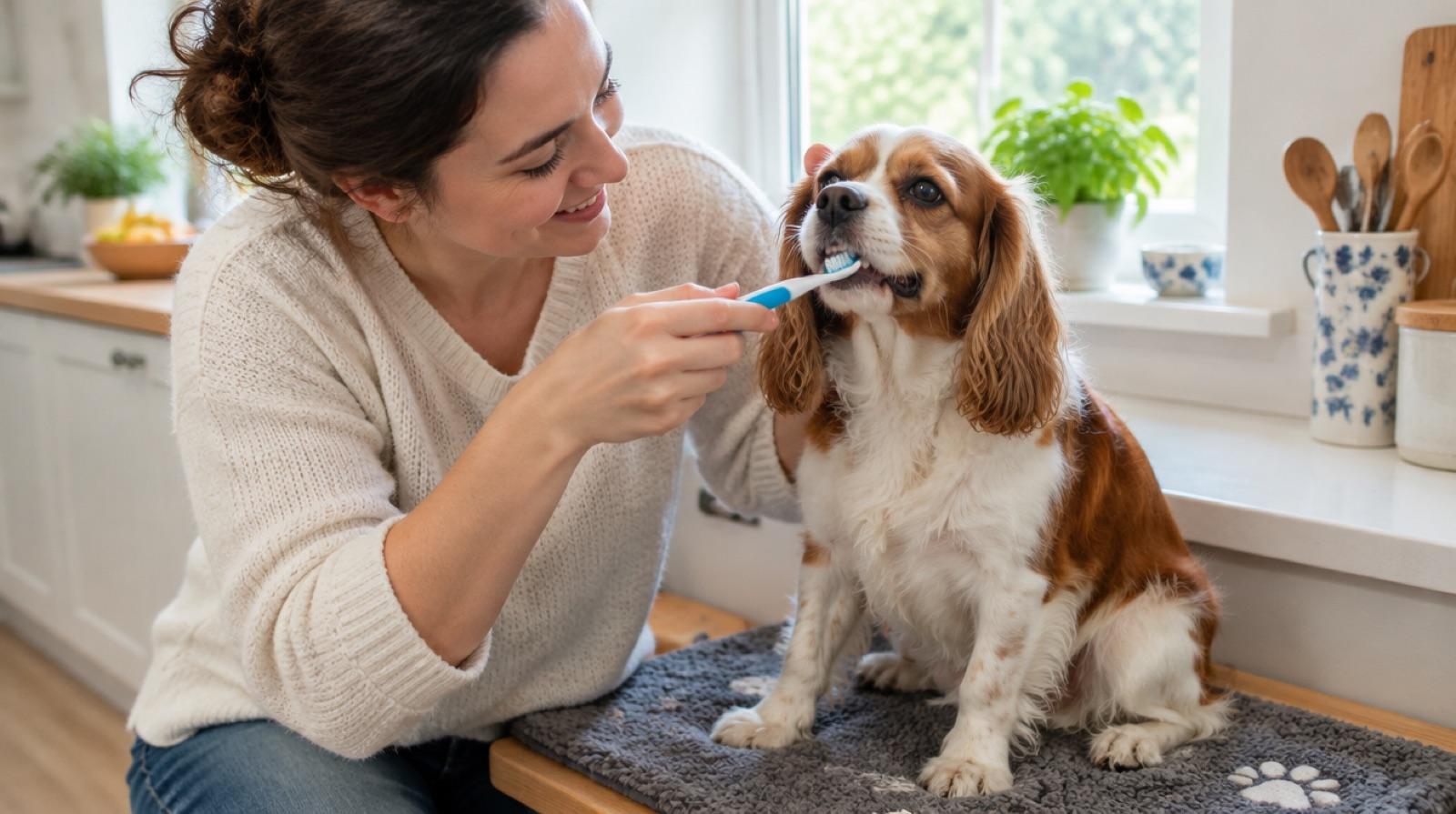
The Australian Veterinary Association calls brushing the gold standard of home care, and the RSPCA calls daily brushing the most effective way to promote good oral health in both cats and dogs. The AVA's Vet Voice site adds that brushing is safer and more effective than chewing. Here is what both bodies advise.
- Use pet products only. Use a toothbrush and toothpaste made for pets. The AVA says human toothpaste is toxic to pets.
- Ask for a demonstration. The AVA suggests asking your vet to show you how best to brush your dog's teeth, and the RSPCA suggests asking your vet when and how to start.
- Introduce it gradually. The RSPCA says brushing should be introduced gradually with the correct tools and technique, and that most animals get used to it. Keep early sessions short and pleasant, and build up over days and weeks.
- Start young if you can. The RSPCA says the younger your pet is when you start, the easier it is. A newly adopted adult dog can still learn; it just takes patience.
- Expect it to take time. The AVA says it can take a few months for a pet to get used to the idea.
- Aim for daily. The AVA recommends daily brushing and says a couple of times a week is better than no brushing at all.
Never force it. If your dog shows pain when you touch its mouth, stop and book a vet visit.
Do dental chews, dental diets and bones work?
They can help, but none of them does what brushing does, and the advice on bones differs between Australian bodies.
| Option | What RSPCA Australia says | What the AVA says |
|---|---|---|
| Dental diets | Special dental diets can help control plaque and tartar; ask your vet whether one suits your pet | Your vet can recommend a diet designed to clean the teeth as the pet chews; wet and soft diets are notorious for plaque and tartar build-up |
| Dental chews and toys | Can help reduce the formation of plaque and tartar, but will not prevent it; your vet can advise on effective products | Not every dental chew on the market is entirely safe, so ask your vet |
| Bones | Not recommended: they can break teeth and cause internal blockages, and raw bones carry bacteria; if offered, always raw and introduced gradually | Raw bones can help clean teeth but carry risks; feed raw only, supervised, never cooked, and discuss with your vet first |
Sources: RSPCA teeth care, RSPCA feeding guide, AVA Caring for your pet's teeth. Where the two bodies differ, your own vet, who has looked in your dog's mouth, is the right person to decide. A dog that gulps chews or bones instead of chewing them gets little dental benefit and more risk.
What happens at a professional dental clean?
Home care slows plaque. It cannot remove hardened tartar or treat disease below the gum line, and that is where the vet comes in. The RSPCA says all vets are trained in dentistry and can assess the teeth, probe the gum line for disease, scale and polish the teeth, take X-rays to check the tooth roots, and extract teeth if needed, and that board-certified specialist veterinary dentists perform advanced procedures. All of this is done under general anaesthetic.
The AVA says dogs with dental disease need a general anaesthetic so the vet can assess the teeth and clean thoroughly under the gum line, and that severely diseased, potentially painful teeth are generally removed. The RSPCA's teeth care page shows why X-rays matter, with images from the President of the Australian Veterinary Dental Society: a cat's tooth that looked relatively normal had extensive destruction of the root and crown that showed only on the X-ray.
On the anaesthetic itself, the RSPCA says modern anaesthetic agents used by vets are safe, anaesthetised animals are closely monitored and complications are rare, and that with adequate precautions and planning older pets and those with chronic diseases can undergo anaesthesia safely. If you are worried, ask your vet what pre-anaesthetic checks and monitoring they use for your dog.
Is anaesthesia-free dental cleaning a good idea?
No, according to every Australian vet body that has published on it. The Australian Veterinary Association's policy (ratified December 2016) says anaesthesia-free dentistry on dogs and cats is not appropriate, because comprehensive examination, diagnosis and treatment cannot properly proceed while an animal is conscious. Its reasoning:
- Periodontal disease, the most common disease in dogs and cats, needs cleaning below the gum line, which is uncomfortable or painful and cannot be done properly on an awake animal.
- Removing only the visible tartar leaves the root surfaces dirty, and the policy notes that bacteria left below the gum line may contribute to disease elsewhere in the body, such as heart or kidney disease.
- Dental X-rays need the animal to stay still, and probing needs it to be unable to feel pain.
- The practice compromises welfare and puts the operator at risk of injury.
- At best it is a purely cosmetic activity; at worst it can hide dental disease and delay treatment.
The RSPCA says anaesthesia-free dentistry involves physically restraining a conscious animal, is generally done by people not trained in dentistry, does not prevent or treat dental disease, and should be avoided. Internationally, the WSAVA Global Dental Guidelines describe it as ineffective at best and damaging at worst. If cost or fear of anaesthesia is the reason you are considering it, talk to your vet about both before choosing a cosmetic scrape.
How much does a dog dental clean cost in Australia?
Vets set their own fees, and most do not publish a price for dental work because the bill depends on what the vet finds under anaesthetic, including X-rays and any extractions. The most useful published reference we found is a charity hospital's consult fee, not a procedure price.
| Published item | Fee | Read |
|---|---|---|
| Lort Smith (Melbourne), weekday dental estimate consult | $98 ($83.30 with a Health Care or Pension Card) | 10 Nov 2026 |
| Lort Smith, Saturday dental estimate consult | $118 ($100.30 with a card) | 10 Nov 2026 |
| Lort Smith, reservation fee at booking a dental admission | $150 | 10 Nov 2026 |
| The dental procedure itself | Not published; Lort Smith says it cannot quote dental over the phone | 10 Nov 2026 |
Reference figures read on the clinic's own fee page, not a quote. Your vet's fees will differ; ask for a written estimate before booking.
Two things keep the bill down. Brushing and yearly checks catch disease while it is still reversible, before extractions are needed. And our guide to cheap vet care in Australia lists charity hospitals, concession discounts and payment plans. If you are buying pet insurance, read how the policy treats dental illness and routine dental care, and note that Moneysmart says most insurers exclude pre-existing conditions.
What about cats?
Briefly: the same rules apply. The RSPCA says 70% of cats show some dental disease by age three, recommends daily brushing introduced gradually for cats as well as dogs, and shows an X-ray of a feline resorptive lesion, a very painful condition that can hide under a normal-looking tooth. The AVA's anaesthesia-free dentistry policy covers cats too. If you are adopting a cat, see adopting a cat in Australia.
Adopting a dog: start the dental habit on day one
A newly adopted dog is the easiest time to start. Many rescues check teeth before adoption: the Animal Welfare League NSW says its adoption fee includes a health and dental check, and GAP Queensland includes a dental scale and polish for its greyhounds. Ask the rescue what was found and whether any dental work was done or recommended, then book your own vet visit in the first weeks and ask for a brushing demonstration while you are there.
Small and senior dogs are the groups the studies above flag for dental disease, so plan for it if you adopt one. Browse small dogs in Sydney, Melbourne, Brisbane, Perth and Adelaide, or senior dogs in Sydney and Melbourne. Our guides to adopting a dog and adopting a senior dog cover the rest, and the dog cost calculator helps you budget for vet care.
More Australian dog health guides
- Puppy and kitten vaccinations: core vaccines and the schedule.
- Paralysis ticks, snake bite and cane toads: the Australian emergencies.
- Dog bloat (GDV): the emergency for large, deep-chested breeds.
- Dachshund IVDD: back care for long-backed dogs.
- Crate training a puppy and dog separation anxiety: settling a new dog in.
Frequently asked questions
How common is dental disease in dogs?▼
Very common. The RSPCA Knowledgebase says 80% of dogs and 70% of cats show some level of dental disease by three years of age, and the Australian Veterinary Association says four out of five dogs and cats over three have some form of it. A Royal Veterinary College study of 22,333 UK dogs found 12.52% were diagnosed with periodontal disease by a vet in a single year, a lower figure because it counts only diagnoses recorded that year.
How often should I brush my dog's teeth?▼
Daily is ideal. The Australian Veterinary Association calls brushing the gold standard of home care and says a couple of times a week is still better than no brushing at all. Brushing works by removing soft plaque before it hardens into tartar, which only a professional clean can remove.
Can I use human toothpaste on my dog?▼
No. The Australian Veterinary Association says human toothpaste is toxic to pets and advises using only toothpaste and toothbrushes made for pets. Ask your vet or vet nurse which pet toothpaste and brush suit your dog.
My dog will not let me brush its teeth. What can I do?▼
Go slowly. The RSPCA says brushing should be introduced gradually with the right tools and technique, and that the younger a pet is when you start, the easier it is. The AVA says it can take a few months for a pet to get used to it, and suggests asking your vet for a demonstration. If brushing is not possible, ask your vet about a dental diet or dental chews, which help but do not replace brushing.
Do dental chews work?▼
They help, within limits. The RSPCA Knowledgebase says dental chews and toys can help reduce the formation of plaque and tartar, but will not prevent it, and that your vet can advise on the most effective products. The AVA adds that not every dental chew on the market is entirely safe, so ask your vet before choosing one.
Are bones good for a dog's teeth?▼
Australian vet and welfare bodies differ. The RSPCA does not recommend bones and raw meat because they can break teeth and cause internal blockages, and raw bones carry bacteria; if you do offer them, it says they should always be raw and introduced gradually. The AVA says raw bones can help clean teeth but carry risks, should be fed under supervision, should never be cooked, and should be discussed with your vet first.
Does dry food clean a dog's teeth?▼
Ordinary food is not a dental plan. The AVA says wet and soft diets are notorious for letting plaque and tartar build up, and that your vet can recommend a diet designed to clean the teeth as your dog chews. The RSPCA says special dental diets can help control plaque and tartar. Ask your vet whether a dental diet suits your dog.
Why does my dog's breath smell?▼
The most common cause is dental disease, according to the RSPCA Knowledgebase, which says dogs should have neutral-smelling breath. It also notes that illness such as kidney disease and diabetes, and diet or food allergies, can cause bad breath. Persistent bad breath is a reason for a vet check, not a breath freshener.
Why does my dog need an anaesthetic for a dental clean?▼
Because a proper dental examination and clean cannot be done on an awake animal. The RSPCA explains that a full examination and dental X-rays are not possible without a general anaesthetic, and that probing under the gum line and scaling off tartar would cause pain and distress if the pet were awake. It says modern anaesthetics used by vets are safe, complications are rare, and older pets and those with chronic disease can be anaesthetised safely with extra precautions.
Is anaesthesia-free dental cleaning safe for dogs?▼
Australian vet bodies advise against it. The Australian Veterinary Association's policy says anaesthesia-free dentistry on dogs and cats is not appropriate, because comprehensive examination, diagnosis and treatment cannot properly proceed while an animal is conscious, and it describes the practice as at best cosmetic and at worst able to hide disease and delay treatment. The RSPCA says it should be avoided, and the WSAVA Global Dental Guidelines call it ineffective at best and damaging at worst.
How much does a dog dental clean cost in Australia?▼
Vets set their own fees and most do not publish a dental price, because the cost depends on what the vet finds, including X-rays and any extractions. As one published reference, Lort Smith in Melbourne's fee page (read 10 November 2026) lists a weekday dental estimate consult at $98 ($83.30 with a Health Care or Pension Card), and says it cannot give quotes for dental procedures over the phone. That is a reference, not a quote; ask your vet for a written estimate.
Which dogs get the most dental disease?▼
Small dogs. In the Royal Veterinary College's study of 22,333 UK dogs, the odds of periodontal disease fell as adult bodyweight rose, and the RVC says dogs under 10 kg had about three times the risk of dogs weighing 30 to 40 kg. Breeds with the highest odds included the Toy Poodle, King Charles Spaniel, Greyhound and Cavalier King Charles Spaniel.
Sources
- RSPCA Australia Knowledgebase: How should I take care of my cat or dog’s teeth?
- RSPCA Australia Knowledgebase: Why is anaesthesia important for dog and cat dentistry?
- RSPCA Australia Knowledgebase: Why does my dog’s breath smell?
- RSPCA Australia Knowledgebase: What should I feed my dog? (bones)
- Australian Veterinary Association policy: Anaesthesia-free dentistry in dogs and cats
- Australian Veterinary Association (Vet Voice): Caring for your pet’s teeth
- Australian Veterinary Association (Vet Voice): Dental care for your pet
- WSAVA Global Dental Guidelines (Niemiec et al. 2020)
- O’Neill et al. 2021, Journal of Small Animal Practice: periodontal disease in 22,333 UK dogs
- Royal Veterinary College VetCompass: new research gets to the root of dental disease in dogs
- University of Sydney Veterinary Teaching Hospital: Senior health
- Lort Smith: Fees
- Moneysmart: Pet insurance
Keep reading
Adopting a dog in Australia
The steps, RSPCA fees by state, and dogs listed near you.
Cheap vet care in Australia
Charity clinics, concession discounts and payment plans for bigger bills like dental work.
Dachshund IVDD and other health problems
Back care for a small breed that also needs a brushing habit.
Puppy and kitten vaccinations
The core vaccines and schedule, from WSAVA and Australian vet guidance.