The short answer
Adopt if you can. The Bull Arab is not a Dogs Australia breed, so no puppy comes with Dogs Australia papers, a breed standard or a breed club's health-testing rules, and there are no member breeders whose prices we could survey. Bull Arabs and Bull Arab crosses are listed by general rescues, council pounds and Bull Arab Rescue Australia at the standard adoption fee, for example $500 for an adult dog at RSPCA NSW (read 11 November 2026; reference only, not a quote; fees change, so check with the rescue). An adult lets you see the dog's size, energy and behaviour with other animals before you commit. No state or territory restricted-breed list we read names the Bull Arab, but councils assess individual dogs and some states cover crosses of restricted breeds, so keep the rescue's paperwork and check with your council.
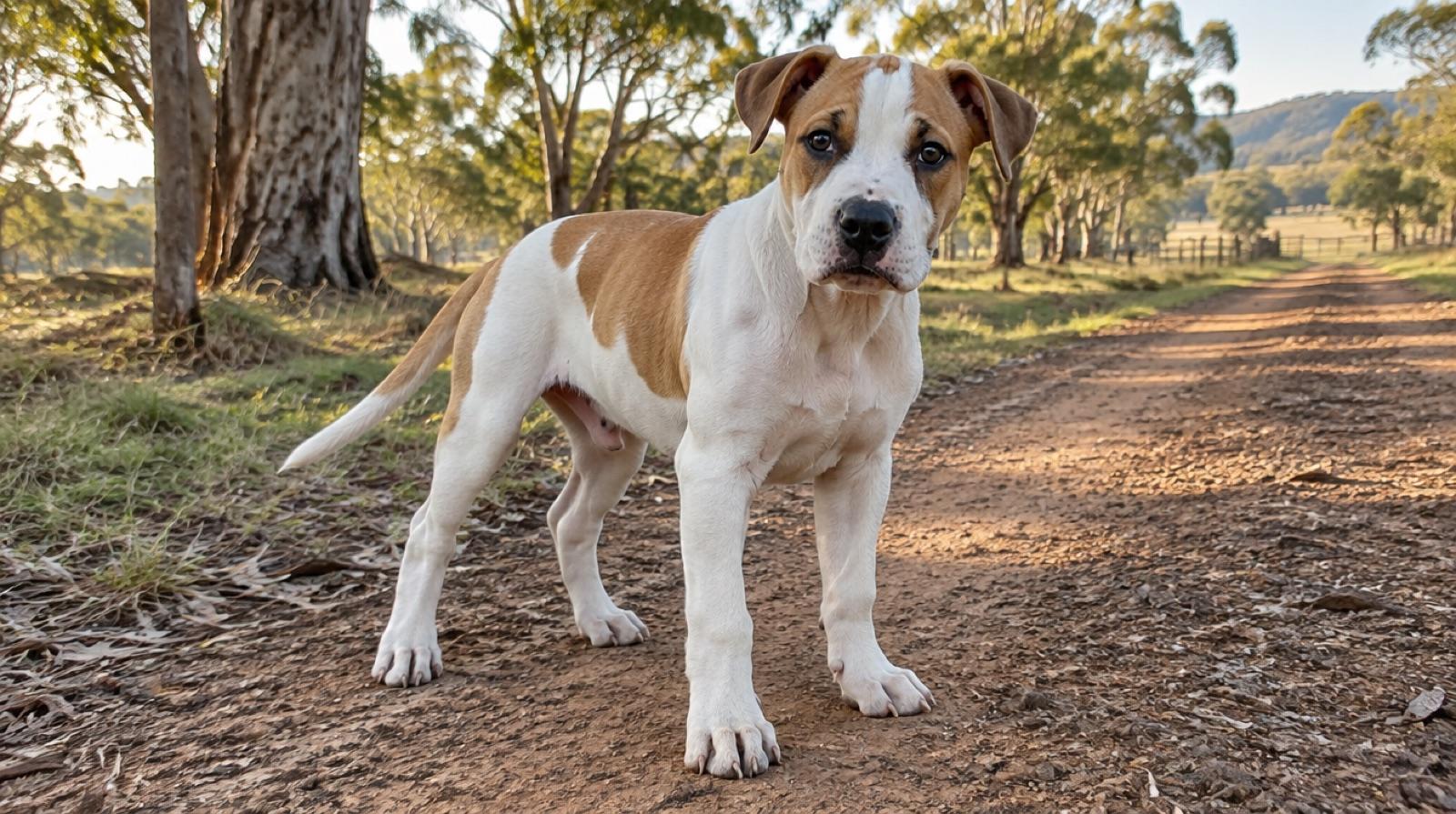
Should you adopt or buy a Bull Arab?
For most homes, adopt. With a recognised breed, buying from a registered breeder gets you a breed standard, health tests set by a breed club, and a breeder answerable to a state canine body. None of that exists for the Bull Arab. A puppy from a Bull Arab seller is a cross of uncertain make-up whose adult size and drive you have to guess. An adult from rescue has already shown its size, its energy and how it behaves with people, dogs and small animals.
The RSPCA Australia Knowledgebase suggests the RSPCA or a reputable rescue first, and if you go to a breeder, visiting where the puppies were born and meeting the parents. Our guide to adopting a dog in Australia covers the rescue process step by step.
| Route | Reference cost | What you usually get | Main risk |
|---|---|---|---|
| Rescue, shelter or council pound | The standard fee, for example $500 for an adult dog at RSPCA NSW | An adult Bull Arab or Bull Arab cross, desexed, microchipped and vaccinated, with notes on behaviour | Unknown parents; some need work on recall and other animals |
| Bull Arab seller (no Dogs Australia papers) | No member breeders exist to survey; we do not repeat listing-site prices | A puppy of uncertain make-up, adult size and drive | No standard, no breed club tests, scams |
Reference only, not quotes. Figures read on 11 November 2026; rescues set their own fees and change them, so check with them. RSPCA NSW says its fees cover desexing, microchipping, vaccination and a health check. The dog cost calculator covers the first year after the fee.
Is the Bull Arab a recognised breed?
No. The Bull Arab is not on the Dogs Australia breed listing (August 2026), the list of breeds Dogs Australia recognises and registers. That means there is no Dogs Australia breed standard, no breed club within Dogs Australia, and no Dogs Australia member breeder of Bull Arabs.
The state canine bodies that make up Dogs Australia also limit crossbreeding by their members. The Dogs NSW Code of Ethics says a member shall not knowingly permit a purebred dog to be mated to a dog of a different breed or a cross-bred dog unless the Board has approved it in advance, and Dogs Victoria's code says dogs “are not permitted to be mated to a dog or bitch of a different breed, to a cross bred dog or bitch”. Any papers offered with a Bull Arab can only come from another registry, and Dogs Australia says other registries it names are not affiliated with it and cannot issue its certified pedigrees.
None of this makes a Bull Arab a lesser dog. It means the checks a breed club would normally push for are yours to make, and that a rescue's behaviour notes are worth more than any pedigree claim.
Where does the Bull Arab come from?
The Bull Arab is a working type developed in Australia for hunting feral pigs. Histories published online disagree on who started it and which breeds went in, so we rely on peer-reviewed research instead. A 2019 review by Orr, Malik, Norris and Westman at the University of Sydney on the welfare of pig-hunting dogs says:
- Most pig-hunting dogs in Australia are a mixture of various pedigree breeds, generally of medium to large build.
- Composite types such as the Bull Arab are used to hunt large boars.
- Pig-hunting dogs, including the Bull Arab, mix bull breeds (such as Bull Terriers, Bullmastiffs, Staffordshire Bull Terriers and American Pit Bull Terriers) with leaner sight hounds (such as Greyhounds, Wolfhounds and Staghounds), German Shorthaired Pointers and Catahoula Leopard Dogs.
- Dogs are used to flush, chase, bail and hold feral pigs.
Two things follow for an adopter. First, a dog called a Bull Arab can look and behave very differently from the next one, because there is no fixed recipe. Second, the job it was bred for (finding, chasing and holding large animals) tells you what to ask the rescue about: recall, fences, cats, small pets and livestock.
What about pig hunting and the law?
The rules on hunting with dogs are set by each state and territory, and they are not the same. The RSPCA Australia Knowledgebase says hunting pigs with dogs is legal in some parts of Australia, with laws varying between states and territories, and that in some jurisdictions dogs can be used to flush out or locate feral pigs but are not permitted to bring them down. The University of Sydney review likewise says the practice is legal in some states and territories and illegal in others.
In NSW, the Office of Local Government lists a dog that “is kept or used for hunting” (not including dogs used for locating, flushing, pointing or retrieving birds or vermin) as one a council officer or court can declare dangerous, whatever its breed.
The two sources also describe the welfare side. RSPCA Australia says it is opposed to recreational hunting, and that pig hunting results in unnecessary and considerable suffering for both the pigs and the dogs. The University of Sydney review lists risks to the dogs including breeding surplus to requirements, early retirement of dogs that do not suit the work, high rates of traumatic injury and a poor quality of life after retirement, and called for more research. Some of the Bull Arabs that reach rescue may have come from that world, so ask the rescue what it knows of the dog's past and any old injuries.
LocalPetFinder lists dogs for adoption as companions. If you plan to use any dog for hunting, check your state's official hunting rules first; this page is general information, not legal advice.
Is the Bull Arab a restricted breed?
Not by name. Each of the six state lists covers the same five import-banned breeds (NSW and Western Australia also cover any other breed that cannot be imported), the ACT has no restricted breeds, the Northern Territory has no territory-wide list, and none names the Bull Arab. Because the research above says some pig-hunting dogs have American Pit Bull Terrier in their mix, the way a state treats crosses matters: in NSW a council officer can declare a dog restricted, including one assessed as a cross of a restricted breed, and Western Australia covers mixes of restricted breeds, while Tasmania says cross-breeds are not declared there.
| State | Breeds on the official list | Bull Arab listed? |
|---|---|---|
| NSW | American pit bull terrier or pit bull terrier, Japanese tosa, dogo Argentino, Perro de Presa Canario, fila Brasileiro and any other breed that cannot be imported; a council can declare a dog restricted, including one assessed as a cross (NSW Office of Local Government) | No |
| VIC | Dogs that are, or fit the approved standard for, the American Pit Bull Terrier (or Pit Bull Terrier), Perro de Presa Canario, Dogo Argentino, Japanese Tosa and Fila Brasileiro (Agriculture Victoria) | No |
| QLD | Prohibited: Dogo Argentino, Fila Brasileiro, Japanese Tosa, American pit bull terrier or pit bull terrier, Perro de Presa Canario (Queensland Government) | No |
| WA | The five breeds, any other breed prohibited from import, and mixes of them (WA Dog Regulations 2013) | No |
| SA | Prescribed: American Pit Bull Terrier, Fila Brasileiro, Japanese Tosa, Dogo Argentino, Presa Canario (Dog and Cat Management Board) | No |
| TAS | American Pit Bull Terrier, Dogo Argentino, Fila Brasileiro, Perro de Presa Canario, Japanese Tosa; cross-breeds are not declared (Tasmanian Government) | No |
| ACT | No restricted breeds; each dog assessed on its own behaviour (ACT City Services) | No |
| NT | We found no Northern Territory government page listing restricted breeds; check with your council | Not on any list we found |
Official pages read 11 November 2026 (WA from the current Dog Regulations 2013). General information, not legal advice; follow the link for your state before you rely on a detail. Separately from any breed list, any dog of any breed can be declared dangerous or menacing after an incident.
If you adopt, keep the rescue's paperwork, its breed description and the microchip record with your council registration. Our Staffy vs pit bull guide explains each state's process if a council ever questions a bull-breed cross, and our renting with pets guide covers each state's tenancy rules.
See the Bull Arabs listed right now
Bull Arabs and Bull Arab crosses listed by the rescues, shelters and council pounds we aggregate, by city. Every listing links to the rescue, where you apply directly.
Adopting a Bull Arab: what rescues offer
Bull Arabs and Bull Arab crosses are listed by general rescues, shelters and council pounds across the cities we cover, often as adults. Shelters label a dog with no history by how it looks, so “Bull Arab cross” is often a best guess; read the description and ask how the rescue assessed the dog.
Bull Arab Rescue Australia is a registered charity (ACNC) based in Queensland that takes in Bull Arabs and Bull Arab crosses. Its website says all its dogs are desexed, vaccinated, microchipped and up to date with worm, flea and tick treatments. It also takes foster carers, which is a good way to find out whether a Bull Arab suits your household.
Questions worth asking any rescue about a Bull Arab:
- Other animals. Has the dog been tested with cats, small dogs and other dogs?
- Recall and fences. How does it behave off lead, and what height and type of fence does the rescue recommend?
- Exercise. How much does it need, and how does it settle at home?
- History. Anything known about its past, including old injuries or a hunting background.
Our city guides cover adopting a Bull Arab locally: Sydney, Melbourne, Brisbane, Perth and Adelaide, and the Bull Arab health guide covers care.
How do Bull Arab puppy scams work?
Never pay a deposit for a Bull Arab puppy you have not seen with its mother, in person or at least on a live video call. A seller who asks for more money after the first payment, for transport, a crate or insurance, is following the standard scam script.
Scamwatch says scammers set up fake websites and fake social media and marketplace profiles to sell popular breeds and pets that do not exist. Its advice: view the pet in person, ask for a video call if you cannot visit, check the seller is legitimate, and compare prices, because a very cheap pet is likely a scam.
- “Purebred” or “registered” Bull Arabs. There is no Dogs Australia registration for the Bull Arab, so papers can only come from a registry Dogs Australia says is not affiliated with it. Papers of that kind do not tell you about health testing.
- Promises about size or temperament. With no standard and a mixed make-up, nobody can promise how a puppy will turn out.
- No breeder or source number. NSW, Victoria, Queensland, South Australia and the ACT each require an identifying number in puppy ads, and that applies to any dog, not only recognised breeds. Look it up on the official register, not through a link the seller sends.
Our guide to puppies for sale in Australia has the full state-by-state table of breeder numbers and what to do if you have already paid.
Is a Bull Arab the right dog for you?
A Bull Arab can be a devoted companion, but be honest about four things before you apply.
- Size and strength. Pig-hunting dogs are generally medium to large in build. Lead training matters from day one; the dog exercise calculator helps you compare daily needs.
- Chase instinct. A dog bred to chase and hold pigs may chase cats, small pets, livestock and wildlife. Secure fencing and a realistic plan for recall matter.
- Exercise and a job to do. Plan for daily exercise and training that uses its nose and brain.
- Other people's reactions. Some landlords and neighbours react to a muscular bull-breed look. Keep registration and adoption papers handy.
Not sure it fits? The what dog breed am I quiz and the adoption readiness check each take a few minutes.
Find a Bull Arab near you
- Bull Arabs for adoption in Sydney
- Bull Arabs for adoption in Melbourne
- Bull Arabs for adoption in Brisbane
- Bull Arabs for adoption in Perth
- Bull Arabs for adoption in Adelaide
See the Bull Arab breed page for every listing. Considering a related dog? Our American Staffordshire Terrier, Bull Terrier, German Shorthaired Pointer, Rhodesian Ridgeback, Shar Pei, Koolie, Basset Hound and Bernedoodle guides cover each the same way.
Frequently asked questions
Should I adopt or buy a Bull Arab puppy?▼
For most people, adopt. The Bull Arab is not a Dogs Australia breed, so there is no registered breeder, breed club or breed standard behind any puppy you buy. Bull Arabs and Bull Arab crosses are listed by rescues and council pounds, and an adult from rescue comes with a known size, energy level and record with other animals, which matters a great deal in a dog bred to chase and hold pigs.
Is the Bull Arab a recognised breed in Australia?▼
No. The Bull Arab is not on the Dogs Australia breed listing (August 2026), so it has no Dogs Australia breed standard and cannot be registered on the Dogs Australia system. University of Sydney researchers describe it as a composite type of pig-hunting dog. Dogs Australia says some other registries are not affiliated with it and cannot issue its certified pedigrees.
How much is a Bull Arab puppy in Australia?▼
There is no reference price we can give. Our breeder price surveys only use member breeders of Dogs Australia or a breed club, and because the Bull Arab is not a Dogs Australia breed there are none to survey. Prices on listing sites cannot be checked, so we do not repeat them. For comparison, RSPCA NSW listed $500 for an adult dog, read 11 November 2026: reference only, not a quote, and fees change, so check with the rescue.
What was the Bull Arab bred for?▼
Pig hunting. A 2019 University of Sydney review of pig-hunting dog welfare says pig-hunting dogs in Australia, including the Bull Arab, are a mixture of bull breeds and leaner sight hounds and pointers, and that composite types such as the Bull Arab are used to hunt large boars. Dogs are used to flush, chase, bail and hold feral pigs.
Is the Bull Arab a restricted breed?▼
Not by name. The Bull Arab is not on the restricted, prohibited or prescribed breed list of any state or territory we read on 11 November 2026. Those lists cover the American Pit Bull Terrier (or pit bull terrier), Dogo Argentino, Fila Brasileiro, Japanese Tosa and Perro de Presa Canario (NSW and Western Australia also cover any other breed that cannot be imported), the ACT has none, and we found no Northern Territory list. That does not make every Bull Arab automatically exempt: in NSW a council can declare a dog restricted if it is assessed as a cross of a restricted breed, Western Australia's rule covers mixes, and any dog can be declared dangerous or menacing. Check with your council.
Is pig hunting with dogs legal in Australia?▼
It depends on the state or territory. The RSPCA Australia Knowledgebase says hunting pigs with dogs is legal in some parts of Australia, with laws varying between states and territories, and that in some places dogs may be used to flush out or locate feral pigs but not to bring them down. RSPCA Australia says it is opposed to recreational hunting and that hunting pigs with dogs causes considerable suffering for pigs and dogs. In NSW, a dog kept or used for hunting can be declared dangerous. Check your state's official rules before you use any dog for hunting.
Are Bull Arabs good family pets?▼
They can be in the right home, and plenty live as companions, but the dog was bred to find, chase and hold pigs. Ask the rescue how the dog is with children, other dogs, cats and small animals, and how it copes when left alone. An adult whose temperament is known is a safer choice than an unknown puppy for most families.
How big do Bull Arabs get?▼
There is no breed standard, so no official size. University of Sydney researchers describe pig-hunting dogs as generally medium to large in build, and Bull Arab crosses vary widely. That is a strong reason to adopt an adult: you can see the size and strength of the dog you are taking home.
Where can I adopt a Bull Arab?▼
From general rescues, shelters and council pounds, and from Bull Arab Rescue Australia, a Queensland-based registered charity whose website says all its dogs are desexed, vaccinated and microchipped. Check the Bull Arab listings on LocalPetFinder for your city and set an alert.
Can a registered breeder sell me a Bull Arab?▼
Not as a Dogs Australia registered dog, because the Bull Arab is not a recognised breed. The state canine bodies also restrict crossbreeding by members: the Dogs NSW Code of Ethics says a member shall not knowingly permit a purebred dog to be mated to a dog of a different breed or a cross-bred dog without prior Board approval. Anyone selling Bull Arab puppies still needs your state's breeder or source number where the state requires one.
Are Bull Arab puppies on Gumtree or Facebook a scam?▼
Some are scams, and none come with Dogs Australia papers. Scamwatch says scammers set up fake websites and social media profiles for popular breeds and that a very cheap pet is likely a scam. See the puppy with its mother, check the seller's breeder or source number on your state's register, and never pay a deposit for a puppy you have not seen.
Sources
- Dogs Australia: Breed listing (August 2026)
- Dogs Australia: How to choose a puppy
- Dogs NSW: Code of Ethics (June 2026)
- Dogs Victoria: Part 20 Codes
- Orr, Malik, Norris and Westman (2019), Animals: The welfare of pig-hunting dogs in Australia (University of Sydney)
- RSPCA Australia Knowledgebase: Is hunting feral pigs with dogs legal in Australia?
- Bull Arab Rescue Australia
- NSW Office of Local Government: Restricted dogs
- NSW Office of Local Government: Dangerous and menacing dogs
- Agriculture Victoria: Owning a restricted breed dog
- Queensland Government: Regulated dogs
- WA Dog Regulations 2013
- Dog and Cat Management Board (SA): Prescribed breeds
- Tasmanian Government: Restricted breed FAQs
- ACT City Services: Dangerous dogs
- Scamwatch: Buying and selling scams
- RSPCA NSW: Adoption fees
- RSPCA Australia Knowledgebase: Where should I go for a new companion animal?
Keep reading
Bull Arab
The Bull Arab breed page, with the dogs listed by rescues right now.
Bull Arab exercise and prey drive
What a working pig-hunting background means for walks, fences and other pets.
Staffy vs pit bull
Every state’s restricted-breed list and what it means for adopting a bull-breed cross.
Puppies for sale: adopt or buy?
The breeder number each state requires, how to check it, and the full scam checklist.