The short answer
A Bull Arab needs at least an hour of real exercise a day plus mental work and a job, and it has a strong prey drive because it was bred to hunt. Those two things are why the breed suits an experienced, active home with a secure yard, not an apartment or a first-time owner. Manage the prey drive rather than expecting to train it away: real caution around cats and small animals, a lead in any unfenced space because recall fails against a strong trigger, and secure high fencing. Add early, ongoing socialisation and consistent reward-based training, and you get the calm, loyal, capable dog the breed can be. Under-exercise or under-contain one, and you get the destruction and escaping that fills rescues.
Why exercise and prey drive define Bull Arab ownership
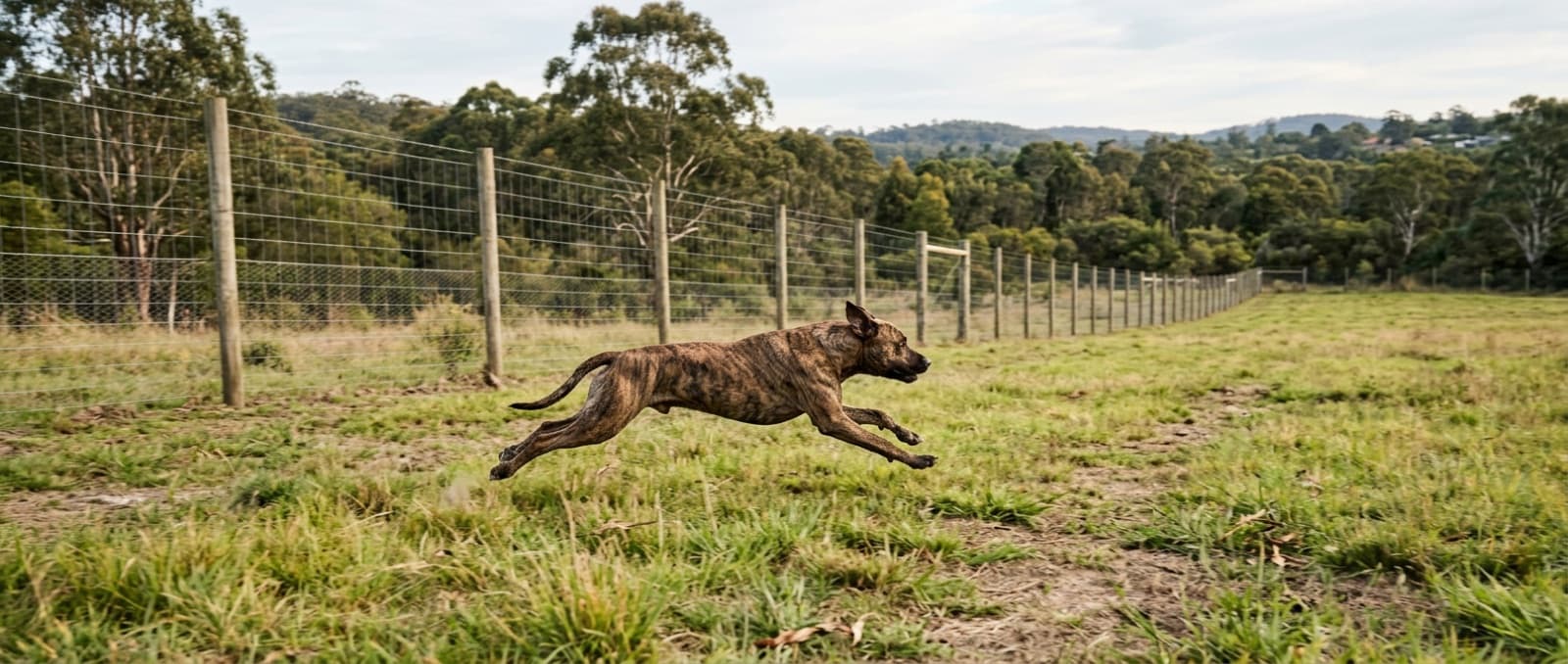
Most of what goes right or wrong with a Bull Arab comes down to these two things, so it is worth understanding them before you adopt. The Bull Arab was built as a hunting dog, combining the strength of bull and mastiff breeds with the scenting and speed of hounds and pointers, to find, chase and hold pigs across country. That heritage produced a dog with enormous stamina, a strong drive to chase, and the athleticism to act on it.
In a home that channels those traits, the result is a loyal, capable, satisfying dog. In a home that does not, the same traits become the destruction, escaping and difficult-to-manage behaviour that lands so many Bull Arabs in rescue. The dog is not being difficult; it is a working athlete with unmet needs. The encouraging part is how directly the outcome follows the management: meet the exercise, manage the prey drive, and contain and socialise the dog, and most of the problems simply do not appear.
Understanding and managing the prey drive
Prey drive is the instinct to notice, chase and catch moving animals, and in the Bull Arab it is strong. In everyday life it means the dog may fixate on and pursue cats, rabbits, chickens, other small pets, livestock and wildlife, and once that instinct fully engages, the dog can be very hard to call off. This is not aggression toward people and it is not a temperament fault; it is the breed doing what it was created to do.
The key insight is that you manage a drive this deep rather than train it away. That means setting the dog up so the instinct is not triggered in a dangerous situation: real caution and honest assessment around cats and small animals, a lead or long-line in any unfenced space, secure fencing at home, and awareness on walks near wildlife. For homes with resident cats or small pets, a Bull Arab needs to be one a rescue has specifically assessed as suitable, with slow, supervised introductions, and for many households the honest answer is that this is not the right breed for a multi-species home. Some owners of high-drive dogs also do muzzle training as a calm, positive safety tool for specific situations, which a good trainer can guide.
The exercise and jobs a Bull Arab needs
Plan on at least an hour a day, and often more, of real activity for an adult Bull Arab, and understand that a gentle walk does not meet the need. The breed wants to move: long walks, secure off-lead running in fenced areas, and hikes in the cool hours all suit the stamina. Because it is a working dog, mental exercise matters as much as physical, so training sessions, scent games, puzzle feeders and problem-solving all help drain the energy that otherwise becomes trouble.
Giving a Bull Arab a job is one of the best ways to satisfy it. Structured obedience, trick training, scent work and reward-based activities that tap into the natural drive to find and follow give the dog purpose and focus. The ideal routine mixes solid physical exercise with mental work, and in a Sydney summer it front-loads the physical activity into the cool of the morning and evening and shifts the mental work indoors on hot days. A Bull Arab that is properly exercised in body and mind is a calm, settled, easy dog; the destructive, escaping version is simply one whose needs are not being met.
Containment, socialisation and training
A large, strong, driven dog needs a yard that genuinely holds it. Aim for a secure fence around 1.8 metres that the dog cannot jump, push through or dig under, with the base dug in or backed by a solid barrier, tall self-latching gates, and nothing nearby a big dog could climb on. Meeting the exercise need is part of containment, because a satisfied Bull Arab is far less motivated to test the boundaries than a bored one. Supervise a new dog in the yard until you know what it can do.
Socialisation and training are not optional with a dog of this size and drive. Early and ongoing positive exposure to people, other dogs and everyday situations builds a confident, steady dog, and consistent reward-based training with a confident handler teaches the control and manners a powerful breed needs. Harsh, punishment-based methods backfire and damage trust. Many Bull Arab owners benefit from a good force-free trainer or a structured obedience class, and the breed genuinely rewards the effort: the work you put into a young or newly adopted Bull Arab shapes the settled adult you live with for the next decade.
Thinking about adopting a Bull Arab?
With the exercise, containment and training sorted, a Bull Arab is a loyal, capable, devoted companion. Browse adoptable Bull Arabs across Sydney and NSW, and read the full adoption guide first.
Read the Bull Arab Adoption Guide →If your Bull Arab gets loose
Even careful owners have a gate left open or a dog slip a lead, and with a large, fast, driven breed it pays to know the response. Do not chase, because a chase becomes a game that pushes the dog further and faster, often toward a road or an animal it has fixed on. Instead, get low, turn side-on, and call in a bright, happy voice, or run away from the dog so it chases you. An open car door, a favourite toy or high-value food can help. If the dog is already gone, note the direction and start a calm, systematic search, and get help quickly, because a Bull Arab covers ground fast.
If your Bull Arab is genuinely lost, work several channels at once. Confirm your microchip contact details are current on the NSW Pet Registry, which is what a vet or council pound scans against. Ring and physically check your council pound and nearby vets and keep checking daily, post a clear recent photo and the last-seen location to local community and lost-pet Facebook groups, and notify neighbours. For the wider picture, see our companion guides, Bull Arab Adoption in Sydney and Bull Arab Health Issues in Sydney.
Frequently Asked Questions
How much exercise does a Bull Arab need?
A lot, and this is one of the two things that make or break ownership. Plan on at least an hour, and often more, of real activity a day for an adult Bull Arab, made up of walking, secure running, and mental work rather than a stroll around the block. This is a working breed with real stamina, and an under-exercised Bull Arab channels that energy into destruction, digging and escaping. Mental exercise matters as much as physical: training, scent games, puzzle feeders and having a job to do all help. In the Sydney summer, shift the physical work to the cool of the morning and evening. A well-exercised Bull Arab is a calm, settled dog; a bored one is a problem.
What does prey drive mean in a Bull Arab?
Prey drive is the instinct to notice, chase and catch moving animals, and in the Bull Arab it is strong because the breed was developed to find and hold pigs. In practice it means a Bull Arab may fixate on and chase cats, rabbits, chickens, other small pets, livestock and wildlife, and when that instinct engages, the dog can become very difficult to call off. It is not aggression and it is not a fault; it is what the breed was bred to do. Understanding it is the key to managing it: you set the dog up so the drive is not triggered in dangerous situations, rather than expecting to train it away, because you cannot fully train out an instinct this deep.
Can a Bull Arab live safely with cats or small pets?
Sometimes, but it needs honesty and care, and for many Bull Arabs the answer is no. Because of the prey drive, cats, rabbits, chickens and small animals can be a genuine risk, and even a Bull Arab raised with a cat can be unreliable, especially with a fleeing or unfamiliar animal. If you have small pets, do not adopt on hope: look for a dog a rescue has specifically assessed as cat-friendly or small-animal-tolerant, and even then manage introductions very slowly and never leave them unsupervised early on. A foster-based rescue that has lived with the dog can give you the most reliable read. If in doubt, choose a breed better suited to a multi-species home.
Can a Bull Arab be trusted off-lead in Sydney?
Only in a fully fenced, secure area, and even then with an eye on what sets the dog off. The prey drive plus size and speed mean a Bull Arab that takes off after an animal in an unfenced space is hard to recall and can cover ground fast, which near Sydney roads and wildlife is a real risk. Use securely fenced off-leash dog parks for free running, a securely fenced yard at home, and a lead or a long-line everywhere else, including bush trails and beaches outside fenced areas where wildlife scent and movement are everywhere. Reliable recall in the face of a strong prey trigger is not something most Bull Arab owners can count on, so manage it with fencing and leads.
How do I contain a Bull Arab in the yard?
Take it seriously, because this is a large, strong, driven dog. A secure fence of good height (1.8 metres is a sensible target) that the dog cannot jump, push through or dig under is essential, with the base dug in or backed by a solid barrier and gates that are tall and self-latching. Remove anything near the fence a big dog could use to get over. A Bull Arab that is properly exercised and mentally satisfied is far less motivated to test the boundaries, so meeting the exercise need is part of containment. Supervise a new dog in the yard until you know what it can do, and never leave a Bull Arab in a yard you are not confident holds it.
How important is socialisation and training for a Bull Arab?
Very. A large, powerful, driven dog needs early and ongoing socialisation and consistent, reward-based training to become the steady family companion it can be, and that is a real commitment rather than an optional extra. Positive exposure to people, other dogs and everyday situations, started young and maintained, builds a confident, settled dog, and reward-based training with a confident, consistent handler teaches the manners and control that a dog of this size and strength needs. Harsh handling backfires. Because the breed rewards experience, a Bull Arab suits an owner who is willing to put in the training work, and many benefit from a good force-free trainer or a structured obedience class.
What kind of exercise and jobs suit a Bull Arab?
Anything that lets it use its body and mind. Long walks, secure off-lead running in fenced areas, and hikes in the cool hours suit the stamina, and many Bull Arabs enjoy structured activities that give them a job, such as obedience training, scent work, and reward-based games that tap into the natural drive to find and follow. Mental enrichment is as valuable as physical exercise for a working breed, so puzzle feeders, training sessions and problem-solving games help tire the dog and keep it settled. A mix of solid physical exercise and a job to do is what keeps a Bull Arab out of trouble and content in a home.
What happens if a Bull Arab does not get enough exercise or a job?
It becomes a problem, and this is a common thread in Bull Arab surrenders. A large, driven working dog with nothing to do will make its own entertainment: destroying the yard and house, digging, escaping, and becoming restless and hard to manage. None of this is the dog being bad; it is an athlete with unused energy and no outlet. The reassuring flip side is that the behaviour follows the management, so a Bull Arab that is properly exercised, mentally engaged and given a job is usually a calm, easy, affectionate housemate. Meeting the need is the single biggest thing you can do for a settled dog and a happy household.
What should I do if my Bull Arab gets loose or is lost?
Do not chase, because a chase becomes a game and pushes the dog further and faster, often toward a road or an animal it is fixed on. Instead, get low, call in a happy voice, or run the other way so the dog follows you, and use food or a favourite toy if you can. If the dog is genuinely lost, act fast across several channels: make sure your microchip details are current on the NSW Pet Registry, ring and physically check your council pound and nearby vets and keep checking daily, post a clear photo and last-seen location to local lost-pet Facebook groups, and notify neighbours. Because a Bull Arab can travel fast, widen the search sooner than you would for a smaller dog.
Keep reading
Bull Arab Adoption in Sydney
Where to adopt, what it costs, and why this Australian working breed fills NSW rescue.
Bull Arab Health Issues in Sydney
A generally hardy breed, the large-dog cautions to know, bloat, and paralysis tick and heat in NSW.
Adoptable Bull Arabs in Sydney
Live listings of Bull Arabs and Bull Arab crosses, with filters for age, size and compatibility.
How to Adopt a Dog in Sydney
The full Sydney adoption process, paperwork, vet questions and home-check tips.