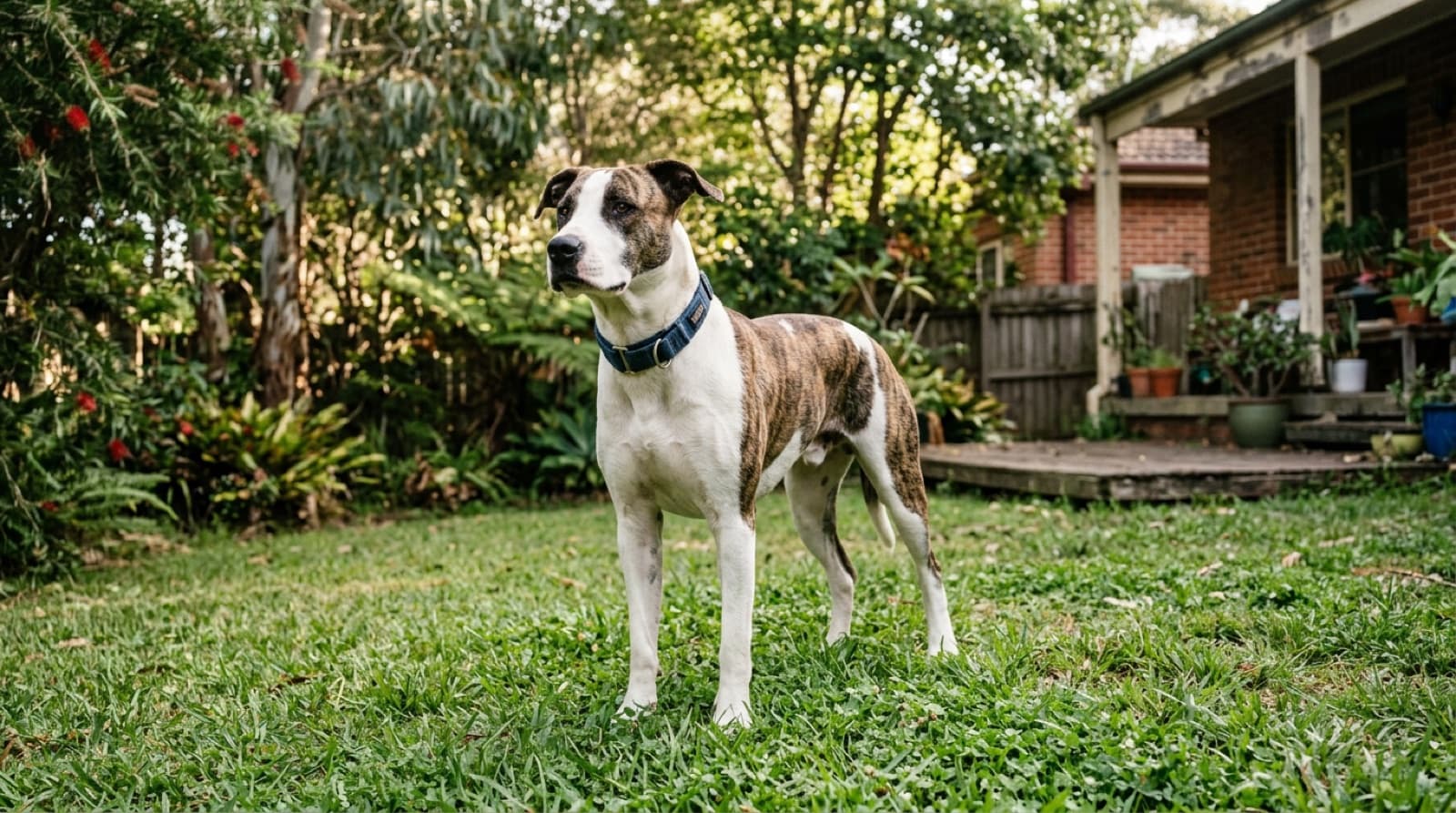
The short answer
The Bull Arab is a genuinely hardy breed. Being a working mixed type, it benefits from hybrid vigour and avoids many of the extreme inherited conditions of narrowly bred purebreds, and a lean, well-exercised Bull Arab often lives 12 to 15 years. The health picture is really about being a large, deep-chested, active dog: the one emergency to know cold is bloat, and the ongoing cautions are joints and weight. The short coat and normal muzzle mean it handles the Sydney climate reasonably well, though summer exercise still belongs in the cool hours, and year-round paralysis tick prevention is essential as for any NSW dog. Adopt with eyes open and you have a robust, long-lived companion.
A note on this guide. This is general breed information to help you plan, not veterinary advice. It is written for adopters and checked against the RSPCA Knowledgebase and Australian Veterinary Association guidance. Every dog is different, and because the Bull Arab is a varied working type, individuals differ more than in a standardised breed. Always see your own vet for diagnosis, treatment and any decision about your dog's care, and never medicate a dog based on an article.
A hardy working breed
It is worth starting with the reassuring part, because it is genuinely a point in the breed's favour. The Bull Arab was developed as a working dog from several breeds, and unlike a narrowly bred purebred selected heavily for appearance, it has not been funnelled toward the extreme physical features and small gene pools that drive many inherited diseases. The result is a dog that tends to be robust, athletic and long-lived, and many rescue Bull Arabs, often surrendered as healthy young adults, come with few or no known health problems.
That does not mean nothing can go wrong, and because the breed is a varied type rather than a standardised one, individual dogs differ. But the health conversation for a Bull Arab is mostly the general large-active-dog conversation, not a long list of breed-specific conditions, and that is a genuine advantage of the breed.
Bloat: the one emergency to know
If you learn one thing from this guide, make it the signs of bloat. Gastric dilatation-volvulus (GDV), commonly called bloat, is the most important emergency in any large, deep-chested dog, and the Bull Arab build puts it squarely in that group. The stomach fills with gas and can twist on itself, cutting off blood supply, and it becomes rapidly life-threatening without emergency surgery.
The signs to know are a swollen or hard belly, unproductive retching (trying to vomit but bringing nothing up), restlessness and pacing, excessive drooling, and obvious distress. If you see these, do not wait: treat it as an immediate emergency and get to a vet straight away, calling ahead so they are ready. As sensible precautions for a deep-chested dog, feed smaller meals rather than one large one, and avoid heavy exercise right before and after eating. Knowing the signs before you ever need them is the single most life-saving thing a Bull Arab owner can do.
Joints, weight and the everyday checks
As a large, active dog, the Bull Arab can develop the joint issues common to big breeds, including hip and elbow dysplasia and the arthritis that can follow, and an active working life adds wear over time. Weight is the biggest lever you control, because every extra kilo loads the joints, so keeping a Bull Arab lean and well-muscled matters. Favour regular, sensible exercise over occasional hard bursts, and see your vet for stiffness, limping, reluctance to move or difficulty rising. If serious orthopaedic care is ever needed, a Sydney referral hospital such as the Small Animal Specialist Hospital (SASH) is where advanced imaging and surgery happen.
The other everyday checks are ordinary. The short coat is low-maintenance, but watch for skin irritation, hot spots and allergies, especially in the warm months. Check and clean the ears regularly, particularly for a dog that swims, and keep an eye on the eyes for redness or discharge. None of these are breed-specific, and most are easily managed when caught early.
The Sydney essentials: tick and heat
Two things apply to every dog in Sydney and matter for an active outdoor breed like the Bull Arab. First, the paralysis tick is native to NSW bushland and can be fatal, so year-round prevention is essential, with your vet recommending a suitable monthly product, and a thorough physical tick search after any bush or long-grass outing on top of that, because a working, exploring dog is well exposed. Second, heat: the Bull Arab copes better than flat-faced or heavy-coated breeds thanks to its normal muzzle and short coat, but it is still a large, active dog that can overheat if worked hard on a hot day, so exercise in the cool hours, carry water, and never leave a dog in a hot car or a shadeless yard.
For plain-language guidance on tick prevention and summer heat safety, the RSPCA Knowledgebase and the Australian Veterinary Association are both reliable, non-commercial starting points.
Meet an adoptable Bull Arab in Sydney
Rescue Bull Arabs arrive already desexed, vaccinated, microchipped and vet-checked, often as healthy young adults. Browse live listings across Sydney and NSW.
See Available Bull Arabs →Budgeting and insurance
Routine yearly costs for a Bull Arab in Sydney (food for a big dog, an annual check, dental care, tick and parasite prevention, registration) sit around $1,500 to $2,500, with food and any treatment costing more simply because it is a large dog. The Bull Arab is generally hardy, so it is not a breed defined by frequent vet bills, but the two potential big-ticket events, bloat surgery and orthopaedic care, can each run into four figures at a referral hospital.
That is the case for pet insurance with this breed: less about frequent claims and more about a buffer against the occasional large emergency. Enrol while the dog is young and healthy, before any issue becomes a pre-existing exclusion, and compare a few Australian providers on cover, annual limit and excess. For the full adoption picture and everyday life with the breed, see our companion guides, Bull Arab Adoption in Sydney and the exercise and prey-drive detail in our Bull Arab exercise and prey drive guide.
Frequently Asked Questions
Are Bull Arabs a healthy breed?
Generally, yes. As a working type bred from several breeds rather than a narrowly standardised show dog, the Bull Arab tends to benefit from hybrid vigour and carries fewer of the extreme inherited problems seen in some purebreds. Most are hardy, athletic and long-lived, often reaching 12 to 15 years. That said, it is a large, deep-chested, active dog, so the cautions are the general large-breed ones: bloat, joint issues like hip and elbow dysplasia, and the wear that comes with size and activity, plus the skin, ear and eye issues any dog can have. A rescue Bull Arab arrives already vet-checked, and a lean, well-exercised one with good routine care generally lives a long, healthy life.
What is bloat and are Bull Arabs at risk?
Bloat, or gastric dilatation-volvulus (GDV), is the most important emergency to know about in any large, deep-chested dog, and the Bull Arab build puts it in that category. The stomach fills with gas and can twist, cutting off blood flow, and it is rapidly life-threatening without emergency surgery. Signs include a swollen or hard belly, unproductive retching or trying to vomit without bringing anything up, restlessness, drooling and distress. If you see these, treat it as an immediate emergency and get to a vet straight away. Feeding smaller meals rather than one large one, and avoiding heavy exercise right around mealtimes, are sensible precautions for a deep-chested dog.
Do Bull Arabs have joint problems?
They can, as any large, active breed can. Hip and elbow dysplasia, malformed joints that can lead to arthritis, occur in large dogs including Bull Arabs, and the wear of an active working life adds to joint stress over time. Keeping the dog lean is the single most protective thing you can do, because every extra kilo loads the joints. Favour regular, sensible exercise over occasional hard bursts, and see your vet for stiffness, limping, reluctance to move or difficulty rising. Advanced imaging and orthopaedic surgery, if it comes to that, happen at a Sydney referral hospital such as the Small Animal Specialist Hospital.
What skin, ear and eye issues should I watch for?
Nothing breed-specific and dramatic, but the usual dog checks apply. The short Bull Arab coat is low-maintenance, but skin allergies, hot spots and irritation can occur, especially in the warm Sydney months, so watch for itching, redness or hair loss. Check and clean the ears regularly, particularly in a dog that swims, as moisture in the ear canal leads to infections. Keep an eye on the eyes for redness, discharge or cloudiness. None of these are unique to the breed, and most are easily managed when caught early with routine care and a vet visit when something looks off.
Is paralysis tick a risk for Bull Arabs in Sydney?
Yes, as for any dog in Sydney, and it is not optional to manage. The paralysis tick is native to the NSW east coast and its bushland fringes, and its neurotoxin can be fatal without veterinary treatment. Every Sydney dog needs year-round tick prevention, and your vet will recommend a suitable product. A Bull Arab that works or plays in long grass and bush is well exposed, so a thorough physical tick search after any bush walk, running your hands over the whole body and checking the short coat down to the skin, is a sensible habit on top of the monthly preventative. A wobbly back end, a changed bark, vomiting or breathing trouble is an emergency.
How does a Bull Arab handle the Sydney heat?
Better than a flat-faced or heavy-coated breed, because the Bull Arab has a normal muzzle and a short coat, but it is still a large, active dog that can overheat if worked hard in the heat. Exercise in the cool of the morning and evening through summer rather than the heat of the day, provide constant shade and water, and test hot pavement with your hand before walking. Never leave any dog in a hot car or a shadeless yard. Watch for heavy panting, drooling, weakness or distress, which are signs of heat stress and a veterinary emergency. Sensible timing and water handle almost all of it for this breed.
Should I get pet insurance for a Bull Arab?
It is worth considering, mainly because of the size rather than a long list of breed diseases. Bull Arabs are generally hardy, but a large dog means larger bills when something does go wrong, and the two big-ticket risks, bloat surgery and joint or orthopaedic treatment, can each run into four figures at a Sydney referral hospital. Enrol while the dog is young and healthy, before anything becomes a pre-existing exclusion, and compare a few Australian providers on chronic and hereditary cover, the annual limit and the excess. For a hardy breed, insurance is less about frequent claims and more about a buffer against the occasional big emergency.
How long do Bull Arabs live?
Often 12 to 15 years, which is a good lifespan for a large dog and reflects the hardiness of a working mixed type. Keeping a Bull Arab lean, well-exercised and up to date on veterinary care supports both length and quality of life, and attention to weight in particular protects the joints over a long, active life. As with any deep-chested breed, being alert to the signs of bloat is the one thing that can genuinely be life-saving. A healthy, active Bull Arab is a robust dog that stays capable and vigorous well into its later years.
Does a rescue Bull Arab come with health checks?
Yes. A Bull Arab adopted through a Sydney rescue arrives already desexed, vaccinated, microchipped, wormed and vet-checked, and shelter-based rescues add a behavioural assessment. Treat the first month as a baseline: see your own vet, establish records, have the joints and general condition assessed, confirm the microchip is registered to you, set up year-round tick and parasite prevention, and score body condition. From there, an annual check, a lean weight and awareness of the bloat signs cover most of what this hardy breed needs. Because these dogs are often surrendered as healthy young adults, many come with few or no known health problems at all.
Keep reading
Bull Arab Adoption in Sydney
Where to adopt, what it costs, and why this Australian working breed fills NSW rescue.
Bull Arab Exercise & Prey Drive in Sydney
The exercise needs, the prey-drive reality, secure containment and socialising a working breed.
Adoptable Bull Arabs in Sydney
Live listings of Bull Arabs and Bull Arab crosses, with filters for age, size and compatibility.
How to Adopt a Dog in Sydney
The full Sydney adoption process, paperwork, vet questions and home-check tips.