The short answer
If you want a papered Balinese kitten, buy from a breeder registered with a cat council and ask to see both parents' DNA results, including PRA and the Siamese-relevant tests. In November 2026 we found no member breeder publishing a Balinese price on its own website, and no council or club publishes one, so ask registered breeders directly and expect to wait. Do not choose one for allergies: ASCIA says all cat breeds can cause them. If papers do not matter, check the Siamese and long-haired cats in rescue near you, for a rescue fee (RSPCA NSW listed $270 for a kitten under 6 months on 12 November 2026). Fees change, so check with them; reference only, not a quote.
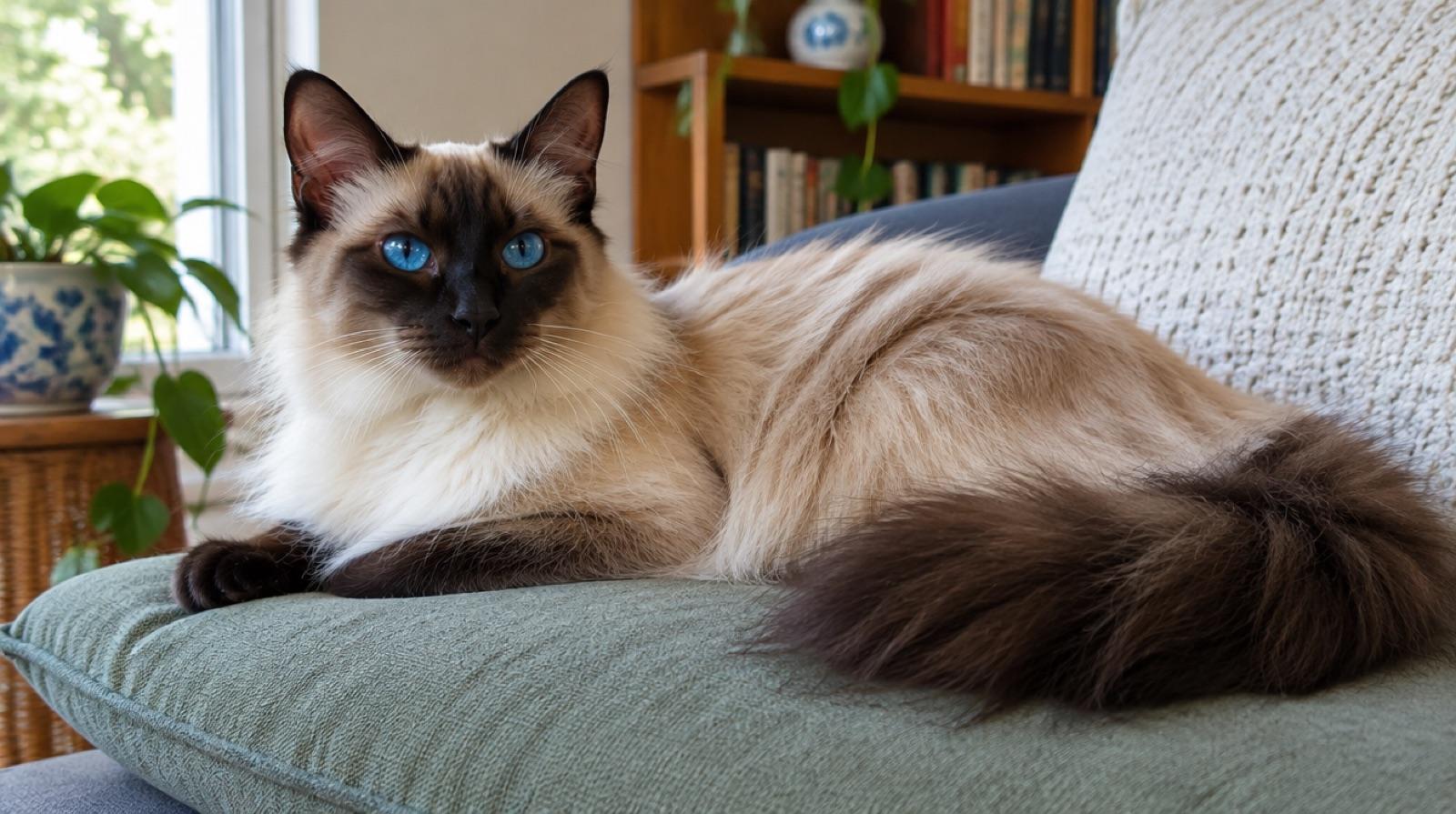
Should you adopt or buy a Balinese?
It depends on whether the papers matter. If you want a registered Balinese with known parents and DNA results, a council-registered breeder is the only route, and with this breed you should expect to make enquiries and wait. If what you want is a talkative, affectionate Siamese-type cat, the Siamese and long-haired cats in rescue are worth watching: numbers change daily, and the fee covers desexing, microchipping and vaccination.
The RSPCA Australia Knowledgebase encourages prospective owners to adopt from the RSPCA or another reputable animal welfare, rehoming or rescue organisation. If you buy from a breeder, it suggests at a minimum checking they are registered by the relevant authority in your state or territory, visiting the place where the animal was born, and meeting the parents, especially the mother.
| Route | Reference cost | What you usually get | Main risk |
|---|---|---|---|
| Registered breeder | No price published on member breeders' own websites (November 2026); ask | A papered kitten with known parents and DNA results | No breeder listed in the council directories we checked; expect to wait |
| Rescue | A rescue fee; see the examples below | Siamese-type and long-haired cats of all ages, desexed, microchipped and vaccinated | Unknown parents; a breed label in a listing describes looks, not papers |
| Online ad or social media | Anything; Scamwatch says a very cheap pet is likely a scam | Anything from a real litter to a kitten that does not exist | Scams, “hypoallergenic” promises, pointed longhair moggies sold as Balinese |
Rescue fees read 12 November 2026 on the pages linked below. Reference only, not a quote: rescues set and change their own fees, so check with them.
How do the Australian registries treat the Balinese and the Javanese?
The CCCA and the ACF each publish a Balinese standard that ties it to the Siamese, and ANCATS includes it in its breed profiles. The names differ for the unpointed longhair version. Read on 12 November 2026:
| Registry | Balinese | Unpointed longhair |
|---|---|---|
| CCCA | Standard, issue date November 2023: “a semi longhaired cat, derived from the Siamese breed”; type and colour “conform in all respects to the Siamese standard”. Outcrosses: Siamese, Oriental Shorthair and Longhair | Oriental Longhair, covered in the Oriental standard (November 2023); no separate Javanese standard on the CCCA list |
| ACF | Standard updated 1 November 2024, source FIFe 1987: body, points and eye colour conform to the comparable Siamese varieties; “the only difference is in hair length”. Outcrosses: Oriental Longhair and Shorthair, Siamese | Oriental Longhair, listed with the Oriental Shorthair on the ACF DNA list |
| ANCATS | Breed profile: named after Balinese dancers; a semi-longhair, svelte and elegant, with brilliant blue eyes | A separate Javanese profile: green eyes, “obtained recently by crossing Oriental Shorthairs and Balinese” |
The Tasmanian Feline Association lists “Oriental Longhair (Javanese)” in the same Group 2 as the Balinese and Siamese, so you will see both names in Australian pedigrees. If a breeder offers a “Javanese”, ask which council registered it and under which breed name.
Overseas, TICA calls the Balinese a longhaired variety of the Siamese and part of its Siamese Breed Group, with the Siamese, Oriental Shorthair and Oriental Longhair. The Cat Fanciers' Association says longhaired kittens appeared in Siamese litters as far back as the early 1900s, that breeders began developing the Balinese in the 1940s, and that it was accepted for CFA championship competition in 1970. The CFA accepted non-traditional colours under the name Javanese in 1979, and in 2008 its breeders voted to combine the two as one breed with separate divisions.
What the Australian standard asks for
- Coat: semi-long, fine and silky, without undercoat, shorter on the head and shoulders, with a long, feathery tail plume. The CCCA penalises a definite double or woolly coat.
- Type: the Siamese wedge head, large flared ears and long, svelte body; the CCCA penalises a lack of Siamese type.
- Colour: pointed, in the Siamese colours and patterns, with decidedly blue eyes. White toes or incorrect eye colour rule a cat out of awards.
- Breeding note: since 2008 the CCCA standard says offspring of shorthair and longhair matings are not to be bred into shorthair programmes.
For the Siamese side of the family, including how the modern and traditional looks differ, see our guide to applehead vs modern Siamese.
What does a Balinese kitten cost in Australia?
We could not find a published price. No Australian cat council or club publishes a Balinese price, and Cats Victoria (GCCFV) says kitten pricing is up to individual breeders and will vary depending on the breed. In November 2026 we looked for Balinese catteries on council breeder lists and through search. The Cats Victoria, NSW CFA and GCCFSA breeder directories had no Balinese breeder listings; the Australian Balinese catteries we found advertise through directory listings without a website of their own or without a published price; the Siamese and Oriental catteries we read that publish a price do not list Balinese; and the other Balinese cattery websites we found were overseas. That is what we could check, not proof that no Australian breeder publishes a price. We do not quote overseas prices or prices from listing sites or social media.
| Route | Reference figure | Read |
|---|---|---|
| Member breeders | No Balinese price published on their own websites; ask each breeder | 12 Nov 2026 |
| Cat councils and clubs | No Balinese price published | 12 Nov 2026 |
| RSPCA NSW | $270 kitten under 6 months; $220 cat over 6 months | 12 Nov 2026 |
| Cat Protection Society of NSW | $150 per cat or kitten; $250 for two | 12 Nov 2026 |
Reference figures only, not quotes. Rescues set and change their own fees, so check with them; RSPCA NSW says its animals are desexed, microchipped, vaccinated and health-checked before adoption. Fees in other states are in our guide to kittens for sale in Australia. For what Siamese breeders publish, see our Siamese kittens guide; those prices are for Siamese, not Balinese.
When you ask a breeder, Cats Victoria suggests asking whether the kitten is desexed, how many vaccinations it has had, whether it is microchipped and whether there is a health guarantee.
Which health tests should a Balinese breeder show you?
The Australian Cat Federation's minimum testing list (October 2025) names two DNA tests for the Balinese and adds that because Balinese are freely interbred with Siamese and Oriental Shorthair and Longhair cats, testing for all diseases relevant to those breeds is recommended. The Siamese entry on the same list is longer.
| Test (ACF list) | What it screens for |
|---|---|
| PRA rdAc (Balinese entry) | An inherited late-onset blindness. The UC Davis Veterinary Genetics Laboratory says affected cats have normal vision at birth, that most become blind at about 3 to 5 years of age, and that the variant poses “a significant health risk in the Siamese breed group”, which includes the Balinese and Javanese |
| PKD 1 (Balinese entry) | Polycystic kidney disease (listed at one laboratory) |
| Siamese-relevant tests | The Siamese entry lists gangliosidosis GM1, MPS VI, Niemann-Pick disease, PKD 1 and two forms of acute intermittent porphyria, plus amyloidosis outside DNA testing; ask which of these the breeder runs |
Source: ACF DNA tests by breed (October 2025), read 12 November 2026. A test being on the list means breeders should screen for it, not that every line carries it. This is a buying checklist, not veterinary advice. The ACF also says AB blood group types should be monitored in all breeds.
UC Davis says PRA rdAc is autosomal recessive: a carrier sees normally, but two carriers bred together can produce affected kittens, and there is no treatment. Ask to see results for both parents, with names or microchip numbers that match the litter. The CFA says Balinese are generally healthy but can be predisposed to some conditions, from minor ones such as crossed eyes or tail kinks to others that need genetic or physical testing.
See the Siamese-type cats listed right now
Siamese and Siamese crosses from the rescues and shelters we aggregate, with each rescue's notes on personality and other pets. Numbers change daily. Every listing links to the rescue, where you apply directly.
Are Balinese cats good for allergies?
Not reliably. The Balinese appears on some “hypoallergenic” lists: RSPCA South Australia, for example, names it among cat breeds that are considered hypoallergenic, while saying no furry friend is 100% allergen free. The medical position is plainer. The Australasian Society of Clinical Immunology and Allergy (ASCIA) says that as all cats have sebaceous glands, all cat breeds can cause allergies.
If anyone at home has a cat allergy or asthma, talk to a doctor first, and spend long, repeated visits with the individual cat before committing. A breeder who guarantees a kitten will not trigger allergies is making a promise no one can keep. Our guide to hypoallergenic cats in Australia covers the evidence and how to test a cat.
What is a Balinese like to live with?
The Cat Fanciers' Association describes the Balinese as vocal, affectionate and active: alert and always curious, less talkative than the Siamese, but with “ongoing conversation” the norm. TICA says Balinese prefer to be near their people, though not always directly on top of them, gives adult females about 5 to 8 pounds (about 2.3 to 3.6 kg) and males about 8 to 12 pounds (about 3.6 to 5.4 kg), and says kittens do not fully develop until 18 to 24 months.
Grooming is lighter than the coat suggests. The CFA says Balinese are single-coated with no downy undercoat, so they are not susceptible to mats, and recommends combing or brushing several times a month to control shedding.
- Good fit: a home where someone is around much of the day and a chatty, people-focused cat is welcome.
- Think twice: long days out, a wish for a quiet cat, or choosing the breed for allergies.
Our Sydney guide to Siamese temperament and companionship covers the family personality in depth. Not sure what kind of cat suits you? Try the what cat breed am I quiz, and see our cost of owning a cat guide for the ongoing costs.
How do you check a Balinese breeder?
Rescue is not right for everyone. A registered breeder makes sense if you want a kitten with known parents and DNA results, a particular point colour, or plan to show. If you go that way:
- Registration. Ask which council the breeder belongs to: ANCATS, a member body of the Australian Cat Federation, or a member council of the CCCA. Check with that council directly.
- The breed name on the papers. Balinese, Javanese or Oriental Longhair mean different things to different councils.
- DNA results for both parents: PRA rdAc, PKD 1 and the Siamese-relevant tests the breeder runs.
- Amyloidosis history. It is listed for the Siamese with no DNA test; ask whether it has appeared in the lines.
- The mother, in person or on a live video call, before any deposit.
- Age and paperwork. At least 10 weeks old (ANCATS recommends 12), vaccinated, microchipped and desexed or with desexing agreed in writing. Our kittens for sale guide has each state's rules for kitten ads.
What do Balinese kitten scams look like?
Never pay for a kitten you have not seen with its mother, in person or at least on a live video call, and never pay a deposit to a seller you cannot verify.
Scamwatch says scammers set up fake websites, and fake social media and marketplace profiles, to get you to pay for popular breeds and pets that do not exist. Its advice: view the pet in person by visiting the breeder or seller, ask to see the pet on a video call with the breeder, verify the breeder is legitimate and accredited, and compare prices, because a very cheap pet is likely a scam. It also warns about being asked to pay by money order, pre-loaded card, or to several different PayIDs or accounts.
- “Hypoallergenic” guarantees. ASCIA says all cat breeds can cause allergies.
- A fluffy pointed kitten sold as a Balinese without papers. A fluffy colourpoint kitten could be any longhaired cat with pointed parents.
- “Registered” with no council named, or a membership you cannot confirm with that council.
- Copied photos. Run a reverse image search on the kitten photos and search a sentence of the ad.
If you have already paid, contact your bank straight away and report it to Scamwatch.
Where to find a Balinese type cat to adopt
We do not have a Balinese breed page, so watch the Siamese and long-haired cat listings and set an alert. A rescue's breed label describes how a cat looks; the foster carer can tell you how vocal it is and how it copes with time alone.
Siamese listings
- Siamese for adoption in Sydney
- Siamese for adoption in Melbourne
- Siamese for adoption in Brisbane
- Siamese for adoption in Perth
- Siamese for adoption in Adelaide
- Australia-wide: the Siamese and Oriental Shorthair breed pages.
Long-haired cats
Long-haired cats in Sydney, Long-haired cats in Melbourne, Long-haired cats in Brisbane, Long-haired cats in Perth, Long-haired cats in Adelaide. Our Sydney guides cover Siamese adoption and Siamese health issues.
Before you apply, the adoption readiness check takes a few minutes, and our guide to adopting a cat in Australia walks through the process.
Frequently asked questions
Should I adopt or buy a Balinese kitten?▼
Buy from a breeder registered with a cat council if it has to be a papered Balinese with known parents and the Siamese-family DNA results, and expect to search and wait: we could not find a member breeder publishing a Balinese price on its own website in November 2026. If what you want is a talkative, affectionate Siamese-type cat, check the Siamese and long-haired cats in rescue. Numbers change daily, so check the live listings.
How much is a Balinese kitten in Australia?▼
We could not find a published price. No Australian cat council or club publishes one, Cats Victoria (GCCFV) says kitten pricing is up to individual breeders, and in November 2026 we found no member breeder publishing a Balinese price on its own website. We do not quote prices from listing sites or overseas catteries. A rescue cat costs the normal rescue fee, for example $220 for a cat over 6 months at RSPCA NSW (read 12 November 2026; fees change, so check with them; reference only, not a quote).
What is a Balinese cat?▼
A longhaired Siamese. The CCCA standard (November 2023) calls it a semi-longhaired cat derived from the Siamese breed whose type and colours conform in all respects to the Siamese standard, and says the long hair may diffuse but never conceal the Siamese type. The ACF standard says the only difference from the Siamese is hair length.
Is the Balinese recognised in Australia?▼
Yes. The Coordinating Cat Council of Australia publishes a Balinese standard (issue date November 2023), the Australian Cat Federation publishes one (updated 1 November 2024), and ANCATS carries a Balinese breed profile. In the US, the Cat Fanciers' Association accepted the Balinese for championship competition in 1970.
What is the difference between a Balinese and a Javanese?▼
It depends on the registry. ANCATS has a separate Javanese profile: a semi-longhair with green eyes, obtained by crossing Oriental Shorthairs and Balinese. The Tasmanian Feline Association lists Oriental Longhair (Javanese) as its own breed, and the CCCA covers the Oriental Longhair in its Oriental standard. The CFA used the name Javanese from 1979 for non-traditional colours and merged it into the Balinese in 2008.
What colours do Balinese cats come in?▼
Pointed colours only, with blue eyes. The CCCA standard follows the Siamese colours, including solid points such as seal, blue, chocolate and lilac, plus tortie, tabby and other pointed patterns, and withholds awards for white toes or eye colour other than blue. A longhaired cat of Siamese type without points is an Oriental Longhair, not a Balinese.
What health tests should a Balinese breeder do?▼
The Australian Cat Federation's minimum testing list (October 2025) names PRA rdAc, an inherited late-onset blindness, and PKD 1 for the Balinese, and recommends testing for all diseases relevant to the Siamese and Oriental, because the breeds are freely interbred. For the Siamese the list includes gangliosidosis GM1 and MPS VI, among others. Ask to see results for both parents.
Are Balinese cats hypoallergenic?▼
No cat is. ASCIA, the Australasian Society of Clinical Immunology and Allergy, says that as all cats have sebaceous glands, all cat breeds can cause allergies. RSPCA South Australia lists the Balinese among breeds considered hypoallergenic, but says no furry friend is 100% allergen free. If anyone at home is allergic, get medical advice and spend real time with the individual cat first.
Do Balinese cats need a lot of grooming?▼
Less than most longhairs. The Cat Fanciers' Association says Balinese are single-coated, with no downy undercoat, so they are not susceptible to mats, and recommends combing or brushing several times a month to control shedding. The CCCA standard notes that kittens may be slow to develop their adult coat length.
What is a Balinese like to live with?▼
Chatty and involved. The Cat Fanciers' Association describes the breed as vocal, affectionate and active, less talkative than the Siamese but with ongoing conversation the norm. TICA says Balinese like to be near their people, though not always on top of them. Every cat is an individual, so ask about the one you meet.
How old should a Balinese kitten be when it goes home?▼
At least 10 weeks. ANCATS rules set 10 weeks as the minimum and ANCATS recommends 12, and Cats Victoria (GCCFV) says a kitten must be 10 weeks of age or older, vaccinated, desexed and microchipped before it comes to you. TICA notes Balinese kittens mature slowly and do not fully develop until 18 to 24 months.
Sources
- Coordinating Cat Council of Australia: Balinese standard (November 2023)
- Coordinating Cat Council of Australia: Oriental Shorthair & Longhair standard (November 2023)
- Australian Cat Federation: Balinese standard (updated 1 November 2024)
- Australian Cat Federation: DNA health testing by breed (Oct 2025)
- ANCATS: Find a breeder and breed profiles
- ANCATS: Registration rules
- Tasmanian Feline Association: Our breeders (breed groups)
- TICA: Balinese breed page
- Cat Fanciers' Association: Balinese breed profile
- UC Davis Veterinary Genetics Laboratory: PRA rdAc test
- Cats Victoria (GCCFV): Breeders and buying a kitten
- NSW CFA: Breeder's directory
- GCCFSA: Find a breeder
- RSPCA Australia Knowledgebase: Where should I go for a new companion animal?
- Scamwatch: Buying and selling scams (pet scams)
- ASCIA: Pet allergy
- RSPCA South Australia: Pets for people with allergies
- RSPCA NSW: Adoption fees
- Cat Protection Society of NSW: Cats for adoption
Keep reading
Siamese kittens: adopt or buy?
The shorthaired original: the breed society price, the same DNA tests, and Siamese in rescue.
Oriental Shorthair kittens: adopt or buy?
Siamese type without the points: breeder checks, PRA and MPS VI tests, and rescue.
Hypoallergenic cats in Australia
What ASCIA says about cat allergies, why no breed is a guarantee, and how to test a cat first.
Kittens for sale: adopt or buy?
State breeder rules, how to check a seller, and what rescue kittens cost.