The short answer
You can adopt a Siamese in Sydney, but be patient: purebreds are rare in rescue, crosses are more common, and adoption is a fraction of breeder cost. Register with the main NSW cat rescues, set alerts, and have your application ready so you can move the day a colour-pointed cat is listed. Expect about $100 to $300 all inclusive of desexing, vaccination, microchipping and a FIV check, against several thousand from a breeder. A Siamese cross gives you the same voice and look far sooner, and for the lowest cost.
What a Siamese cat actually is
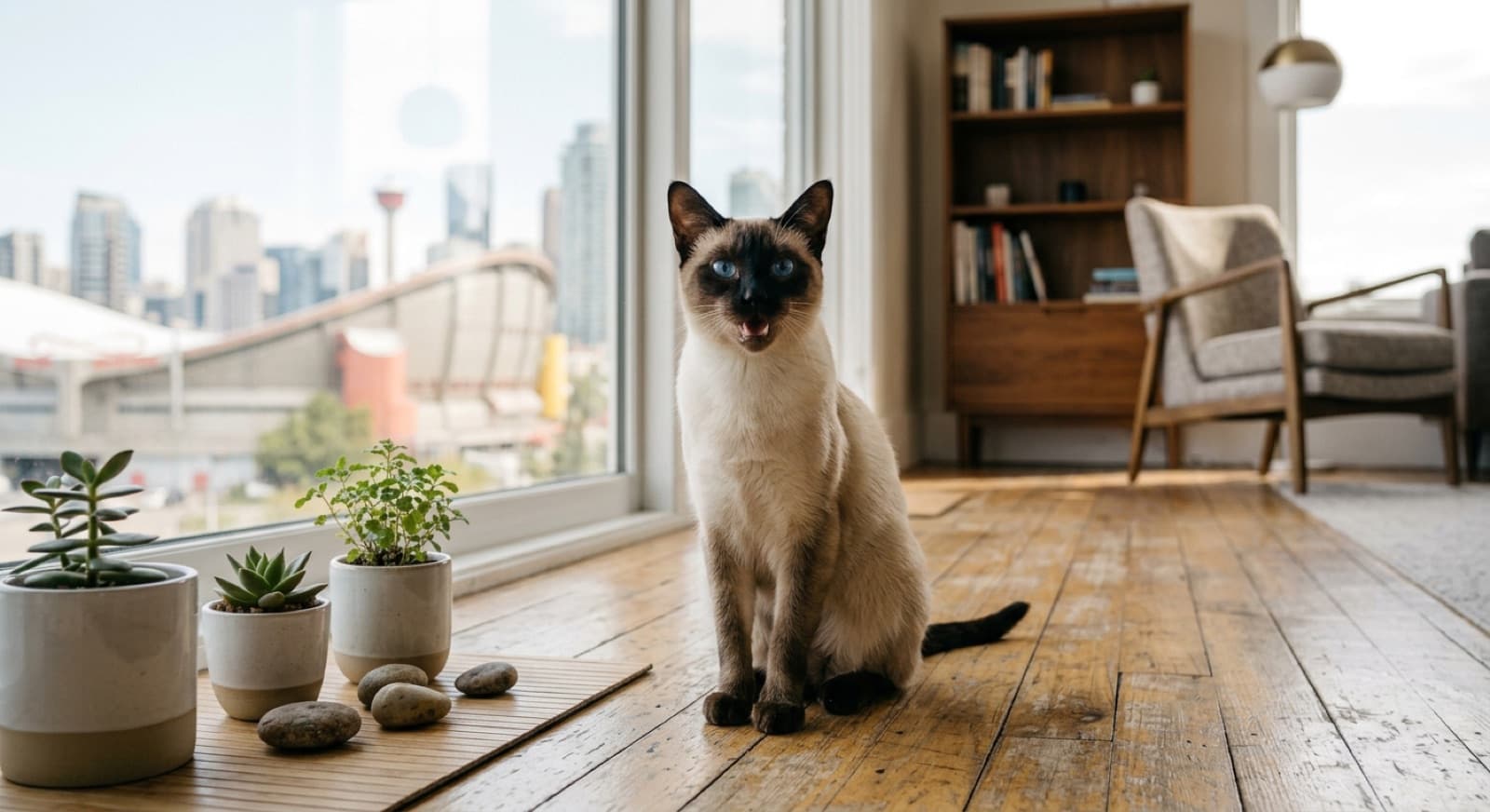
A Siamese is one of the most recognisable cats in the world: a sleek, short-coated cat with colour points, meaning a pale body with darker colouring on the face, ears, paws and tail. The classic points come in seal, chocolate, blue and lilac, set off by almond-shaped, vivid blue eyes. The build is fine-boned and athletic rather than heavy, and the whole look is elegant and angular.
What defines a Siamese is not really the coat, it is the personality. They are famously vocal, holding loud, insistent conversations with their people all day. They are intensely people-oriented, affectionate and often demanding of attention, following you room to room and wanting to be involved in everything. They are intelligent and active, closer to a busy toy breed of dog than a placid lounge cat. And they bond hard, which means they dislike being left alone for long stretches and do best with company or a companion cat.
None of that is a flaw. For the right home, a Siamese is a devoted, engaging, endlessly entertaining companion. But the voice and the neediness genuinely surprise people who chose the breed for its looks, which is exactly why some end up in rescue. We go deep on temperament and companionship needs in a dedicated Siamese temperament guide.
Why Siamese are rare in rescue, and why they still turn up
Purebred Siamese are uncommon in Sydney rescue for a simple reason: they are a deliberately bred pedigree cat, not a free-roaming moggie. The overwhelming majority of cats in NSW shelters are domestic shorthairs and their crosses, which enter the system in huge numbers through unplanned litters and stray colonies. A papered Siamese was bought on purpose, so far fewer ever reach a shelter.
When one does surrender, the reason is often the very traits described above. Someone falls for the striking blue-eyed look, buys a kitten, and is caught off guard by the constant talking, the demand for attention, and the separation issues when the cat is left alone all day. Add a house move, a new baby, an allergy or a relationship change, and a Siamese can land in rescue through no fault of its own.
The more common sight is a Siamese cross or a Siamese-type cat: a domestic cat carrying the pointed colouring, blue eyes, or the unmistakable Siamese voice from mixed ancestry. These appear across Sydney rescues far more often than full purebreds, and they carry the same distinctive character. If it is the look and the personality you want rather than a pedigree certificate, a cross is the realistic and often better answer.
Where to adopt a Siamese or Siamese cross in Sydney
Because purebreds are rare, the strategy matters more than the specific rescue. Register with several groups, turn on alerts where you can, and be application-ready so you can act fast. These are the main NSW cat rescues where a Siamese or pointed cat can appear:
Cat Protection Society of NSW
A cat-only adoption centre in Newtown, and the best place to start for a breed-specific match, because staff who work only with cats can flag a Siamese or pointed cat and describe its temperament honestly. Every cat is desexed, vaccinated, microchipped and FIV tested. Listings at catprotection.org.au.
Sydney Dogs and Cats Home
Sydney's oldest shelter, founded in 1946 and based at Strathfield South. It takes cats through owner surrender and council contracts, so the intake is broad and varied, and pointed or Siamese-cross cats pass through regularly. Adoption includes desexing, vaccination, microchipping and a vet check. More at sydneydogsandcatshome.org.
RSPCA NSW
The Sydney Adoption Centre at Yagoona plus a statewide network rehome a steady stream of cats. Their listings are searchable and worth checking often for a Siamese-type cat. Adoption includes desexing, vaccination, microchipping, a FIV check and a behavioural assessment. Apply at rspcansw.org.au.
AWL NSW
Animal Welfare League NSW runs the Kemps Creek Shelter plus around a dozen volunteer branches, many fostering cats in real homes. That means detailed notes on how a cat behaves, which is gold when you want a vocal, high-interaction breed to suit your household. Current listings on awlnsw.com.au.
Maggie's Rescue and Brighter Future Cat Rescue
Both run foster-based models, so cats are assessed in real homes and the temperament notes are honest and detailed. Maggie's Rescue is Inner West based in Marrickville (maggiesrescue.org), and Brighter Future Cat Rescue is a cat-only foster network in Western Sydney (brighterfuturecatrescue.com). Foster observation matters more for a Siamese than for a placid cat, because you want to know how it copes with alone time.
A note on “Siamese Rescue NSW.” Adopters often search for a single-breed Siamese rescue, and we cannot verify a currently-active, NSW-based organisation that only handles Siamese cats. Breed-specific pedigree cats are simply too uncommon in rescue to support one. Treat any group presenting itself that way with caution, never send a deposit before confirming it is real and has a physical presence, and use the general rescues above with alerts instead.
What it costs: adopt versus buy
This is where adoption wins outright. Through a Sydney rescue you can expect:
- Adult Siamese or cross: about $100 to $250, all inclusive of desexing, F3 vaccination, microchipping and a FIV check.
- Kitten: about $150 to $300, covering the same vet work plus the early vaccination course.
- Purebred from a breeder: far more up front, commonly well into four figures and often several thousand dollars, with none of that vet work done.
The gap is stark. A rescue fee bundles hundreds of dollars of veterinary work into the price, so an adopted Siamese cross can cost roughly a tenth of a breeder purebred once you add up what a private buyer pays for the cat and then the desexing, jabs and chip themselves. A Siamese-cross from rescue is the cheapest route of all to the look and the voice.
Budget for ongoing costs too: quality food, litter, scratching posts and climbing furniture (a Siamese needs the enrichment), annual vet checks, and a vet-recommended parasite product. In Sydney that product matters, because the paralysis tick is present in bushland areas year round and is dangerous to cats. Ask your vet for a cat-safe option, since some products made for dogs are toxic to cats, and consider pet insurance while the cat is young. For the full adoption process, our complete Sydney cat adoption guide covers fees, NSW law and applications in detail.
If you have been searching “Siamese cat for sale”
Plenty of people land here after searching for a Siamese kitten to buy, and the reframe is worth hearing out. Adoption gives you the same striking cat for a fraction of the price, already desexed, vaccinated, microchipped and FIV tested. A cross carries the points, the blue eyes and the famous voice without the breeder price tag or the wait list.
It is also far safer. The online market for popular purebred kittens is a documented hotspot for deposit scams: a seller advertises a Siamese kitten, asks for a deposit or full payment up front, and then disappears with a cat that never existed. The ACCC Scamwatch records these regularly. Never transfer money before you have seen the cat in person and confirmed the seller is genuine. A registered rescue, by contrast, has a physical location, a current adoptable list, and a cat that is already vetted. When the risk is a scam on one side and a vetted cat on the other, adoption is the clear call.
Browse adoptable Siamese cats in Sydney
Purebred Siamese are rare, so Siamese crosses and pointed cats are your best route to the look and the voice. Check the live listings and set an alert so you hear the moment one is added.
See Available Siamese Cats →The Siamese personality is the real thing to consider
Before you set alerts, be honest about whether the breed suits your life, because looks are the easy part. A Siamese is loud. They talk constantly, and the voice is carrying and insistent, which delights some owners and wears others down. They are also intensely social and hate being ignored or left alone all day, so a Siamese in an empty house from 8 to 6 is a recipe for boredom, over-attachment and vocal distress.
This is the single biggest reason a companion helps. Two cats keep each other occupied, so a bonded pair or a second compatible cat is well worth considering for a Siamese, especially in a working household. You can browse cats listed together on the bonded pairs page. If you want a quiet, independent cat that entertains itself, a Siamese is probably the wrong match, and a calmer domestic shorthair will make you both happier. We unpack the voice, the neediness and how to meet those needs in the Siamese temperament and companionship guide.
Indoor living suits a Siamese
Most Sydney rescues now adopt cats out to live indoors or with contained outdoor access, and a Siamese takes to that well, provided the home is set up for it. Their intelligence and energy mean an indoor Siamese needs real enrichment: vertical space to climb, scratching posts, puzzle feeders, window perches for watching the street, and daily interactive play. Give them that and they are perfectly content inside, and they live longer for it, away from traffic, cat fights and ticks.
Indoor keeping is also the responsible choice in Sydney, where free-roaming cats face heavy traffic and paralysis ticks and threaten vulnerable native wildlife, and a growing number of NSW councils are bringing in containment rules. If you are adopting a cat that has lived outdoors, the transition takes patience but is very doable. We cover catios, harness training and how to move an outdoor cat indoors humanely in the indoor versus outdoor cats guide.
Health, in brief
Siamese are generally an active, long-lived breed, and a rescue cat arrives already vet-checked, desexed, vaccinated and FIV tested, so you start with a clear picture of its health. As a pedigree line, Siamese do have some breed-associated tendencies worth understanding before you adopt, and a Siamese cross often benefits from a wider gene pool. The Australian Veterinary Association (ava.com.au) and the RSPCA Australia Knowledgebase (kb.rspca.org.au) are good starting points, and your own vet is the authority on any individual cat. We go into the breed's health profile and what to ask a rescue in the Siamese health guide.
Choosing your Siamese
A few practical calls make the difference between a good adoption and a hard one:
- Adult versus kitten. An adult Siamese has a known temperament the rescue or foster can describe: how vocal it is, how it copes with alone time, whether it is relaxed with children or other pets. That known quantity is often the safer choice, especially for a busy home. A kitten is adaptable but its full Siamese intensity is still developing.
- Read the foster notes. For a breed this personality-driven, the notes predict fit far better than looks. Look for lines about talkativeness, neediness and how the cat handles being left alone.
- Consider a cross. A Siamese-type cross gives you the points, the blue eyes and the voice, appears in rescue far more often, and costs less. For a pet, it is not a downgrade.
- Think about a companion. If you are out for long days, a bonded pair or a second cat suits a Siamese better than a solo life.
Get those right, register with the rescues, and set your alerts. The wait for a Siamese can be longer than for an ordinary moggie, but a colour-pointed cat with a big voice and a bigger personality is well worth it for the right home.
Frequently Asked Questions
Where can I adopt a Siamese near me in Sydney?
Start with the main NSW cat rescues and set alerts, because a purebred Siamese is a rare listing. Cat Protection Society of NSW in Newtown, Sydney Dogs and Cats Home at Strathfield South, RSPCA NSW at Yagoona, AWL NSW at Kemps Creek, Maggie's Rescue in Marrickville and Brighter Future Cat Rescue in Western Sydney all rehome cats regularly, and colour-pointed or Siamese-cross cats turn up across them. Purebreds go fast, so browse a few rescues at once, register for alerts on the ones with a notify feature, and have your application details ready so you can move the day one appears. A Siamese-type cross gives you the same look and voice far sooner than waiting for a papered purebred.
Why are Siamese cats rare in rescue?
Purebred Siamese are uncommon in rescue because they are a deliberately bred pedigree cat, not a free-roaming moggie, so far fewer enter the shelter system in the first place. Most cats in Sydney rescue are domestic shorthairs and their crosses, which vastly outnumber any pedigree breed. When a Siamese does surrender, it is often because an owner bought one for the striking looks and was surprised by how vocal and demanding the breed is. Siamese crosses and pointed cats appear more often than full purebreds, and they carry the same distinctive traits.
How much does it cost to adopt a Siamese versus buy one?
Adopting a Siamese or Siamese cross through a Sydney rescue costs about $100 to $250 for an adult and $150 to $300 for a kitten, and that fee already covers desexing, F3 vaccination, microchipping and a FIV check. Buying a purebred Siamese from a breeder costs far more, commonly well into four figures and often several thousand dollars, with none of that vet work included. So adoption is both dramatically cheaper and safer, and the cat arrives already vetted. A Siamese-cross from rescue gives you the breed's look and personality for the lowest cost of all.
Are there Siamese rescues in NSW?
Adopters often search for a dedicated Siamese Rescue NSW, and we cannot verify a currently-active, NSW-based rescue that only handles Siamese cats. Do not send money or a deposit to any group presenting itself that way without confirming it is real, registered and has a physical presence. The reliable path is the general NSW cat rescues, which do take in Siamese and Siamese crosses, plus alerts so you hear the moment one is listed. Breed-specific pedigree cats are simply too uncommon in rescue to support a single-breed shelter the way high-volume dog breeds sometimes do.
Are Siamese cats good indoor cats?
Yes. Siamese are people-oriented, active and intelligent, which makes them a strong fit for indoor or contained living where they get interaction and stimulation. Most Sydney rescues already adopt cats out to live indoors or with contained outdoor access, given the traffic, paralysis ticks and native wildlife. A Siamese does need more enrichment than a placid cat: vertical space, daily play, puzzle feeders and ideally a companion, because they hate being bored or ignored. Set the home up for climbing and play and an indoor Siamese thrives.
Are Siamese crosses as good as purebreds?
For a family pet, a Siamese cross is often the better choice, not a compromise. Crosses usually carry the classic Siamese look and voice, the colour points, blue eyes and talkativeness, while the mixed genetics can soften some of the extremes and widen the health pool. They also appear in Sydney rescue far more often than purebreds and cost less. Unless you specifically want to show or breed a papered cat, which rescue cats are desexed and cannot do anyway, a Siamese-type cross delivers everything most adopters actually want.
Is it safe to buy a Siamese kitten online?
Be very careful, because the online market for popular purebred kittens is a documented hotspot for deposit scams. A common scam asks you to pay a deposit for a Siamese kitten that does not exist, then the seller disappears. The ACCC Scamwatch records these regularly. Never transfer money before you have seen the cat in person, confirmed the seller is genuine, and ideally viewed the mother. Adoption sidesteps the risk entirely: a rescue is a registered organisation with a physical location and a current adoptable list, and the cat is already desexed, vaccinated and microchipped.
Should I adopt one Siamese or two?
Two is worth serious thought if you are out for long stretches, because Siamese are among the most companionship-hungry cats and dislike being left alone. A pair keeps each other company, which prevents the boredom, over-attachment and vocal distress that a lonely single Siamese can develop. If a rescue lists a bonded pair of Siamese or pointed cats, adopting both is usually easier than one, and often for a single combined fee. If you are home most of the day or already have a compatible cat, one may be plenty. Read the foster notes for how the individual cat copes with alone time.
Keep reading
Adoptable Siamese Cats in Sydney
Live listings of Siamese and Siamese-cross cats across Sydney and NSW rescues.
Siamese Health Issues in Sydney
The breed's health profile, what to ask a rescue, and how a cross can widen the gene pool.
Siamese Temperament and Companionship
The voice, the neediness, and why a Siamese often does best with company.
All Cat Adoption Resources
Guides on adopting, kitten care, indoor living and choosing the right cat in Sydney.