The short answer
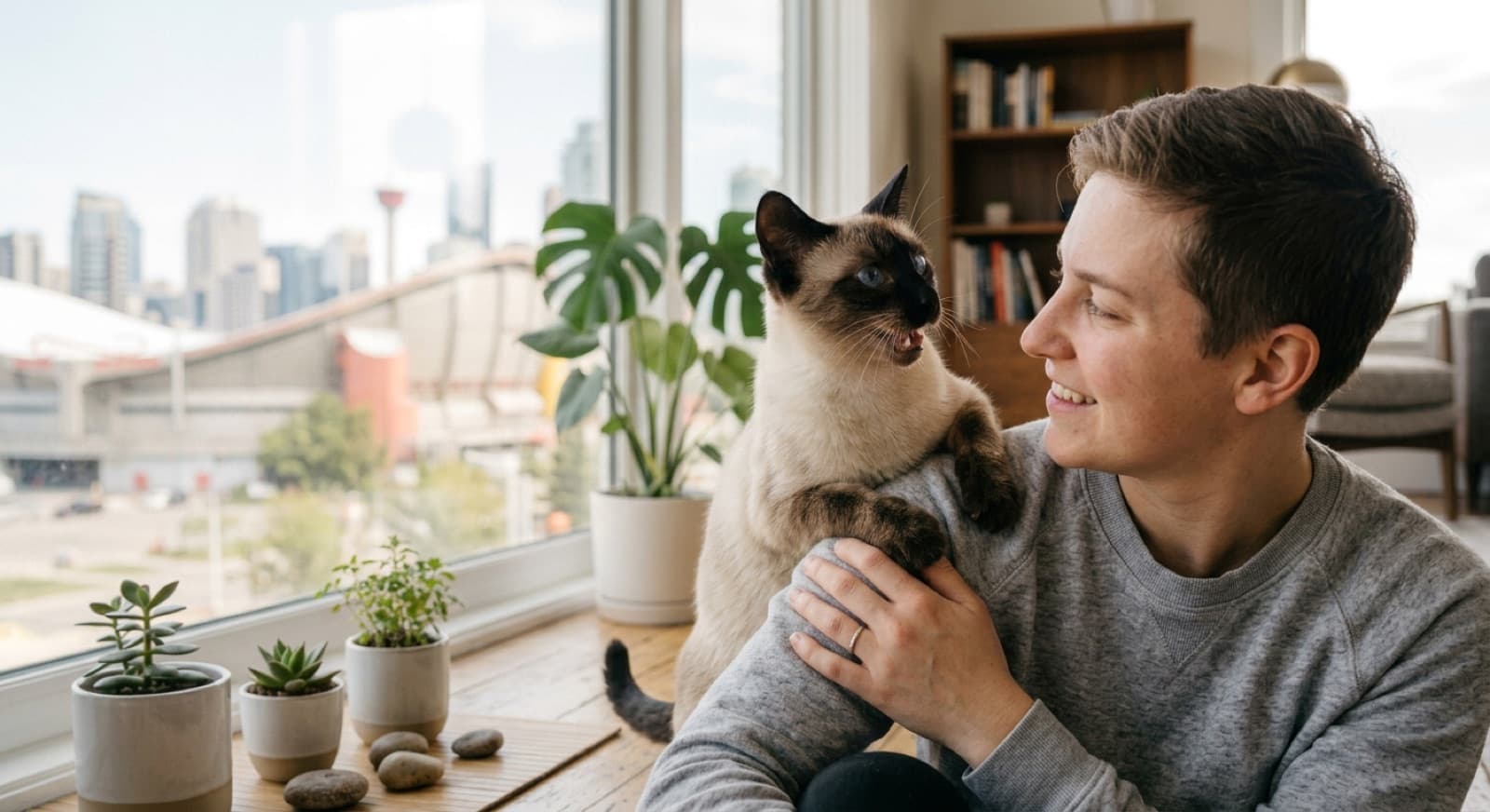
The Siamese is a loud, intensely affectionate, dog-like cat that needs company. That is brilliant for the right home and overwhelming for the wrong one. They are among the most vocal and most people-focused of all cats: they talk to you, follow you everywhere and want constant interaction. They also hate being alone, so a single Siamese left empty all day can become bored and stressed. They suit a household where someone is home a lot, or where they have a companion cat. If you want a quiet, low-demand cat, this is not the breed for you.
The Siamese personality: a shadow, not a loner
If you have only ever met independent, aloof cats, a Siamese will surprise you. This is one of the most social, people-oriented breeds there is. A Siamese bonds hard to its humans and then wants to be with them, on them, or right beside them for most of the day. They follow you from room to room, sit on your lap or drape across your shoulders, sleep in your bed and supervise every task you attempt. Many owners describe them as dog-like, and it is a fair comparison.
They are also clever and active. A Siamese wants a job: a toy to chase, a game to play, a puzzle to solve, a person to talk to. Bored is not a state they tolerate well. That intelligence is part of the charm, but it comes with a need for daily interaction that a self-contained cat simply does not have.
The honest way to think about it is expectation-setting. If you want an interactive, involved, affectionate companion that treats you as its whole world, a Siamese delivers exactly that. If you want a cat that quietly does its own thing while you get on with yours, this breed will frustrate both of you. Neither is wrong, they are just different homes. Whatever you read here, always weigh it against the individual cat's foster notes from the rescue, which describe how that particular cat actually behaves.
Why Siamese are so vocal
The Siamese voice is famous, and it is worth understanding before you adopt one. This breed talks. Their meow is loud, low-pitched and insistent, closer to a conversation than the polite chirp of a quieter cat. They will greet you at the door, tell you they are hungry, ask for play, comment on the birds outside the window and protest loudly at any door closed in their face.
This is normal breed behaviour, not a problem to fix. Vocalising is simply how a Siamese communicates and demands attention, and they are hard-wired to do far more of it than most cats. The RSPCA notes that meowing is a key way cats interact with people, and a Siamese takes that to an extreme. Talk back and many will answer you, which is part of why owners adore them.
The practical catch is that the noise carries. In a Sydney apartment with shared walls, or a townhouse close to the neighbours, a chatty Siamese can genuinely become a noise issue, especially if the cat is bored or left alone and vocalising for company. This is not a reason to avoid the breed, but it is a reason to go in with your eyes open. Know your building, know your tolerance, and set the cat up so it has plenty to do so the talking stays happy rather than distressed.
They need company and hate being alone
This is the single most important thing to understand about the breed. A Siamese bonds so intensely and so completely that being left alone is genuinely hard for them. They are not a cat that shrugs off a quiet, empty house. Long stretches of isolation leave them bored, lonely and stressed, and a stressed Siamese tends to show it.
The behaviour that comes from loneliness is fairly predictable: excessive vocalising, over-grooming that can lead to bald patches, house-soiling outside the litter tray, and destructiveness like scratching or knocking things about. The Australian Veterinary Association points out that many feline behaviour problems are linked to stress and an under-stimulating environment, and for a highly social breed like the Siamese, being alone too much is a direct source of both.
This is why a companion cat is worth serious thought for a Siamese, particularly if your home sits empty during work hours. A compatible feline friend gives them someone to play with, groom and curl up against while you are out, which heads off the loneliness before it becomes a behaviour problem. It is a big reason rescues list bonded pairs, two cats already attached to each other and rehomed together so they are never separated. If you are choosing a Siamese and you are out a lot, adopting a pair, or a Siamese alongside a friendly resident cat, is often the kindest and easiest path. You can browse cats listed as bonded pairs to see what is available. A Siamese will not automatically accept any cat, so introductions still need to be slow and proper, but company genuinely suits the breed.
Enrichment and mental stimulation
A clever, active cat that is left with nothing to do will invent its own entertainment, and you will not enjoy the results. The Siamese needs both physical and mental outlets, and giving them proper enrichment is one of the best things you can do for a happy household. The RSPCA Australia Knowledgebase has good guidance on keeping indoor cats stimulated, and it matters double for a breed this busy.
- Vertical space. Cat trees, shelves and window perches let a Siamese climb, survey and rest up high, which they love.
- Puzzle feeders. Making a cat work for part of its food engages that clever brain and slows down a greedy eater.
- Interactive play. Wand toys and chase games with you, every day, are non-negotiable for this breed. They want to hunt and they want to do it with their person.
- Training and tricks. Siamese are among the most trainable cats. Many learn to sit, come, fetch, and even walk on a harness and lead. Training is enrichment, not a gimmick.
- Rotation. Swap toys in and out so novelty keeps things interesting rather than letting the same three mice go stale.
The goal is simple: give a Siamese a job so it does not create one. A cat with climbing space, daily play, something to solve and ideally a companion is a contented cat. A Siamese with none of that is where the vocalising and mischief come from.
Who a Siamese suits
Matching the breed to the household honestly is what makes for a happy adoption. A Siamese is a wonderful cat for the right home and a poor fit for the wrong one, and the difference is mostly about how much company and interaction you can offer.
A Siamese suits you if:
- Someone is home a lot, or works from home, so the cat has company for much of the day.
- You already have, or are willing to adopt, a compatible companion cat.
- You want an interactive, affectionate, chatty, dog-like cat and you find that endearing rather than exhausting.
- You have time and appetite for daily play and enrichment.
A Siamese is the wrong choice if:
- Your home is empty all day, every day, and you would leave a single cat alone in it.
- You want a quiet, low-demand, independent cat that entertains itself.
- Noise is a real problem for your living situation and you cannot manage a talkative cat.
If that first list sounds like you, a Siamese will reward you enormously. If the second list does, be honest now and choose a calmer, more self-sufficient cat instead. There is no shame in it, and it saves both you and the cat a lot of stress. For the wider view on choosing well, our Siamese adoption guide for Sydney covers where to find them and what to expect.
Indoor life suits a Siamese
A Siamese is well suited to indoor or contained living, and in Sydney that is the safer choice anyway. Free-roaming exposes any cat to traffic, cat fights that spread disease, and paralysis ticks in bushland suburbs, and it puts native wildlife at risk. A growing number of NSW councils now have cat containment rules, and most Sydney rescues adopt cats out to live indoors or with contained outdoor access like a catio, secure yard or harness walks.
For a breed as clever and social as the Siamese, indoor life is not a compromise, provided the home is set up for it. Vertical space, scratching posts, window perches, daily play and ideally a companion cat give them everything they need without the outdoor risks. A harness-trained Siamese can even join you outside safely, which plays to their trainable, adventurous streak. Under NSW law your cat must be microchipped and registered on the NSW Pet Registry, and keeping an indoor microchipped cat makes it far more likely you are reunited if it ever slips out. We cover the full case for containment and how to transition an outdoor cat in our indoor versus outdoor cats guide.
Browse adoptable Siamese cats in Sydney
Siamese and Siamese-cross cats, including bonded pairs, from rescues across Sydney and NSW. The right home for a vocal, devoted cat is one where it will not be lonely.
See Available Siamese Cats →When vocalising or behaviour signals a problem
A talkative Siamese is normal. A sudden change in how much or how a cat vocalises is not, and it deserves attention. The rule of thumb is that any abrupt shift in behaviour warrants a vet visit first, before you assume it is a personality quirk or a training issue.
Watch for these in particular:
- A sudden increase in vocalising, or a change in the sound, especially if it is new for your cat.
- Over-grooming, licking or chewing at the coat until there are thin or bald patches.
- An older cat yowling, often at night. In senior cats this can point to pain, high blood pressure, an overactive thyroid or cognitive decline, all of which a vet can check for.
- Any other change: hiding, appetite shifts, litter tray problems or a normally social cat withdrawing.
The right order is medical first, behaviour second. See your vet to rule out pain, thyroid disease, high blood pressure or other health causes. The Australian Veterinary Association maintains guidance and a vet-finder that can help you locate care. If your cat gets a clean bill of health and the behaviour is stress or anxiety driven, ask your vet about a referral to a veterinary behaviour service. Please do not reach for any medication or dose on your own. What is safe and appropriate is a decision for your vet, who knows the individual cat.
Frequently Asked Questions
Are Siamese cats affectionate?
Yes, Siamese are among the most affectionate and people-focused of all cats. They bond hard to their humans, follow you from room to room, sit on your lap or shoulder, sleep in the bed and want to be part of whatever you are doing. Many owners describe them as dog-like. This makes them wonderful for someone who wants an interactive, involved companion. It also means they are not the cat for a person who wants a quiet, independent pet that keeps to itself. Read a rescue cat's foster notes, but with a true Siamese, expect a shadow, not a loner.
Why are Siamese cats so vocal?
Siamese are vocal because talking is how they communicate and get your attention, and the breed is simply wired to do more of it than most cats. Their meow is loud, low and insistent, almost a conversation, and they will use it to greet you, demand food, ask for play or protest a closed door. This is normal behaviour for the breed, not a fault. It is worth knowing before you adopt, though, because the noise carries. In a flat with shared walls or thin partitions, a chatty Siamese can become a neighbour issue, so factor that into your decision.
Do Siamese cats need a companion?
Many Siamese do best with feline company, especially in a home where people are out for long stretches. Because they bond so intensely and hate being alone, a single Siamese left by itself all day is prone to boredom and stress. A compatible companion cat gives them someone to play with, groom and sleep against while you are gone, which heads off a lot of the loneliness-driven behaviour. This is a big reason rescues list bonded pairs, two cats already attached and rehomed together. A Siamese is not guaranteed to accept any cat, so a slow, proper introduction matters, but company suits the breed.
Can Siamese cats be left alone?
A Siamese can be left alone for a normal working day, but long, regular isolation is where the breed struggles more than most. They are social, clingy and easily bored, so hours on end with no company or stimulation can lead to excessive vocalising, over-grooming or destructive behaviour. If your household is empty for long stretches, the kinder setup is a companion cat plus real enrichment: climbing space, puzzle feeders and interactive play when you are home. A Siamese suits a home where someone is around a lot, or where the cat has feline company, far better than a single-cat home that sits empty all day.
Are Siamese cats good for apartments?
A Siamese can live happily in an apartment because they are indoor-suited and do not need a yard, but two things need managing. First, the noise: a Siamese is loud and talkative, and in a unit with shared walls that can carry to neighbours, so it pays to think about your building before adopting one. Second, boredom: a small space with nothing to do is a recipe for a stressed, vocal cat. Fit vertical climbing space, scratching posts, window perches and daily play, and consider a companion cat if you are out at work. Set up well, an apartment Siamese thrives.
Do Siamese cats get separation anxiety?
Siamese are more prone than the average cat to separation-related stress, because they attach so strongly to their people and dislike being alone. Signs can include excessive vocalising, over-grooming to the point of bald patches, going to the toilet outside the litter tray, or destructive behaviour when you are out. The best prevention is not leaving them isolated for long: a companion cat, plenty of enrichment and a predictable routine all help. If the signs are sudden or severe, see your vet first to rule out a medical cause, then ask about a referral to a vet behaviour service. Do not just wait it out.
Are Siamese cats good with children and other pets?
Siamese are often very good with children and other pets, because they are social, playful and thrive on interaction rather than wanting to be left alone. A busy household with gentle kids and another friendly cat can suit their energy well. The usual rules still apply: supervise young children, teach them to handle a cat kindly, and introduce any resident cat or dog slowly over days to weeks rather than all at once. Every cat is an individual, so lean on the rescue's foster notes, which will tell you how a particular Siamese has behaved around children, dogs and other cats in a real home.
Is a Siamese a good first cat?
A Siamese can be a great first cat for the right person, but it is not a low-demand starter pet. If you want an interactive, affectionate, dog-like companion and you are home a lot or can offer feline company, a Siamese is rewarding and easy to bond with. If you picture a quiet, independent cat that entertains itself while you are out all day, a Siamese will likely frustrate you and be unhappy in return. Be honest about your lifestyle before you commit. For a first cat, a calm adult Siamese with a known temperament from a foster home is a safer choice than a kitten.
Keep reading
Adoptable Siamese Cats in Sydney
Live listings of Siamese and Siamese-cross cats from Sydney and NSW rescues.
Siamese Adoption Guide for Sydney
Where to find a Siamese in Sydney rescue, what it costs, and how to choose the right one.
Siamese Health Issues in Sydney
The breed-specific health conditions to know, and how to budget for veterinary care.
Cat Adoption Resources Hub
Guides on adopting, settling and caring for a rescue cat in Sydney and NSW.