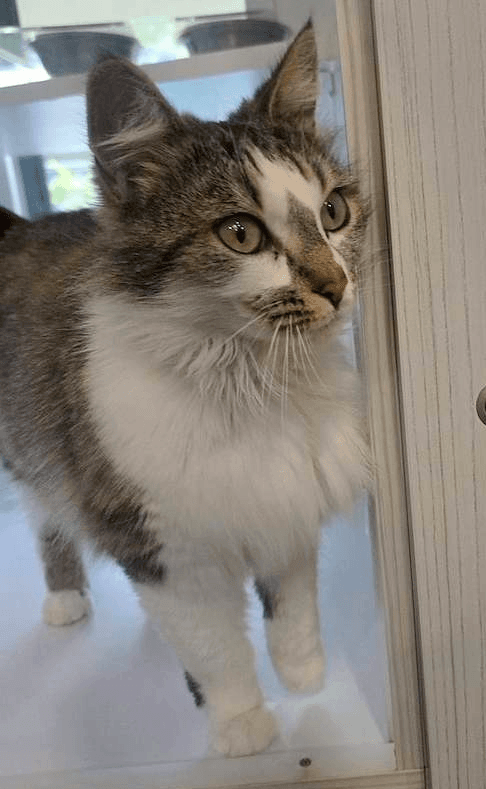
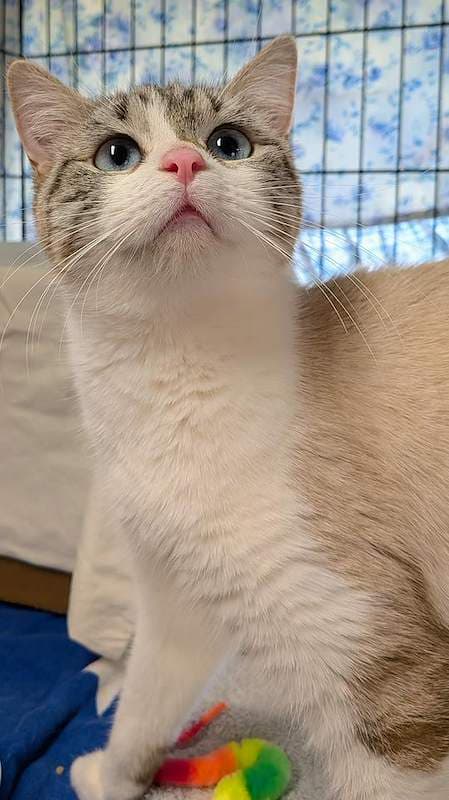
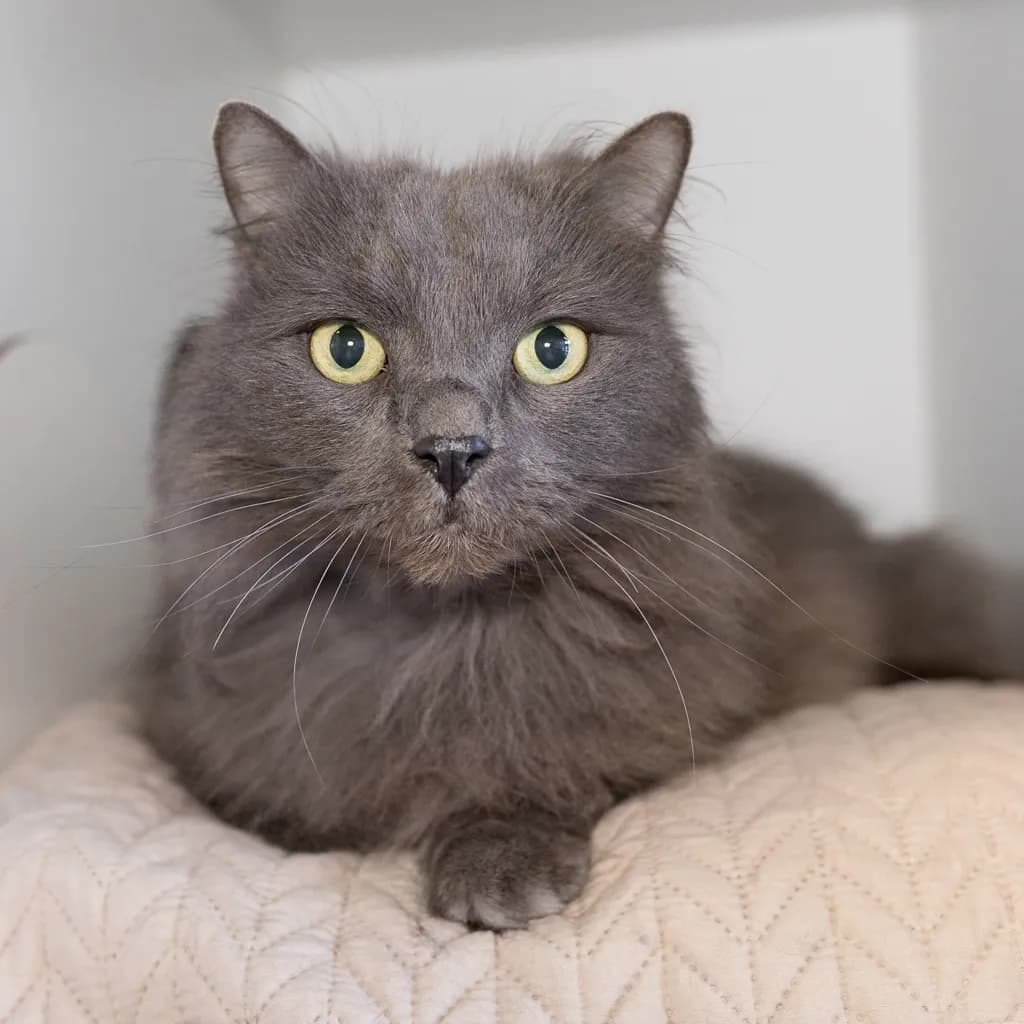
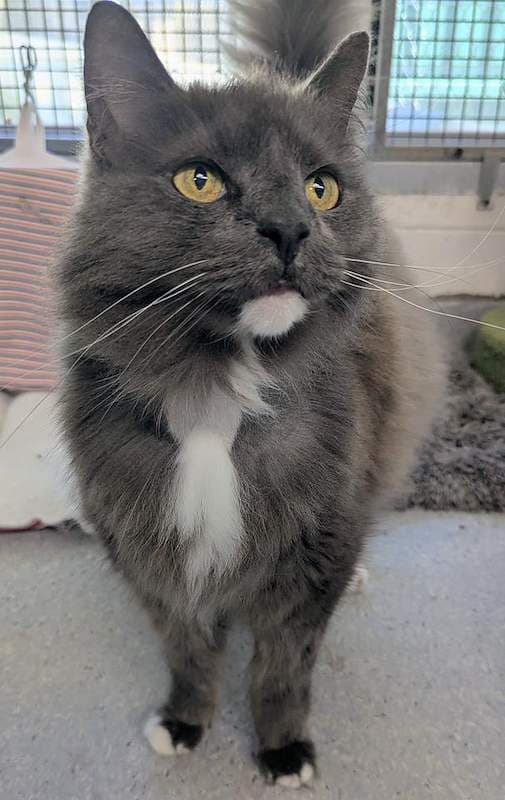
Cujo
11 years 5 months • Domestic Medium Hair
Get notified about new cats in Brisbane
We will email you when new rescue cats become available in Brisbane, so you can be among the first to meet them.
Long-haired cats, including Maine Coons, Ragdolls, Persians, Norwegian Forest Cats, Siberians, Birmans, and Domestic Longhairs (DLH), are beautiful, characterful companions. Their dense double coats keep them warm through winter and shed seasonally as the weather warms. They are generally calmer and more lap-oriented than short-haired breeds, though personalities vary.
The trade-off is grooming. Long-haired cats need brushing 2 to 3 times per week to prevent matting, with daily brushing during seasonal sheds in spring and autumn. Cats with extreme coats (Persians especially) may need professional grooming every 6 to 8 weeks, or you can keep them in a lion cut (shaved body, fluffy head and tail) to reduce maintenance.
All cats listed below are long-haired or have heavy long-coat ancestry, sourced from Brisbane and Queensland cat rescues.
Popular Long-Haired Breeds and Their Temperaments
Long-haired cats come in a wonderful range of breeds and mixes, and the coat is often the least interesting thing about them. The Maine Coon is one of the largest domestic cats, known for a gentle, dog-like friendliness and a talkative nature. The Ragdoll earns its name by going limp and relaxed when held, and tends to be placid, affectionate, and devoted to its people. Both are famously easygoing family cats.
The Persian is the classic flat-faced, luxuriously coated cat, generally calm, quiet, and happy to be a serene lap companion, though its extreme coat and facial structure need extra care. The Norwegian Forest Cat and the Siberian are sturdy, cold-climate breeds with thick double coats and an independent but friendly streak, often more active and playful than the placid Ragdoll. The Birman is a gentle, sociable cat with a silky coat that mats less than some.
Most long-haired rescue cats, though, are Domestic Longhairs, the mixed-breed equivalent of all these pedigrees. A Domestic Longhair, or DLH, carries the fluffy coat without a specific breed background, and its temperament is as individual as any moggy. This is good news for adopters, because it means you can find a long-coated cat to suit almost any household without paying breeder prices or waiting on a litter.
As with any cat, personality varies more between individuals than the breed reputation suggests, so treat these descriptions as a starting point rather than a guarantee. The rescue or foster carer who has lived with the cat can tell you what this particular animal is actually like: whether it is a lap cat or an aloof observer, playful or placid, confident or shy. That first-hand knowledge matters far more than the label on the coat.
Grooming Routine and Coat Care
Grooming is the defining commitment of long-haired cat ownership, and it is not optional. Plan for brushing two to three times a week as a baseline, stepping up to daily during the seasonal sheds in spring and autumn when the coat blows out. A cat with an extreme coat, a Persian in particular, needs daily attention year-round. Skipping grooming is the single most common mistake new long-haired cat owners make, and it leads straight to painful mats.
The right tools make the job quick and pleasant. A slicker brush lifts loose hair from the topcoat, while a metal comb works through the dense undercoat where mats actually form, especially behind the ears, under the legs, and around the back end. A de-shedding tool helps during heavy sheds. Introduce grooming gently and pair it with praise or treats so your cat comes to tolerate, and ideally enjoy, the routine rather than dreading it.
Mats are the enemy, and they form fast on a neglected long coat. Once a mat is tight against the skin it pulls painfully and cannot simply be brushed out, so it usually needs careful cutting or professional removal. Never try to cut a tight mat out with scissors at home, as it is very easy to nick the skin. If a coat gets badly matted, a groomer or vet can shave it out safely, and then you start the regular routine fresh.
For owners who find full-coat maintenance too much, a lion cut is a practical option. This is a professional groom that shaves the body short while leaving the head, legs, and tail fluffy, dramatically reducing brushing and matting for a few months at a time. It is popular for Persians and for cats whose owners cannot keep up with daily grooming, and it keeps the cat comfortable through warmer weather.
Managing Shedding, Hairballs, and Mats
Long-haired cats do not necessarily shed more than short-haired cats, but the hair they drop is longer and far more visible around the house. The most effective way to control loose hair is at the source: regular brushing removes it before it lands on your sofa and clothes. A weekly deep groom plus quick daily passes during shedding season keeps the drifting fur to a manageable level.
Hairballs are the flip side of a long coat. Because cats groom themselves by licking, a long-haired cat swallows more hair, which it periodically brings back up. The occasional hairball is normal, but frequent hairballs, or a cat that repeatedly retches without producing anything, is worth a mention to your vet. Regular brushing is the best prevention, since the hair you catch in the brush is hair the cat does not swallow.
Mat prevention comes down to consistency and knowing the trouble spots. The friction areas, behind the ears, in the armpits, along the belly, and around the rear, mat first, so give them particular attention every session. Check your cat over with your fingers as well as the comb, because a mat starting deep in the undercoat is easy to miss visually until it tightens. Catching them early keeps grooming painless for the cat.
A little routine care around the coat pays off elsewhere too. Long-haired cats, particularly those with a rear end that is hard to keep clean, can get faeces caught in the fur, so keeping the area trimmed and tidy prevents mess and skin irritation. If your cat suddenly resists grooming a spot it used to tolerate, check for a mat, a skin problem, or soreness, and speak to your vet if anything looks wrong.
The Cost of Keeping a Long-Haired Cat
The adoption fee for a long-haired rescue cat is the same as any other cat, typically $150 to $250 for an adult, and it includes all the usual desexing, vaccination, microchipping, and vet-check work. The extra cost of a long coat is not in the adoption, it is in the ongoing grooming, and it is modest but real. Budgeting for it up front prevents the coat from becoming a neglected problem later.
The everyday grooming costs are supplies: a good slicker brush, a metal comb, and a de-shedding tool, most of which are one-off purchases that last for years. Add to that a little more litter, since long fur tracks litter further, and the fact that long-haired cats are more prone to hairballs. None of this is expensive, but it does add up to more than the running cost of a short-haired cat.
Professional grooming is the variable that matters most to your budget. Owners who keep up with home brushing may never need a groomer, while those who opt for regular lion cuts or who let the coat get away from them will pay for professional grooms periodically. A cat with an extreme Persian coat is realistically a professional-grooming commitment, so factor that in if you are drawn to a flat-faced breed.
Set against those extra costs is the fact that adopting saves you a fortune compared with buying a pedigree Maine Coon, Ragdoll, or Persian from a breeder. Long-coated cats and mixes turn up in rescue regularly, fully vetted, for a fraction of the price of the same look from a breeder. If you love the fluffy aesthetic, adoption is by far the most economical way to bring one home.
Long-Haired Cats and the Australian Climate
Many long-haired breeds, the Siberian, the Norwegian Forest Cat, the Maine Coon, evolved thick double coats to survive cold northern winters, which raises a fair question about how they cope in a warm Australian climate. The reassuring answer is that as indoor cats they manage perfectly well year-round, provided you help them stay comfortable through the hottest months.
The main heat-management tool is grooming. A well-brushed coat with the loose undercoat removed insulates far better and traps far less heat than a matted, neglected one, so regular grooming is doubly important in summer. Keeping the coat free of mats also lets air move through it, which helps the cat regulate its own temperature the way nature intended.
Beyond grooming, the same things that keep any cat comfortable in the heat apply. Make sure there is always fresh water, keep cool, shaded spots available indoors, ensure good airflow, and avoid leaving the cat in a hot, closed room during the day. A long-haired cat will naturally seek out the coolest tiles or the breeziest corner, so give it the freedom to find those spots.
None of this changes the core rule that long-haired cats, like all Brisbane rescue cats, should live indoors or in contained outdoor space for their own safety and to protect native wildlife. A long coat is no reason to let a cat roam in search of cool air, and it is no barrier to a happy indoor life. With sensible grooming and a cool spot to retreat to, a fluffy cat thrives in an Australian home.
Health Considerations for Long-Coated Cats
A long coat brings a few health points worth keeping an eye on, most of them tied directly to grooming. Mats that are left to tighten pull painfully on the skin and can trap moisture and dirt underneath, leading to irritation or infection, so consistent brushing is genuinely a health measure and not just a cosmetic one. If you find a mat close to the skin or any sore, red patch beneath the coat, it is worth a check with your vet.
Hairballs are the other coat-related issue. Because a long-haired cat swallows more hair while grooming itself, it tends to bring up hairballs more often, and the occasional one is normal. A cat that retches frequently without producing anything, or that seems off its food or uncomfortable, should be seen by your vet rather than left, since persistent problems are not something to simply wait out. Regular brushing, which removes hair before the cat swallows it, is the best prevention.
Some flat-faced long-haired breeds, the Persian above all, have particular needs beyond the coat. Their facial structure can lead to weepy eyes that need gentle daily wiping, and their breeding sometimes brings other health considerations, so a good relationship with your vet matters. Whatever the breed, keeping the rear end trimmed and clean prevents mess and skin trouble in a cat whose long fur makes self-cleaning harder.
Beyond the coat, long-haired cats need exactly the same core health care as any cat: an annual checkup, parasite prevention, dental attention, a good diet in sensible portions, and a watchful eye on weight. The rescue discloses any known health issues before you adopt, and every cat listed here arrives desexed, vaccinated, microchipped, and vet-checked, so you start with a clear picture of the individual cat's health.
Grooming a long-haired cat in humid Brisbane
Long coats need routine work, and Brisbane's humidity makes staying on top of it matter more. Breeds and mixes with dense or long fur mat easily, especially behind the ears, under the legs and around the rump, and a neglected coat can pack down into painful mats that need clipping out. Aim to brush most days with a comb that reaches the undercoat rather than just skimming the surface. Starting the habit while a cat is young makes it a calm part of the routine rather than a wrestle.
If a coat is already matted or the cat will not tolerate handling, a professional groom is worth it, and your local vet can clip out serious mats safely, sometimes under light sedation. The RSPCA Knowledgebase has sensible coat-care guidance for long-haired cats.
Keeping a long coat comfortable through Brisbane heat
Brisbane summers are hot and humid, and a heavy coat holds heat. On hot days keep a long-haired cat indoors in the coolest part of the house, provide plenty of fresh water and shaded spots, and never leave any cat in a car or a hot enclosed space. A well-maintained coat actually regulates temperature better than a matted one, which is another reason to keep on top of grooming before summer arrives.
Watch for heat-stress signs on extreme days: panting, drooling, lethargy, or a cat seeking out cool tiles. If a cat seems genuinely overheated and is not recovering in a cool room, treat it as an emergency and call a vet. A contained cat with a catio still needs a shaded, cool retreat it can reach at any time.
Adopting a long-haired cat locally
Long-haired cats and mixes come through Brisbane rescues regularly, so you rarely need to buy one. RSPCA Queensland and foster groups such as Animals in Need Brisbane can tell you how much grooming a particular cat has needed and whether it tolerates brushing, which matters more than the breed on the label. Adult cat fees of $150 to $180 include desexing, vaccination, microchipping and an FIV check, and because Brisbane does not require cat registration, there is no council fee to add.
Long Haired Cat FAQ
Tap a question to expand