The short answer
A Yorkshire Terrier is a toy terrier that tends to live long, but vet records show dental disease is very common and slipping kneecaps are a known risk. Skip any puppy sold as “teacup” or “micro”: the Royal Kennel Club says no teacup breed exists and links teacup breeding to fragile bones, heart and breathing problems and shorter lives. If you buy, use a Dogs Australia registered breeder who can show eye and kneecap results for the parents. We found no member breeder that publishes a price on its own website, so ask each one. If you adopt, purebred Yorkies are rare in rescue but Yorkie crosses appear more often. Rescue fees are reference figures, not quotes; check with the rescue.
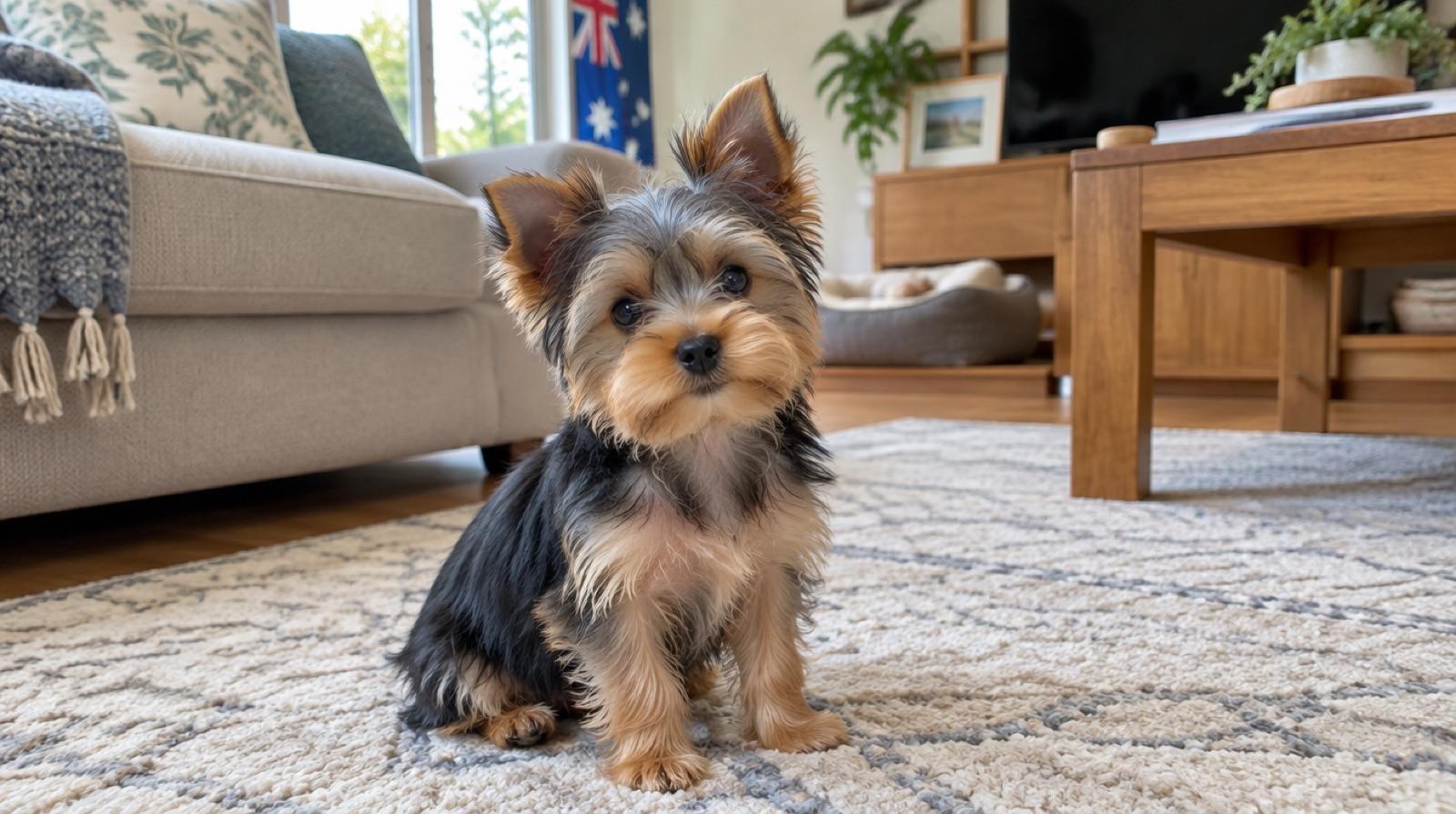
Should you adopt or buy a Yorkshire Terrier?
Either route can work if you avoid the size trap. The Dogs Australia breed standard describes an alert, intelligent toy terrier with a spirited, even disposition, a long, straight, silky coat in dark steel blue and rich tan, and a weight of up to 3.2 kg. Nothing in it asks for a dog smaller than that, and nothing in it describes a “teacup” or “micro” Yorkie.
A registered breeder who tests the parents and breeds to the standard gives you a puppy with known parents and a history. A rescue gives you an adult whose teeth, knees and character you can see before you commit. The route to avoid is a seller who prices puppies by how small they will stay, because that is selling the very thing that raises the health risk.
| Route | Reference cost | What you usually get | Main risk |
|---|---|---|---|
| Dogs Australia registered breeder | No member breeder we checked published a price; ask each one | A blue and tan puppy with pedigree papers, often on the Limited Register | Waiting lists; teeth and knees still need care |
| General rescue or council pound | The standard fee, for example $500 to $1,200 at the RSPCA rows below | Mostly adult Yorkies and Yorkie crosses, desexed and microchipped | Purebred Yorkies are rare in rescue |
| “Teacup” or “micro” seller | Any price; the Royal Kennel Club says a teacup should not cost more than others of the breed | A puppy bred to be tiny, or a puppy that does not exist | Size-related health problems and scams |
Reference figures: the RSPCA NSW, RSPCA ACT and RSPCA Victoria fee pages, read November 2026. They are not quotes; rescues change their fees, so check with them.
What does “teacup” really mean?
It is a sales word, not a breed. The Royal Kennel Club in the UK says the term simply means a dog smaller than average, that it does not recognise any teacup breeds, and that it will not record dogs as teacup on its register. It explains that teacup breeding often means breeding only from the runts of litters, dogs that may be smaller and weaker and may struggle to survive at first, and that some breeders use unethical techniques to stunt growth.
The health issues it lists for teacup dogs include breathing problems, fragile bones, joint problems, heart issues and stomach problems, and it says teacup dogs are more likely to live significantly shorter lives than other dogs. Its advice to buyers is plain: a puppy should not cost more than other dogs in the breed, and health and temperament matter more than size.
Size matters for the knees, too. The Royal Veterinary College study of Yorkies notes that very small types of dogs appear heavily predisposed to slipping kneecaps. And the same study found that the median adult Yorkie in its UK vet records weighed 5.06 kg, well above the 3.2 kg in the standard, which is a reminder that a healthy Yorkie is not necessarily a tiny one.
How healthy are Yorkshire Terriers?
They tend to live long, and their main problems are in the mouth and the knees. A Royal Veterinary College VetCompass study published in 2025 looked at the UK vet records of 28,032 Yorkshire Terriers seen in 2016, with disorders counted in a random sample of 3,308 of them. The median age at death was 13.56 years, and the authors describe the breed's high longevity as “suggestive of robust overall health”.
| Problem | Yorkies affected in one year | What it means for you |
|---|---|---|
| Periodontal (gum and tooth) disease | 21.1% | The most common problem; daily brushing and dental checks |
| Overgrown nails | 6.5% | Regular nail trims |
| Anal sac impaction | 4.0% | Scooting or licking; see your vet |
| Overweight or obesity | 3.7% | Small dogs gain weight on small treats |
| Persistent baby teeth | 3.6% (1.0% previously reported in UK dogs overall) | Ask your vet about teeth that have not fallen out |
| Slipping kneecaps (patellar luxation) | 3.4% | Ask for the parents' kneecap results |
Source: O'Neill et al., Companion Animal Health and Genetics, 2025 (UK primary-care vet records, 2016; disorders from a random sample of 3,308 Yorkies). UK records are not Australian records, but the breed is the same here. The authors name periodontal disease, persistent baby teeth and patellar luxation as common and predisposed in the breed.
Teeth, knees, windpipe and liver
- Teeth. Dental disease was by far the most common problem in the study. Start brushing as a puppy and read our dog dental care guide.
- Kneecaps. The American College of Veterinary Surgeons (ACVS) names Yorkshire terriers among small dogs affected by patellar luxation, where the kneecap slips out of its groove. Most affected dogs suddenly carry a back leg for a few steps.
- Windpipe. The ACVS says tracheal collapse is most common in small breeds, particularly Yorkshire terriers, and causes a harsh, dry “goose honk” cough, often in middle age or later, and coughing when the dog is picked up or pulls on its collar. Tell your vet about a cough like that.
- Liver shunt. The ACVS lists Yorkshire Terriers among breeds in which portosystemic shunts, an abnormal vessel that lets blood bypass the liver, are considered congenital. Signs include small body size, slow recovery from anaesthetic, odd behaviour and neurological signs such as wobbliness or seizures. Ask the breeder whether shunts have occurred in their lines, and see your vet if you notice the signs.
Which health tests should a Yorkie breeder show you?
We could not find an Australian Yorkshire Terrier club that publishes a list of required tests. Dogs New Zealand's accredited breeder scheme is a useful checklist to ask an Australian breeder about:
| Test | Dogs New Zealand | What to ask |
|---|---|---|
| Kneecap certificate | Mandatory, yearly | When were both parents last checked? |
| Eye certificate | Mandatory, yearly | Who examined the parents, and when? |
| DNA: primary lens luxation | Mandatory | Are the parents clear, carriers or affected? |
| Legg-Calve-Perthes (hip) | Optional | Has either parent been x-rayed? |
| Thyroid | Optional | Was it done? |
Source: Dogs New Zealand accredited breeder health tests for the Yorkshire Terrier, read 11 November 2026. This is a New Zealand scheme, not an Australian rule.
How much is a Yorkie puppy from a registered breeder?
We could not find a published figure. We read the websites of Dogs Australia member breeders of Yorkshire Terriers in November 2026, leaving out listing and marketplace sites, and none published a price for a pet puppy on its own website. We also found no Yorkshire Terrier club in Australia that publishes a guide price. So we do not quote one.
Registered Yorkies are not common. Dogs Australia's registration figures show 156 Yorkshire Terriers registered in 2025, down from 211 in 2018, so expect to wait. When you ask a breeder for a price, also ask what it includes: the parents' kneecap and eye results, vaccinations, microchip, the register type and desexing agreement, and whether the breeder will take the dog back. A price that rises as the promised adult size falls is a reason to walk away.
Budget for the life of the dog too. The dog cost calculator gives a first-year figure, and our guide to cheaper vet care helps with dental bills.
See the Yorkies listed right now
Yorkshire Terriers and Yorkie crosses from the rescues, shelters and council pounds we aggregate, each with its rescue, desexing and microchip details. Every listing links to the rescue, where you apply directly.
What do Yorkies in rescue look like?
Purebred Yorkies are rare across the rescues we aggregate; Yorkie crosses appear more often. Most are adults, and many are older dogs whose owners have moved into care, died or can no longer manage. A rescue Yorkie may already have had dental work, and a good rescue will tell you what it knows about the teeth, knees and any cough.
That is the advantage of adopting. With a “teacup” puppy from an ad, you find out about the knees and liver later. With an adult in rescue, you can see the dog walk and play, hear whether it coughs, and read its vet notes before you sign anything. Because Yorkies are few, set an alert on the breed page and the Yorkie cross page and apply quickly.
What does a rescue Yorkie cost?
| Rescue | Fee as published | Read |
|---|---|---|
| RSPCA NSW | $620 puppy under 12 months; $500 dog over 12 months | 11 Nov 2026 |
| RSPCA ACT | $1,200 for popular small breed puppies up to 12 months; $650 for popular breeds and mixes over 12 months and under 8 years | 11 Nov 2026 |
| RSPCA Victoria | $500 to $1,000 for adult dogs | 11 Nov 2026 |
Reference only, not a quote. These are the fees each rescue published on the date shown; fees change and some dogs are priced individually, so check with the rescue. The fee normally covers desexing, microchipping, vaccinations and a vet check.
Other small dogs come through rescue far more often than Yorkies, so browse small dogs as well: Sydney, Melbourne, Brisbane, Perth, Adelaide.
How do Yorkie puppy scams work?
Never send a deposit for a Yorkie puppy you have not seen with its mother, in person or at least on a live video call. A seller who asks for more money after the first payment, for transport, a crate or insurance, is following the standard scam script.
Scamwatch warns that scammers set up fake websites, social media profiles and marketplace listings for pets that do not exist, and that a very cheap pet is likely a scam. Dogs Victoria's puppy scam fact sheet adds that fake ads may display microchip, source or membership numbers lifted from legitimate breeders. Yorkie versions of the pattern to watch for:
- The size menu. An ad that charges more for a “teacup” or “micro” Yorkie is selling smallness, which is the health risk.
- Borrowed numbers. A real breeder's membership or source number in an ad proves nothing on its own. Contact the breeder through Dogs Australia or the state body, not the ad.
- “Hypoallergenic” promises. ASCIA says all dog breeds can cause allergies; a seller who guarantees otherwise is overselling.
- Stock photos. Yorkie puppies photograph alike. A reverse image search can show whether the same picture appears on another site.
Our guide to puppies for sale in Australia has the state-by-state table of breeder numbers, how to check each one, and what to do if you have already paid.
When is a registered breeder the better choice?
Rescue is not right for everyone, and with so few purebred Yorkies in rescue, a breeder may be the realistic route if you want a puppy. Check these before you pay:
- Registration. Ask for the breeder's prefix and membership number and check them with Dogs Australia or the state body. It confirms membership, not puppy quality.
- Size talk. A good breeder talks about the standard and health, not about how tiny a puppy will stay.
- The test results in the table above, for both parents, with names that match the litter.
- The mother. Meet her, watch her move, and look at her teeth and coat.
- A written contract covering health problems, register type, desexing and whether the breeder will take the dog back.
Is a Yorkshire Terrier the right dog for you?
The appeal is real: a small, alert, intelligent dog that tends to live long and fits a smaller home. Be honest about three things before you apply anywhere. Grooming: the standard coat is long, straight and silky, so it needs regular brushing or a short clip, and our Yorkie grooming guide explains the options. Teeth: plan for daily brushing and dental bills. Handling: a toy dog can be hurt by a fall or rough play, so think about small children and other dogs.
Not sure? Try the what dog breed am I quiz and the adoption readiness check, and read our guides to toy dog breeds and apartment dogs.
Find a Yorkie near you
Yorkshire Terriers listed by rescues, by city:
- Yorkshire Terriers for adoption in Sydney
- Yorkshire Terriers for adoption in Melbourne
- Yorkshire Terriers for adoption in Brisbane
- Yorkshire Terriers for adoption in Perth
- Yorkshire Terriers for adoption in Adelaide
Local guides to adopting a Yorkie, with the rescues that serve each city: Sydney, Melbourne, Brisbane, Perth, Adelaide, Gold Coast. For health in more depth, see the Yorkshire Terrier health guide.
More adopt-or-buy guides: West Highland White Terrier, Boston Terrier, Bull Terrier, Basset Hound, Koolie, German Shorthaired Pointer, Rhodesian Ridgeback, Bernedoodle.
Frequently asked questions
How much is a Yorkshire Terrier puppy in Australia?▼
We could not find a published price. None of the Dogs Australia member breeders whose own websites we read in November 2026 listed a price for a Yorkie puppy, and no Yorkshire Terrier club publishes a guide price. Ask each breeder and compare what is included. Be wary of a price set by size: the Royal Kennel Club says a teacup puppy should not cost more than other dogs in the breed.
Is there such a thing as a teacup Yorkie?▼
Not as a breed. The Royal Kennel Club says teacup simply means a dog smaller than average, that it does not recognise any teacup breeds, and that teacup breeding often means breeding from the runts of litters. It lists breathing problems, fragile bones, joint, heart and stomach problems among the health issues, and says teacup dogs are more likely to live significantly shorter lives.
How big does a Yorkshire Terrier get?▼
The Dogs Australia breed standard sets a weight of up to 3.2 kg. Many pet Yorkies weigh more: in a Royal Veterinary College study of UK vet records, the median adult weight was 5.06 kg. A Yorkie above the standard weight is not unhealthy for that reason; a puppy sold as much smaller than the standard is the one to question.
Do Yorkies have bad teeth?▼
Dental disease is their most common problem. The Royal Veterinary College study found periodontal disease recorded in 21.1% of Yorkshire Terriers in one year, and persistent baby teeth in 3.57%, against 1.01% previously reported in UK dogs overall. Start tooth brushing early, book dental checks, and ask your vet about any baby teeth that have not fallen out.
What is a liver shunt in Yorkies?▼
A portosystemic shunt is an abnormal blood vessel that lets blood bypass the liver. The American College of Veterinary Surgeons lists Yorkshire Terriers among breeds in which shunts are considered congenital, and says single shunts outside the liver more often affect small and toy breeds. Signs include small size, slow recovery from anaesthetic, odd behaviour and neurological signs; see your vet if you notice them.
What health tests should a Yorkie breeder do?▼
There is no Australian club test list we could find, so look at what other kennel clubs require. Dogs New Zealand's accredited breeder scheme makes a yearly eye certificate, a yearly kneecap certificate and a DNA test for primary lens luxation mandatory for Yorkshire Terriers, with Legg-Calve-Perthes and thyroid tests optional. Ask an Australian breeder which of these the parents have had.
Are Yorkshire Terriers hypoallergenic?▼
No dog is. The Australasian Society of Clinical Immunology and Allergy (ASCIA) says all dog breeds can cause allergies, so a Yorkie's silky coat is not a guarantee. If someone in your home is allergic, spend time with the specific dog before you commit and talk to your doctor.
Can I adopt a Yorkie in Australia?▼
Yes, but purebred Yorkies are rare across the rescues we aggregate. Yorkie crosses appear more often, and adult Yorkies come into rescue when owners move into care or can no longer keep them. Watch the Yorkshire Terrier and Yorkie cross listings, set an alert and apply quickly when one appears.
How much does it cost to adopt a Yorkie?▼
You pay the rescue's standard fee. RSPCA NSW listed $620 for a puppy under 12 months and $500 for a dog over 12 months, RSPCA ACT listed $1,200 for popular small breed puppies up to 12 months and $650 for popular breeds over 12 months, and RSPCA Victoria listed $500 to $1,000 for adult dogs. These were the fees published in November 2026; they are a reference, not a quote, so check with the rescue.
Are Yorkshire Terriers good apartment dogs?▼
Often, yes. A Yorkie is a toy breed, and the Dogs Australia standard describes an alert, intelligent toy terrier with a spirited, even disposition. It still has a terrier's alertness, so expect some barking, and the long coat needs regular grooming. Check your strata by-laws and lease before you apply.
How do I avoid Yorkie puppy scams?▼
Only pay for a puppy you have seen with its mother, in person or at least on a live video call. Scamwatch says a very cheap pet is likely a scam, and Dogs Victoria warns that fake ads may show microchip, source or membership numbers lifted from real breeders. Treat teacup, micro and rare colour labels as a warning sign rather than a selling point.
Sources
- Dogs Australia: Yorkshire Terrier breed standard (last updated 5 August 2009)
- Dogs Australia: National Animal Registration Analysis 2018 to 2025
- Dogs Australia: registered breeder check
- O'Neill et al. (2025), Yorkshire Terriers under primary veterinary care in the UK: demography and disorders, Companion Animal Health and Genetics (Royal Veterinary College VetCompass)
- Royal Kennel Club: Buying a teacup dog
- American College of Veterinary Surgeons: Portosystemic shunts
- American College of Veterinary Surgeons: Patellar luxations
- American College of Veterinary Surgeons: Tracheal collapse
- Dogs New Zealand: Accredited breeder health tests for the Yorkshire Terrier
- ASCIA: Pet allergy
- Scamwatch: Buying and selling scams (pet scams)
- Dogs Victoria: A7 Identifying puppy scams and puppy farms (fact sheet)
- RSPCA NSW: Adoption fees
- RSPCA ACT: Adoption process
- RSPCA Victoria: The adoption process
Keep reading
Yorkies listed by rescues
Yorkshire Terriers listed right now by the rescues and shelters we aggregate across Australia.
Yorkie crosses listed by rescues
Yorkie crosses, which reach rescue more often than purebred Yorkies.
Maltese puppies: adopt or buy?
The other long-coated toy dog, its health checks and Maltese crosses in rescue.
Westie puppies: adopt or buy?
Skin, lung and jaw health in Westies, and Westies in rescue.