The short answer
Suspect a grass seed if your dog suddenly starts limping or licking one paw, shaking its head or scratching one ear, squinting or pawing at an eye, rubbing its face on the ground, or has a red, swollen or weeping spot after time in long or dry grass. See your vet the same day for an eye or ear, and promptly for anything else. RSPCA South Australia says to take a dog with a suspected grass seed wound to the vet, and warns that left untreated there is a serious risk of permanent injuries such as loss of sight or hearing; Australian vet researchers also describe seeds migrating deep into the body. Prevention is a hands-on check after every walk and regular brushing: in an Australian study, grooming was what protected dogs, not clipping alone.
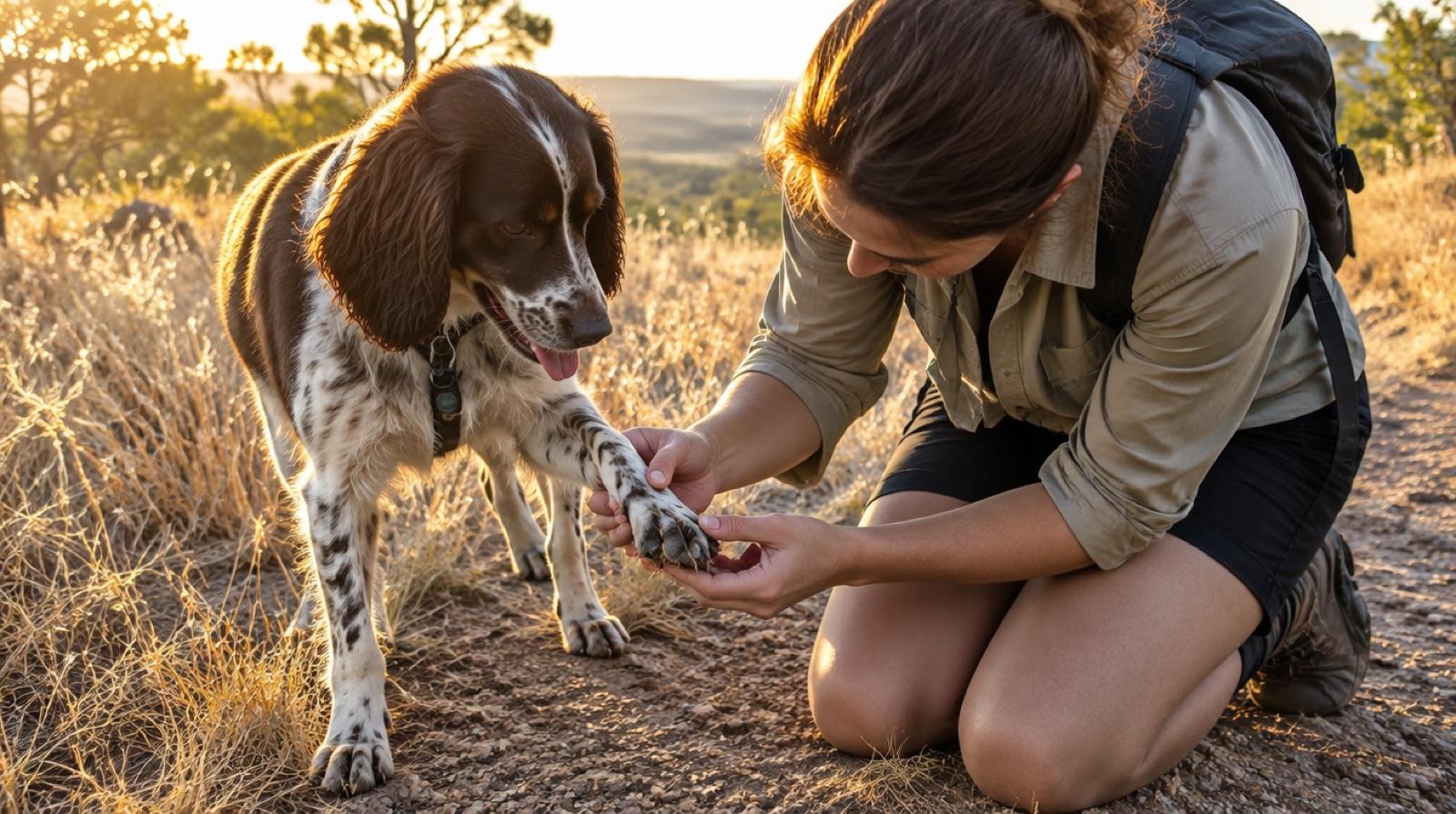
See a vet the same day if your dog has
- A squinting, red, swollen or weeping eye, or is pawing at an eye
- Sudden, repeated head shaking, or is rubbing or scratching one ear
- Started pawing at its nose or rubbing its face along the ground after a walk
- A limp, or a swollen, red or weeping spot between the toes
- A cough, odd breathing, or is flat and off its food after a run in long grass
Signs drawn from RSPCA NSW and RSPCA South Australia; the breathing signs reflect the deeper disease Australian vet researchers describe. Out of hours, find a 24-hour hospital: Sydney, Melbourne, Brisbane, Perth, Adelaide, Canberra, Hobart.
Why are grass seeds dangerous to dogs?
Because of their shape. Murdoch University vets describe the sharp, backward pointing barbs on grass awns, which encourage them to migrate in one direction (Hopper et al, 2004). RSPCA NSW says seeds can embed in the fur, ears, eyes, nose and skin, burrow through the skin and migrate to difficult locations. RSPCA South Australia adds that seeds can carry bacteria and lead to infection.
Australian vet researchers treat this as a real disease, not a nuisance. A Charles Sturt University team calls grass seed foreign body disease common in dogs throughout Australia, typically affecting the feet and ears, and describes rarer cases where seeds reached the chest, spine, abdomen, brain and spinal cord (Combs et al, 2017). Murdoch University vets reporting one such case note that the wild oat awn is the type more often encountered in Australian veterinary practice (Hopper et al, 2004).
LocalPetFinder is an adoption listings site, not a vet. This page brings together what the RSPCA and Australian veterinary research say, read in November 2026. It is general information and does not replace your own vet.
What are the signs of a grass seed, by body part?
The signs depend on where the seed has lodged. Most are things a dog does, rather than something you can see:
| Where | What you might notice | Source |
|---|---|---|
| Paw (between the toes) | Limping; licking a foot excessively until it is red; visible irritation, sometimes blood or pus | RSPCA SA, RSPCA SA |
| Ear | Shaking the head and rubbing the ear excessively | RSPCA NSW |
| Eye | Squinting; swelling and redness; seeds can lodge in the eyelids | RSPCA NSW, RSPCA SA |
| Nose and face | Seeds can end up in the nose; rubbing the face on the ground or pawing at it | RSPCA NSW, RSPCA SA |
| Skin and coat | Matted fur where seeds are caught; redness, itching, a sore spot the dog keeps licking, including the genital area | RSPCA NSW, RSPCA SA |
| Deeper in the body | Rare, but seeds have caused chest infections and spinal, abdominal and brain disease | Combs et al, Hicks et al |
RSPCA South Australia makes a useful point: paw licking, rubbing the face on the ground and head shaking are all normal dog things. What matters is a change, when the behaviour becomes excessive or starts suddenly after a walk. Any of those, plus a walk through long or dry grass, is worth a closer look and usually a vet visit.
What should I do if I think my dog has a grass seed?
See your vet. Both RSPCA branches we used are direct about it: RSPCA South Australia says if you suspect your dog has a grass seed wound, take it to the vet, who can assess the wound and decide whether your dog needs an anaesthetic so the seed can be removed safely and painlessly. It warns that if left untreated there is a serious risk of permanent injuries, such as loss of sight or hearing.
- Eye or ear: the same day. You cannot see down a dog's ear canal or under the eyelids, and these are the places where the RSPCA warns about lasting damage.
- Paw or skin: promptly. RSPCA South Australia's vet says a dog that starts limping on a foot, or licking a foot excessively and making it red, should be taken to be checked by a vet.
- Do not dig. A seed that has gone into the skin, ear, eye or nose is not a home job. The RSPCA pages we used send you to the vet for a suspected grass seed wound and give no home removal method.
- A seed still on the coat is what the after-walk check is for. RSPCA South Australia's vet says close-trimmed feet make it easier to see grass seeds and remove them before they have had a chance to burrow deep into the skin.
- Mention the walk. Tell your vet where your dog has been and when the signs started. It helps them decide where to look.
Your vet will decide how to find and remove the seed; RSPCA South Australia notes some dogs need an anaesthetic. Vets set their own fees, so ask for an estimate. Our cheap vet care guide lists charity clinics and help with bills.
What does Australian research say about grass seeds in dogs?
The most useful Australian study comes from the Riverina in south-west New South Wales, a farming region with a lot of grass seed. Charles Sturt University researchers combined a telephone survey with case records from Wagga Wagga Veterinary Hospital and the university's teaching hospital between July 2006 and October 2011 (Hicks et al, 2016). What they found:
| Finding | Riverina study, 473 affected dogs |
|---|---|
| How common | Grass seed disease made up 2.0% of hospital presentations |
| Most common problem in general practice | Ear canal inflammation (otitis externa), 47% |
| Most common problem at the referral hospital | Pus in the chest (pyothorax), 34% |
| Coat | Breeds with high-density coats overrepresented; about 3 times the odds of a medium coat than a short coat |
| Grooming | Affected dogs had about 5 times lower odds of being groomed |
| Clipping or searching alone | Clipping or coat searching without grooming was not an effective prevention |
Source: Hicks, Golland, Heller, Malik and Combs, Australian Veterinary Journal, 2016. The study covers one high-risk rural region, so its percentages will not match a city vet's caseload.
Two practical lessons follow. First, ears matter as much as paws: in this study the commonest problem in everyday practice was the ear. Second, a regular brush is not just about looks. The study does not name individual breeds in its summary, so we will not either; what it measured was coat type, and denser, medium-length coats did worse.
When is grass seed season?
When grasses dry off and set seed, which in most of Australia means the warmer months. RSPCA NSW puts grass seeds on its spring checklist, and RSPCA South Australia calls them one of the main risks of a run outside in the warmer months, with advice for the spring and summer months. Its vet adds that grass seeds are common everywhere, not just on trails (RSPCA SA).
We have not found an official month-by-month calendar, and timing shifts with rain and with which grasses grow locally. Your own vet will know when their grass seed cases start each year, which is the best local guide you can get.
How do I prevent grass seeds?
No single step works on its own. Put together, the RSPCA advice and the Riverina findings look like this:
- Check after every walk. RSPCA NSW advises checking your dog's fur after walks or yard time every day. Use your hands: between and under all the toes, inside and around the ear flaps, around the eyes, the armpits, groin and any matted patch.
- Groom regularly. In the Riverina study, grooming was the measure linked to protection. RSPCA South Australia also says bathing and grooming regularly helps.
- Keep the feet trimmed in summer. RSPCA South Australia's vet suggests asking a groomer for close-trimmed feet so seeds are easier to see and remove before they burrow. Remember the study finding: a trim helps you see, but it is not a substitute for brushing.
- Avoid long grass in the season. RSPCA NSW advises keeping the coat clean and short and avoiding walks through long grass.
- Keep barley grass out of the yard. RSPCA South Australia suggests keeping your yard free from barley grass.
If your dog has a long or curly coat, our cavoodle grooming guide covers brushing routines and how often to book a groom. Hot days bring their own risks on the same walks: see dogs in hot weather.
How bad can it get?
RSPCA South Australia tells the story of Keiva, an 8-year-old Maltese cross who was missing for 18 months and came in with grass seed wounds all over her body, including her feet and under one eye, and a badly infected wound under a back leg. Its vets had to shave her whole body and remove the seeds under anaesthetic, and she needed a long course of treatment (RSPCA SA). It is an extreme case, but it shows what seeds left alone can do, and why a daily check is worth the two minutes.
Adopting a dog with a thick coat
None of this is a reason to skip a fluffy dog. It is a reason to budget time for brushing and to learn the signs before your first summer together. The RSPCA's Adopt A Pet site says all its animals have been health and behaviour assessed, and its dogs and cats are desexed, microchipped and vaccinated. Ask the rescue about the dog's coat care and grooming history, and book your own vet early so you have someone to call when something looks off.
New to rescue? Start with adopting a dog in Australia and a rescue dog's first weeks.
Find a rescue dog near you
Dogs listed right now by the rescues and shelters we aggregate, with each dog's details on its profile.
More guides for dog owners
- Dogs in hot weather: heatstroke signs and first aid, hot cars and hot pavement.
- Tick paralysis: the other reason to run your hands over your dog every day.
- Barking dogs and bark collars: what the law and the RSPCA say.
- Flying with a pet and cat enclosures and catios.
Frequently asked questions
What are the signs of a grass seed in a dog's paw?▼
Limping, licking or chewing one paw over and over, and redness, swelling or a weeping spot between the toes. RSPCA South Australia lists excessive paw licking, visible irritation, and sometimes blood or pus, and its vet says a dog that starts limping or licking a foot until it is red should be checked by a vet.
What does a grass seed in a dog's ear look like?▼
You usually cannot see it. The sign is behaviour: sudden head shaking and rubbing or scratching at one ear, which RSPCA NSW describes as the typical sign of a seed in the ear. Head shaking that starts after a walk through grass is a reason to see a vet the same day, because a vet can look down the ear canal and you cannot.
Can I remove a grass seed from my dog myself?▼
Only a seed still sitting on the coat, which you may be able to brush or lift out as you check. RSPCA South Australia says that if you suspect your dog has a grass seed wound, take it to the vet, who can assess the wound and decide whether your dog needs an anaesthetic so the seed can be removed safely. Murdoch University vets note that the sharp, backward pointing barbs on grass awns encourage them to migrate one way, which is why a seed that has gone in is a vet job.
Is a grass seed in a dog an emergency?▼
A seed in the eye, or a dog that is suddenly shaking its head hard or pawing at its face after a walk, should see a vet the same day. RSPCA South Australia warns that an untreated seed risks permanent injuries such as loss of sight or hearing. Seeds can also travel deep into the body: Australian vet researchers describe cases involving the chest, spine, abdomen and brain, so a dog that seems unwell after time in long grass needs a vet promptly.
When is grass seed season in Australia?▼
The risk rises as grasses dry out and set seed in the warmer months. RSPCA NSW lists grass seeds as a spring risk, and RSPCA South Australia calls them one of the main risks of the warmer months and talks about spring and summer. The exact timing depends on the grasses and the rain where you live, so ask a local vet when cases pick up in your area.
Which dogs get grass seeds most?▼
Dogs with thicker coats, in the Australian research we found. A Charles Sturt University study of 473 affected dogs in the Riverina found breeds with high-density coats were overrepresented, and dogs with grass seed disease had about 3 times the odds of having a medium coat rather than a short coat. Any dog that runs through long dry grass can pick one up.
Does clipping my dog's coat stop grass seeds?▼
Not on its own, according to the Riverina study, which found clipping or searching the coat without grooming was not an effective prevention. Regular grooming was the measure linked to protection. RSPCA South Australia's vet does suggest asking a groomer to keep the feet trimmed short in summer, because it makes seeds easier to see between the toes, so trimming plus brushing is the sensible combination.
How do I check my dog for grass seeds after a walk?▼
Go over the coat with your hands and a brush, and look closely between and under the toes, in and around the ears, around the eyes, the armpits, groin and anywhere the coat mats. RSPCA NSW advises checking your dog's fur after walks or yard time every day, and RSPCA South Australia says to check the paws, especially between the toes, after every walk.
Can grass seeds kill a dog?▼
They can cause serious disease when they migrate. Australian vet school researchers describe seeds reaching the chest, spine, abdomen, brain and spinal cord, the Riverina study recorded a small number of dogs with catastrophic disease inside the skull, and in that study a chest infection called pyothorax was the most common grass seed problem seen at the referral hospital. That is why a seed that has gone into the skin is a vet job, not a wait-and-see.
How much does it cost to remove a grass seed?▼
There is no standard price: vets set their own fees, and the bill depends on where the seed is and what your vet needs to do to find and remove it, which RSPCA South Australia notes can include an anaesthetic. Ask your vet for an estimate, and see our cheap vet care guide for charity clinics and help with bills.
Can cats get grass seeds too?▼
Yes, though this guide is about dogs. RSPCA NSW's advice covers pets generally, and Australian vet researchers include cats in their case series of grass seed disease. A cat that is squinting, shaking its head or licking one spot after time outdoors should see a vet.
Sources
- RSPCA NSW: Pet reminders for spring (26 September 2025)
- RSPCA South Australia: Missing for 18 months, this brave dog was found completely covered in grass seeds (3 February 2021)
- RSPCA South Australia: Paws on the pavement, walking your dog during summer (9 November 2021)
- Hicks, Golland, Heller, Malik and Combs (2016), Charles Sturt University: Epidemiological investigation of grass seed foreign body-related disease in dogs of the Riverina District of rural Australia, Australian Veterinary Journal
- Combs et al (2017), Charles Sturt University: Grass seed foreign body-related disease in dogs and cats, a wide spectrum of clinical presentations, Australian Veterinary Practitioner
- Hopper et al (2004), Murdoch University: Pneumothorax and focal peritonitis in a dog due to migration of an inhaled grass awn, Veterinary Radiology and Ultrasound
- RSPCA Adopt A Pet: How to adopt
Keep reading
Dogs in hot weather
Heatstroke signs, the RSPCA first aid, hot cars by state, and when it is too hot to walk.
Tick paralysis in dogs and cats
The signs, the RSPCA first steps and how to search a coat for ticks.
Snake bite in dogs
The warning signs and the RSPCA first-aid steps.
Cheap vet care in Australia
Charity clinic prices, concession discounts and help with an unexpected bill.