The short answer
If what you want is a playful, sociable cat, start with rescue: the Munchkin's short legs come from a dwarfism mutation that International Cat Care, RSPCA Australia and the Australian Veterinary Association all flag as a welfare concern, and Victoria's breeding code lists it as a heritable defect. If you still want a papered Munchkin, buy only from a breeder registered with a council that recognises the breed (the CCCA and the ACF do), ask for both parents' DNA and vet results, and see the kitten with its mother first. No council publishes a price and no member cattery we found published a current one, so any figure you hear is the breeder's, not a reference. Rescue cats cost a few hundred dollars, desexed and vaccinated (fees read 11 November 2026; reference only, not a quote).
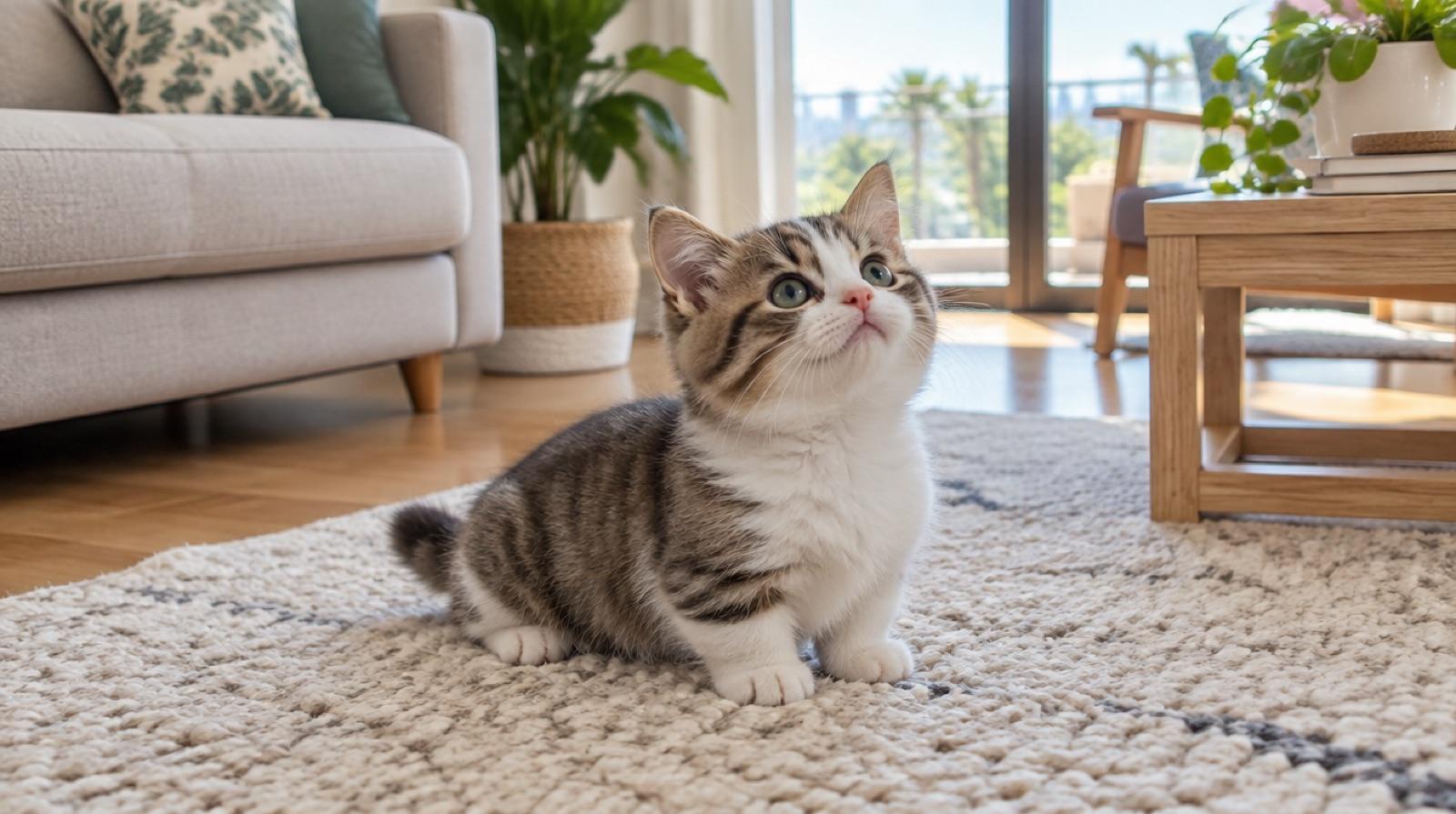
Should you adopt or buy a Munchkin?
For most people, rescue first. The thing that makes a Munchkin a Munchkin is a dwarfism mutation, and the main Australian and international welfare bodies are cautious about breeding for it. If what draws you is the personality TICA describes (sociable, curious, playful, good with children and other pets), plenty of rescue cats share it with ordinary legs, and they come desexed, microchipped and vaccinated with notes from the people caring for them.
Rescue is not right for everyone. If you have thought through the welfare debate below and still want a papered Munchkin, the honest route is a breeder registered with a cat council that recognises the breed, who will show you the parents' health results and answer hard questions. The worst route is a cheap online ad with no papers, which is where most of the scams sit.
| Route | Reference cost | What you usually get | Main risk |
|---|---|---|---|
| Registered breeder | No published council or member-breeder price; ask each breeder | A papered kitten, vaccinated and microchipped, a chance to meet the mother | The welfare questions about the breed itself; very few breeders |
| Rescue | A rescue fee, often a few hundred dollars | Mostly domestic shorthairs; short-legged cats rarely, desexed, microchipped and vaccinated | A true Munchkin is rare; unknown parents |
| Online ad or social media | Anything, often well under a breeder's price | Anything from a real litter to a kitten that does not exist | Scams, unregistered breeding, no health checks |
Rescue fees read 11 November 2026 on the pages linked below. A reference, not a quote: breeders and rescues set and change their own prices, so check with them.
What causes the Munchkin's short legs?
A single dominant gene. TICA says the short legs come from a spontaneous autosomal dominant mutation that makes the long bones of the legs develop shorter, so a cat needs only one copy to have short legs and pass them on. Its standard describes shortening and possibly slight bowing of the long bones, and says the spine is unaffected and the short legs do not hamper mobility or survival ability. The Coordinating Cat Council of Australia standard (issue date February 2025) uses similar words.
RSPCA Australia describes the same thing differently: a genetic mutation causing disproportionate dwarfism (chondrodysplasia, a defect in the formation of cartilage), which it says has the potential to restrict the cat's mobility and natural behaviour and to affect the joints through abnormal limb development.
Even the breed's own rules show the trait is not neutral. The CCCA standard withholds awards for a sway back or an “excessive dip behind the shoulder (lordosis)”, and the Australian Cat Federation's breeding rules (June 2026) say normal-legged Munchkin variants that are not used for breeding are to be desexed before going to pet homes. Litters can include both kinds of kitten, so ask which one you are being offered.
What do vets and welfare bodies say about Munchkins?
They are cautious, and the honest summary is that the evidence on long-term pain is thin rather than reassuring.
- International Cat Care. Its position statement on conformational health, made with the iCatCare Veterinary Society's international partners, says breeding for extreme traits that impair welfare should be actively discouraged, naming chondrodystrophy alongside folded ears, hairlessness and extreme flat faces. It argues that preventive action should not wait for definitive proof.
- RSPCA Australia. The Knowledgebase names the Munchkin among the main cat breeds in Australia that suffer from significant welfare problems and/or are prohibited from being bred in at least one Australian jurisdiction, and says the RSPCA is opposed to selective breeding that produces exaggerated features detrimental to health or welfare.
- Australian Veterinary Association. Its genetic defects policy (ratified July 2023) gives “Munchkin” dwarf cats as an example of a genetic defect selected for in a breed, and says animals with known genetic defects that could harm their welfare must not be used for breeding, other than in exceptional circumstances.
- The research. A 2025 review in Animal Welfare found dwarf cats do not appear to share the high rate of disc disease seen in short-legged dogs, but that evidence is lacking on whether the altered limbs cause pain or osteoarthritis, and that pain in dwarf cats should be a research priority.
- The Cat Group. In a statement published by International Cat Care (August 2024, updated September 2025), it asked the public not to buy “Bully” or “Dwelf” cats under any circumstances, saying their deformities, including hairlessness and short, bowed legs, are painful and restrict mobility.
On the other side, TICA and the Australian councils that recognise the breed describe Munchkins as healthy, mobile cats. Weigh both, and if you go ahead, keep the cat lean and involve your vet early if it ever seems stiff or reluctant to jump.
Which registries recognise the Munchkin?
They split almost exactly down the middle.
| Body | Position on the Munchkin |
|---|---|
| Coordinating Cat Council of Australia | Publishes a Munchkin longhair and shorthair standard (issue date February 2025) |
| Australian Cat Federation | Munchkin breeding rules (domestic shorthair and longhair outcross only) and a separate breeding policy |
| TICA | Accepted into its new breed programme in 1994; championship status from May 2003 |
| GCCF (UK) | Munchkin, Minuet and other dwarf breeds “Ineligible due to reported health problems” |
| FIFe (Europe) | Will not register or recognise any breed with dwarfism as a breed characteristic, naming the Munchkin; such cats are not allowed for breeding |
From each body's own pages and rules, read 11 November 2026. Registry recognition is about showing and pedigrees, not a health guarantee.
What do Victoria and the ACT say about breeding Munchkins?
Two Australian codes mention the breed by name. Both are about breeding, not about owning or adopting a Munchkin.
- Victoria. Agriculture Victoria's Code of Practice for the Breeding of Animals with Heritable Defects that Cause Disease lists “aplasia or hypoplasia of long bones (Munchkin cats or Twisty Cats)” among dominant heritable diseases in cats. Under its rules for dominant conditions, mating two affected animals is prohibited outside an approved breeding program, affected kittens must be desexed unless used in one, and an affected animal must not be passed to another person without advice of its heritable defect status, including a vet certificate linked to its microchip. RSPCA Australia's reading is that affected cats cannot be bred in Victoria under this code.
- ACT. The Animal Welfare (Welfare of Cats in the ACT) Code of Practice 2007, listed as in force, says “The deliberate breeding of malformed animals is unacceptable” and names the Sphinx, Manx, Cymric, Munchkin and Scottish Fold as breeds that may have genetic health problems associated with such breeding.
Other states have their own breeder registration and sale rules; our kittens for sale guide has the state-by-state table. This is a plain-language summary, not legal advice: check the official pages for your state.
What does a Munchkin kitten cost from a registered breeder?
We could not find a figure we can stand behind. No Australian cat council or club publishes a Munchkin price, and Cats Victoria (GCCFV) says kitten pricing is up to individual breeders.
In November 2026 we read the websites of Munchkin catteries listed with Australian cat councils. Few breed Munchkins at all, most publish no price, and the one cattery that showed a price did so on a page dated 2022, so we left it out. Sites that named no registering body were not counted either. Any price you are quoted is the breeder's own; ask what it includes.
| Route | Reference cost | Read |
|---|---|---|
| Member breeders (own websites) | No current price published | 11 Nov 2026 |
| Cat councils and clubs | No Munchkin price published | 11 Nov 2026 |
| RSPCA NSW, kitten under 6 months | $270 | 11 Nov 2026 |
| RSPCA NSW, cat over 6 months | $220 | 11 Nov 2026 |
| Cat Protection Society of NSW | $150 per cat or kitten; $250 for two | 11 Nov 2026 |
Reference figures only, not quotes. Fees change, so check with the rescue. Rescue fees usually include desexing, microchipping and vaccination. For the costs after you bring a cat home, see our cost of owning a cat guide and the cat cost calculator.
What should you ask a Munchkin breeder?
If you decide to buy, these questions separate a careful breeder from a risky one:
- Which council are you registered with? Check with that council yourself (the CCCA and its members, the ACF and its members, or ANCATS), not through a link the seller sends.
- Are both parents short-legged? Ask what the pairing was and why. In Victoria, mating two affected cats is prohibited outside an approved breeding program.
- DNA and heart results for both parents, against the ACF minimum list for the breed: PKD, pyruvate kinase deficiency, the Ragdoll HCM variant and PRA (rdAc), plus an annual heart scan.
- Mobility. Has a vet checked the parents' and the kitten's legs and joints? Can you watch the parents move and jump?
- The mother, in person or on a live video call, before any deposit.
- Age and paperwork. At least 10 weeks old (ANCATS rules recommend 12), vaccinated, microchipped and desexed or with desexing agreed in writing. In Victoria, ask for the heritable defect advice the code requires.
A breeder who is defensive about any of these is telling you something.
See the cats listed right now
Munchkins and short-legged crosses turn up only now and then, so set an alert on the breed page. Every listing links to the rescue, where you apply directly.
What do Munchkins in rescue look like?
Rare. Across the rescues and shelters we aggregate, a cat listed as a Munchkin or short-legged cross appears only now and then. That is why an alert on the Munchkin breed page matters more than checking once.
If one does come up, ask the rescue what it knows about the cat's mobility, weight and any vet findings, and plan a home with low perches and easy access to beds and litter trays. Some cats with mobility needs are listed under special needs: see Sydney, Melbourne, Brisbane, Perth, Adelaide.
The wider choice is the domestic shorthair, the everyday Australian moggy that makes up most of rescue. Many are just as playful and people-focused as the Munchkin is said to be, with none of the debate. Read what a domestic shorthair is, then browse them in Sydney, Melbourne, Brisbane, Perth, Adelaide.
What do Munchkin kitten scams look like?
Never pay for a Munchkin kitten you have not seen with its mother, in person or at least on a live video call. A seller who asks for more money after the first payment, for transport, a carrier or insurance, is following the standard scam script.
Scamwatch says scammers set up fake websites and social media profiles to sell popular breeds, including pets that do not exist. Its advice: view the pet in person, ask for a video call if you cannot visit, check the breeder is legitimate, and compare prices, because a very cheap pet is likely a scam.
Munchkin-specific versions of the pattern:
- A polished site, or “registered” with nobody in particular. Ask which council and check its directory yourself.
- Photos only, never a video call, and payment asked for by money order, pre-loaded card or to several different PayIDs or accounts, which Scamwatch warns about.
- A kitten under 10 weeks, or one offered before it is vaccinated and microchipped.
Is a Munchkin the right cat for you?
TICA describes Munchkins as sociable, curious and playful, and good with children and other pets, and says they reach high spots in smaller steps rather than one leap. That temperament is common in ordinary cats too. If you are drawn by the look, be honest with yourself about the welfare debate; if you are drawn by the personality, rescue gives you far more to choose from.
Not sure what fits? Try the what cat breed is right for me quiz and read our guide to adopting a cat in Australia. Browse kittens in Sydney, Melbourne, Brisbane, Perth, Adelaide. Considering another breed with a welfare question? See Manx kittens, or for a calm long-haired cat, RagaMuffin kittens.
Find a Munchkin near you
Munchkins and short-legged crosses listed by rescues, by city:
Frequently asked questions
Should I adopt or buy a Munchkin kitten?▼
If you love the Munchkin's playful, sociable nature, a rescue cat is the kinder place to start, because the short legs come from a mutation that International Cat Care, RSPCA Australia and the Australian Veterinary Association all raise welfare concerns about. If you still want a papered Munchkin, buy only from a breeder registered with a cat council that recognises the breed, and ask the questions in this guide first.
Why are Munchkin cats controversial?▼
Because the short legs are a form of dwarfism. RSPCA Australia describes a mutation causing disproportionate dwarfism (chondrodysplasia, a defect in cartilage formation) that can restrict mobility and natural behaviour. International Cat Care says breeding for chondrodystrophy should be actively discouraged. TICA's breed standard says the spine is unaffected and the legs do not hamper mobility. A 2025 review in Animal Welfare found the evidence on pain and joint disease in dwarf cats is still thin.
Is it legal to breed Munchkin cats in Australia?▼
It depends on the state, and breeding rules are not buying rules. Victoria's code of practice for breeding animals with heritable defects lists aplasia or hypoplasia of the long bones (short leg bones) in Munchkin cats, and RSPCA Australia says affected cats cannot be bred in Victoria under it. The ACT's cat welfare code says the deliberate breeding of malformed animals is unacceptable and names the Munchkin. Check your own state's rules; this is not legal advice.
Which cat councils recognise the Munchkin?▼
In Australia, the Coordinating Cat Council of Australia publishes a Munchkin standard (February 2025) and the Australian Cat Federation has Munchkin breeding rules and a breeding policy. TICA recognises the breed overseas. The UK's GCCF does not, saying dwarf breeds are ineligible due to reported health problems, and FIFe will not register any breed with dwarfism as a breed characteristic.
How much is a Munchkin kitten in Australia?▼
We cannot give a reliable figure. No Australian cat council or club publishes a Munchkin price, and in November 2026 none of the member catteries we found published a current price on its own website. Cats Victoria (GCCFV) says kitten pricing is up to individual breeders. Ask each breeder what the price includes; any figure you are quoted is theirs, not ours.
Do all Munchkin kittens have short legs?▼
No. Litters can include normal-legged kittens. The Coordinating Cat Council of Australia standard allows Munchkin variants with normal leg length as breeding partners but not for showing, and the Australian Cat Federation's rules say variants not used for breeding are to be desexed before going to pet homes. Ask the breeder which kind of kitten you are being offered.
Can Munchkin cats jump and climb?▼
Mostly, in smaller steps. TICA says a Munchkin may not jump from the floor to the top of a fridge in one bound but will find a path up in smaller jumps. RSPCA Australia notes the short limbs have the potential to restrict mobility and natural behaviour. Lower perches and steps help, and any change in how easily a cat moves is a reason to see a vet.
How big do Munchkin cats get?▼
Average sized in the body, short in the leg. TICA says Munchkins do not stay kitten sized and gives adult females at about 5 to 7 pounds (about 2.3 to 3.2 kilos) and males at about 7 to 10 pounds (about 3.2 to 4.5 kilos). Keeping a short-legged cat lean takes load off its joints, so ask your vet for a target weight.
What health checks should a Munchkin breeder do?▼
Ask for DNA results on both parents for the tests the Australian Cat Federation lists as minimum testing for the Munchkin: PKD (polycystic kidney disease), pyruvate kinase deficiency, the Ragdoll HCM variant and PRA (rdAc), plus an annual heart scan. The ACF notes that because Munchkins are interbred with domestic shorthairs and longhairs, testing for all diseases known to cats is recommended. Ask too whether both parents have been checked by a vet for mobility and joint problems.
Can you adopt a Munchkin in Australia?▼
Occasionally. Short-legged cats and Munchkin crosses do appear in rescue but are rare across the rescues we aggregate. Set an alert on the Munchkin breed page for your city. If what draws you is a playful, people-loving cat, the domestic shorthairs that fill Australian rescues are a much wider choice.
How much does it cost to adopt a cat instead?▼
A few hundred dollars at most rescues. On 11 November 2026 RSPCA NSW listed $270 for a kitten under 6 months and $220 for a cat over 6 months, and the Cat Protection Society of NSW listed $150 per cat or kitten, with desexing, microchipping and vaccination included. Fees change, so check with the rescue; these are reference figures, not quotes.
What do Munchkin kitten scams look like?▼
Scamwatch says scammers set up fake websites and social media profiles for popular breeds, and warns that a very cheap pet is likely a scam. Be wary of any seller who cannot name the cat council they are registered with. Never pay before you have seen the kitten with its mother, in person or on a live video call.
Sources
- International Cat Care: Feline conformational health and welfare in cat breeding (position statement)
- RSPCA Australia Knowledgebase: Health and welfare issues of exaggerated physical features in cats
- Australian Veterinary Association: Genetic defects in domestic animals (policy)
- Roberts et al. 2025, Animal Welfare: welfare of purebred cats with extreme conformation
- Agriculture Victoria: Code of Practice for the Breeding of Animals with Heritable Defects that Cause Disease
- ACT Legislation Register: Animal Welfare (Welfare of Cats in the ACT) Code of Practice 2007
- TICA: Munchkin breed page and standard
- Coordinating Cat Council of Australia: Munchkin standard (February 2025)
- Australian Cat Federation: By-laws Part 2, Breeding and Registration Rules (June 2026)
- Australian Cat Federation: DNA tests by breed (Oct 2025)
- GCCF: Unrecognised breeds
- FIFe: Breeding and Registration Rules (issued 1 July 2026)
- Scamwatch: Buying and selling scams (pet scams)
- RSPCA NSW: Adoption fees
- Cat Protection Society of NSW: Cats for adoption
Keep reading
Munchkins listed by rescues
Munchkins and short-legged crosses listed right now by the rescues and shelters we aggregate.
Manx kittens: adopt or buy?
Taillessness, Manx syndrome, the tail types and the breeding rules Australian councils set.
Small cat breeds
Naturally small breeds and what the standards say about size, without the dwarfism.
Kittens for sale: adopt or buy?
State breeder rules, how to check a seller, and what rescue kittens cost.