The short answer
If you buy, know which dog you are buying. A first-cross Lab x Poodle comes from a crossbreed breeder with no association behind it, so check the state breeder number and both parents' hip, elbow and DNA results yourself. An Australian Labradoodle from an Australian Labradoodle Association member breeder comes with the association's mandatory hip, elbow and DNA testing: of the 11 member breeders that published a pet price on their own websites in November 2026, the lowest pet price at each ranged from $3,000 to $4,400, with a median of $3,900, usually on a desexing contract. No dog is hypoallergenic, ASCIA says. If an adult suits you, rescues list Labradoodles regularly; RSPCA NSW charges $500 for a dog over 12 months. Prices and fees are reference figures, not quotes.
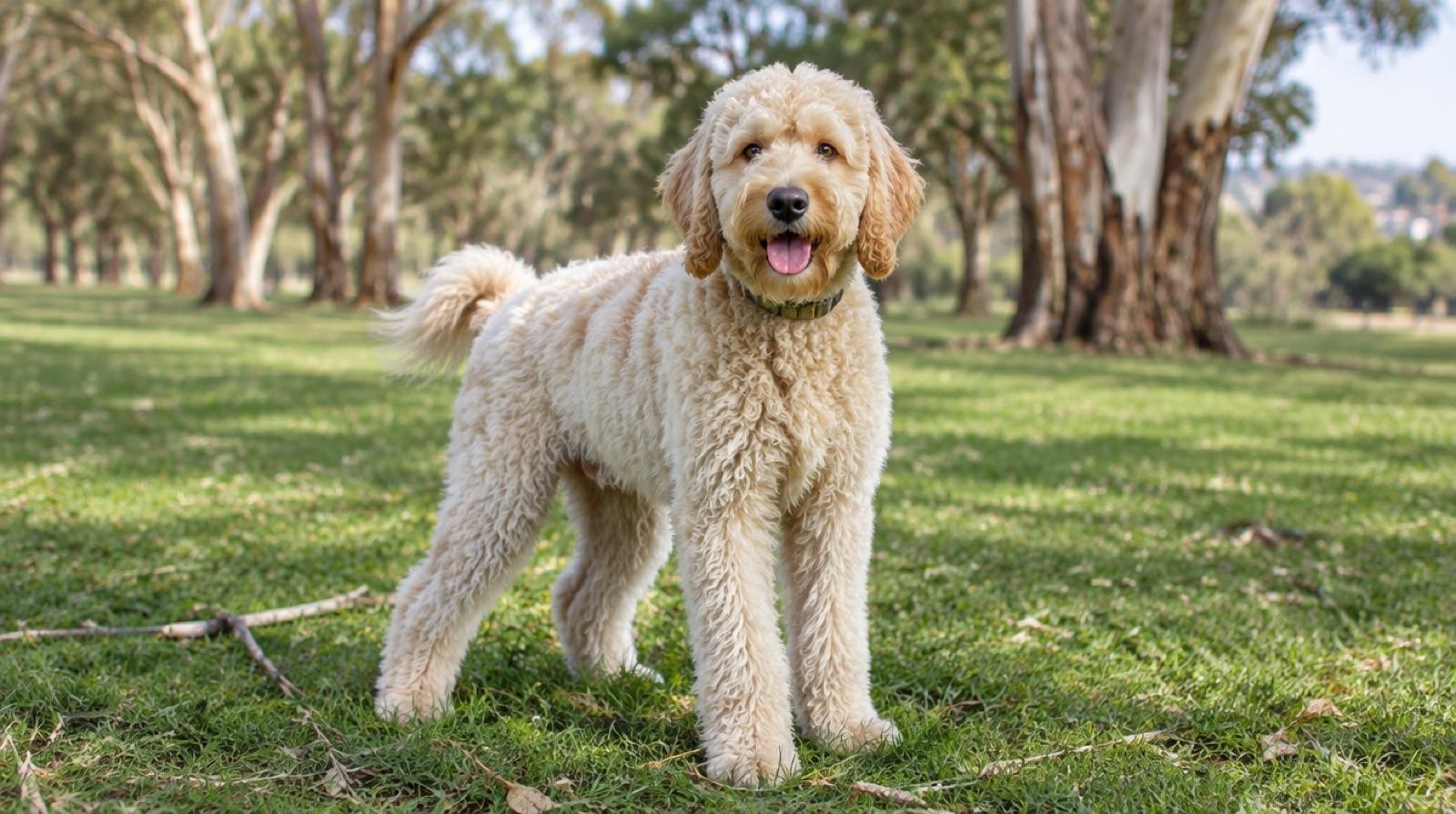
Where did the Labradoodle come from?
Victoria. The ABC reports that in 1989 Wally Conron, then breeding manager of the Royal Guide Dogs Association of Australia (now Guide Dogs Victoria), crossed a Labrador with a Standard Poodle for a blind woman in Hawaii whose husband was allergic to dog hair, hoping to produce a guide dog he would not react to. Two University of Sydney geneticists, writing in The Conversation, give the same origin. The name caught on fast. The ABC quotes Conron calling it a gimmick, “Same dog, different name”, and reports that he came to regret starting the craze for crossbreeds.
From that first cross, two different dogs grew. Which one a seller means matters more than anything else in this guide.
Labrador x Poodle or Australian Labradoodle: what is the difference?
The Australian Labradoodle Association (ALA), formed in 1998, says the Australian Labradoodle “was not just a Labrador x Poodle cross but was a breed in its own right developed over many years”. It describes it as “a mature crossbreed bred with a purpose and to a consistent type”. That is the association's own claim; Dogs Australia does not recognise the Australian Labradoodle as a breed.
| First-cross Labradoodle | Australian Labradoodle (ALA) | |
|---|---|---|
| Parents | A purebred Labrador and a purebred Poodle | Australian Labradoodles bred over generations from six recognised parent breeds: Labrador, Poodle (Standard, Miniature, Toy), Irish Water Spaniel, Curly Coated Retriever, English and American Cocker Spaniel |
| Register | None; Dogs Australia does not register crossbreeds | The ALA's own register, not a Dogs Australia pedigree |
| Health testing | Whatever the breeder chooses to do | Hips, elbows and DNA mandatory for all breeding dogs |
| Coat | The most variable; can be Lab-like and shed | Bred for low-shedding coats, though breeders still price low-shedding and non-shedding puppies differently |
| Size | Usually large, from a Standard Poodle | Several sizes, depending on the Poodle line |
Association details from the ALA's own website, read 9 November 2026. Other Labradoodle associations exist, some based overseas; check any membership claim in that association's own directory.
Genetics backs part of the story. The University of Sydney researchers in The Conversation report that Australian Labradoodles turned out to be more Poodle than Labrador in their DNA, and explain that in multi-generation crosses a puppy that inherits no copies of the Poodle coat genes will have a Labrador coat.
Why can't a Dogs Australia breeder sell you a Labradoodle?
Because the state canine bodies forbid their members from crossbreeding. Dogs Victoria's code, for example, says dogs “are not permitted to be mated to a dog or bitch of a different breed, to a cross bred dog or bitch”. So Labradoodle breeders sit outside the Dogs Australia system. Dogs Australia says other registries are not affiliated with it and cannot issue certified pedigrees. An association like the ALA can still set and enforce its own rules for its members, and those rules are worth knowing.
Which health tests should a Labradoodle breeder show you?
Hips, elbows and DNA results on both parents. The ALA says its breeders “are mandated to test hips, elbows and DNA for disease profiling of all breeding dogs”, and that it will not register dogs for breeding that miss its hip and elbow cut-off scores. On its breeding strategies page it says it was the first breed association to make DNA testing for PRA-prcd (an inherited blindness) compulsory, and that breeders must screen hips and elbows using PennHIP, the Australian Veterinary Association scheme or the OFA.
| Ask about | What it checks |
|---|---|
| Hip and elbow scores | Joint development; both parent breeds, Labrador and Standard Poodle, are screened for hip dysplasia |
| DNA: PRA-prcd | An inherited eye disease that slowly leads to blindness |
| DNA: exercise induced collapse (EIC), neonatal encephalopathy (NEEN) and DM | The other three DNA tests the ALA's rules make mandatory, alongside PRA-prcd |
| The certificates | Dates and the dog's name or microchip number; a verbal “health tested” is not a result |
Tests from the ALA's website and its rules (updated December 2025), read 9 November 2026. A buying checklist, not veterinary advice.
For a first-cross Lab x Poodle from a breeder outside any association, ask for the same results on both purebred parents; nobody else will have checked. Our Labradoodle health guide explains each condition and what to watch for once your dog is home.
See Labradoodles listed by rescues right now
Labradoodles and other Poodle crosses come through Australian rescues regularly and go quickly. The breed page shows what is listed today, and an alert tells you when a new one arrives.
See Labradoodles →What does a Labradoodle puppy cost?
Labradoodle association members publish prices more often than most purebred breeders. In November 2026 we read the websites of breeders listed in the Australian Labradoodle Association directory and found 11 that published a price for a pet puppy, in NSW, Queensland, South Australia and Victoria. Taking each breeder's lowest pet price, the range was $3,000 to $4,400 and the median $3,900. Ten of the 11 started at $3,750 or more; the one lower figure is a breeder that prices low-shedding pups at $3,000 and non-shedding pups at $4,400.
| Source | Published figure | Checked |
|---|---|---|
| ALA member breeders (11 with a price on their own websites) | $3,000 to $4,400; median $3,900 (each breeder's lowest pet price, standard colours) | 9 Nov 2026 |
| Rare colours at one member breeder | Up to $5,000 (merle and parti colours) | 9 Nov 2026 |
| RSPCA ACT, popular small breed puppies and poodle mixes up to 12 months | $1,200 | Nov 2026 |
| RSPCA NSW | $620 under 12 months; $500 over 12 months | 9 Nov 2026 |
| RSPCA Victoria | Puppies under 6 months $650 to $1,000; adults $500 to $1,000, each on its profile | 9 Nov 2026 |
Breeder prices as published on each member breeder's own website; rescue fees as published by each rescue. A reference, not a quote: prices change, some include GST and some do not, so confirm what is included before you budget.
Read the inclusions closely. The ALA says puppies from its breeders should be microchipped, desexed or on a desexing contract, wormed and vaccinated, with a health guarantee and ALA registration. Most member breeders we read send puppies home on a desexing contract, which means you pay the vet for desexing later; only a couple quote a price for a puppy already desexed. A rescue fee normally includes desexing. Then run the first year, including a clip every few weeks, through the dog cost calculator.
We have not quoted a price for first-cross Lab x Poodle puppies from breeders outside any association. Those sellers set their own prices with no published benchmark, and a figure on a listing site is one seller's asking price.
Are Labradoodles hypoallergenic?
No dog is. The Australasian Society of Clinical Immunology and Allergy (ASCIA) says: “All dog breeds cause allergies, although some do not shed as much dander, and therefore less allergen is spread.” It also says up to 50% of people allergic to animals do not get symptoms straight away, so a short meeting can give a false all clear.
The Labradoodle has been tested directly. A 2012 Dutch study in the Journal of Allergy and Clinical Immunology measured the main dog allergen in coat samples and found levels in Labradoodles and other so-called hypoallergenic breeds were higher, not lower, than in Labradors and ordinary dogs. Airborne levels did not differ, and floor dust in Labradoodle homes had less allergen, but the authors found “no evidence” for calling any breed hypoallergenic. A low-shedding coat may help some people with housework; it is not a medical guarantee. If anyone at home has asthma or a dog allergy, see a doctor first. Our guides to hypoallergenic dogs in Australia and dogs that don't shed cover how to test a specific dog.
What do Labradoodles in rescue look like?
Mostly young adults and adults, plus the occasional puppy. Across the rescues we aggregate, Labradoodles and Lab-Poodle crosses are listed under several names (Labradoodle, Labrador x Poodle, Poodle cross) and are often surrendered when owners find the size, energy or grooming more than they expected. They are popular, so they tend to be adopted quickly. Set an alert on the breed page, and widen your search to other Poodle crosses through the low-shedding listings for your city.
There is a second route for Australian Labradoodles. The ALA's rehoming page lists older Labradoodles from its breeders that need a new home, and the association says its breeders must help rehome any dog they bred whenever asked. An adopted adult shows you its coat, size and temperament before you commit, which matters more for a cross than for any purebred.
How do Labradoodle scams work, and how do you check a seller?
Never pay for a Labradoodle you have not seen with its mother, in person or on a live video call. A seller who then asks for more money for transport, a crate or insurance is running the standard scam script.
Scamwatch warns that scammers set up fake websites and social media and marketplace profiles for popular breeds that do not exist, and that a very cheap pet is likely a scam. A Dogs Victoria fact sheet says popular breeds and Poodle mixes feature commonly in scam ads, and that fake ads may show microchip, source or membership numbers lifted from legitimate breeders. With published association prices in the thousands, a Labradoodle offered for a fraction of that is a red flag.
- The state number. A breeder identification number in NSW, a Pet Exchange Register source number in Victoria, a supply number in Queensland. Look it up on the official register and confirm it matches the seller and the microchip. Our puppies for sale guide covers every state.
- The association claim. If a seller says it is an Australian Labradoodle Association member, find it in the ALA's breeder directory, which lists each breeder's member number and state breeder number.
- Both parents and their results. Meet the mother, ask about the father, and see the hip, elbow and DNA certificates. Dogs Australia suggests asking whether your vet can check a puppy before you buy, which is good advice for any breeder.
- No bank transfers to strangers. Pay only once you have seen the puppy, by a method that gives you some protection.
Should you adopt or buy a Labradoodle?
Adopt if you can be flexible about age: an adult Labradoodle from a rescue costs a published fee, arrives desexed and vet checked, and has a coat you can see and an allergy response you can test before you commit. Buy if you need a puppy, and if you do, an Australian Labradoodle Association member breeder gives you published prices and mandatory health testing that a breeder outside any association does not have to provide. Whichever route, check the state breeder number yourself.
If what you really want is a predictable size and coat, the purebred Poodle has a breed standard and Dogs Australia registered breeders; see our Poodle health guide. Comparing crosses? Read the Spoodle, Cavoodle and Groodle guides, or try the what dog breed am I quiz and the adoption readiness check.
Find a Labradoodle near you
Each page shows Labradoodles listed right now by rescues in that city, and each listing links to the rescue where you apply directly.
- Labradoodles for adoption in Sydney
- Labradoodles for adoption in Melbourne
- Labradoodles for adoption in Brisbane
- Labradoodles for adoption in Perth
- Labradoodles for adoption in Adelaide
Low-shedding dogs of every type, listed by city: Sydney, Melbourne, Brisbane, Perth, Adelaide.
Local Labradoodle adoption guides: Sydney, Melbourne, Brisbane, Gold Coast, Sunshine Coast, Perth, Adelaide.
Frequently asked questions
How much is a Labradoodle puppy in Australia?▼
Of the 11 Australian Labradoodle Association member breeders that published a pet puppy price on their own websites in November 2026, the lowest pet price at each ranged from $3,000 to $4,400, with a median of $3,900; ten of the 11 started at $3,750 or more, and the $3,000 figure is one breeder's price for a low-shedding coat. Most send puppies home on a desexing contract, with the desexing paid by the buyer, and some charge more for rare colours. These breeders are members of the Labradoodle association, not Dogs Australia, which does not register Labradoodles. Reference figures, not quotes.
What is the difference between a Labradoodle and an Australian Labradoodle?▼
A Labradoodle is usually a first cross between a Labrador and a Poodle. The Australian Labradoodle Association describes the Australian Labradoodle as more than a Labrador x Poodle cross: a mature crossbreed bred over many generations to a consistent type, with six recognised parent breeds that include the Irish Water Spaniel, the Curly Coated Retriever and the English and American Cocker Spaniels as well as the Labrador and Poodle.
Is the Labradoodle a recognised breed in Australia?▼
No. Dogs Australia, the national kennel body, does not recognise the Labradoodle or the Australian Labradoodle, and its state member bodies bar members from crossbreeding. The Australian Labradoodle Association, formed in 1998, keeps its own register for the dogs its member breeders produce, but that is an association register, not a Dogs Australia pedigree.
Who bred the first Labradoodle?▼
Wally Conron, the breeding manager of the Royal Guide Dogs Association of Australia, now Guide Dogs Victoria, bred the first known litter in 1989, the ABC reports. He was trying to produce a guide dog for a blind woman in Hawaii whose husband was allergic to dog hair. The ABC also reports that Conron later called the name a gimmick and said the cross was one of his greatest regrets.
Are Labradoodles hypoallergenic?▼
No dog is. The Australasian Society of Clinical Immunology and Allergy (ASCIA) says all dog breeds cause allergies, although some do not shed as much dander and so spread less allergen. A 2012 Dutch study found levels of the main dog allergen in coat samples from Labradoodles and other so-called hypoallergenic breeds were higher, not lower, than in Labradors, and found no evidence for calling any breed hypoallergenic. If someone at home is allergic, see a doctor and spend long visits with the specific dog.
What health tests should a Labradoodle breeder do?▼
Hips, elbows and DNA tests on both parents. The Australian Labradoodle Association says its breeders are mandated to test hips, elbows and DNA for disease profiling of all breeding dogs, and that it will not register dogs for breeding that miss its hip and elbow cut-off scores. Its rules make four DNA tests mandatory, including progressive retinal atrophy (prcd-PRA) and exercise induced collapse. For a Lab x Poodle cross from a breeder outside the association, ask for the same results on both parents.
Do Labradoodles shed?▼
Some do and some barely do. A Labradoodle can inherit a low-shedding Poodle-type coat, a shedding Labrador-type coat or something between, and University of Sydney geneticists writing in The Conversation explain that a puppy that inherits no Poodle coat genes will have a Labrador coat. Some association breeders sell low-shedding and non-shedding puppies at different prices, which tells you coats vary even within planned litters.
Can I adopt a Labradoodle from a rescue?▼
Yes. Labradoodles and other Poodle crosses come through Australian rescues and council pounds, mostly as young adults and adults, with the occasional puppy. The Australian Labradoodle Association also lists older dogs from its breeders that need new homes. Labradoodles are popular, so watch the breed page and set an alert.
How big does a Labradoodle get?▼
It depends on the Poodle used. The Australian Labradoodle Association recognises Standard, Miniature and Toy Poodles among its parent breeds, so association breeders produce several sizes, while a first-cross Labradoodle from a Standard Poodle is usually a large dog. Meeting both parents, or adopting an adult, is the surest guide to adult size.
How do I check a Labradoodle breeder?▼
Check the breeder number your state requires on the official register yourself, such as the breeder identification number in NSW, the Pet Exchange Register source number in Victoria or the supply number in Queensland. If a breeder claims Australian Labradoodle Association membership, find them in the association's own breeder directory. Then meet the mother and ask for both parents' hip, elbow and DNA results.
Is a Labradoodle a good family dog?▼
It can be, for an active family that will groom it. The Australian Labradoodle Association says it aims for sensitive, intuitive and sociable dogs, but a cross has no Dogs Australia temperament standard, and a large Labradoodle is a strong, bouncy dog that needs daily exercise, training and a clip every few weeks for life.
Sources
- Australian Labradoodle Association: Why choose an ALA accredited breeder
- Australian Labradoodle Association: Parent breeds
- Australian Labradoodle Association: Breeding strategies (health testing)
- Australian Labradoodle Association: Labradoodle puppies available
- Australian Labradoodle Association: Accredited breeders directory
- Australian Labradoodle Association: Looking for a new home
- ABC News (2019): Wally Conron and the first labradoodle
- The Conversation (2020): Australian Labradoodles are more Poodle than Lab
- Dogs Australia: How to choose a puppy (breed standards and other registries)
- Dogs Australia: Choosing a breeder
- Dogs Victoria: Part 20 Codes (Code of Practice 20.1.15)
- ASCIA: Pet allergy FAQ
- Vredegoor et al. (2012), Journal of Allergy and Clinical Immunology: Can f 1 levels in hypoallergenic dogs
- Scamwatch: Buying and selling scams (pet scams)
- Dogs Victoria: Identifying puppy scams and puppy farms (fact sheet)
- RSPCA NSW: Adoption fees
- RSPCA Victoria: The adoption process
- RSPCA ACT: Adoption process
Keep reading
Labradoodles listed by rescues
Labradoodles and Labrador-Poodle crosses listed right now by the rescues and shelters we aggregate.
Labrador puppies: adopt or buy?
The hip and elbow scores every registered Labrador litter needs, and Labs in rescue.
Groodle puppies: adopt or buy?
The Golden Retriever and Poodle cross, and the certificates both its parents need.
Hypoallergenic dogs in Australia
Why no dog is allergy-free, and how to test a specific dog before you commit.