The short answer
Adopt if you are happy with an adult Lab or a Lab cross: Labradors are listed by rescues far more often than most pedigree breeds, fees run from a few hundred dollars (Labrador Rescue Inc published $200 to $1,000 for most dogs when read on 9 November 2026), and desexing is done. Buy from a Dogs Australia registered breeder if you want a puppy with known parents: every registered Labrador litter needs hip and elbow scores on both parents, and you should also ask for annual eye checks and DNA tests. No Labrador club publishes a set price, so ask each breeder; the $3,500 to $5,000 that breed bodies quote for German Shepherds and Cavaliers is for other breeds, a sense of scale only. Avoid silver, charcoal or champagne “Labradors”. Prices and fees are reference figures read in November 2026, not quotes.
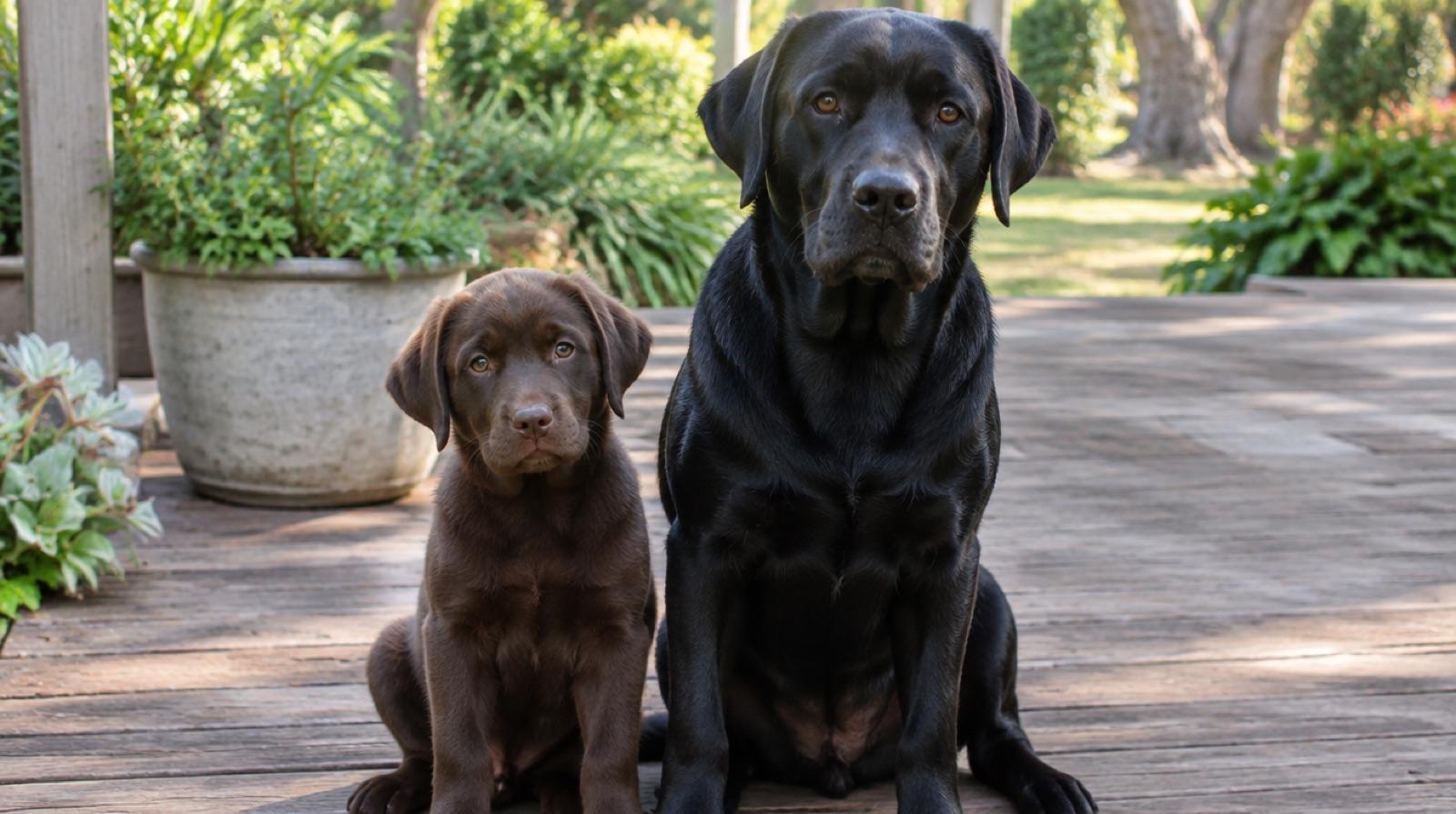
Should you adopt or buy a Labrador?
For most families, adopting is the easier route with a Labrador than with almost any other pedigree breed, because Labs reach rescue so often. Labradors and Lab crosses turn up in rescue far more often than Golden Retrievers, and in every state. Most are adults or adolescents, and the rescue can tell you how they behave with children, cats and being left alone.
Buying from a registered breeder makes sense if it has to be a young puppy with known parents, or if you want a Lab for retrieving trials, obedience or another sport. Labrador Rescue Inc says as much in its own FAQs: if you want a puppy, the best place to buy one is a properly registered and reputable breeder.
| Route | Reference cost | What you usually get | Main risk |
|---|---|---|---|
| Dogs Australia registered breeder | No published Labrador figure; ask each breeder (see below) | A purebred puppy, pedigree papers, parents hip and elbow scored; often eye, DNA and heart results too | Eye, DNA and heart tests are not compulsory, so check them |
| Labrador Rescue Inc | $200 to $1,000 | A foster-assessed Lab, with a two-week trial and full refund if it does not work out | Few young puppies |
| General rescue or pound | The standard fee, for example $500 to $900 at the RSPCA rows below | Labs and Lab crosses of all ages, desexed and microchipped | Unknown parent health history |
| Pet shop, online ad or social media | Anything from cheap to expensive | A puppy that may only look like a Labrador, or may not exist | No health scoring, scams, short guarantees |
Reference figures: Labrador Rescue Inc, RSPCA NSW and RSPCA ACT fee pages read on 9 November 2026. Not quotes. Breeder prices: no Labrador club publishes one. Breeders and rescues set their own prices and change them.
How much is a Labrador puppy from a registered breeder?
There is no published club figure. We read the National Labrador Retriever Breed Council's puppy buyers guide and the puppy and health pages of the Victorian and Queensland Labrador clubs in November 2026, and none of them quotes a price. Registered breeders set their own, so ask each one and compare what is included.
For a sense of scale only, here is what two Australian breed bodies publish for other popular pedigree breeds: the German Shepherd Dog Club of Victoria puts an average German Shepherd puppy at $3,500 to $5,000, and Dogs Australia says to expect $4,000 to $5,000 for a Cavalier. Those are other breeds, not a Labrador price.
The breed council's guide makes a point about price that cuts both ways. It warns against the “cheap” puppy from a backyard breeder, and also against puppies sold for high prices through pet shops or the internet that only look like a Labrador. A responsible breeder may cost a little more, it says, because the mother has been fed properly and the puppies wormed, vaccinated and weaned on the right diet. The guide also notes that pet shops and unregistered breeders do not have to score the parents' hips and elbows, and may offer only a 14 to 30 day guarantee.
Two more things the guide says to expect from a registered breeder: registration papers from your state's canine body (a printed pedigree without a registration number is not the same thing), and a microchip, which is required before a puppy can be registered. Pet puppies are often on the Limited Register, which means the dog cannot be bred from or shown in conformation; the guide notes that for a family dog it “won't matter in the slightest”.
Which health tests should a Labrador breeder show you?
For Labradors, some testing is compulsory. According to Dogs Australia, Labrador litter parents must have their hips and elbows x-rayed and scored before the litter can be registered. The breed council's buyers guide dates the rule to all litters whelped on or after 1 October 2003. Everything beyond that is recommended, not required, which is why you still need to ask.
| Test (both parents) | Screens for | Compulsory to register the litter? | What to look for |
|---|---|---|---|
| Hip and elbow scoring | Hip and elbow dysplasia | Yes | Low scores; best 0:0 for hips (worst 53:53) and 0:0 for elbows (worst 3:3) |
| Eye examination (ACES) | Retinal dysplasia, inherited cataract and other eye conditions | No, recommended | Normal, within the last 12 months (18 months if DNA clear for PRA-prcd) |
| DNA tests | PRA-prcd (progressive retinal atrophy), EIC (exercise induced collapse), HNPK (hereditary nasal parakeratosis) | No, recommended | Clear or carrier results that the breeder can explain |
| Heart | Inherited heart conditions | No, recommended | A clearance from a veterinary cardiac specialist |
Sources: Dogs Australia, the breed council buyers guide, the Labrador Retriever Club of Victoria and the Labrador Retriever Club of Queensland, read 9 November 2026.
The buyers guide is blunt about each question. If a breeder says hip and elbow scoring, annual eye checks or DNA tests for PRA and EIC are not necessary, or will not show you the certificates, it says to look elsewhere. It also says to ask how the breeder complies with the government breeding code where one exists, as in NSW, Victoria and Queensland.
There is good news in the data too. The breed council told Dogs Australia that DNA testing has all but removed progressive retinal atrophy from the breed in Australia. That only holds for puppies bred from tested parents, which is the point of asking.
One Labrador trait no certificate covers: appetite. A University of Cambridge study linked a POMC gene variant to greater food motivation and extra weight, and its researchers estimate around one in four Labradors (23%) carries it. Our city guides on Labrador weight management and Labrador health issues cover what that means day to day.
See the Labradors listed right now
Labs and Lab crosses from the rescues, shelters and council pounds we aggregate, each with its rescue, desexing and microchip details. Every listing links to the rescue, where you apply directly.
What do Labradors in rescue look like?
Mostly adult Labs and a lot of Lab crosses. Labradors are big, food-motivated and energetic as youngsters, and they reach rescue when an owner's circumstances or expectations change. Lab crosses are common in rescue listings, as are Labradoodles. You can browse the Labradoodle and German Shepherd and Lab mix pages for those.
Purebred Lab puppies do turn up in rescue, but not often, and they go quickly. If you want a young dog, keep an alert running on the Labrador and Golden Retriever puppies page for your city, and consider a Lab of six to 18 months, whose adult size and temperament are already showing.
The breed rescues
- Labrador Rescue Inc: a volunteer, foster-based rescue covering the ACT, NSW, Queensland, South Australia and Victoria. Foster carers assess each Lab, adopters fill in a questionnaire, and the dog goes home on a two-week trial. If it is not a match, the dog comes back with a full refund.
- Labrador Retriever Club of Victoria: acts as a referral point between people rehoming adult Labs and people offering a home. In most cases the club has not seen the dog and gives no warranty, so ask your own questions. Occasionally it takes a dog in, assesses it and charges a fee to cover vet work.
- Labrador Retriever Club of Queensland: runs a rescue and re-home network of members as one of its breed services.
What does a rescue Labrador cost?
| Rescue | Fee | Checked |
|---|---|---|
| Labrador Rescue Inc | $200 to $1,000 for most dogs, depending on age | 9 Nov 2026 |
| RSPCA NSW | $620 puppy under 12 months; $500 dog over 12 months | 9 Nov 2026 |
| RSPCA ACT | $900 for popular medium to large breeds and mixes up to 12 months; $650 for popular breeds 12 months to 8 years | 9 Nov 2026 |
Fees as published on the date shown. They are a reference, not a quote. The fee normally covers desexing, microchipping and a vet check; ask each rescue what else is included.
Then budget for the dog itself with the dog cost calculator. A Lab eats like the large dog it is.
How do Labrador puppy scams work?
Never send a deposit for a Labrador puppy you have not seen with its mother, in person or at least on a live video call. A seller who asks for more money after the first payment, for transport, a crate or insurance, is following the standard scam script.
Scamwatch says scammers set up fake websites, social media profiles and marketplace listings offering popular breeds or cute puppies that do not exist. Its advice: view the puppy in person, ask for a video call if you cannot visit, check that the breeder is legitimate, and compare prices, because a very cheap pet is likely a scam.
Labrador-specific versions of the pattern:
- Silver, charcoal or champagne “Labs”. The breed council says these colours are not recognised and should be avoided. Charging extra for them is a sales tactic, not a sign of rare breeding.
- “Lab type” puppies at pedigree prices. The guide describes puppies sold through pet shops or online that only look like a Labrador. Ears that stick out or up, it notes, suggest crossbred ancestry.
- Meeting away from home. The guide says to beware a breeder who will not let you see the mother with the puppies, or wants to hand the puppy over away from where it was raised.
- A printed pedigree with no registration number. Real registration papers come from your state's canine body and carry its number.
Every state also has its own breeder or source number rules. Our guide to puppies for sale in Australia has the full state-by-state table and how to check each number yourself.
When is a registered breeder the better choice?
When you need a puppy whose size, coat and health background you can predict, when you want a Lab for retrieving, obedience or another dog sport, or when you have owned Labradors before and want another from known lines. The buyers guide lists the questions to ask, and they make a good checklist:
- Are you registered? Membership of your state canine body (Dogs NSW, Dogs Victoria, Dogs Queensland, Dogs West, Dogs SA, Dogs Tasmania, Dogs ACT or Dogs NT) binds the breeder to its Code of Ethics. Check it yourself in the Dogs Australia registered breeder check.
- Can I see both parents' hip and elbow certificates and current eye clearances?
- What DNA tests have the parents had? PRA and EIC at a minimum, per the guide.
- Can I see the mother with the puppies?
- Will the puppy have registration papers and a microchip registered in Australia?
- How old will the puppy be when it comes home? At least 8 weeks.
Then check the breeder number your state requires on the official register, and get the sale terms in writing.
Is a Labrador the right dog for you?
The Dogs Australia breed standard describes the Labrador as intelligent, keen and biddable, with a strong will to please and a kindly nature with no trace of aggression or undue shyness. It also describes an excellent nose, a soft mouth and a keen love of water. That combination is a big part of the breed's appeal as a family dog.
The commitment is real, though. Labrador Rescue Inc's FAQs tell families to expect an hour of walking every day, by the adult, for around 15 years, whatever the children promise. Labs shed, and most are very food-driven. If you are unsure, try the what dog breed am I quiz or the adoption readiness check, and read our guide to the best family dogs in Australia.
Choosing between a Lab and a Golden? Our Labrador vs Golden Retriever guide compares size, coat, temperament, appetite and health side by side.
Find a Labrador near you
Labradors and Lab crosses listed by rescues, by city:
- Labradors for adoption in Sydney
- Labradors for adoption in Melbourne
- Labradors for adoption in Brisbane
- Labradors for adoption in Perth
- Labradors for adoption in Adelaide
Young retrievers and retriever crosses: Sydney, Melbourne, Brisbane, Perth, Adelaide.
Local guides to adopting a Labrador, with the rescues that serve each city: Sydney, Melbourne, Brisbane, Perth, Adelaide, Gold Coast, Sunshine Coast, Newcastle, Hobart.
Frequently asked questions
How much is a Labrador puppy in Australia?▼
No Labrador club or the National Labrador Retriever Breed Council publishes a price, so ask each registered breeder. For scale only, and for other breeds rather than Labradors: the German Shepherd Dog Club of Victoria puts a German Shepherd puppy at $3,500 to $5,000, and Dogs Australia says to expect $4,000 to $5,000 for a Cavalier King Charles Spaniel. The breed council's own buyers guide warns against both the cheap backyard puppy and the expensive pet shop or internet puppy that only looks like a Labrador. These are reference figures read on 9 November 2026, not quotes.
What health tests must a Labrador breeder do?▼
Hip and elbow x-rays and scoring on both parents are compulsory to register a Labrador litter with Dogs Australia. The National Labrador Retriever Breed Council's buyers guide says this applies to all litters whelped on or after 1 October 2003. The council also recommends annual eye checks under the Australian Canine Eye Scheme (ACES), DNA tests and heart clearances, which are not compulsory, so ask for them.
What DNA tests should Labrador parents have?▼
Ask about PRA-prcd (an inherited form of progressive retinal atrophy, which causes blindness), EIC (exercise induced collapse) and HNPK (hereditary nasal parakeratosis, a crusting of the nose). Those are the DNA tests the Labrador Retriever Club of Victoria lists. The breed council's buyers guide says that if a breeder tells you eye checks and DNA tests for PRA and EIC are not necessary, look elsewhere.
What is a good hip and elbow score for a Labrador?▼
Lower is better. The Labrador Retriever Club of Queensland explains that the best possible hip score is 0:0 and the worst 53:53, and the best elbow score is 0:0 and the worst 3:3. Ask to see the certificates for both parents and ask the breeder to explain the scores. A good score improves the odds but, as the breed council says, it is no guarantee.
Are silver Labradors purebred?▼
No, not as far as the Australian breed council is concerned. The National Labrador Retriever Breed Council's buyers guide says silver, charcoal and champagne are not recognised Labrador colours and should be avoided, because Labradors do not carry the dilute gene responsible for them. The recognised colours are black, yellow (from pale cream to fox red) and chocolate. A higher price for a rare colour is a warning sign, not a premium.
Can I adopt a Labrador in Australia?▼
Yes, and Labradors are among the purebred-type dogs rescues list most often. Labrador Rescue Inc is a volunteer, foster-based rescue covering the ACT, NSW, Queensland, South Australia and Victoria, and the state Labrador clubs in Victoria and Queensland offer rehoming help. General rescues and council pounds list Labs and Lab crosses all year. Most are adults rather than puppies.
How much does it cost to adopt a Labrador?▼
Labrador Rescue Inc says most of its dogs have a $200 to $1,000 adoption fee, depending on age, and it gives adopters a two-week trial with a full refund if the dog goes back. RSPCA NSW publishes $620 for a puppy under 12 months and $500 for an older dog, and RSPCA ACT lists $900 for popular medium to large breeds and mixes up to 12 months. All read on 9 November 2026; these are reference figures, not quotes, and fees usually include desexing and microchipping.
Is a Labrador a cross between a Labrador and a Golden Retriever?▼
No. The National Labrador Retriever Breed Council's buyers guide is clear that the Labrador Retriever is a breed of its own, just as the Golden Retriever is. Both belong to the Gundog group, but they were bred for different purposes. A puppy sold as a Labrador and Golden cross is a crossbreed, not a purebred of either.
How old should a Labrador puppy be before it leaves the breeder?▼
At least 8 weeks. The breed council's buyers guide says selling a puppy younger than 8 weeks is a serious breach of the Dogs Australia Code of Ethics and should be reported to your state's canine body. A seller offering younger puppies is telling you something about how the litter was raised.
Are cheap Labrador puppy ads scams?▼
Many are. Scamwatch warns that scammers set up fake websites and social media profiles offering popular breeds that do not exist, and that a very cheap pet is likely a scam. The usual script is stolen photos, a low price, a deposit by bank transfer, then requests for more money for transport or insurance. Never pay for a puppy you have not seen with its mother.
Is a Labrador a good family dog?▼
For an active household, yes. The Dogs Australia breed standard describes the Labrador as intelligent, keen and biddable, with a strong will to please and a kindly nature with no trace of aggression or undue shyness. Labradors need daily exercise; Labrador Rescue Inc tells adopters to expect to walk a Lab for an hour every day. They are also food-driven, so plan for weight control from the start.
Why are Labradors always hungry?▼
Partly genetics. A University of Cambridge study of 310 pet and assistance Labradors linked a POMC gene variant to greater food motivation and extra body weight, and the researchers estimate that around one in four Labradors (23%) carries at least one copy. It does not mean every Lab will be overweight, but it is a good reason to measure meals and count treats from puppyhood.
Sources
- National Labrador Retriever Breed Council: Puppy buyers guide (PDF)
- Dogs Australia: The National Labrador Retriever Breed Council of Australia
- Dogs Australia: Labrador Retriever breed standard
- Dogs Australia: registered breeder check
- Labrador Retriever Club of Victoria: Health testing
- Labrador Retriever Club of Victoria: Rescue and rehoming
- Labrador Retriever Club of Queensland: Hips, elbows and eyes
- Labrador Retriever Club of Queensland: Rescue and re-home
- Labrador Rescue Inc: FAQs
- Labrador Rescue Inc: About us (adoption fee)
- German Shepherd Dog Club of Victoria: Puppy FAQs (price comparison)
- Dogs Australia: Buying a Cavalier King Charles Spaniel puppy (price comparison)
- Scamwatch: Buying and selling scams (pet scams)
- RSPCA NSW: Adoption fees
- RSPCA ACT: Adoption process
- University of Cambridge: Labrador POMC gene study
Keep reading
Labradors listed by rescues
Labradors and Lab crosses listed right now by the rescues and shelters we aggregate across Australia.
Labrador vs Golden Retriever
Size, coat, temperament, appetite and health from the Dogs Australia standards, side by side.
Golden Retriever puppies: adopt or buy?
The four health certificates to ask a Golden breeder for, and why rescue Goldens are rare.
Puppies for sale: adopt or buy?
The breeder number each state requires, how to check it, and rescue puppy fees.