The short answer
If you want a Groodle puppy, you will be buying from a crossbreed breeder, so check the state breeder number yourself and ask for health certificates on both parents: hips, elbows, eyes and heart for the Golden Retriever, and hips, eyes and skin for a Standard Poodle. No breed club or Dogs Australia page publishes a Groodle price, so we do not quote one. No dog is hypoallergenic: ASCIA says all dog breeds cause allergies. If an adult suits you, rescues list Groodles and other Poodle crosses; RSPCA ACT, for example, charges $1,200 for poodle mixes up to 12 months with the vet work done. Fees are reference figures checked in November 2026, not quotes.
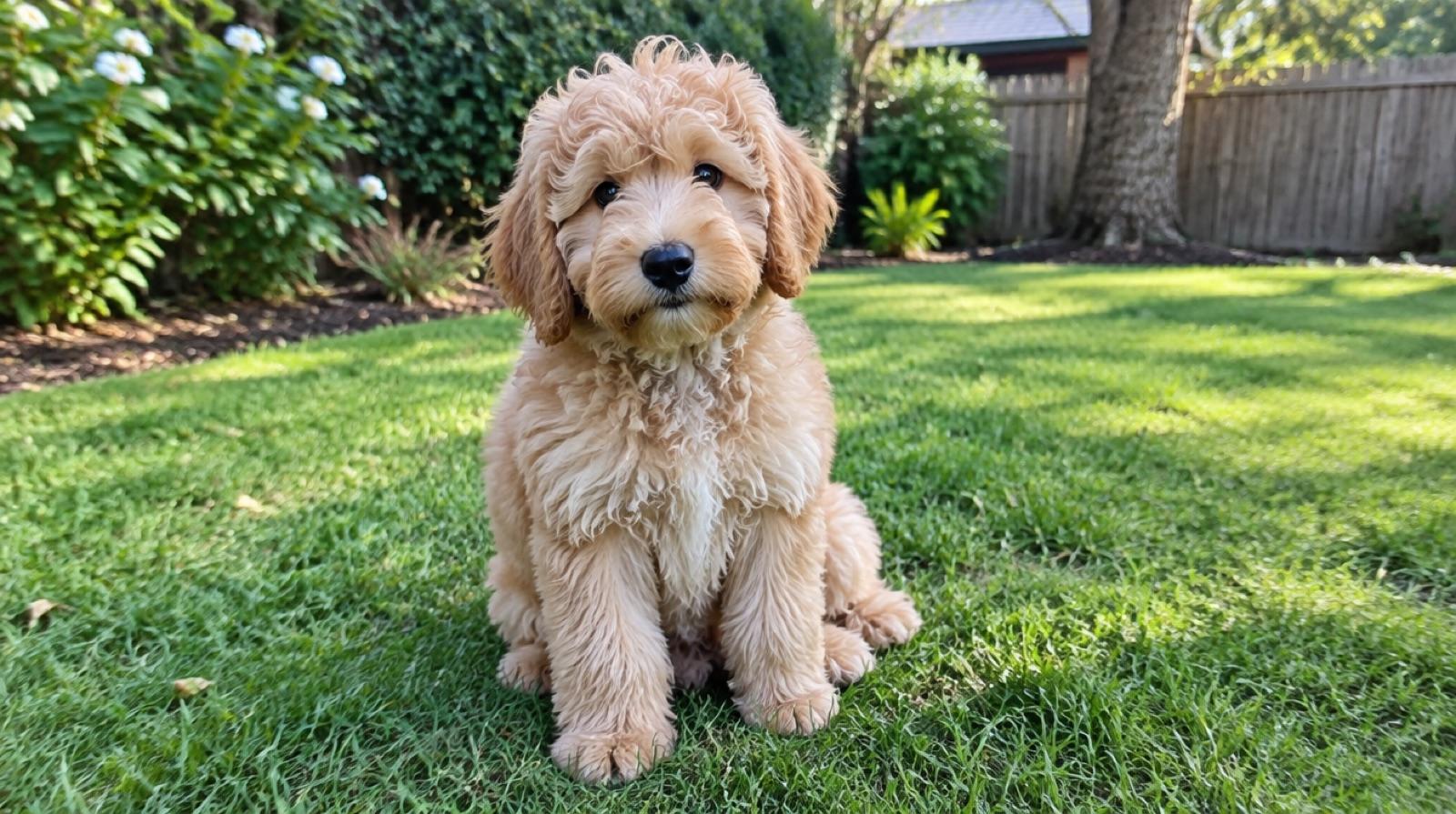
What exactly is a Groodle?
A Groodle is a cross between a Golden Retriever and a Poodle, usually a Standard Poodle, sometimes a Miniature. Outside Australia the same dog is called a Goldendoodle. It is not a breed in the formal sense: Dogs Australia publishes a breed standard for each purebred breed it recognises, and the Groodle is not one of them. For a buyer that means:
- No standard to measure a puppy against. Adult size, coat and temperament depend on the parents and can vary within one litter.
- No Dogs Australia registered Groodle breeders. Some crossbreed breeders belong to other registries, which Dogs Australia says are not affiliated with it and cannot issue certified pedigrees.
- No breed club. Nobody sets minimum health tests for Groodle litters or publishes a reference price, the way the Golden Retriever clubs do for their breed.
The best-known Poodle cross started in Australia. Two University of Sydney geneticists writing in The Conversation explain that the Labradoodle began in the late 1980s, when a Guide Dogs Victoria breeding manager crossed a Labrador with a Standard Poodle for people who reacted to Labrador hair. The Groodle, the Cavoodle and many other crosses followed, and none of them is a breed Dogs Australia recognises.
How big does a Groodle get, and what is it like?
Bigger than many buyers expect. Because there is no Groodle standard, the parent breeds are the only reference:
| Parent | Height (breed standard) | Coat | Character (breed standard) |
|---|---|---|---|
| Golden Retriever | Dogs 56 to 61 cm, bitches 51 to 56 cm | “Flat or wavy with good feathering” and a dense undercoat; sheds | “Kindly, friendly and confident”; biddable and intelligent |
| Standard Poodle | 38 cm and over | “Very profuse and dense of good harsh texture” and curly; needs regular clipping | “A very active, intelligent, well balanced” dog with good temperament |
| Groodle | No standard; usually large from a Standard Poodle, smaller from a Miniature | Anything from flat to curly, even within a litter | No standard; depends on the parents and the upbringing |
Heights, coat descriptions and character from the Dogs Australia breed standards for the Golden Retriever and the Standard Poodle, read 9 November 2026. The shedding and clipping notes and the Groodle row are general guidance, because a cross has no standard.
In practice most Groodles are energetic family dogs that need daily exercise, training and a groomer every few weeks for life. If you want something smaller, a Groodle bred from a Miniature Poodle may suit, but size is still a guess until the puppy grows. An adult from a rescue answers that question on day one.
Are Groodles hypoallergenic or non-shedding?
No dog is hypoallergenic. If someone at home has asthma or a dog allergy, see a doctor before you choose any dog, Groodle included.
The Australasian Society of Clinical Immunology and Allergy (ASCIA) says: “All dog breeds cause allergies, although some do not shed as much dander, and therefore less allergen is spread.” The main dog allergen is in saliva, and up to 50% of people allergic to animals do not get symptoms straight away, so a short cuddle at a breeder's house proves very little.
Shedding is a coat question, and Groodle coats vary. One puppy may grow a curly Poodle-type coat that sheds little; a littermate may grow a Golden-type coat that sheds; many land between. Generation labels such as F1b (an F1 Groodle bred back to a Poodle) make a Poodle-type coat more likely but promise nothing, and no registry checks them. Our guides to dogs that don't shed and hypoallergenic dogs in Australia cover how to test a specific dog before you commit.
Which health tests should a Groodle breeder show you?
Certificates for both parents. A Groodle can inherit conditions from either side, and with no Groodle club there is no minimum standard, so the parent breeds' screening is your benchmark.
| Parent | Ask to see | Where the benchmark comes from |
|---|---|---|
| Golden Retriever | Hip and elbow scores, an eye certificate renewed every year, and a heart certificate taken after 12 months of age | The Golden Retriever Club of Victoria lists litters only when both parents have these; the Queensland club explains each one |
| Standard Poodle | Hip score, eye examination, and a skin biopsy screen for sebaceous adenitis | The Orthopedic Foundation for Animals says sebaceous adenitis is seen primarily in Standard Poodles, has no DNA test and is screened by biopsy |
| Both | The certificates themselves, with dates and the dog's name or microchip number | A verbal “both parents are health tested” is not a result |
Read 9 November 2026. A buying checklist, not veterinary advice; your vet can tell you what each result means.
For what each condition means once you have your dog, see our national guides to Golden Retriever health and Poodle health, and the Groodle health guide.
See Groodles listed by rescues right now
Groodles and other Poodle crosses come through Australian rescues and are adopted quickly. The breed page shows what is listed today, and an alert tells you when a new one arrives.
See Groodles →What does a Groodle cost?
We cannot give you a breeder price we can stand behind. Purebred breeds have clubs and Dogs Australia breeder pages that sometimes publish a reference figure; the Groodle has neither, so any figure on a listing site is that seller's asking price. What we can show you is what rescues publish:
| Rescue | Published fee | Checked |
|---|---|---|
| RSPCA ACT | $1,200 for popular small breed puppies and poodle mixes of any size up to 12 months | 9 Nov 2026 |
| RSPCA NSW | $620 puppy under 12 months; $500 dog over 12 months | 9 Nov 2026 |
| RSPCA Victoria | $650 to $1,000 puppy under 6 months; adult dogs $500 to $1,000, shown on each profile | 9 Nov 2026 |
Fees as published by each rescue on the date shown. A reference, not a quote: fees change and some dogs are priced individually. Adoption fees normally include desexing, microchipping and vaccinations, which you would pay a vet for after buying a puppy.
The purchase price is the smaller number over a large dog's life. Food for a big dog, grooming every few weeks for a curly coat and insurance all add up, so run the first year through the dog cost calculator.
What do Groodles in rescue look like?
Mostly young adults and adults, plus the occasional puppy. Across the rescues we aggregate, Groodles are listed under several names (Groodle, Goldendoodle, Golden Retriever x Poodle, Poodle cross) so search more than one name. For an adopter ready for a large dog, an adult has one big advantage: you see the size, coat and energy before you commit.
A rescue will usually have had the dog vet checked, desexed, microchipped and vaccinated, and a foster carer can tell you how it behaves with children, cats and other dogs. What you will not usually get is its generation or its parents' health results, so book a baseline vet check in the first week. Widen the net by searching the low-shedding listings for your city, and look at the Labradoodle and Poodle breed pages too.
How do Groodle scams work, and how do you check a seller?
Never pay for a Groodle you have not seen with its mother, in person or on a live video call. A seller who then asks for more money for transport, a crate or insurance is running the standard scam script.
Scamwatch describes fake websites, social media profiles and marketplace listings offering popular breeds that do not exist, often at a price that looks like a bargain. A Dogs Victoria fact sheet warns that scam ads target in-demand breeds and mixes, and that they may show microchip, source or membership numbers copied from real breeders, so check that a number belongs to that breeder, that location and that breed.
Because a Groodle breeder cannot be a Dogs Australia registered breeder, the checks that matter are the ones every breeder must pass:
- The state number. A breeder identification number in NSW, a Pet Exchange Register source number in Victoria, a supply number in Queensland, a DACO breeder number in South Australia, a licence number in the ACT. Look it up on the official register yourself. Our puppies for sale guide sets out every state's scheme.
- The mother, where the puppies are raised. Dogs Australia says responsible breeders should show you all the dogs on their premises, and suggests asking whether your vet can check the puppy before you buy.
- Certificates for both parents, as in the table above.
- A reverse image search of the puppy photos, and a search of a sentence from the ad.
- No bank transfers to strangers. Pay only once you have seen the puppy, by a method that gives you some protection. If you have already paid, call your bank straight away and report it to Scamwatch.
Should you adopt or buy a Groodle?
Adopt if you can be flexible about age. An adult Groodle from a rescue costs a published fee, arrives with the vet work done and shows you its size, coat and character, which matters more for a cross than for a purebred. Buy if you need a young puppy and will do the checking a missing breed standard leaves to you: state breeder number, the mother on site, certificates for both parents.
If what you really want is a predictable size and coat, consider the parent breeds. Both the Golden Retriever and the Poodle have breed standards, breed clubs and Dogs Australia registered breeders; our Golden Retriever adopt-or-buy guide covers one side. If a smaller oodle suits your home better, read the Cavoodle adopt-or-buy guide. Still deciding? Try the what dog breed am I quiz or the adoption readiness check.
Find a Groodle near you
Each page shows Groodles listed right now by rescues in that city, and each listing links to the rescue where you apply directly.
- Groodles for adoption in Sydney
- Groodles for adoption in Melbourne
- Groodles for adoption in Brisbane
- Groodles for adoption in Perth
- Groodles for adoption in Adelaide
Low-shedding dogs of every type, listed by city: Sydney, Melbourne, Brisbane, Perth, Adelaide.
Local Groodle adoption guides: Sydney, Melbourne, Brisbane, Gold Coast, Sunshine Coast, Perth, Adelaide.
Frequently asked questions
Is a Groodle a recognised breed in Australia?▼
No. A Groodle, also called a Goldendoodle, is a cross between a Golden Retriever and a Poodle. Dogs Australia, the national kennel body, publishes breed standards only for the purebred breeds it recognises, and the Groodle is not one of them. So there is no official Groodle size, coat or temperament, no breed club and no Dogs Australia registered Groodle breeders.
How much does a Groodle puppy cost in Australia?▼
There is no published reference price we can point you to. The Groodle has no breed club and no Dogs Australia breeder pages, so every seller sets its own price, and an asking price on a listing site is not a benchmark. For comparison, RSPCA ACT charges $1,200 to adopt popular small breeds and poodle mixes up to 12 months old, with desexing, microchipping and vaccinations included. That is a rescue fee read in November 2026, not a quote and not a guide to breeder prices.
Are Groodles hypoallergenic?▼
No dog is. The Australasian Society of Clinical Immunology and Allergy (ASCIA) says all dog breeds cause allergies, although some do not shed as much dander and so spread less allergen, and that the main dog allergen is in saliva. A Groodle can inherit a low-shedding Poodle-type coat, a shedding Golden-type coat or something between. If someone at home is allergic, see a doctor first and spend long, repeated visits with the specific dog.
Do Groodles shed?▼
Some do and some barely do, and you cannot tell for certain from a young puppy. The coat depends on what each puppy inherits from the Golden Retriever and Poodle sides. A Poodle-type coat sheds little but keeps growing and needs regular clipping; a Golden-type coat sheds. An adult Groodle whose coat has grown in is the only way to know what you are getting.
How big does a Groodle get?▼
There is no standard size because there is no breed standard. A Groodle bred from a Standard Poodle is usually a large dog: the Dogs Australia standards put Golden Retrievers at 51 to 61 cm at the shoulder and Standard Poodles at 38 cm and over. Smaller Groodles are usually bred from a Miniature Poodle, and size can vary within one litter. Meeting both parents, or adopting an adult, is the surest guide.
What health tests should a Groodle breeder show me?▼
Results for both parents. Golden Retriever clubs expect hip and elbow scores, an eye certificate renewed every year and a heart certificate taken after 12 months of age. For a Standard Poodle parent, ask about hips, eyes and sebaceous adenitis, a hereditary skin disease the Orthopedic Foundation for Animals says is seen primarily in Standard Poodles. If a seller cannot show you certificates for both parents, the puppy's health background is unknown.
Are Groodles healthier than purebreds?▼
Not automatically. A Groodle can inherit conditions from either parent breed, which is why both parents need screening. Being a cross is not a substitute for health testing, and there is no breed club setting minimum tests for Groodle litters.
Can I adopt a Groodle from a rescue?▼
Yes. Groodles and other Poodle crosses come through Australian rescues and council pounds, mostly as young adults and adults whose owners could no longer keep them, with the occasional puppy. They are popular and tend to be adopted quickly, so watch the Groodle breed page, set an alert and look at other Poodle crosses too.
What does F1b mean for a Groodle?▼
It is breeder shorthand. An F1 Groodle has a purebred Golden Retriever parent and a purebred Poodle parent. An F1b is an F1 Groodle bred back to a purebred, usually a Poodle, so a Poodle-type coat is more likely. No registry checks these labels, and none of them makes a dog safe for an allergic person.
How do I check a Groodle breeder?▼
Check the breeder number your state requires on the official register yourself, such as the breeder identification number in NSW, the Pet Exchange Register source number in Victoria or the supply number in Queensland. Dogs Australia registration does not apply to a Groodle litter, and Dogs Australia says other registries are not affiliated with it and cannot issue certified pedigrees. Then meet the mother and ask for both parents' health certificates.
Is a Groodle a good family dog?▼
It can be, for an active family. The Dogs Australia standards describe the Golden Retriever as kindly, friendly and confident and the Standard Poodle as very active and intelligent, but a cross has no temperament standard of its own. A Groodle bred from a Standard Poodle is a big, bouncy dog that needs daily exercise, training and regular grooming for life.
Sources
- Dogs Australia: How to choose a puppy (breed standards and other registries)
- Dogs Australia: Choosing a breeder
- Dogs Australia: Golden Retriever breed standard
- Dogs Australia: Poodle (Standard) breed standard
- Golden Retriever Club of Queensland: Buying a Golden Retriever
- Golden Retriever Club of Victoria: Looking for a puppy
- Orthopedic Foundation for Animals: Sebaceous adenitis
- ASCIA: Pet allergy FAQ
- The Conversation (2020): Australian Labradoodles are more Poodle than Lab
- Scamwatch: Buying and selling scams (pet scams)
- Dogs Victoria: Identifying puppy scams and puppy farms (fact sheet)
- RSPCA NSW: Adoption fees
- RSPCA Victoria: The adoption process
- RSPCA ACT: Adoption process
Keep reading
Groodles listed by rescues
Groodles and Golden Retriever-Poodle crosses listed right now by the rescues and shelters we aggregate.
Cavoodle puppies: adopt or buy?
The other popular Poodle cross: what the generation labels mean and how to check a seller.
Dogs that don’t shed
Why non-shedding is a myth, and what a low-shedding coat costs you in grooming.
Golden Retriever puppies: adopt or buy?
The hip, elbow, eye and heart certificates a Golden parent should have.