The short answer
The fluffiest dogs fall into four coat types. Double-coated spitz breeds (Samoyed, Pomeranian, Keeshond, Japanese Spitz, Chow Chow) have a long or stand-off outer coat over a soft, dense undercoat and shed. Long coats (Maltese, Coton de Tulear, Havanese, Shih Tzu) and curly coats (Bichon Frise, Poodle) shed little but keep growing and need clipping. Big shaggy coats (Old English Sheepdog, Bearded Collie, Rough Collie) need hours a week. A teddy bear dog is not a breed: it is a sales name for small fluffy crosses and a haircut. Every fluffy coat needs brushing down to the skin to stop matting, double coats should be groomed, not shaved, in summer, and the grooming bill is ongoing; any cost mentioned here is a reference figure, not a quote. Fluffy crosses are common in rescue, often clipped short on arrival.
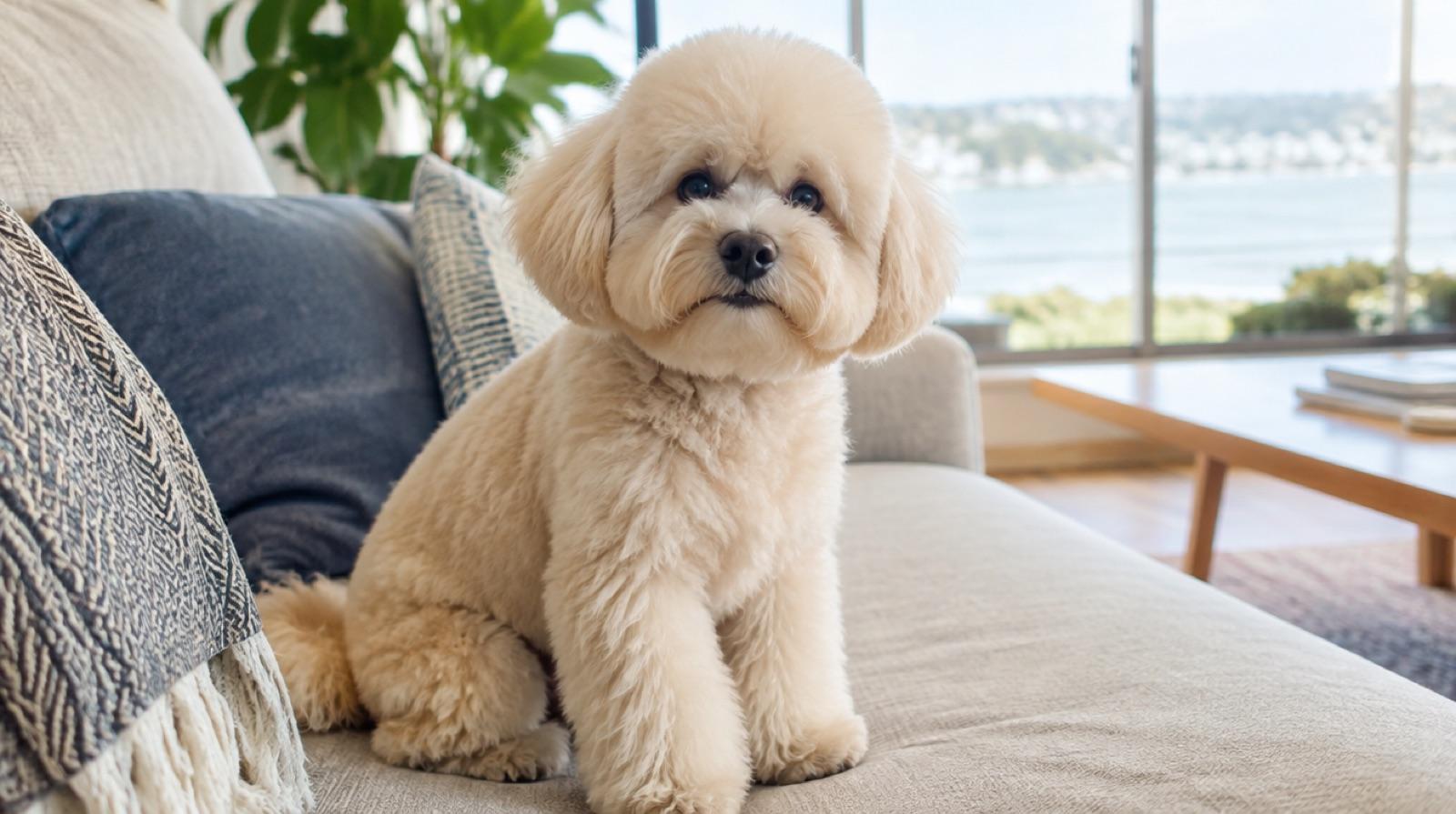
What makes a dog fluffy?
Fluffy is not a category any kennel council uses, so this guide sorts breeds by what their coat is actually made of, quoting each Dogs Australia breed standard. That matters because two dogs that look equally fluffy can need completely different care. A Samoyed sheds a cloud of undercoat; a Maltese hardly sheds at all but grows hair until it is clipped.
Dogs Australia puts it plainly: many coat types exist, “short, medium, long, smooth, wire and even hairless”, and some breeds need “extensive levels of grooming”. Every fluffy breed is in that last group. The four tables below cover the main types, with breeds linked where we have a breed page.
Which breeds have a fluffy double coat?
The spitz breeds. Their standards describe a long or stand-off outer coat, harsh or coarse in most of them, over a soft, dense undercoat. That is the classic fluffy look, and it sheds, heavily at times.
| Breed | Coat, from the standard | Size in the standard |
|---|---|---|
| Samoyed | Thick, close, soft undercoat with harsh hair standing straight away from the body (standard) | 51 to 56 cm / 46 to 51 cm |
| Pomeranian | Soft, fluffy undercoat; long, straight, harsh outer coat; very abundant frill (standard) | 1.8 to 2 kg / 2 to 2.5 kg |
| Keeshond | Harsh, off-standing; dense ruff; soft, thick, light-coloured undercoat (standard) | 46 cm / 43 cm (ideal) |
| Japanese Spitz | Straight stand-off outer coat over a profuse, short, dense soft undercoat; pure white (standard) | 34 to 37 cm / 30 to 34 cm |
| Chow Chow | Abundant, dense, straight and stand-off; coarse outer coat, soft woolly undercoat (standard) | At least 46 cm |
The RSPCA Knowledgebase names the Samoyed among double-coated dogs that “can be prone to getting matted hair” and says they “should normally be groomed every day” to stop dead hair building up. For long double coats such as the Pomeranian's, it suggests brushing in sections with an undercoat rake and then a wide-toothed comb. If you want this look with less hair on the floor, read dogs that don't shed first. Breed guides: Samoyed and Pomeranian.
Which fluffy breeds have long coats?
The companion breeds. These coats are long, and several have little or no undercoat (the Maltese, Papillon and Havanese, by their standards), which is why they shed less. The trade-off is that the hair keeps growing.
| Breed | Coat, from the standard | Size in the standard |
|---|---|---|
| Maltese | Long, straight and silky with no woolly undercoat; pure white (standard) | Not over 25 cm |
| Coton de Tulear | Very soft and supple, with the texture of cotton; dense and profuse (standard) | 26 to 28 cm / 23 to 25 cm |
| Havanese | Very long (12 to 18 cm), soft, flat or wavy topcoat; undercoat often absent (standard) | 23 to 27 cm |
| Papillon | Abundant, long, fine and silky, without undercoat; profuse frill on the chest (standard) | 20.3 to 28 cm |
| Shih Tzu | Long, dense outer coat, not curly, with a moderate undercoat (standard) | 4.5 to 8 kg |
| Lhasa Apso | Heavy, straight, hard top coat of good length over a dense undercoat (standard) | 25 cm (ideal, dogs) |
Dogs Australia explains that coats like the Maltese and Poodle have a long growth phase, so they “seem to keep growing and need regular trimming”. Most pet owners keep these dogs in a short clip rather than the floor-length show coat. Breed guides: Maltese and Shih Tzu.
Which fluffy breeds have curly coats?
The Bichon Frise, the Bolognese and the Poodle in all three sizes. Curls hold loose hair instead of dropping it, which is good for the carpet and bad for matting.
| Breed | Coat, from the standard | Size in the standard |
|---|---|---|
| Bichon Frise | Fine, silky, with soft corkscrew curls, 7 to 10 cm long (standard) | Under 30 cm |
| Bolognese | Long all over, forming fluffy flocks that stand off the body (standard) | 27 to 30 cm / 25 to 28 cm; 2.5 to 4 kg |
| Poodle (Toy, Miniature, Standard) | Very profuse and dense, of harsh texture; short hair close, thick and curly (standard) | Toy under 28 cm; Standard 38 cm and over |
Dogs Australia lists the Poodle, Bichon Frise, Shih Tzu, Maltese and Havanese among breeds considered low shedding, and adds a warning worth reading twice: “Often it is assumed no shedding means no grooming, but in fact, these breeds require regular or daily brushing” (Dogs Australia). The Poodle crosses, from the Cavoodle to the Moodle, usually inherit some version of this coat; our Cavoodle grooming guide sets out the routine.
Which big dogs are fluffy?
The shaggy herding breeds and a few mountain dogs. They are the most work of all, because there is simply more dog to brush.
| Breed | Coat, from the standard | Size in the standard |
|---|---|---|
| Old English Sheepdog | Profuse, hard-textured, shaggy, free from curl, with a waterproof undercoat (standard) | 56 cm and up (dogs) |
| Bearded Collie | Soft, furry undercoat; flat, harsh, shaggy outer coat that must not be trimmed (standard) | 53 to 56 cm (dogs, ideal) |
| Rough Collie | Very dense; harsh outer coat, undercoat so close it almost hides the skin; abundant mane (standard) | 56 to 61 cm (dogs) |
| Bernese Mountain Dog | Long, shining, straight or slightly wavy (standard) | 64 to 70 cm (dogs) |
Dogs Australia says the Old English Sheepdog “requires three to four hours of grooming each week in a full coat” (Dogs Australia), and the Bearded Collie standard says its coat “must not be trimmed in any way”, although pet dogs are often kept shorter. Dogs Australia also notes that the arctic breeds “tend to have long coats requiring more work”. Our big dog breeds guide covers their size and costs.
Source: Dogs Australia breed standards, read on 10 November 2026. Sizes are heights at the shoulder unless a weight is shown; where two figures are given they are dogs / bitches. A standard describes the breed ideal, not a promise about any one dog.
What is a teddy bear dog?
A label, not a breed. There is no “teddy bear” breed on the Dogs Australia breed listing, so no standard says how big one grows, what its coat will be or how it behaves. In practice the name is used two ways:
- As a sales name for small, round-faced, fluffy dogs, usually crosses of breeds such as the Shih Tzu, Bichon Frise, Maltese and Poodle. Crosses such as the Shih-poo, Moodle and Cavoodle are often described this way.
- As a haircut. A rounded face and an even, plush body clip make many long-coated dogs look like a teddy bear, whatever their breed.
Neither use tells you anything about health or temperament. Dogs Australia warns that other registries that issue papers for crosses, such as the MDBA and ABR, are not affiliated with it and cannot issue certified pedigrees. A cross can be a lovely dog; just judge the dog and the seller rather than the name. Our Moodle and Cavoodle guides go further.
Be alert to scams, too. Scamwatch says scammers set up fake websites and social media profiles to sell “popular breeds, cute puppies, or other pets” that do not exist, and advises you to see the pet in person or on a video call, check the breeder is legitimate, and treat a very cheap price as a warning sign.
Which dog breeds are the cutest, and is cute ever a problem?
There is no official list of the cutest dog breeds, and any ranking is somebody's taste. What most people mean by cute is a round face, big eyes, a short muzzle and a soft coat. The fluffy breeds in the tables above tick the coat box; many toy breeds tick the rest.
Cute has a limit worth knowing. The RSPCA Knowledgebase warns that exaggerated features, including “very flat faces” and “abnormally large heads and eyes”, can affect a dog's ability to breathe, exercise and regulate its temperature, and can cause painful eye, skin and ear problems. A fluffy dog with a moderate face and a normal-length nose gives you the look without that cost. Our healthiest dog breeds guide has the lifespan research.
How much grooming does a fluffy dog really need?
A lot, every week, for life. This is the part most fluffy-dog owners underestimate.
| Coat type | At home | Professional |
|---|---|---|
| Double coat (spitz) | Normally every day, per the RSPCA Knowledgebase; more during a heavy shed | Bath and de-shed as needed; no shave |
| Long coat | Brush and comb to the skin several times a week | Regular clip to a manageable length |
| Curly coat and oodle crosses | Regular or daily brushing, per Dogs Australia | Regular clip; ask your groomer how often your dog's coat needs it |
| Big shaggy coat | Three to four hours a week for an Old English Sheepdog in full coat, per Dogs Australia | Many pet owners keep a shorter clip |
Sources: RSPCA Knowledgebase grooming page; Dogs Australia grooming pages; read 10 November 2026. Frequencies are a general guide; your groomer will advise for your dog's coat.
The RSPCA Knowledgebase lists the reasons this matters beyond looks: brushing removes dead hair and grass seeds, prevents mats, and removes “excess hair which can make the coat very heavy and make your dog feel hotter”. It also says that if a mat is close to the skin, a professional groomer or vet is the safest way to remove it. It suggests checking between the toes, around the ears, under the armpits and between the hind legs, where mats and grass seeds hide.
What it costs. We found no published Australian price list for grooming by coat type, so ask local groomers before you choose a dog. The one national figure is from the Animal Medicines Australia Pets in Australia 2025 report: dog-owning households spent an average of $139 a year on clipping and grooming in the year to March 2025, and Australian pet owners spent an estimated $0.9 billion on it in total. That average includes owners who spent nothing on grooming, so a fluffy dog clipped every few weeks will cost much more. It is a reference figure from 2025, not a quote. For the whole budget, try the dog cost calculator.
Can a fluffy dog cope with an Australian summer?
Yes, if you manage the coat and the heat. The Department of Agriculture, Fisheries and Forestry warns that Australian summer temperatures “can exceed 40°C” and lists animals with “long or thick hair” among those at risk of heat stress, alongside flat-faced breeds and overweight dogs.
- Double coats: groom, don't shave. RSPCA Victoria says double coats are designed to keep dogs warm or cool, that regrowing a shaved undercoat “can make dogs even hotter”, that the top coat “vitally prevents sunburn”, and that shaving can permanently change the coat. Brushing out the dead undercoat is the cooling strategy.
- Long single coats: a shorter clip helps. RSPCA South Australia notes that long hair can trap heat and says a clip before summer is a safe idea. Leave enough coat to protect the skin from the sun.
- Everyone: timing, shade, water. The RSPCA Knowledgebase advises exercising in the coolest parts of the day, giving shade and water, avoiding hot ground and never leaving a dog in a car. Heatstroke is an emergency: get to a vet straight away.
A brushed, mat-free coat matters in heat too: matted hair holds heat and moisture against the skin. If you live somewhere hot and humid and do not enjoy grooming, a short-coated breed or a low-maintenance dog may be the kinder choice.
Are fluffy dogs good for allergies?
Some low-shedding fluffy coats may suit people with mild allergies, but none is allergy-free. The Australasian Society of Clinical Immunology and Allergy says all dog breeds cause allergies, although breeds that shed less spread less allergen. The fluffy breeds that shed least are the curly and long single coats; the double-coated spitz breeds shed the most. Spend real time with the particular dog before you commit, and read our hypoallergenic dogs guide.
Are there fluffy dogs in rescue?
Yes, plenty, though they may not look fluffy in the photo. Small fluffy crosses, such as Maltese, Shih Tzu, Poodle and Cavoodle mixes, appear regularly on the listings of the shelters and rescues we aggregate, mostly as adults. A long-coated dog that has not been groomed for months often arrives matted, and the kindest fix is usually a full clip right down. So a rescue Shih Tzu cross in a short summer coat in its listing photo can be a fluffy teddy bear again within a few months.
An adult rescue also takes the guesswork out of the coat: the foster carer can tell you whether it mats, how it handles brushing and the groomer, and how much it sheds. Ask those questions before you apply. If grooming worries you, a rescue that has already been clipped and brush-trained is a good place to start, and the adoption readiness check will help you think it through.
If you want a particular fluffy purebred, a registered breeder is a reasonable choice. Check membership with the Dogs Australia body in your state, ask what health tests the parents have had, meet the mother and never pay for a puppy you have not seen (Dogs Australia's breeder advice). Our puppies for sale guide has each state's breeder rules.
Frequently asked questions
What are the fluffiest dog breeds?▼
The fluffiest coats belong to the spitz breeds and the long-coated companion breeds. By their Dogs Australia standards, the Samoyed, Pomeranian, Keeshond, Japanese Spitz and Chow Chow have a long or stand-off outer coat over a soft, dense undercoat, while the Bichon Frise has soft corkscrew curls, the Coton de Tulear a coat with the texture of cotton, and the Old English Sheepdog a profuse shaggy coat. All of them need regular grooming.
What is a teddy bear dog?▼
Teddy bear dog is a sales and grooming label, not a breed. No breed of that name appears on the Dogs Australia breed listing, so there is no standard that sets its size, coat or temperament. Sellers use it for small, round-faced, fluffy dogs, usually crosses of breeds such as the Shih Tzu, Bichon Frise, Maltese or Poodle, and groomers use it for a rounded haircut. Judge the dog and the seller, not the name.
What are the cutest dog breeds?▼
Cute is a matter of taste, and there is no official list. The looks most people call cute are a round face, big eyes and a soft coat. Be careful with the extremes: the RSPCA Knowledgebase warns that exaggerated features such as very flat faces and abnormally large heads and eyes can cause pain and lifelong health problems. A moderate face with a normal-length nose is the safer kind of cute.
Do fluffy dogs shed a lot?▼
It depends on the coat. Double-coated spitz breeds such as the Samoyed, Pomeranian and Keeshond shed, and the RSPCA Knowledgebase says double-coated dogs should normally be groomed every day. Long single coats and curly coats such as the Maltese, Bichon Frise and Poodle shed little, but Dogs Australia says coats like the Maltese and Poodle seem to keep growing and need regular trimming. Low shedding never means low grooming.
Are fluffy dogs hypoallergenic?▼
No dog is. The Australasian Society of Clinical Immunology and Allergy says all dog breeds cause allergies, although some breeds that shed less spread less allergen. A fluffy low-shedding coat may suit some people with mild allergies better than a heavy shedder, but the only real test is time with the particular dog before you commit.
How much grooming does a fluffy dog need?▼
More than most people expect. The RSPCA Knowledgebase says double-coated dogs should normally be groomed every day to stop mats forming, Dogs Australia says an Old English Sheepdog in full coat needs three to four hours of grooming a week, and curly or long single coats need regular clipping by a groomer as well as brushing at home. Budget the time before you budget the money.
How much does it cost to groom a fluffy dog?▼
There is no single price, so ask local groomers before you choose a dog. The only national figure we found is the Animal Medicines Australia Pets in Australia 2025 report, which put average spending on clipping and grooming at $139 a year per dog-owning household in the year to March 2025. That average includes owners who spent nothing, so a long-coated dog clipped every few weeks will cost far more. It is a reference figure, not a quote.
Should I shave my fluffy dog in summer?▼
Not if it has a double coat. RSPCA Victoria advises to groom but not shave double-coated dogs, because the coat helps keep them cool, protects against sunburn and can grow back changed. Long coats with little or no undercoat, such as the Maltese, are a different case: RSPCA South Australia says long hair can trap heat and a clip before summer is a safe idea. Ask your groomer which coat your dog has.
Can fluffy dogs live in hot parts of Australia?▼
Yes, with care. The Department of Agriculture, Fisheries and Forestry lists long or thick hair among the risk factors for heat stress and notes summer temperatures can exceed 40 degrees. Keep a fluffy dog brushed out, walk in the coolest part of the day, give shade and water, and never leave it in a car. The RSPCA Knowledgebase says heatstroke is an emergency that needs a vet straight away.
What is the best small fluffy dog for a family?▼
Look at temperament as well as coat. The Havanese standard says the breed loves children, the Bichon Frise standard describes a gay and happy dog, and the Maltese is sweet tempered by its standard. Very small dogs can be hurt by rough handling, so a sturdier small dog or a calm adult rescue cross that has lived with children in foster care is often the easier choice for young families.
Why do so many fluffy dogs end up in rescue matted?▼
Because long and curly coats mat when they are not brushed down to the skin, and an owner who runs out of time or money for grooming falls behind fast. Rescues often clip a badly matted dog right down when it arrives, so a fluffy rescue dog may look short-haired in its listing photo and be fully fluffy again within a few months.
Where can I adopt a fluffy dog?▼
Start with the small dogs and hypoallergenic dogs pages for your city, which list dogs from the shelters and rescues we aggregate and are refreshed regularly. Fluffy small crosses such as Maltese, Shih Tzu, Poodle and Cavoodle mixes appear often. Most rescue dogs are desexed, vaccinated, microchipped and vet checked before adoption.
Sources
- Dogs Australia: Breed listing (18 March 2026)
- Dogs Australia: Grooming and what you need to consider
- Dogs Australia: The key to getting grooming right
- Dogs Australia: How to choose a puppy
- Dogs Australia: Choosing a breeder
- Dogs Australia breed standards: Samoyed, Pomeranian, Keeshond, Japanese Spitz, Chow Chow, Maltese, Coton de Tulear, Havanese, Papillon, Bichon Frise, Bolognese, Shih Tzu, Lhasa Apso, Old English Sheepdog, Bearded Collie, Collie (Rough), Bernese Mountain Dog
- RSPCA Knowledgebase: Why and how should I groom my dog?
- RSPCA Knowledgebase: How can I protect my dog from heatstroke?
- RSPCA Knowledgebase: Exaggerated physical features that compromise dog welfare
- RSPCA Victoria: Keeping pets cool
- RSPCA South Australia: The complete guide to grooming your dog
- Department of Agriculture, Fisheries and Forestry: Quarantine in Australia (heat stress warning)
- Animal Medicines Australia: Pets in Australia 2025 report
- Australasian Society of Clinical Immunology and Allergy: Pet allergy
- Scamwatch: Buying and selling scams
Keep reading
Dogs that don't shed
Low-shedding coats explained, and why they still need grooming.
Cavoodle grooming
The brushing and clipping routine that keeps an oodle coat mat-free.
Toy dog breeds
The Dogs Australia Toy group, their sizes and the teacup myth.
What dog breed am I?
A quick quiz that matches your lifestyle to a breed type.